Επιμένω σ’ έναν άλλο κόσμο.

William Bronk (1918-1999) was a poet from Fort Edward, New York. For his book, Life Supports (1981), he won the National Book Award for Poetry.


The Smile on the Face of a Kouros

This boy, of course, was dead, whatever that
might mean. And nobly dead. I think we should feel
he was nobly dead. He fell in battle, perhaps,
and this carved stone remembers him
not as he may have looked, but as if to define
the naked virtue the stone describes as his.
One foot is forward, the eyes look out, the arms
drop downward past the narrow waist to hands
hanging in burdenless fullness by the heavy flanks.
The boy was dead, and the stone smiles in his death
lightening the lips with the pleasure of something achieved:
an end. To come to an end. To come to death
as an end. And coming, bring there intact, the full
weight of his strength and virtue, the prize with which
his empty hands are full. None of it lost,
safe home, and smile at the end achieved.
Now death, of which nothing as yet—or ever—is known,
leaves us alone to think as we want of it,
and accepts our choice, shaping the life to the death.
Do we want an end? It gives us; and takes what we give
and keeps it; and has, this way, in life itself,
a kind of treasure house of comely form
achieved and left with death to stay and be
forever beautiful and whole, as if
to want too much the perfect, unbroken form
were the same as wanting death, as choosing death
for an end. There are other ways; we know the way
to make the other choice for death: unformed
or broken, less than whole, puzzled, we live
in a formless world. Endless, we hope for no end.
I tell you death, expect no smile of pride
from me. I bring you nothing in my empty hands.


Το χαμόγελο στο πρόσωπο ενός Κούρου

Αυτό το αγόρι, φυσικά, ήταν νεκρό, ό,τι κι αν
θα μπορούσε να σημαίνει αυτό. Και μάλιστα, αρχοντικά νεκρό.
Νομίζω πρέπει να το νoιώθουμε
πως πέθανε με αρχοντιά. Μπορεί να έπεσε στη μάχη
κι αυτή η λαξευμένη πέτρα τον θυμάται
όχι όπως ίσως ήταν εμφανισιακά, αλλά σαν να θέλει να καθορίσει
τη γυμνή αρετή που η πέτρα περιγράφει ως δική του.
Το ένα πέλμα μπροστά, τα μάτια ατενίζουν, οι βραχίονες
πέφτουν προς τα κάτω, προσπερνούν τη στενή μέση και καταλήγουν σε χέρια
που κρέμονται, με μια πληρότητα χωρίς βάρος, δίπλα στις βαριές του λαγόνες.
Το αγόρι ήταν νεκρό κι η πέτρα χαμογελά για το θάνατό του,
φωτίζοντας τα χείλη με την ευχαρίστηση ενός επιτεύγματος:
ενός τέλους. Να φτάνει κανείς μέχρι τέλους. Να συναντιέται με το θάνατο
ως ένα τέλος. Και φτάνοντας εκεί, να φέρνει ανέπαφο, ολάκερο το
βάρος της δύναμης μα και της αρετής του, το έπαθλο με το οποίο
τ’ άδεια χέρια του είναι γεμάτα. Κανένα μέρος από αυτό να μην έχει χαθεί,
εκείνος να είναι σπίτι του ασφαλής στον προορισμό του
και να χαμογελά για την τελείωση του σκοπού του.
Τώρα ο θάνατος, για τον οποίο τίποτε ακόμη —ή και ποτέ— δεν έγινε γνωστό,
μας αφήνει μονάχους να αναλογιστούμε πώς τον θέλουμε
και αποδέχεται την επιλογή μας, δίνοντας σχήμα στη ζωή μέχρι το θάνατο.
Θέλουμε μήπως ένα τέλος; Μας το δίνει— και παίρνει αυτό που δίνουμε εμείς
και το κρατά. Κι έχει, έτσι, στην ίδια τη ζωή,
καταφέρει να φτιάξει κάτι σαν θησαυροφυλάκιο με ελκυστική μορφή,
να φυλαχτεί ο θάνατος εκεί και να μείνει
για πάντα όμορφος και ολοκληρωμένος, λες και
το να θέλει κανείς πάρα πολύ την τέλεια, αδιάσπαστη μορφή
είναι το ίδιο με το να θέλει το θάνατο, με το να επιλέγει το θάνατο
ως ένα τέλος. Υπάρχουν όμως κι άλλοι τρόποι. Ξέρουμε εμείς τον τρόπο
να κάνουμε την άλλη επιλογή για το θάνατο: αδιαμόρφωτοι
ή και σπασμένοι, λειψοί, σαστισμένοι, ζούμε
σε έναν άμορφο κόσμο. Χωρίς σκοπό, ελπίζουμε να μην έχουμε ούτε τέλος.
Σου λέω, θάνατε, μην περιμένεις χαμόγελο περφάνιας
από μένα. Εγώ δεν σου φέρνω τίποτα με τ’ άδεια μου χέρια.


Kouros

14 Σεπ 2022

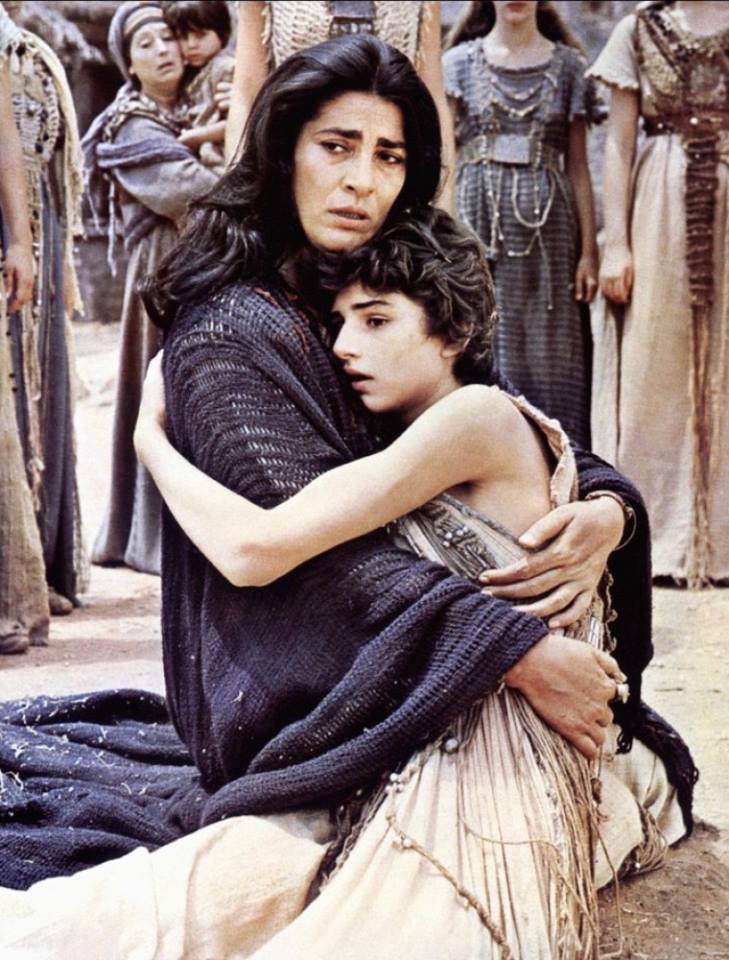
Iphigenia

Συντάκτης: Κων/νος Βούλγαρης | Κάτω από: Εκπαίδευση στον 21ο αιώνα

Iphigenia in the arms of her mother, Clytemnestra


Iphigenia (Greek: Ιφιγένεια) is a 1977 Greek film directed by Michael Cacoyannis, based on the Greek myth of Iphigenia, the daughter of Agamemnon and Clytemnestra, who was ordered by the goddess Artemis to be sacrificed.

Cacoyannis adapted the film—the third in his “Greek tragedy” trilogy after the release of Electra in 1962 and The Trojan Women in 1971—from his stage production of Euripides’ play Iphigenia at Aulis.

The film stars Tatiana Papamoschou as Iphigenia, Kostas Kazakos as Agamemnon and Irene Papas as Clytemnestra.

The score was composed by Mikis Theodorakis.

Denise Duhamel (b. 1961) is a poet from Woonsocket, Rhode Island. She received a BFA degree from Emerson College and an MFA degree from Sarah Lawrence College.


Yes

According to Culture Shock:
A Guide to Customs and Etiquette
of Filipinos, when my husband says yes,
he could also mean one of the following:
a.) I don’t know.
b.) If you say so.
c.) If it will please you.
d.) I hope I have said yes unenthusiastically enough
for you to realize I mean no.
You can imagine the confusion
surrounding our movie dates, the laundry,
who will take out the garbage
and when. I remind him
I’m an American, that all his yeses sound alike to me.
I tell him here in America we have shrinks
who can help him to be less of a people-pleaser.
We have two-year-olds who love to scream “No!”
when they don’t get their way. I tell him,
in America we have a popular book,
When I Say No I Feel Guilty.
“Should I get you a copy?” I ask.
He says yes, but I think he means
“If it will please you,” i.e. “I won’t read it.”
“I’m trying,” I tell him, “but you have to try too.”
“Yes,” he says, then makes tampo,
a sulking that the book Culture Shock describes as
“subliminal hostility . . . withdrawal of customary cheerfulness
in the presence of the one who has displeased” him.
The book says it’s up to me to make things all right,
“to restore goodwill, not by talking the problem out,
but by showing concern about the wounded person’s
well-being.” Forget it, I think, even though I know
if I’m not nice, tampo can quickly escalate into nagdadabog
foot stomping, grumbling, the slamming
of doors. Instead of talking to my husband, I storm off
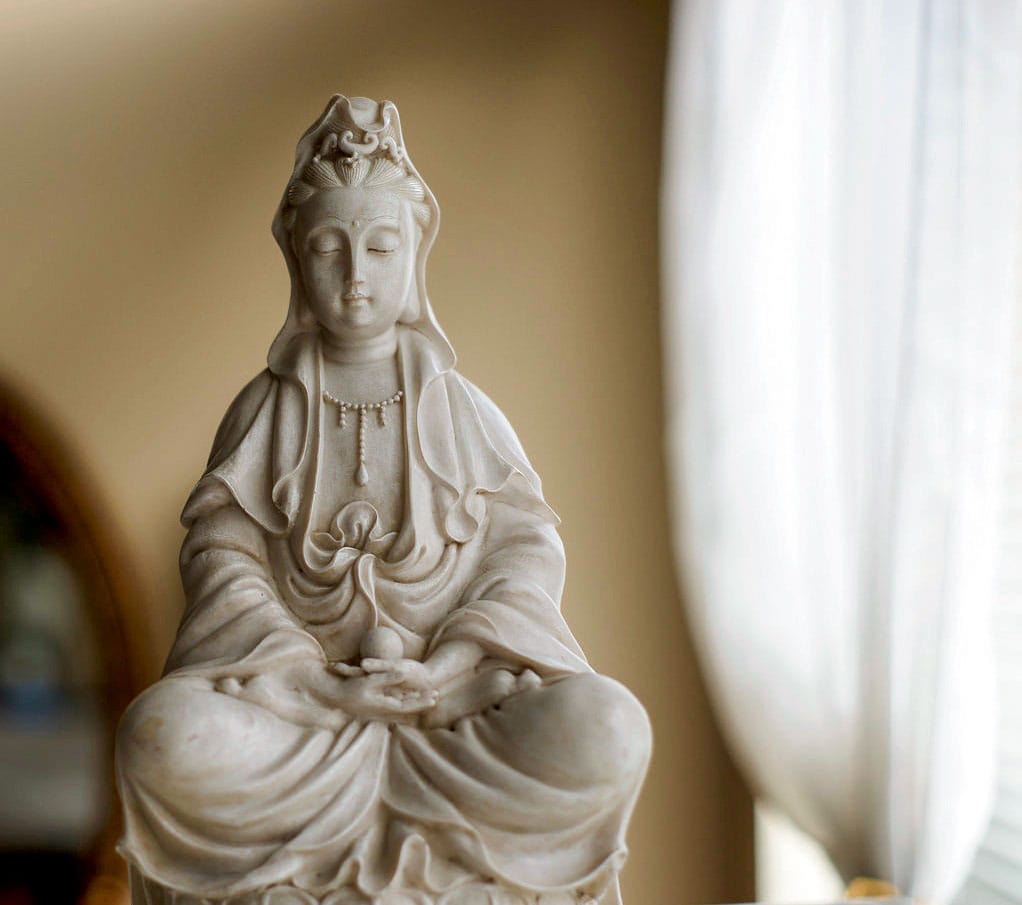
to talk to my porcelain Kwan Yin,
the Chinese goddess of mercy
that I bought on Canal Street years before
my husband and I started dating.
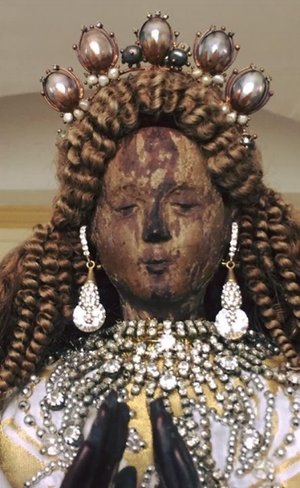
“The real Kwan Yin is in Manila,”
he tells me. “She’s called Nuestra Señora de Guía.
Her Asian features prove Christianity
was in the Philippines before the Spanish arrived.”
My husband’s telling me this
tells me he’s sorry. Kwan Yin seems to wink,
congratulating me—my short prayer worked.
“Will you love me forever?” I ask,
then study his lips, wondering if I’ll be able to decipher
what he means by his yes.

Kwan Yin


Ναι

Σύμφωνα με το βιβλίο «Πολιτισμικό Σοκ:
Ένας οδηγός για τα ήθη κι έθιμα
των Φιλιππινέζων», όταν ο σύζυγός μου λέει ναι,
ενδεχομένως να εννοεί ένα από τα παρακάτω:
α) Δεν ξέρω.
β) Αφού το λες εσύ.
γ) Εάν έτσι μείνεις ευχαριστημένη.
δ) Ελπίζω να είπα «ναι» χωρίς ιδιαίτερο ενθουσιασμό
ώστε να καταλάβεις τελικά πως εννοώ «όχι».
Μπορείτε να φανταστείτε τη σύγχυση που επικρατεί
γύρω από το πότε θα πάμε κινηματογράφο, ποιος θα αναλάβει τα άπλυτα,
ποιος θα βγάλει τα σκουπίδια
και πότε. Του θυμίζω ότι
είμαι Αμερικανίδα: όλα του τα ναι μού ακούγονται ίδια.
Του λέω πως εδώ στην Αμερική έχουμε ψυχαναλυτές
που μπορούν να τον βοηθήσουν να μην προσπαθεί συνέχεια να ευχαριστήσει τους άλλους.
Έχουμε κάτι δίχρονα που τους αρέσει πολύ να ουρλιάζουν «όχι!»
όταν δεν γίνεται το δικό τους. Του λέω,
στην Αμερική έχουμε ένα πολύ δημοφιλές βιβλίο με τίτλο
«Όταν λέω όχι, νιώθω ένοχος».
— Να σου φέρω ένα αντίτυπο; ρωτώ.
Μου λέει ναι, αλλά νομίζω ότι εννοεί
«εάν έτσι μείνεις ευχαριστημένη», δηλ. «δεν θα το διαβάσω».
— Προσπαθώ, του λέω, αλλά πρέπει να προσπαθήσεις κι εσύ.
— Ναι, μου λέει και μετά το γυρίζει στο tampo,
ένα χαρακτηριστικό φιλιππινέζικο κατσούφιασμα που το βιβλίο «Πολιτισμικό Σοκ» περιγράφει ως
«υποσυνείδητη εχθρότητα […] μια απομάκρυνση από τη συνήθη μας ευθυμία
μπροστά σε κάποιον που μας έχει δυσαρεστήσει».
Το βιβλίο λέει ότι είναι στο χέρι μου να φτιάξω τα πράγματα,
«για να αποκατασταθεί η καλή θέληση, όχι συζητώντας το πρόβλημα διεξοδικά,
αλλά δείχνοντας ότι πραγματικά νοιάζομαι για το αν είναι καλά
ο θιγμένος». Ξέχνα το, σκέφτομαι, αν και γνωρίζω ότι
αν δεν είμαι καλόβολη, το tampo μπορεί γρήγορα να κλιμακωθεί σε nagdadabog:
θα χτυπάει δυνατά τα πόδια του κάτω, θα μου γκρινιάζει, θα βαράει
τις πόρτες. Αντί να μιλήσω στον άντρα μου, ορμάω τρέχοντας
να μιλήσω στην πορσελάνινη Κουάν Γιν,
την κινέζικη θεά του ελέους,
που την αγόρασα στην οδό Κανάλ [στην Τσάιναταουν της Νέας Υόρκης]
χρόνια πριν γνωριστούμε ο άντρας μου κι εγώ κι αρχίσουμε να βγαίνουμε.
— Η πραγματική Κουάν Γιν βρίσκεται στη Μανίλα,
μου λέει εκείνος. Τη λένε Nuestra Señora de Guía.
Τα ασιατικά χαρακτηριστικά της αποδεικνύουν ότι ο Χριστιανισμός
υπήρχε στις Φιλιππίνες προτού φτάσουν οι Ισπανοί.
Το ότι ο σύζυγός μου μού το λέει αυτό,
σημαίνει ότι λυπάται. Η Κουάν Γιν μοιάζει να μου κλείνει το μάτι,
να μου δίνει συγχαρητήρια— η σύντομη προσευχή μου εισακούστηκε!
— Θα μ’ αγαπάς για πάντα; ρωτώ
κι ύστερα παρατηρώ τα χείλη του. Αναρωτιέμαι αν θα μπορέσω να αποκρυπτογραφήσω
τι εννοεί με το ναι του.

Nuestra Señora de Guía


Jack Prelutsky (b. 1940) is a children’s poet from Brooklyn, New York.


Last Night I Dreamed of Chickens

Last night I dreamed of chickens,
there were chickens everywhere,
they were standing on my stomach,
they were nesting in my hair,
they were pecking at my pillow,
they were hopping on my head,
they were ruffling up their feathers
as they raced about my bed.

They were on the chairs and tables,
they were on the chandeliers,
they were roosting in the corners,
they were clucking in my ears,
there were chickens, chickens, chickens
for as far as I could see…
when I woke today, I noticed
there were eggs on top of me.


Χθες βράδυ ονειρεύτηκα κοτόπουλα

Χθες βράδυ ονειρεύτηκα κοτόπουλα,
υπήρχαν κοτόπουλα παντού,
στέκονταν πάνω στο στομάχι μου,
φώλιαζαν στα μαλλιά μου,
ράμφιζαν το μαξιλάρι μου,
χοροπηδούσαν στο κεφάλι μου,
ανασήκωναν τα φτερά τους
καθώς έτρεχαν γύρω από το κρεβάτι μου.

Ήταν στις καρέκλες και στα τραπέζια,
ήταν πάνω στους πολυελαίους,
κούρνιαζαν στις γωνίες,
κακάριζαν μες στα αυτιά μου,
υπήρχαν κοτόπουλα, κοτόπουλα, κοτόπουλα,
μέχρι εκεί που έφτανε το βλέμμα μου…
Και σήμερα που ξύπνησα, παρατήρησα
υπήρχαν πάνω μου αυγά.

Linda Pastan (b. 1932) was raised in New York City but has lived for most of her life in Potomac, Maryland, a suburb of Washington, DC. She has published 15 books of poetry and a number of essays.


A New Poet

Finding a new poet
is like finding a new wildflower
out in the woods. You don’t see

its name in the flower books, and
nobody you tell believes
in its odd color or the way

its leaves grow in splayed rows
down the whole length of the page. In fact
the very page smells of spilled

red wine and the mustiness of the sea
on a foggy day—the odor of truth
and of lying.

And the words are so familiar,
so strangely new, words
you almost wrote yourself, if only

in your dreams there had been a pencil
or a pen or even a paintbrush,
if only there had been a flower.


Ένας καινούριος ποιητής

Το να βρεις έναν καινούριο ποιητή
είναι σαν να βρήκες ένα καινούριο αγριολούλουδο
έξω στο δάσος. Δεν βλέπεις

το όνομά του γραμμένο σε βιβλία ανθοκομίας. Κανείς
δεν σε πιστεύει όταν τους λες
για το περίεργο χρώμα του ή για τον τρόπο που

τα φύλλα του φυτρώνουν απλωτά σε σειρές
σ’ όλο το μήκος της σελίδας. Και μάλιστα,
αυτή ακριβώς η σελίδα μυρίζει χυμένο

κόκκινο κρασί και σαν τη μούχλα της θάλασσας
μια μέρα με ομίχλη: είν’ η οσμή της αλήθειας
και των ψεμμάτων.

Κι οι λέξεις είναι τόσο οικείες,
τόσο παράξενα φρέσκες, λέξεις σαν να
τις είχες γράψει συ ο ίδιος, υπό την προϋπόθεση

να είχε υπάρξει στα όνειρά σου ένα μολύβι
ή ένα στυλό ή ακόμα κι ένα πινέλο,
να είχε υπάρξει έστω ένα λουλούδι.

Welcome Back to School

Άλλη μία σχολική χρονιά σημαίνει ότι θα κάνεις καλούς φίλους
και θα αποκτήσεις καινούριες υπέροχες αναμνήσεις.
Σου εύχομαι καλή αρχή!

Ο δάσκαλός σου
34ο Δημοτικό Σχολείο Αθηνών

Dimitris P. Kraniotis (b. 1966) is a poet from Stomio, a coastal town in central Greece. He has studied medicine and works as a pathologist in Larissa, Greece.


Ideals

Snow-covered mountains,
ancient monuments,
a north wind that nods to us,
a thought that flows,
images imbued
with hymns of history,
words on signs
with ideals of geometry.


Les idéaux

Des montagnes enneigées,
des monuments anciens,
le nord qui nous signe,
la pensée qui coule,
des images mouillées
par les hymnes de notre histoire,
des mots épigraphiques
faits par des idéaux géométriques.


Ιδανικά

Βουνά χιονισμένα,
μνημεία αρχαία,
βοριάς που μας γνέφει,
σκέψη που κυλά,
εικόνες βαμμένες
με ύμνους ιστορίας,
λέξεις επιγραφών
με ιδανικά γεωμετρίας.

Audrey Hepburn
UNICEF Goodwill Ambassador from 1988 to 1993

“I can testify to what UNICEF means to children, because I was among those who received food and medical relief after World War II. I have a long-lasting gratitude and trust for what UNICEF does.”

Audrey Hepburn
(1929-1993)

Edward Dorn (1929-1999) was a poet and teacher from Villa Grove, Illinois. He grew up in rural poverty during the Great Depression. He is often associated with the Black Mountain poets.


Heart of Copper

The Candidate, answering a question
about El Salvador, generalized
by saying he thought
we should support human rights
everywhere they were being abrogated—
South Korea, South Africa
or South Yemen. He didn’t have
the moral perspicuity
to mention South Dakota.
Perhaps it’s too far north.


Χάλκινη καρδιά

Ο Υποψήφιος, απαντώντας σε μία ερώτηση
για το Ελ Σαλβαδόρ, γενίκευσε
λέγοντας ότι νομίζει πως
πρέπει να υποστηρίζουμε τα ανθρώπινα δικαιώματα
όπου κι αν παραβιάζονται:
Νότια Κορέα, Νότια Αφρική
ή Νότια Υεμένη. Δεν είχε
την ηθική διαύγεια
να αναφέρει τη Νότια Ντακότα.
Ίσως αυτή να πέφτει πολύ βόρεια.

Carolyn Kizer (19252014) was an American poet from Spokane, Washington. Her works reached into mythology, politics, and feminism. She won the Pulitzer Prize in 1985.


The Ungrateful Garden

Midas watched the golden crust
That formed over his steaming sores,
Hugged his agues, loved his lust,
But damned to hell the out-of-doors

Where blazing motes of sun impaled
The serried roses, metal-bright.
“Those famous flowers,” Midas wailed,
“Have scorched my retina with light.”

This gift, he’d thought, would gild his joys,
Silt up the waters of his grief;
His lawns a wilderness of noise,
The heavy clang of leaf on leaf.

Within, the golden cup is good
To lift, to sip the yellow mead.
Outside, in summer’s rage, the rude
Gold thorn has made his fingers bleed.

“I strolled my halls in golden shift,
As ruddy as a lion’s meat.
Then I rushed out to share my gift,
And golden stubble cut my feet.”

Dazzled with wounds, he limped away
To climb into his golden bed,
Roses, roses can betray.
“Nature is evil,” Midas said


Ο αχάριστος κήπος

Ο Μίδας παρατήρησε τη χρυσή κρούστα
που σχηματίστηκε πάνω από τις αχνιστές πληγές του.
Αγκάλιασε τον πυρετό του, αγάπησε τον πόθο του,
μα καταράστηκε την ύπαιθρο,

εκεί όπου οι λαμπεροί κόκκοι του ήλιου διαπέρασαν βίαια
τα πυκνά ρόδα με τη μεταλλική λάμψη.
«Κείνα τα διάσημα λουλούδια», ο Μίδας κραύγασε σπαρακτικά,
«μου έκαψαν τον αμφιβληστροειδή με το φως τους!»

Αυτό το δώρο, νόμιζε, θα επιχρύσωνε τις χαρές του,
θα κάλυπτε με λάσπη τα νερά της θλίψης του.
Το γρασίδι στους κήπους του μια ερημιά γεμάτη θόρυβο·
βαρύς ο κρότος του φύλλου πάνω στο φύλλο.

Μέσα, το χρυσό κύπελλο είναι καλό
να το σηκώνει, να ρουφά το κίτρινο υδρόμελο.
Έξω, στην οργή του θέρους, το αυθάδικο
χρυσό αγκάθι έχει κάνει τα δάχτυλά του να αιμορραγούν.

«Περπάτησα στις αίθουσες μες στη χρυσή μου φορεσιά,
αναψοκοκκινισμένος σαν το κρέας του λιόντα.
Ύστερα βγήκα τρέχοντας, το δώρο μου να μοιραστώ—
τα θερισμένα σπαρτά, τώρα χρυσά, μου κόψαν τα πόδια».

Τυφλωμένος απ’ τις πληγές, έφυγε κουτσαίνοντας
μέχρι να σκαρφαλώσει στο χρυσό του κρεβάτι:
Τα τριαντάφυλλα, τα τριαντάφυλλα μπορούν να προδώσουν!
«Η φύση είναι μοχθηρή», είπε ο Μίδας.

W. S. Merwin (19272019) was an American poet from New York City. He wrote more than fifty books of poetry and prose, and produced many works in translation.


Beggars and Kings

In the evening
all the hours that weren’t used
are emptied out
and the beggars are waiting to gather them up
to open them
to find the sun in each one
and teach it its beggar’s name
and sing to it It is well
through the night

but each of us
has his own kingdom of pains
and has not yet found them all
and is sailing in search of them day and night
infallible undisputed unresting
filled with a dumb use
and its time
like a finger in a world without hands


Ζητιάνοι και βασιλείς

Το βράδυ
όλες οι ώρες που δεν χρησιμοποιήθηκαν
αδειάζονται
κι οι ζητιάνοι περιμένουν να τις μαζέψουν
να τις ανοίξουν
να βρουν τον ήλιο σε καθεμιά
και να της μάθουν το ζητιάνικο όνομά της
και να της ψάλουν το «Είναι καλά!»*
μες στη νύχτα

καθένας όμως από μας
έχει το δικό του βασίλειο των πόνων
και δεν τους έχει ακόμα βρει όλους
και πλέει αναζητώντας τους μέρα και νύχτα
αλάθητος αδιαμφισβήτητος ακαταπόνητος
γεμάτος με μια χαζή χρήση
και το χρόνο της
σαν ένα δάχτυλο σε κόσμο χωρίς χέρια


*It Is Well With My Soul is a church hymn penned by hymnist Horatio Spafford and composed by Philip Bliss, appearing in hymnals of a wide variety of Christian fellowships.


Poet, journalist and travel writer Hugo Williams was born in 1942 in Windsor and grew up in Sussex.


Siren Song

I phone from time to time, to see if she’s
changed the music on her answerphone.
‘Tell me in two words,’ goes the recording,
‘what you were going to tell in a thousand.’

I peer into that thought, like peering out
to sea at night, hearing the sound of waves
breaking on rocks, knowing she is there,
listening, waiting for me to speak.

Once in a while she’ll pick up the phone
and her voice sings to me out of the past.
The hair on the back of my neck stands up
as I catch her smell for a second.


Το τραγούδι της σειρήνας

Της τηλεφωνώ πού και πού για να δω μήπως
έχει αλλάξει μουσική στον τηλεφωνητή της.
«Πες μου με δυο λόγια», λέει η ηχογράφηση,
«αυτό που σκόπευες να πεις με χίλια».

Συλλογίζομαι αυτή τη σκέψη, σαν να ατενίζω έξω
τη θάλασσα τη νύχτα, ακούγοντας τον ήχο των κυμάτων
να σπάνε στα βράχια, γνωρίζοντας ότι αυτή είναι εκεί
κι αφουγκράζεται, περιμένοντας να της μιλήσω.

Μια στο τόσο σηκώνει το τηλέφωνο—
και τότε τραγουδά για μένα η φωνή της, από το παρελθόν.
Πίσω στο σβέρκο τα μαλλιά μου ανασηκώνονται
καθώς για ένα δευτερόλεπτο πιάνω τη μυρωδιά της.

7 Σεπ 2022

Chaâbi

Συντάκτης: Κων/νος Βούλγαρης | Κάτω από: Εκπαίδευση στον 21ο αιώνα

This is a wonderful new jazz/Algerian chaâbi fusion album
called Koum Tara: Chaâbi, Jazz and Strings.

The band’s name, Koum Tara, means “stand up and admire.” It is based on a popular traditional Algerian folk song and poem about beauty, nature, and life.

Chaâbi is a form of popular music in North Africa (Algeria, Morocco, and Egypt) that emerged in the first half of the 20th century. The word chaâbi refers to its folk origins, meaning “of the people” or “λαϊκό, popular,” and it’s a celebratory music often played at weddings and festivals.

Algerian chaâbi is associated with Casbah (the citadel of Algiers) and the city of Oran. Its sound incorporates elements of Arab-Andalusian classical music, which goes back to the 9th century.

The father of Algerian chaâbi, El Hadj M’Hamed El Anka (1907-1978), was considered a master of both chaâbi and Andalusian classical music.

Algerian singer Sid Ahmed Belksier is a soulful vocalist who wrote most of the repertoire of original chaâbi poetry and love songs, and plays the mandole (Algerian mandolin).

Koum Tara’s music once again shows us that music binds people together regardless of religion or language barriers.

Spike Milligan (1918-2002) was a British-Irish actor, comedian, writer, musician, poet, and playwright, born in Ahmednagar, British Colonial India.


The Lion

If you’re attacked by a Lion
Find fresh underpants to try on
Lay on the ground quite still
Pretend you are very ill
Keep like that day after day
Perhaps the lion will go away


Ο λιόντας

Αν σου επιτεθεί λιοντάρι,
βρες καθαρά σώβρακα να φορέσεις,
ξάπλωσε στο έδαφος τελείως ακίνητος,
προσποιήσου ότι είσαι πολύ άρρωστος,
μείνε έτσι για μέρες—
ίσως ο λιόντας φύγει.

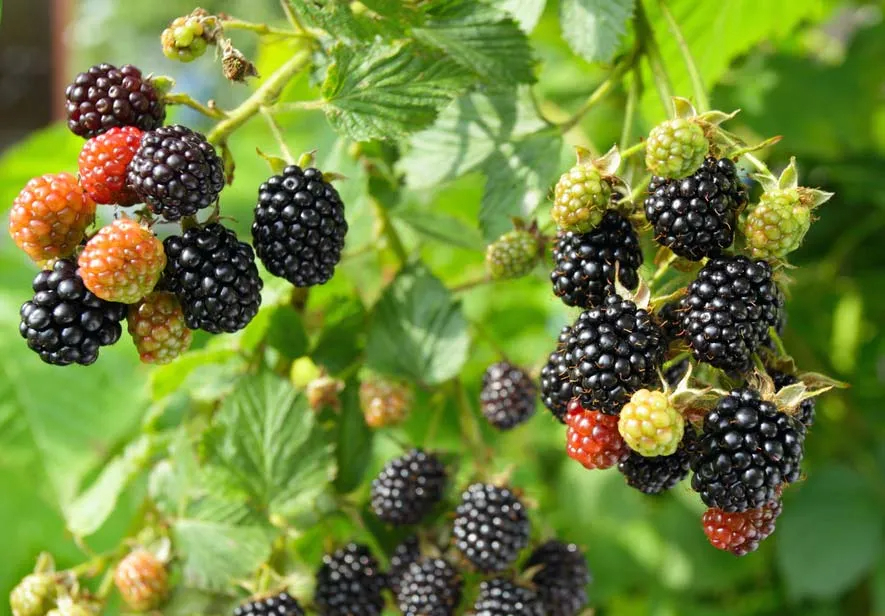
BlackberriesIan Emberson (19362013) was a poet from Hove, Sussex, proud to have been christened by the poet Andrew Young. After moving around quite a bit, he spent his life in the small town of Todmorden, West Yorkshire.


Lingering by the Doorway of the Woods

I was picking blackberries when I thought of the strange girl at the mental hospital.
Beautiful she wasquietly beautiful. Yes—and apparently nothing the matter with
her—except that she was scared to go outside, and scared to go indoors. And so she just sat there in a chair by the entrance door—she was there when I went in with the

library trolley: she was there when I came out. But that was thirty years ago. Odd

that I should have thought of her just then.


Χασομερώντας νωχελικά στην είσοδο του δάσους

Μάζευα βατόμουρα όταν θυμήθηκα εκείνο το παράξενο κορίτσι στο ψυχιατρείο.
Όμορφη ήταν, ήσυχα όμορφη. Ναι— και προφανώς δεν έπασχε από κάτι,
εκτός από το ότι φοβόταν να βγει έξω, φοβόταν και να μπει μέσα. Έτσι, λοιπόν, απλώς καθόταν εκεί σε μια πολυθρόνα στην εξώπορτα. Ήταν εκεί όταν μπήκα με το

τροχήλατο καροτσάκι της βιβλιοθήκης· ήταν εκεί κι όταν βγήκα. Αυτό όμως συνέβη πριν από τριάντα χρόνια. Περίεργο

που τη θυμήθηκα ειδικά τότε.

Wendell Berry (b. 1934) is a poet from Newcastle, Kentucky. He continues to farm the land along the Kentucky River that his family has worked for two centuries.


Woods

I part the out thrusting branches
and come in beneath
the blessed and the blessing trees.
Though I am silent
there is singing around me.
Though I am dark
there is vision around me.
Though I am heavy
there is flight around me.


Δάσος

Χωρίζω τα κλαδιά που προεξέχουν
και περνώ από κάτω,
κάτω από δέντρα που ευλογήθηκαν κι ευλογούν.
Αν κι είμαι σιωπηλός,
υπάρχει γύρω μου τραγούδισμα.
Αν κι είμαι σκοτεινός,
υπάρχει γύρω μου όραμα.
Αν κι είμαι βαρύς,
υπάρχει γύρω μου πέταγμα.


Alan Dugan (1923-2003) was a poet from New York City. He wrote with bemused sarcasm about mundane topics, infusing them with irony.


How We Heard the Name

The river brought down
dead horses, dead men
and military debris,
indicative of war
or official acts upstream,
but it went by, it all
goes by, that is the thing
about the river. Then
a soldier on a log
went by. He seemed drunk
and we asked him Why
had he and this junk
come down to us so
from the past upstream.
“Friends,” he said, “the great
Battle of Granicus
has just been won
by all of the Greeks except
the Lacedaemonians and
myself: this is a joke
between me and a man
named Alexander, whom
all of you ba-bas
will hear of as a god.”


Πώς ακούσαμε το όνομα

Το ποτάμι κατέβασε
νεκρά άλογα, νεκρούς ανθρώπους
και στρατιωτικά θραύσματα,
ενδεικτικά του πολέμου
ή άλλων επίσημων ενεργειών από ψηλά—
μα πάει πια, πέρασε κι αυτό, όλα
περνούν, έτσι συμβαίνει πάντα
με το ποτάμι. Έπειτα πέρασε
κι ένας στρατιώτης, πιασμένος πάνω
σε έναν κορμό. Φαινόταν μεθυσμένος·
τόνε ρωτήσαμε τότενες γιατί
είχε κατεβεί μέχρι τα μέρη μας,
αυτός και το κούτσουρό του,
αφημένος έτσι στο ρεύμα,
παρασυρμένος από το παρελθόν ψηλά.
«Φίλοι μου», μας λέει, «πριν λίγο τελείωσε
η μεγάλη Μάχη του Γρανικού!
Νίκησαν οι Έλληνες, δηλαδή όλοι εκτός από
τους Λακεδαιμόνιους κι από
τον εαυτό μου: είναι ένα αστείο αυτό,
ανάμεσα σ’ εμένα και κάποιον
που τον λένε Αλέξανδρο.
Όλοι εσείς οι προβατάρηδες
θα ακούσετε κάποτε να λένε γι’ αυτόν
πως είναι θεός».


Αφηγητής είναι ένας βοσκός, ο οποίος μαθαίνει από έναν υπερόπτη Έλληνα μισθοφόρο των Περσών, μάλλον το Μέμνονα, ότι νικητής στη Μάχη του Γρανικού ποταμού ανεδείχθη ο Μέγας Αλέξανδρος.


The Battle of Granicus was fought in 334 B.C. between the armies of Alexander the Great and the Persian Empire. The meaning of the soldier’s words is clarified by the fact that Alexander’s forces were made up of soldiers drawn from all the Greek city-states, with the exception of Sparta, whose citizens also went by the name of Lacedaemonians.

The term “ba-bas”—an example of the poetic device known as onomatopoeia—shows that the narrator of the poem and his fellows are shepherds, and its use by the soldier demonstrates his sense of his own superiority to them.

The Greek mercenaries who fought on the side of the Persians in that battle were led by a Greek named Memnon. He escaped the slaughter of his troops at the close of the battle. Readers have ample evidence to assume that Dugan expects them to make the connection and identify the anonymous soldier as none other than General Memnon himself in the act of deserting his men in a decidedly ignominious fashion.

An oeil de boeuf window

Aoeil-de-boeuf, also œil de bœuf and sometimes anglicized as ox-eye window or bull’s-eye window, is a relatively small oval or circular window, typically for an upper storey, and sometimes set in a roof slope as a dormer, or above a door to let in natural light.

It has glazing bars (bars framing the panes of glass) as spokes radiating outward from an empty hub, or circular centre.


Oeil de boeuf
An oeil-de-boeuf window in Sutton, London.

Teacher of the Year

Χάρης Γεωργιακάκης: Ο εκπαιδευτικός της χρονιάς

Transforming a School
Education Leaders Awards


2

1
Δημοτικό Σχολείο Βοριζίων