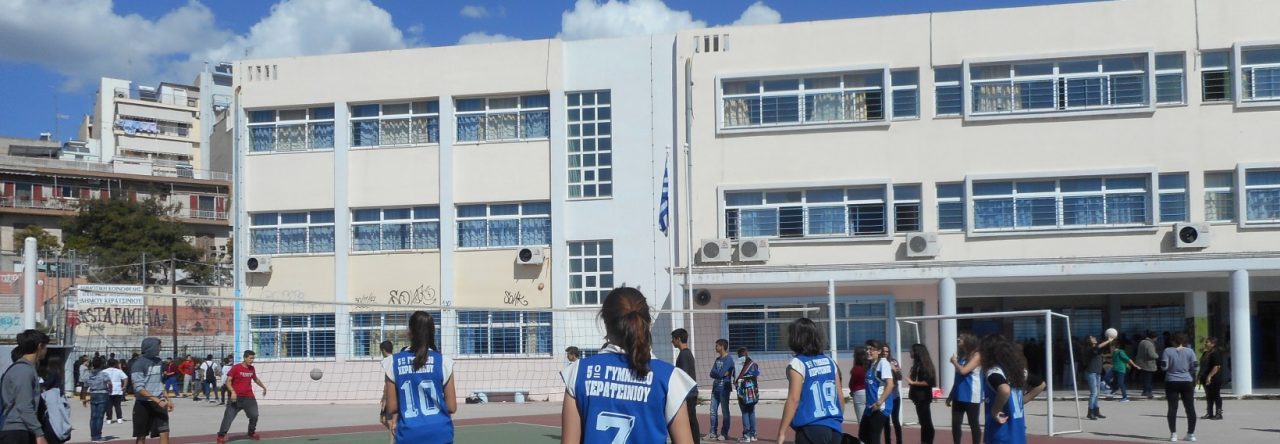

Our first Erasmus+ project
Our school is proud to participate in the Erasmus+ Programme for the first time within the framework of KA1 Erasmus+ mobility project 2025-1-EL01-KA121-SCH-000344561 of the Accredited National Consortium of the Directorate of Secondary Education of Piraeus (OID: E10037523).
Through international cooperation and professional development, Erasmus+ helps us grow as a school and strengthen our European dimension.
Our first project, “Enhancing Cultural Diversity in the Classroom”, focuses on learning from other European schools and bringing new ideas, inclusive practices, and intercultural awareness into our classrooms.
Erasmus+ is a European Union programme that supports education, training, and cooperation across Europe. It allows teachers and staff to learn from international partners and apply innovative approaches in their own schools.
At our school, Erasmus+ is a step towards:
- A more inclusive and culturally aware learning environment
- Modern and engaging teaching methods
- Stronger European cooperation
Job shadowing allows teachers to:
- Observe lessons in a partner school
- Follow colleagues during their daily work
- Learn how cultural diversity is addressed in real classroom situations
- Share experiences and ideas with international peers
- This hands-on experience helps transform theory into practical classroom improvements.
Benefits for Our School Community
Teachers
- Professional development in an international context
- New inclusive teaching methods
- Increased intercultural awareness
- Stronger cooperation with European colleagues
Benefits for Our School Community
Students
- A more open and culturally inclusive classroom environment
- Improved teaching approaches inspired by European best practices
- Stronger awareness of European values
- European Partners
- Through this project, our teachers will cooperate with partner schools in other European countries, observing how cultural diversity is embraced in everyday school life.
Enhancing Cultural Diversity in the Classroom
An Intercultural Inquiry to Foster European Awareness

1. Context and Rationale
The 5th Junior High School of Keratsini aims to participate for the first time in Erasmus+ KA121-SCH staff mobility (job shadowing) within the framework of KA1 Erasmus+ mobility project 2025-1-EL01-KA121-SCH-000344561 of the Accredited National Consortium of the Directorate of Secondary Education of Piraeus (OID: E10037523) in order to strengthen its European dimension and to develop innovative, creative and inclusive teaching practices that value cultural diversity.
The school seeks to enrich everyday teaching with approaches that recognise learners’ diverse cultural backgrounds as a learning resource, cultivate European identity alongside Global Citizenship, and strengthen inclusion, belonging, empathy and democratic participation in school life.

2. Main Aim
To observe and learn from a European partner Junior High School’s effective practice in intercultural education, creative pedagogy and whole-school inclusion, and to adapt these practices into a sustainable intercultural teaching model at the 5th Junior High School of Keratsini.

3. Specific Objectives
• Integrate intercultural perspectives into at least two subject areas (e.g., Language/Literature, History/Civics, Arts) through inquiry-based and creative methodologies.
• Design and implement one cross-curricular intercultural project (4-6 weeks) promoting European awareness and Global Citizenship with clear learning outcomes and assessment tools.
• Adopt at least five inclusive classroom strategies observed at the host school (e.g., cooperative learning roles, culturally responsive materials, restorative dialogue routines).
• Establish a sustainable collaboration channel with the partner (e.g., ESEP/eTwinning space) and co-plan at least one joint student activity (digital exchange or shared product).
• Disseminate results internally and locally through at least two structured dissemination actions and a shared resource pack.
School Access
School: 5th Junior High School of Keratsini
📍 Address: 217 Sokratous Str., Keratsini 187 55, Greece
📞 Phone: +30 210 4004624
Public Transportation Options to the School
🚌 Local Bus Services
There are multiple city bus lines that operate in the Keratsini – Drapetsona area and can help you get near the school. These buses stop at points generally within walking distance to Sokratous Street.
🚍 Main Bus Lines that serve Keratsini:
Bus 820 – frequent route around Keratsini, Nikaia and Drapetsona areas (many stops)
Bus 832 & 833 – also service the Keratsini neighbourhood
Bus 841, 842, 848, 860 – additional buses that might have stops close to the destination depending on your starting point (check local timetables)
📍 Most of these buses stop along or near main roads in Keratsini — e.g., near Platonos Str., Evgenias Square, Makrygianni stops etc. From these stops, it is usually a short walk to the school address at 217 Sokratous Str.
Rail & Metro Connections (for longer-distance access)
🚉 Train / Suburban Railway
The Proastiakos / urban railway line serving Piraeus (station Piraeus or “P3B”) is the closest heavy rail access point for the Keratsini area. From Piraeus station, you can combine a short bus or taxi ride to reach the school.
🚇 Metro (Athens Metro)
The Athens Metro Line M1 / M3 network can be used if coming from other parts of the Athens metropolitan area (e.g., from central Athens). You would get off at Piraeus and then use a local bus or a taxi to reach the school.
Practical Tips for Planning Your Trip
Ticketing: Use an ATH.ENA card for bus, metro, and rail rides around Attiki (single journeys or daily passes) — accepted on buses and metro systems.
Journey Planning: Tools like the OASA Telematics “Best Route” planner can give you step-by-step directions with timings and transfers based on current traffic.
telematics.oasa.gr
From Piraeus Metro/Train to School: After arriving in Piraeus, bus lines like 820 / 832 / 833 can take you closer to Keratsini — typically a short onward ride plus a few minutes’ walk.
Disclaimer
Funded by the European Union. Views and opinions expressed are however those of the author(s) only and do not necessarily reflect those of the European Union or the European Education and Culture Executive Agency (EACEA).
Neither the European Union nor EACEA can be held responsible for them.
