Δράση Παρευρισκομένων σε σχολικά περιβάλλοντα:
Ενδυναμώνοντας μαθήτριες και μαθητές
ώστε να μπορούν να αντιδράσουν ενάντια στη σχολική έμφυλη βία


Δράση Παρευρισκομένων σε σχολικά περιβάλλοντα:
Ενδυναμώνοντας μαθήτριες και μαθητές
ώστε να μπορούν να αντιδράσουν ενάντια στη σχολική έμφυλη βία


Βλ. άσκηση A, σελ. 35, Pupil’s Book, E′ τάξη
Say how you feel in the following situations—
The night before Santa Claus brings your presents:
Excited, happy, curious, thrilled.
When someone breaks your favourite toy:
Sad, upset, angry, disappointed.
When you don’t like a party but you cannot leave:
Bored, annoyed, uncomfortable, frustrated.
When you get the best mark in the class:
Proud, joyful, accomplished, confident.
When your best friend tells you lies:
Hurt, betrayed, confused, disappointed.


 Λεξιλόγιο από τις σελ. 37-38 του βιβλίου Student’s Book της Γ′ τάξης
 pirate: A person who attacks and steals from ships at sea.
parrot: A colourful bird that can imitate sounds and voices.
captain: The leader of a ship or crew.
message: A piece of information that is sent or communicated.
Australia: A country located in the southern hemisphere, home to unique animals like koalas and kangaroos.
koala: A tree-dwelling marsupial native to Australia, known for its round face and fluffy ears.
kangaroos: Large marsupials from Australia that can hop and have strong hind legs.
Μερικές λέξεις ακόμη:
the Outback: A large, remote and wild area in Australia that is not developed or populated.
pouch: A bag or pocket-like structure where some animals, like kangaroos, carry their young.
joey: A baby kangaroo that lives in its mother’s pouch.
down under: A colloquial term for Australia, referring to its position in the southern hemisphere.


Δραστηριότητα C, σελ. 13, Activity Book, Ε′ τάξη
Ακολουθεί μία ιστορία, βασισμένη στην ίδια άσκηση.
Here’s the list completed with the correct prepositions:
On Sunday
In the morning
On weekdays
At Easter
On May 15th
In the evening
In 2015
At night
In winter
On his birthday
In autumn
In September
At 6:00 o’clock
On Christmas Day
At the weekend (British English) / On the weekend (American English)

In 2015, a group of 10-year-old kids formed a secret club called “The Unstoppable Squad.” They weren’t the coolest or the strongest kids in school, but they were determined to prove that teamwork could win against all odds.
It all started on his birthday, when Max, the leader of the squad, received a mysterious box at 6:00 o’clock in the evening. Inside was an invitation to the annual “Big Brains and Brave Hearts Challenge,” a competition that would take place on May 15th. Max’s eyes sparkled. “This is it, guys! We’re going to show everyone we’ve got what it takes!”
The squad spent weeks preparing. They met on weekdays, after school, brainstorming ideas in the evening and practising their skills at night under the glow of a small lamp. “We’ll crush the obstacle course,” said Sophie, the fastest kid in the squad. “And I’ll handle the riddles,” added Chloe, the team’s puzzle expert.
The big day came on May 15th, and it was pouring rain. “Great,” mumbled Liam. “In autumn, it’s mud. In winter, it’s frost. And now this?” But Max grinned. “Rain or shine, we’re unstoppable!”
The competition began. In the first round, teams had to navigate a maze filled with clues. Despite slipping in the mud and losing one shoe, Sophie darted through the maze like lightning. The squad was ahead!
Next, they had to solve riddles inside a spooky tent. Chloe cracked the codes in no time, even though a creepy puppet tried to distract her by whispering, “You’ll never make it!” She just laughed and kept going.
The final challenge was building a tower with marshmallows and spaghetti. The Squad’s tower wobbled dangerously, but Liam saved the day by sticking some marshmallows in his mouth to lighten the load.
Finally, it was time for the results. On Christmas Day, Max remembered his grandma’s advice: “Winning is about giving your all, not about the trophy.” But still, he hoped.
“And the winners are…” the announcer paused dramatically, “The Unstoppable Squad!”
The kids erupted with joy. They celebrated at the weekend, eating the leftover marshmallows and drinking hot chocolate. “We did it!” they cheered.
As they walked home in the evening, Sophie grinned. “We really are unstoppable.”
“Let’s do this again next year,” Max said. “In September, let’s start training!”
And so, with muddy shoes and marshmallow-stuffed smiles, The Unstoppable Squad proved that no matter the season or the challenge, they could overcome anything together.
Σε διασκευή ο διάλογος από τη δραστηριότητα D, σελ. 13, Activity Book, Ε′ τάξη
This version flows more naturally and reflects how children might actually talk to each other. It keeps the tone friendly and welcoming.
Jim: Hi there! Are you new here?
Simon: Yeah, I’ve started today. I’m Simon.
Jim: Nice to meet you, Simon. I’m Jim. How are you finding the school so far?
Simon: It’s pretty cool! I already like it way better than my old school.
Jim: Really? What didn’t you like about your old school?
Simon: It just wasn’t a good place for me. Anyway, what do you usually do after school?
Jim: I usually play football with my friends. Do you like football?
Simon: Yeah, I love it! But I don’t really know anyone here yet.
Jim: Don’t worry, you’ll make friends in no time. Why don’t you join us for a game this afternoon?
Simon: That sounds awesome! Thanks, Jim.
Jim: No problem. See you after school!


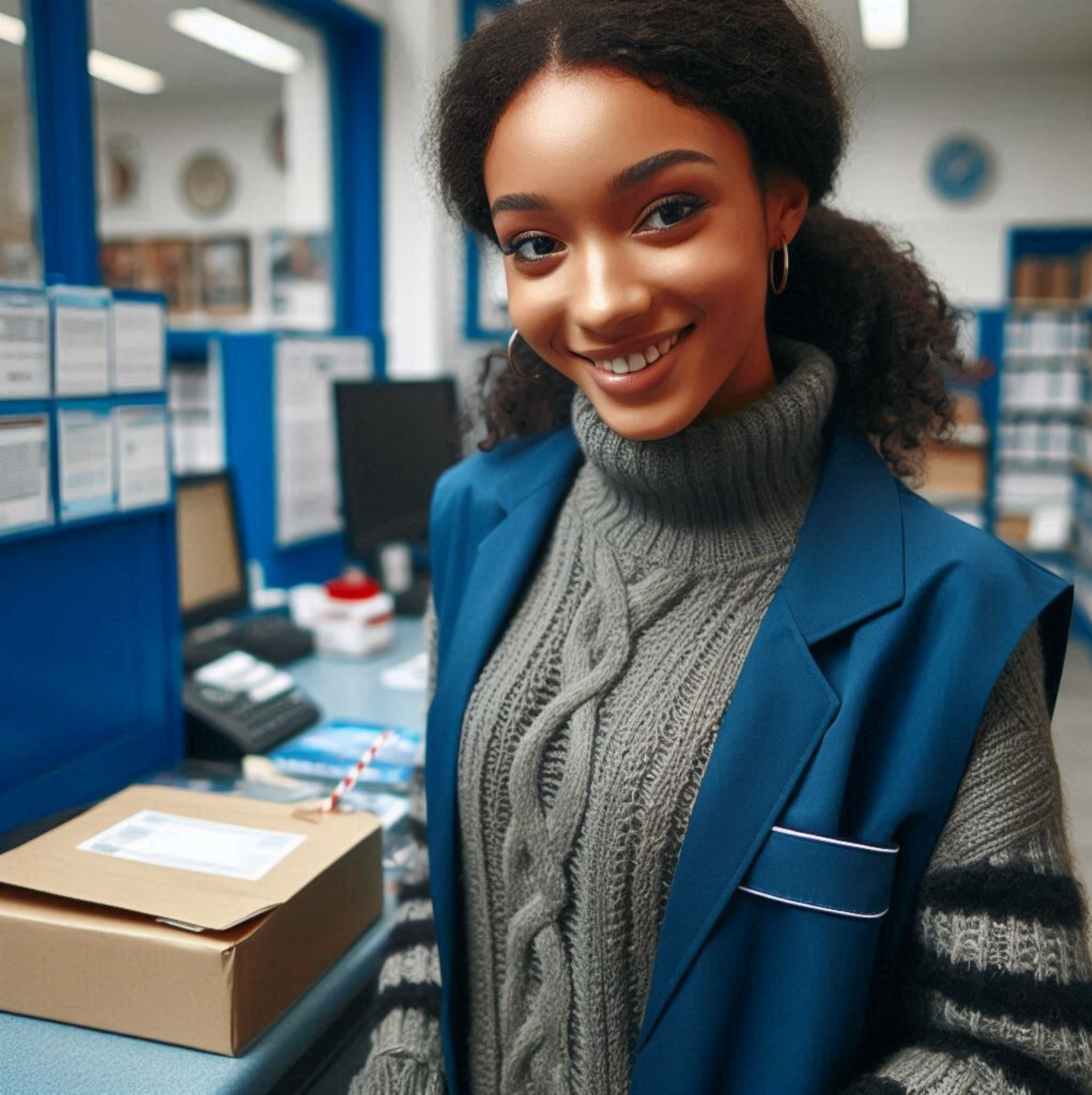 Η λύση στην άσκηση 2 της σελ. 10 του βιβλίου Pupil’s Workbook (ΣΤ′ τάξη). Ακολουθεί μία ιστορία γεμάτη απρόοπτα, βασισμένη στην ίδια άσκηση.
Here’s the matching for where you can find each item:
a. A watch and a bracelet – jeweller’s
b. A bunch of flowers – florist’s
c. A newspaper – newsagent’s
d. A pen and envelopes – stationer’s
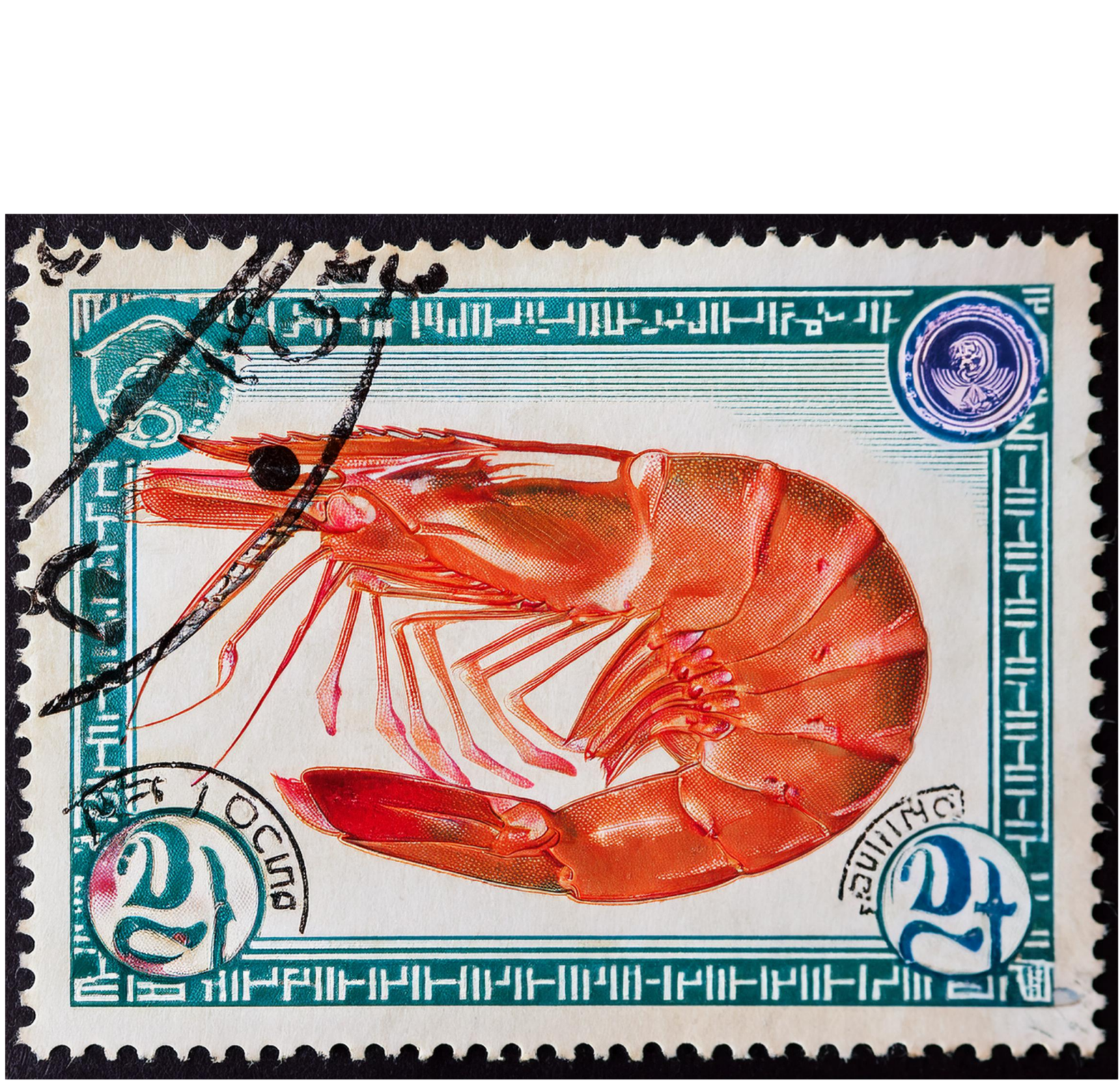
e. Stamps – post office
One sunny morning, Mrs Perkins strolled through the town square, intending to run a few errands. Little did she know, this would be the most confusing day of her life!

Her first stop was the jeweller’s to pick up a watch she’d left for repair. When she entered, the jeweller, looking flustered, handed her a bunch of flowers instead.
“Erm, I think there’s been a mistake,” Mrs Perkins began.
“No mistake!” the jeweller whispered, wide-eyed. “That’s from the florist! They said it’s urgent!”
 Scratching her head, Mrs Perkins carried the flowers to the florist’s, hoping to solve the mystery. But there, the florist handed her a shiny bracelet and whispered, “Take this to the newsagent’s! Quick!”
Now thoroughly puzzled, Mrs Perkins dashed to the newsagent’s, where the owner thrust a newspaper into her hands and said, “Take this to the stationer’s before it’s too late!”
At the stationer’s, Mrs Perkins expected answers. Instead, the shopkeeper handed her a pen and a stack of envelopes. “These need to go to the post office immediately!”
When she reached the post office, clutching the flowers, bracelet, newspaper, pen, and envelopes, the postmaster grinned. “Ah, Mrs Perkins! You’ve passed the town’s secret kindness test. Here are your stamps as a reward!”
“Stamps? I just wanted my watch!”
The postmaster laughed. “It’s in the flowers. We hid it for fun!” Sure enough, there it was, tucked neatly into the bouquet.
From then on, Mrs Perkins became the local hero for solving the town’s silliest scavenger hunt. She never looked at a watch—or a bunch of flowers—the same way again.
In a metaphorical sense, the word “scavenger” is sometimes used in games or activities, like a scavenger hunt, where “scavengers” search for specific items or clues.
 παιχνίδι ανεύρεσης αντικειμένων
Scavenger hunt: Focuses on finding multiple items or completing tasks. It’s a list-based activity.
κυνήγι θησαυρού
Treasure hunt: Involves solving clues and riddles to locate a single hidden treasure.
Both are fun, but scavenger hunts are usually faster-paced and simpler, while treasure hunts tend to feel like solving a mystery or a puzzle.
They can take place indoors, outdoors, or even online, and they’re often used for parties, team-building events, or educational purposes. They’re a fun way to explore, think creatively, and collaborate!


ρακοσυλλέκτης
The term “scavenger” can also be used more broadly to describe a person who collects discarded or unwanted items, often to reuse or recycle them. For example, someone searching through rubbish to find recyclable materials could be called a scavenger.
wear /wɛə(ɹ)/ = to have clothes / accessories on your body
wore /wɔː(ɹ)/ = simple past of ‘wear’
worn /wɔː(ɹ)n/ = past participle of ‘wear’ OR a way to describe something that has been used a lot / looks old
warn /wɔː(ɹ)n/ = to tell someone about a possible danger / something they should be careful about
warehouse /ˈwɛə(ɹ)haʊs/ = a large building used to store goods or products
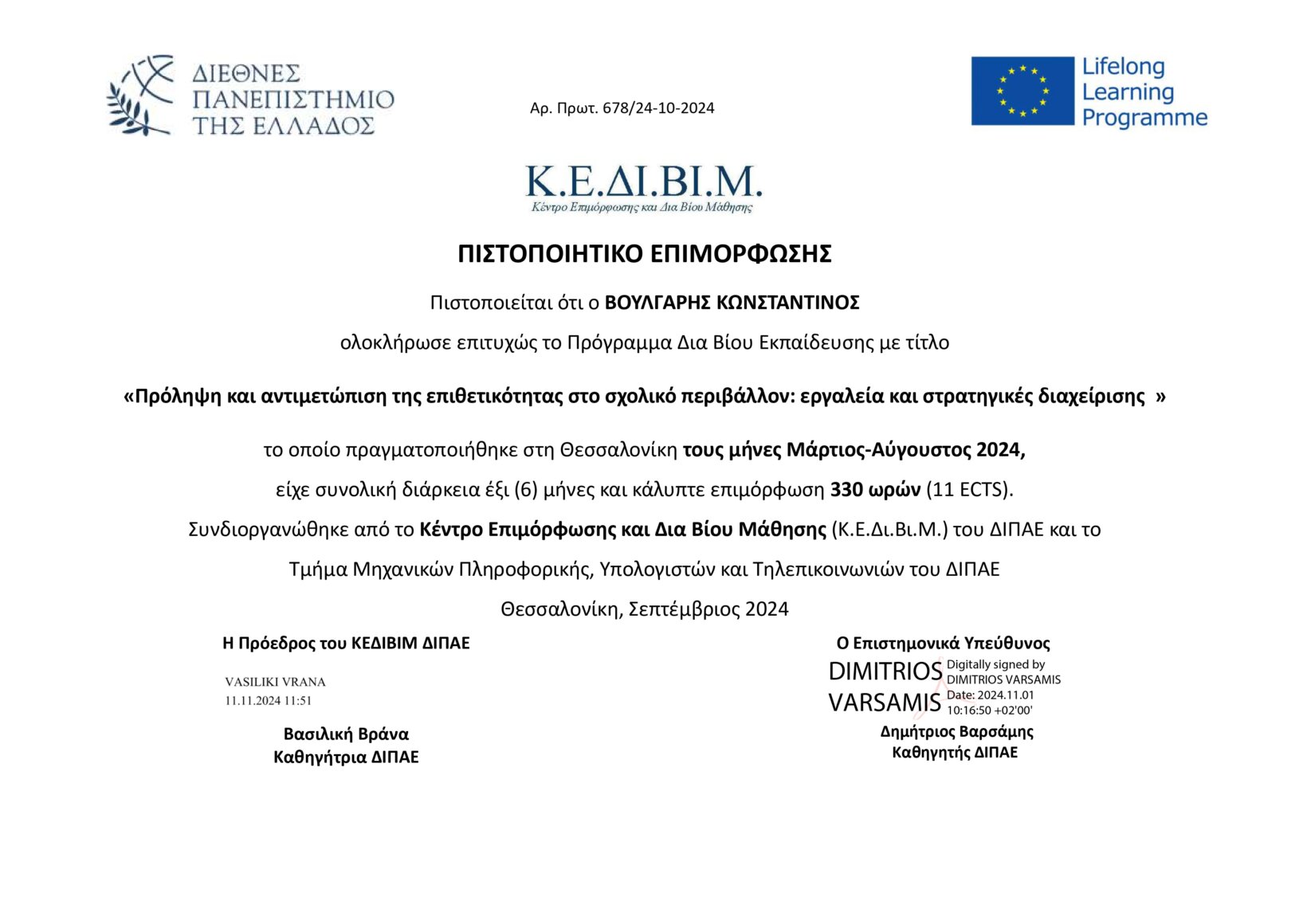
Εργαλεία και στρατηγικές διαχείρισης
Μάρτιος-Αύγουστος 2024
Incorporating STEAM and Inclusive Education Practices
in Everyday Teaching

 Βλ. σελ. 34, Βιβλίο Μαθητή, Δ′ τάξη, ο διάλογος σε διασκευή
Sophia: So, Andrew, tell us about your country. Where is it?
Andrew: It’s in Europe, like Greece. It’s called the “United Kingdom”—it’s an island in the north-west of Europe, surrounded by water and known for its frequent rain. It’s made up of four parts: England, Wales, Scotland, and Northern Ireland.
Nick: And you’re from Oxford, right?
Andrew: Yep, that’s right. Oxford is a city near London. It’s like London’s fancy older brother who reads loads of books. It’s in England.
Sophia: Can you tell us a bit more?
Andrew: Sure! It’s a beautiful place—full of mountains, rivers and trees. Oh, and we’ve got more sheep than people!
Sophia: Greece is beautiful, too. We have mountains, rivers, trees and the most amazing beaches!
Nick: Beaches? Oh, I’m listening now!
Andrew: Well, the sea in the UK is like a giant ice bath. If you swim, you’ll need a wetsuit and probably a cup of tea to warm up after!
Sophia: Ha! I think our warm beaches and sunshine definitely put us ahead of you.
Andrew: True, true. You’ve got the sunshine. We’ve got…umbrellas. But we make up for it with our amazing tea. You can’t beat a good cuppa—trust me, it solves almost everything.
Nick: Oh, tea! Does it come with scones?
Andrew: Of course! We don’t just drink tea—we have tea. It’s an event. You don’t drink it; you experience it.
Glossary
Surrounded: To be completely enclosed or encircled by something, in this case, water.
Frequent: Happening often; in this context, it refers to the regular occurrence of rain.
Wetsuit: A special suit made of material that keeps a person warm in cold water, often used for swimming or surfing.
Cuppa: A slang term for a cup of tea, often used in British English.
Scones: A type of baked product, similar to a biscuit, often served with tea, typically enjoyed with jam and cream.
Experience: To participate in or undergo something; in the context of tea, it means to enjoy the social aspect of drinking tea.

Quiz
1. What is the United Kingdom known for?
a. Warm beaches
b. Frequent rain
c. Deserts
d. Tropical forests
2. How many parts make up the United Kingdom?
a. Three
b. Four
c. Five
d. Two
3. Which city is Andrew from?
a. London
b. Berlin
c. Oxford
d. Paris
4. What does Sophia say Greece has that puts Greece ahead of the UK?
a. More mountains
b. Better food
c. Warm beaches and sunshine
d. More sheep
5. What is something special in the UK that Andrew mentions?
a. Scones
b. Hamburgers
c. Sushi
d. Tacos
6. According to Andrew, what is tea in the UK?
a. Just a drink
b. A type of fruit
c. An event
d. A kind of bread
Self-reflection on Effective Learning
by Fostering the Use of Innovative Educational Technologies
Εργαλείο αναστοχασμού
της ομάδας “Trainees eCourses eTwinning Greece (PE05, PE06, PE07, PE34, PE40)”
Ευρωπαϊκό Πλαίσιο για την Ψηφιακή Ικανότητα των Εκπαιδευτικών

 Μία διασκευή του κειμένου από τη σελ. 5, βιβλίο Pupil’s Workbook, ΣΤ′ τάξη
Dear Tom and Jane,
I’m thrilled to be here in Bucksport, a cosy little town in the state of Maine. The weather is chilly and snowy. Helen and I are staying at our friend George Hurley’s house. The Hurleys are very kind people, and right now, we’re enjoying a hot cup of tea while taking in the fantastic view of the harbour. Mrs Hurley, our friend’s mum, is baking some brownies for us—they’re a favourite treat around here!
Bucksport is a peaceful, coastal town at the end of Penobscot Bay. Visitors love the view of Fort Knox, which stands proudly across the bay. Most people here work in the local paper mill, the International Paper Company, or run their own small businesses. The locals are warm, welcoming, and love to chat. They’re also really into sports! They often go skiing, sailing, and play golf, basketball, or tennis. When they’re not playing sports, they like taking relaxing walks along the mile-long marina.
Bucksport is a unique place to visit, and I feel so happy here. I’m not ready to leave this peaceful spot.
Love,
Nick

Quiz
1. Where is Nick currently staying in Bucksport?
a. At a hotel
b. At the marina
c. At George Hurley’s house
d. At a bed and breakfast
2. What is the weather like in Bucksport according to Nick’s letter?
a. Hot and sunny
b. Mild and rainy
c. Chilly and snowy
d. Warm and windy
3. What is Mrs Hurley baking for Nick and his friends?
a. Cookies
b. Brownies
c. Bread
d. Muffins
4. Which activity is NOT mentioned as a popular sport in Bucksport?
a. Football
b. Skiing
c. Basketball
d. Sailing
5. What do most people in Bucksport do for work, according to the letter?
a. Fish
b. Farm
c. Work at the local paper mill
d. Work in tourism
 The terms “harbour/harbor” and “port” are often used interchangeably, but they have distinct meanings:
Harbour: A harbour is a sheltered area along a coast where ships, boats, and other watercraft can take refuge from rough waters. It may be naturally protected by land formations like bays and inlets or enhanced by man-made structures such as breakwaters. A harbour is mainly about providing a safe space from the open sea and does not necessarily involve facilities for loading and unloading cargo.
Port: A port is a facility within or near a harbour that has infrastructure for handling the arrival and departure of ships. It includes docks, warehouses, cranes, and other equipment needed for loading and unloading goods, as well as passenger terminals. Ports are typically commercial hubs where shipping, trading, and transportation services are provided.
In summary: All ports are harbours (since they’re located in sheltered waters), but not all harbours are ports, as they may lack the commercial infrastructure needed for goods and passengers.

➽ Βλ. σελ. 27–34 του βιβλίου Student’s Book της Γ′ τάξης

Quiz
1. Who is the main character in the story?
a. Billy
b. Kelly
c. Fiona
d. Mr Albert
2. What is Mr Albert?
a. A cat
b. A dog
c. A monkey
d. A parrot
3. Where do the friends want to look for magic things?
a. In the house
b. In the garden
c. At the airport
d. At the playground
4. What do they find in the grass?
a. A stone
b. A book
c. A hat
d. A pen
5. What do the friends pretend to be?
a. Knights
b. Pirates
c. Teachers
d. Animals
6. What do they find in the box?
a. A treasure map
b. A toy car
c. A magic wand
d. A pair of shoes
7. What do the friends say about fighting?
a. It’s fun
b. Friends don’t fight
c. It’s necessary
d. It’s a game
8. Who is excited about the flower?
a. Billy
b. Fiona
c. Kelly
d. Everyone
9. What do the friends want to play with?
a. A ball
b. A doll
c. A key
d. A kite
10. What do the friends do all day long?
a. Sleep
b. Play together
c. Read books
d. Watch TV 
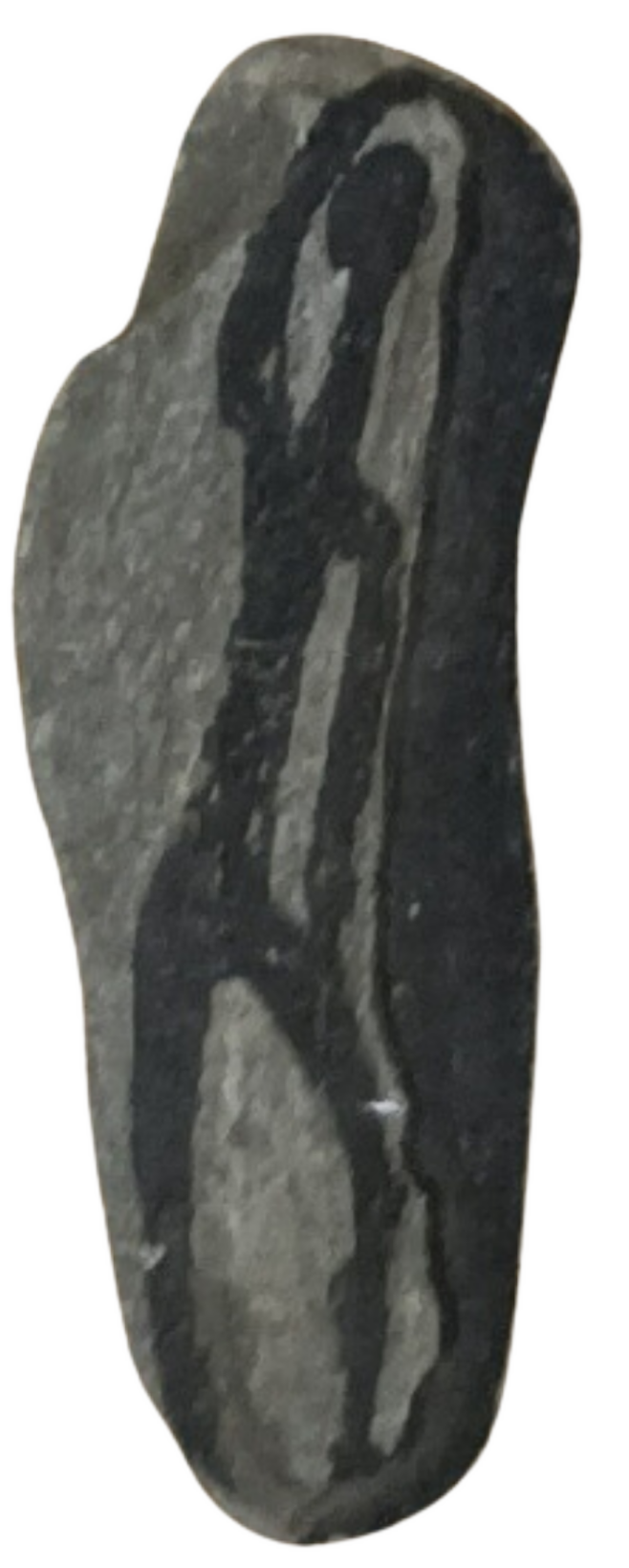


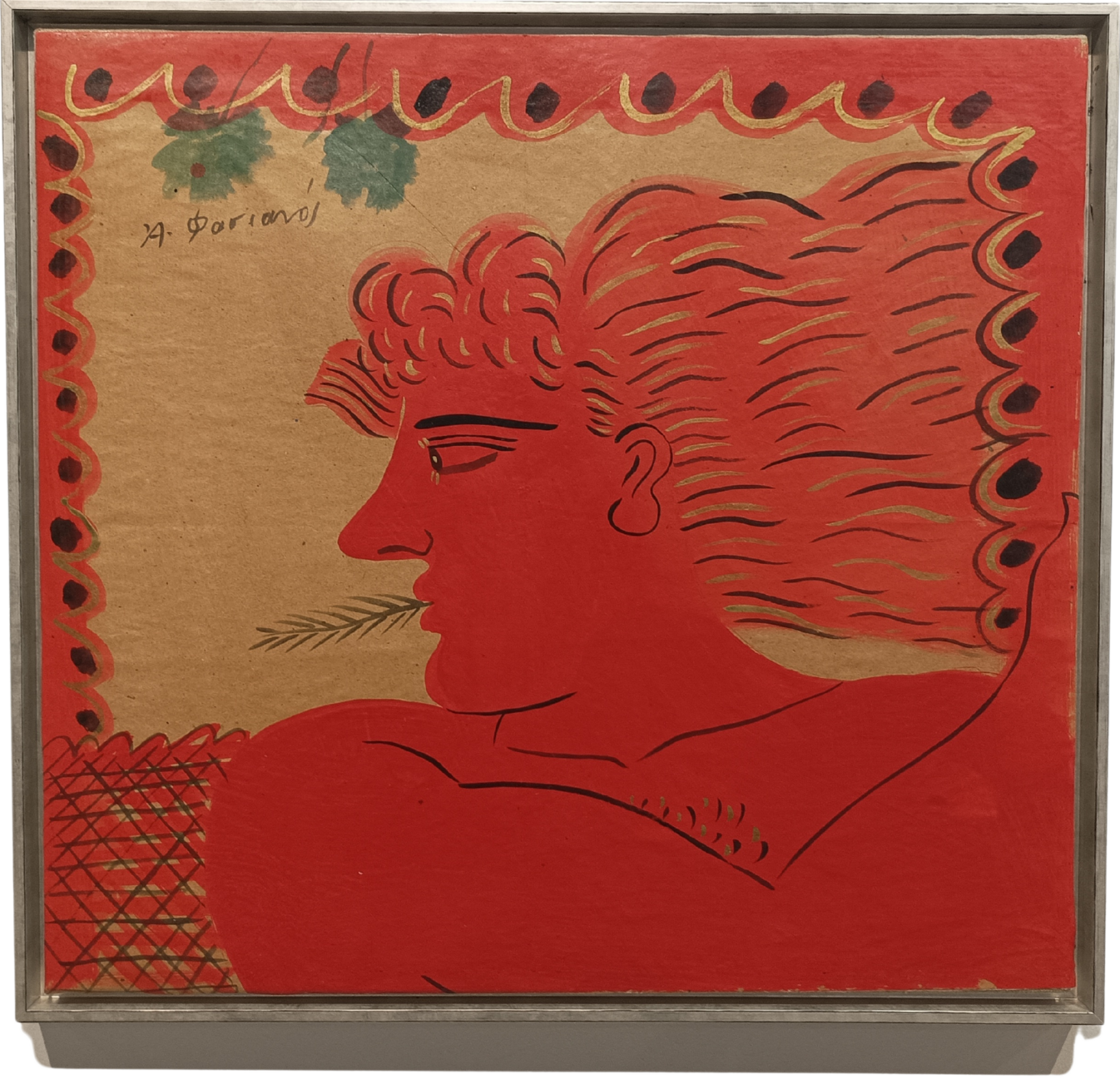
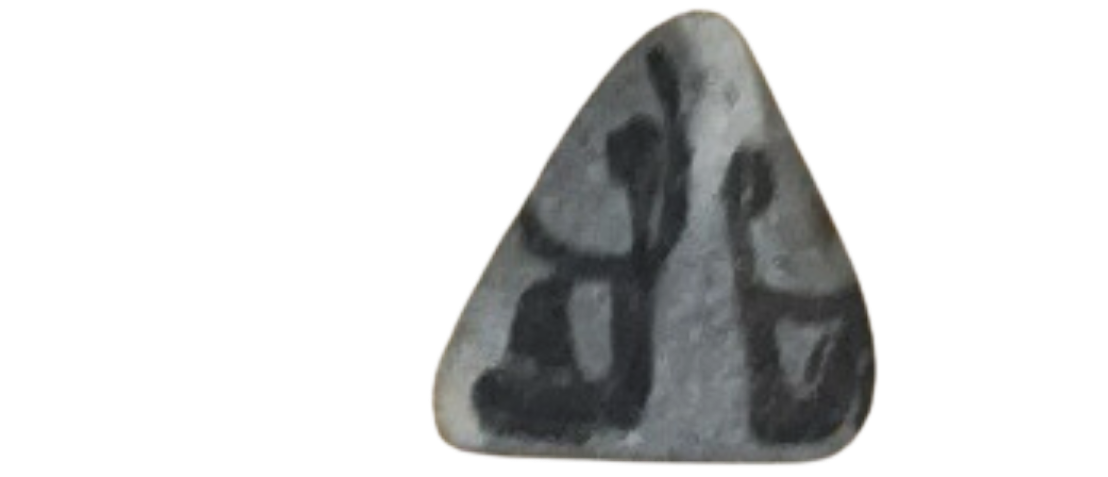
Δημοτική Πινακοθήκη
Λεωνίδου & Μυλλέρου, Μεταξουργείο




The Federal Republic of Germany is made up of 16 federal states, the Länder.

Most of the federal states are fairly large in terms of surface area. However, Berlin, Hamburg and Bremen are classified as city-states, being cities that simultaneously hold federal state status.
Some states call themselves a “free state” (Freistaat). It is merely a historic synonym for “republic” and was a description used by most German states after the abolishment of monarchy after World War I. Today, Freistaat is associated emotionally with a more independent status, especially in Bavaria. However, it has no legal significance.
Baden-Württemberg
Bavaria free state
Berlin city-state
Brandenburg
Bremen city-state
Hamburg city-state
Hesse
Mecklenburg–Western Pomerania
Lower Saxony
North Rhine-Westphalia
Rhineland-Palatinate
Saarland
Saxony free state
Saxony-Anhalt
Schleswig-Holstein
Thuringia free state


simultaneously ταυτόχρονα
merely απλώς, μονάχα
emotionally συναισθηματικά
especially ειδικά
Ένα βίντεο που έφτιαξα για το Νικόλα
Μετασχηματίζοντας τον τρόπο
με τον οποίο διδάσκουμε και μαθαίνουμε
17/08/2024 – 30/09/2024

The Lion King



ΠΕ06 Αγγλικής Φιλολογίας
eTwinning


Hi, I’m Kostas, short for “Constantine.”
Born and raised in Athens, Greece,
I have studied English and Journalism
(Σχολή Δημοσιογραφίας ANT1)
and I teach English at a state primary school in the Greek capital.
Wishing to provide my students with a wider view of the world, I am searching for interesting international opportunities to learn about different cultures and global issues.
Επιθυμώντας να προσφέρω στους μαθητές και τις μαθήτριές μου μία ευρύτερη θεώρηση του κόσμου, αναζητώ ευκαιρίες συνεργασίας στην Ελλάδα/Κύπρο και το εξωτερικό προκειμένου να μάθουμε μαζί για διαφορετικούς πολιτισμούς και να ενημερωθούμε για παγκόσμια θέματα.













Με κέρδισε όμως η Εκπαίδευση. 🙂





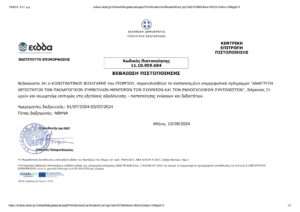
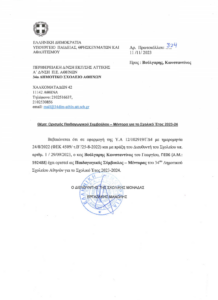

Η χρήση της Τεχνητής Νοημοσύνης
στο μάθημα της Αγγλικής
στην Α/βάθμια Εκπαίδευση

1. Teach.in.G. | Εκπαίδευση εκπαιδευτικών: Γλωσσική και ψυχοπαιδαγωγική διαχείριση πολύγλωσσων και πολυπολιτισμικών τάξεων
2. Ειδική Αγωγή: Διεπιστημονικές πρακτικές σύγκλισης
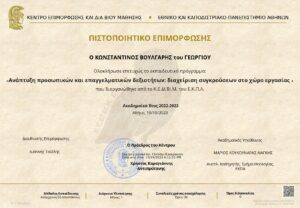
3. Ανάπτυξη προσωπικών και επαγγελματικών δεξιοτήτων: Διαχείριση συγκρούσεων στο χώρο εργασίας
4. Διαπροσωπικές σχέσεις: Το φαινόμενο της μοναξιάς στη σύγχρονη εποχή
Διαχείριση και αντιμετώπιση
5. Από τη μία στην άλλη πλευρά του Αιγαίου:
Η εγκατάσταση των Μικρασιατών προσφύγων στην Ελλάδα μέσα από τη λογοτεχνία
6. Θρησκεία και Ψυχανάλυση
7. Παραπληροφόρηση ή αληθινές ειδήσεις; Μάθετε να τα ξεχωρίζετε
8. Σπουδή στην Ορθόδοξη Θεολογία
9. Τα δικαιώματα του παιδιού
10. Philosophical Life Coaching

1. Εκπαιδευτικός στον 21ο αιώνα: Πώς να ξεχωρίσω
2. Διαχείριση της πολυπολιτισμικότητας στην εκπαίδευση και κοινωνική ένταξη μεταναστών /προσφύγων
3. Σχολική Ψυχολογία
4. Ενδοσχολική βία και εκφοβισμός: Πρόληψη και αντιμετώπιση
5. Μέθοδοι της Μετασχηματίζουσας Μάθησης στο πλαίσιο της Διά Βίου Μάθησης

Σύγχρονες αρχές και πρακτικές στην Ειδική Αγωγή και Εκπαίδευση

1. Σχολική Νοσηλευτική και Ψυχική Υγεία
2. Πρόληψη και αντιμετώπιση της επιθετικότητας στο σχολικό περιβάλλον: Εργαλεία και στρατηγικές διαχείρισης
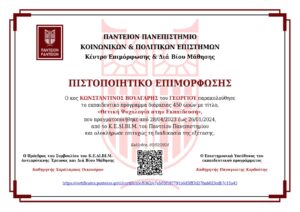
1. Πρόληψη και αντιμετώπιση ρατσισμού
στα δημοτικά σχολεία
2. Θετική Ψυχολογία στην Εκπαίδευση
3. Ενισχύστε την εκπαίδευσή σας με τη δύναμη
της Τεχνητής Νοημοσύνης (AI)

Διαχείριση σχολικής ζωής: Ηγεσία, κρίσεις, διαφορετικότητα, συμπερίληψη

Αγωγή και ετερότητα: Αξιοποιώντας την Τέχνη
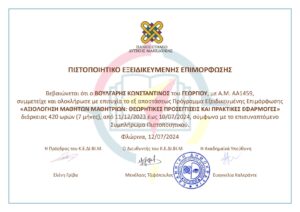
1. Αξιολόγηση μαθητών/μαθητριών: Θεωρητικές προσεγγίσεις και πρακτικές εφαρμογές
2. Έμφυλες σχέσεις και ενδυνάμωση μέσα από αφηγηματικές τεχνικές
1. Ο/Η άνθρωπος-πολίτης/πολίτιδα
απέναντι στο θάνατο και την απώλεια:
Παιδαγωγικές και κοινωνικές προσεγγίσεις
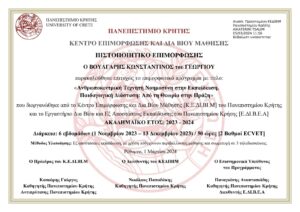
2. Ανθρωποκεντρική Τεχνητή Νοημοσύνη στην Εκπαίδευση: Παιδαγωγική διάσταση
Από τη θεωρία στην πράξη
3. Γνωριμία με το Magic School στην εκπαιδευτική πράξη
4. LIFE on mARTs
5. Ανθρωποκεντρική Τεχνητή Νοημοσύνη στην Εκπαίδευση: Μετασχηματίζοντας τον τρόπο με τον οποίο διδάσκουμε και μαθαίνουμε

1. Επιμορφώνοντας τους εκπαιδευτικούς στο Ολοκαύτωμα: Ανθρωπολογικές αναγνώσεις
του κινηματογράφου
2. Εισαγωγή στην αλβανική γλώσσα

1. Σπουδές στον Ποντιακό Ελληνισμό
2. STEAM Education for All Learners: Incorporating STEAM and Inclusive Education Practices in Everyday Teaching
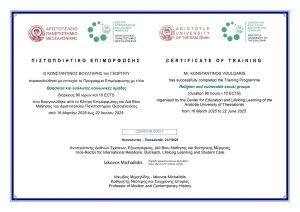
Θρησκεία και ευάλωτες κοινωνικές ομάδες
1. Ψυχολογικές προσεγγίσεις του παιδικού σχεδίου
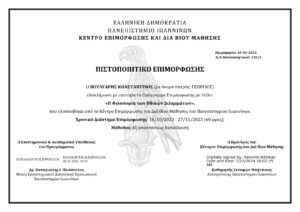
2. Η Φιλοσοφία των Ηθικών Διλημμάτων

Προαγωγή ψυχικής υγείας και ευεξίας
στα σχολεία: Well@School Project
Αξιολόγηση του σχολείου, των εκπαιδευτικών
και ανάπτυξη βέλτιστων λεκπαιδευτικών πρακτικών

1. Επιμόρφωση των Εκπαιδευτικών
στις Δεξιότητες μέσω Εργαστηρίων
2. Εισαγωγή της Αγγλικής Γλώσσας
στο Νηπιαγωγείο (ΕΑΝ)
3. Αναπηρία και διαφορετικότητα,
αυτιστικό φάσμα,
προβλήματα προσοχής και συγκέντρωσης
4. Εκπαίδευση για την Ιδιότητα
του Παγκόσμιου Πολίτη
Ευρωπαϊκό Έργο GENE
(Global Education Network Europe)
5. Διαφοροποιημένη Διδασκαλία:
Πρακτικές υποστήριξης
των μαθητών και των μαθητριών
6. Πρόληψη και αντιμετώπιση περιστατικών ενδοσχολικής βίας και εκφοβισμού

1. Ανάπτυξη δεξιοτήτων των Παιδαγωγικών Συμβούλων-Μεντόρων
2. Ενεργητική ακρόαση και αποτελεσματική επικοινωνία
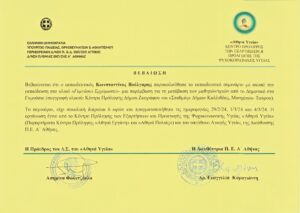
1. Peer Support / Συμβουλευτική Ομηλίκων
2. Εκπαιδευτικός στην τάξη ξανά:
Ενδυναμώνοντας τον εαυτό μου
και το ρόλο μου
3. — Γυμνάσιο, ερχόμαστε!
Μία παρέμβαση για τη μετάβαση
των μαθητών/-τριών
από το Δημοτικό στο Γυμνάσιο
4. Τεχνικές πρόληψης για παιδιά
Neuro-Linguistic Programming
Νευρογλωσσικός Προγραμματισμός

1. Εκμάθηση βασικών τεχνικών NLP
2. Εκμάθηση προχωρημένων τεχνικών NLP
3. NLP – Ο Νευρογλωσσικός Προγραμματισμός στην Ψυχολογία

Δημιουργική γραφή
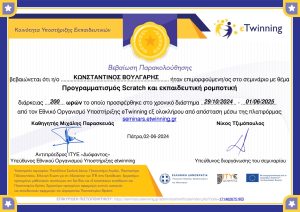
Προγραμματισμός Scratch και εκπαιδευτική ρομποτική

eTwinning και Εργαστήρια Δεξιοτήτων:
Συνεργατικές Δράσεις για την Καλλιέργεια
Γνώσεων, Δεξιοτήτων και Ικανοτήτων
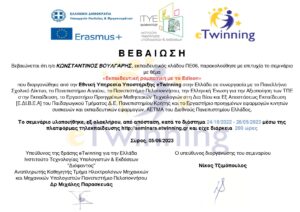
Εκπαιδευτική ρομποτική με το Edison

και για τις μικρότερες τάξεις:
Bee-Bot

1. Το δικό μας όνειρο
2. Αληθινή φιλία
3. Δύο ευγενικοί άνθρωποι
4. Ανακαλύπτω τον κόσμο της Ποίησης
5. Φύγε άγχος, γίνε χρώματα!

1. True Friends Forever
2. True Friends Forever | France and Greece
3. Be a European Star for a European Christmas
4. Comment fait-on la paix ?
5. Μαθαίνω να βλέπω τον Άνθρωπο | Learning to See the Person #SkillsLabs