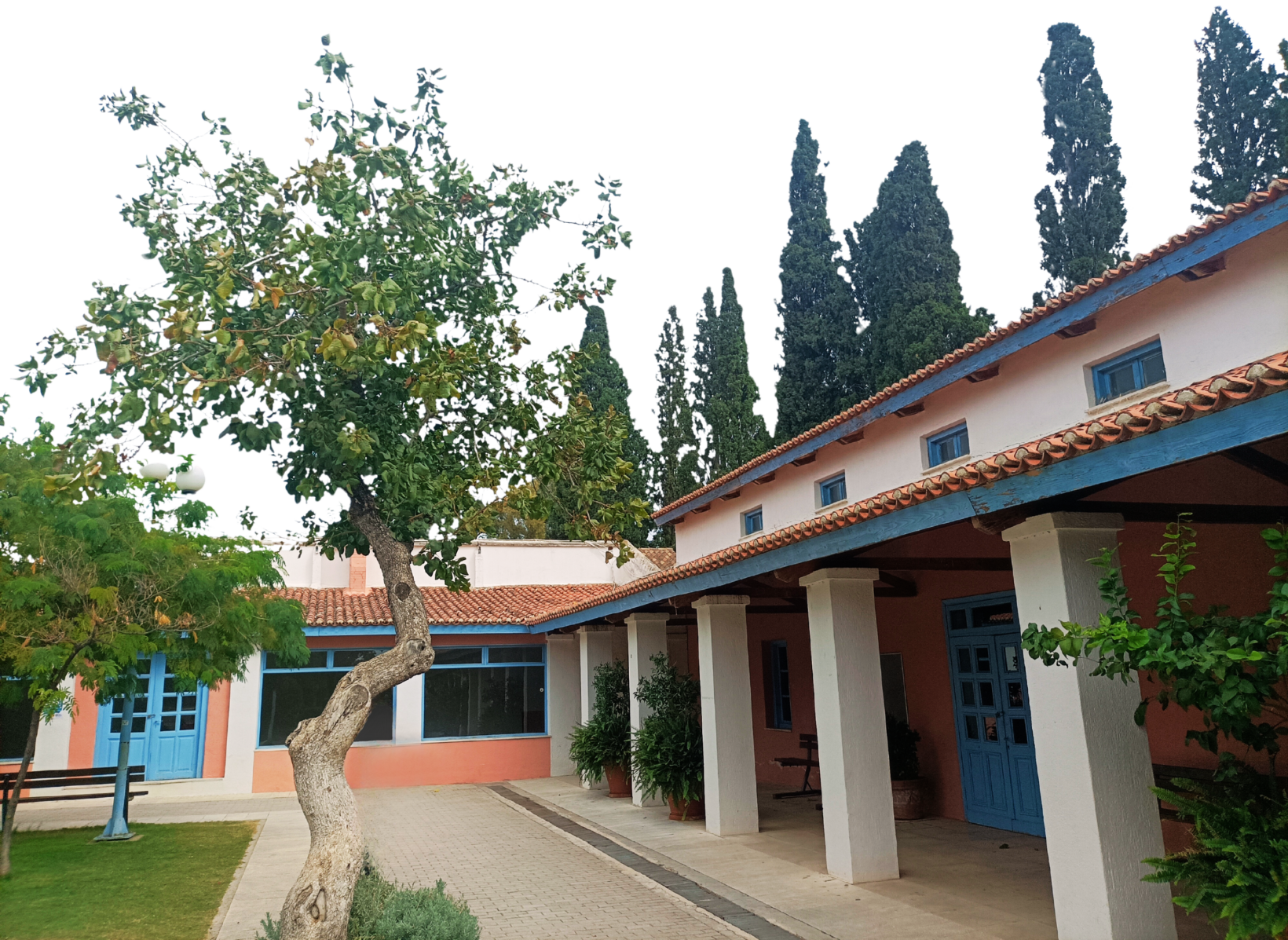
Μητροπολιτικό Πάρκο «Αντώνης Τρίτσης», Οθωνική Αυλή


Μητροπολιτικό Πάρκο «Αντώνης Τρίτσης», Οθωνική Αυλή
Embrace the Softness of Down
Tι σημαίνει down? (όχι, δεν εννοούμε «κάτω»)
Πώς προφέρεται το duvet? (κάνετε κλικ πάνω στη λέξη)

Imagine being as snug as a penguin in an igloo! That’s what this duvet feels like. Filled with soft down feathers (don’t worry, the birds are fine), it keeps you warm on chilly nights and cool when it’s hot. It’s like getting a big, feathery hug all night long.
Ready to snooze like a penguin wrapped in clouds? This duvet’s got you covered!
down
(soft feathers) πούπουλα
These pillows are filled with goose down.
Αυτά τα μαξιλάρια είναι γεμισμένα με πούπουλα χήνας.
(soft hair) χνούδι
He was sixteen and had down on his chin.
Ήταν 16 ετών και είχε χνούδι στο πηγούνι του.
duvet πάπλωμα, προφ. περίπου σαν ντούβεϊ (GB) ή ντουβέι (US)


In cases where products like duvets, pillows or jackets are filled with down feathers, companies often claim that the feathers are ethically sourced, meaning the birds (typically ducks or geese) are not harmed during the process. One common method is collecting feathers that birds naturally shed during molting, or taking feathers from birds that are already being raised for food. This way, the harvesting of feathers doesn’t involve cruelty.
However, it’s important to be aware that not all companies follow these ethical practices, and the treatment of animals can vary depending on the source. Brands that use ethically sourced down often certify their products with labels like the Responsible Down Standard (RDS), which guarantees that the birds are treated humanely.

So nice to see how excited my students were as they moved the Bee-Bot around and used the words we’ve been learning!
turn left | turn right


now press the green button


Pupils’s Workbook, p.3, ΣΤ’ τάξη
Here’s a more natural version of the dialogue:

George: I really like this restaurant!
Helena: Yeah, I always come here on Saturday nights. The food’s amazing. Oh, look! Here’s Mr Thorne, the owner.
Mr Thorne: We always prepare a variety of meals on Saturday nights. Come and have a look at what we’ve got.
Helena and George: Sure!
Mr Thorne: Here we are. This is Bill, our chef. He is making some chicken soup right now.
Bill: Actually, I am preparing a chicken salad. The soup’s already done.
Helena: Is that parsley?
Bill: Yes, I usually put onions in, but tonight I am adding some parsley as well.
George: It smells fantastic!
Bill: Thanks!
This sounds more conversational and natural, with slight changes in word choice to reflect casual dialogue.


Η λύση της άσκησης D, σελ. 9, Activity Book, Ε′ τάξη.
1. Where do you come from? I come from Greece.
2. Does a crocodile climb trees? No, of course not.
3. What does a doctor do? He/She works in a hospital and takes care of people who are ill.
4. How often do you see a dentist? I visit my dentist once a year.
5. People in Greece celebrate Christmas the same way people in the U.K. do, don’t they?
Well, I suppose so. Christmas is an international feast, even though it’s a religious celebration, so people all over the world have fun and enjoy themselves.
6. Where does a postman work? He works at the Post Office and delivers letters all over the neighbourhood.
Το ίδιο κείμενο σε διασκευή, με πιο δύσκολο λεξιλόγιο:
1. Where do you come from? I hail from the land of ancient philosophers and Olympic glory—Greece, of course!
2. Does a crocodile climb trees? Good heavens, no! That would be like asking a kangaroo to fly a hot air balloon—simply preposterous!
3. What does a doctor do? Why, they work wonders in the hallowed halls of the hospital, mending the aches and pains of the poor souls who come under their care. It’s a noble profession, don’t you agree?
4. How often do you see a dentist? Well, mate, I make sure to visit my tooth tamer once a year, lest they find a cavity or two and scold me for my sweet tooth!
5. People in Greece celebrate Christmas the same way people in the U.K. do, don’t they? Ah, but you see, the Greeks have a unique twist on the festive season. Instead of hanging stockings, we leave our shoes out for the mischievous elf-like kallikantzaroi to fill! And don’t even get me started on the delectable Christmas delicacies we indulge in.
6. Where does a postman work? Come on, at the Post Office, of course! And let me tell you, those dedicated posties certainly earn their keep, delivering letters and parcels to every nook and cranny of the neighbourhood, rain or shine!
GB
USA
Ακολουθούμε τις οδηγίες στη σελ. 12 του βιβλίου Activity Book της Γ′ τάξης
και χρωματίζουμε τα ζωάκια.

pink elephant
yellow dog
purple lizard
GB
USA
➽ There Are, There Aren’t
Πιθανές απαντήσεις για τις ασκήσεις 3 και 4, σελ. 8, Τετράδιο Εργασιών, Δ′ τάξη.
Οι αριθμοί μπορούν να αλλάξουν.

In my school, there is a music room. There are eight classrooms. There is no football field. There are two basketball courts. There is a playground. There are two computer rooms.

In my classroom, there is a board. There is a teacher’s desk. There is a teacher’s chair. There are two posters on the walls. There aren’t any pictures or drawings on the walls yet. There is only one map.

Last winter, I gave a giraffe a scarf as a gift, but it took an hour just to wrap its neck!

A Comparative Overview
Μία σύγκριση βασισμένη στα κείμενα από τη σελ. 2 του βιβλίου Pupil’s Book της ΣΤ′ τάξης


Similarities
Geographical Features:
Both Ukraine and Georgia are located near the Black Sea.
Both countries have mountainous regions. Ukraine has the Carpathians, while Georgia is largely mountainous throughout.
Climate:
Both countries experience warm summers, especially along the Black Sea coast. Georgia’s climate is described as mild and sunny, and Ukraine enjoys warm summers and cooler weather near the coast.
Environmental Concerns:
Ukraine faces long-term environmental challenges due to the Chernobyl nuclear accident, while Georgia may face challenges with resource-based industries like mining and oil extraction.
Agricultural Activities:
Both countries grow crops along their coastal regions. Ukraine has plains and fertile land, while Georgia grows vines, tea, and citrus fruit along its coastal areas.
Differences
Geographical Features:
Ukraine is much larger, being the second-largest country in Europe. Georgia, on the other hand, is smaller and located in West Asia.
Economy:
Ukraine has suffered from environmental damage due to the Chernobyl disaster, affecting resources like drinking water. In contrast, Georgia’s economy relies heavily on mining (copper and coal) and oil wells, with some workers migrating for better job opportunities.
Historical and Cultural Background:
Ukraine’s narrative highlights bravery and national pride, shaped by modern challenges such as the Chernobyl disaster and the war with Russia.
Georgia references its ancient history with ties to the myth of Jason and the Golden Fleece, reflecting its deep historical and cultural legacy.
This comparison highlights both shared and unique aspects of these two countries, blending geographical, economic, and cultural dimensions.
The Importance of Asking for Help

Trevor: Hi, Savannah! How are you doing today?
Savannah: Hi, Trevor! I’m good, thanks. What’s on your mind?
Trevor: Well, I was trying to build this Lego castle, but I got stuck. I thought maybe you could help me out?
Savannah: Absolutely, Trevor! I’d be more than happy to lend a hand. Let’s sit down and take a look at it together.
Trevor: Oh, thank you so much, Savannah! I really appreciate it.
Savannah: No problem at all, Trevor. We’re friends, and friends help each other out when they need it.
Trevor: Yeah, you’re right. I’m glad I can ask you for help.
Savannah: Of course, Trevor. Remember, it’s okay to ask for help whenever you need it. Whether it’s building Lego castles or anything else, there’s always someone willing to assist.
Trevor: Thanks for reminding me, Savannah. I’ll keep that in mind.
Savannah: Anytime, Trevor. Don’t hesitate to approach me or anyone else if you ever need a hand with something. That’s what friends are for!
Trevor: I’m really grateful to have a friend like you, Savannah.
Savannah: Oh, thanks, Trevor. Likewise! Now, let’s build this Lego castle together, shall we?

castle
κάστρο
Δεν προφέρεται το t.
Διασκευή του κειμένου από τη σελ. 15 στο βιβλίο Pupil’s Book της E′ τάξης

Dear Christina,
Just dropping you a quick email to say hello! It’s Friday afternoon, and I’m at home, catching up on my emails. I always check them when I get back from school.
I’ve got friends all over Europe and even some in other parts of Ireland. We use the Internet to chat, play games, and sometimes even look up stuff (you know, when we’re pretending to study). Do you do the same in Greece?
Oh, by the way, our English teacher, Mr Butterworth, caught me playing a game during class once. He looked at me, shook his head, and said, “Philip, if you were half as good at grammar as you are at gaming, you’d be writing novels by now.” I still don’t know if that was a compliment or an insult!
Anyway, time to go now.
Cheers,
Philip

⯈ Both “e-mail” and “email” are correct, but “email” has become more widely accepted, especially in informal writing. “E-mail” with the hyphen is the original form, reflecting its origin as “electronic mail,” but as the term has become common, the hyphen is often dropped.

Μαθαίνουμε τα γράμματα b και d
(σελ. 11 και 14 στο βιβλίο Student’s Book της Γ′ τάξης)
Τα λόγια του Andrew από τη σελ. 14 του Βιβλίου Μαθητή της Δ′ τάξης, ελαφρώς παραλλαγμένα:
Hello! It’s me, Andrew, again! Here’s our timetable for this year. My favourite days are Tuesday and Wednesday because we’ve got History, which happens to be my favourite school subject. I love it because we learn about ancient Greece. What about you, Nick? What’s your favourite day? Have you got a favourite subject?

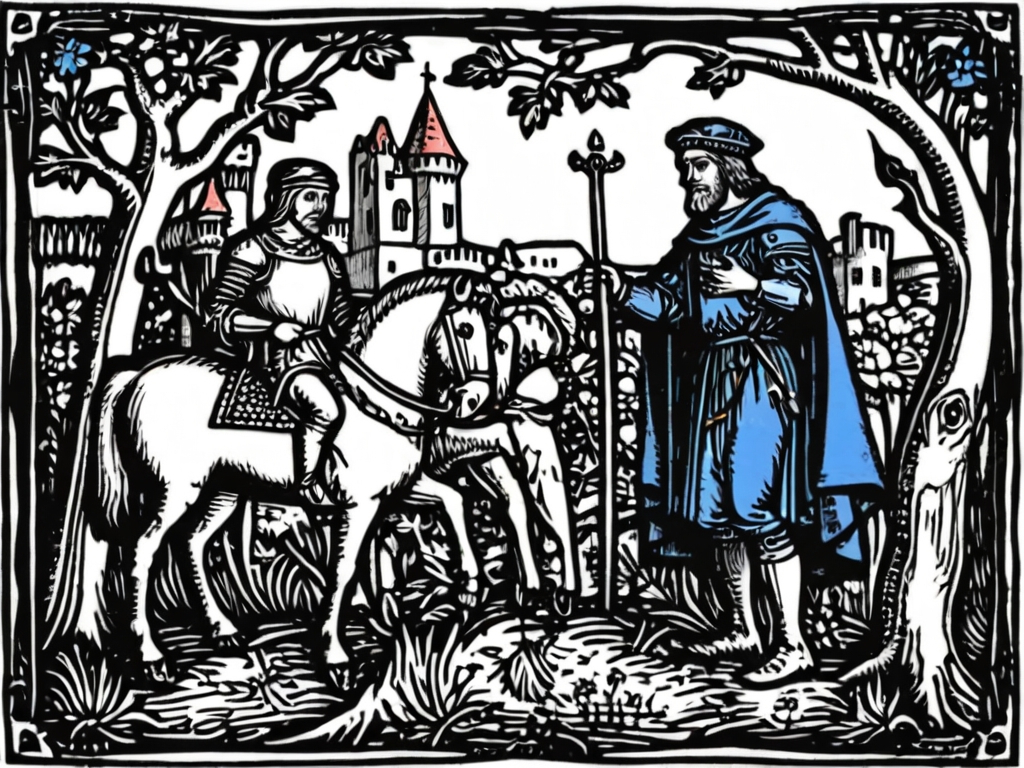
Στη σελ. 8 του βιβλίου Activity Book της Ε’ τάξης, στη δραστηριότητα C, άσκηση 9, βρήκαμε την παρακάτω πρόταση:
William Shakespeare, the famous playwright and poet, was from England.
write γράφω
writer συγγραφέας
play θεατρικό έργο
playwright θεατρικός συγγραφέας

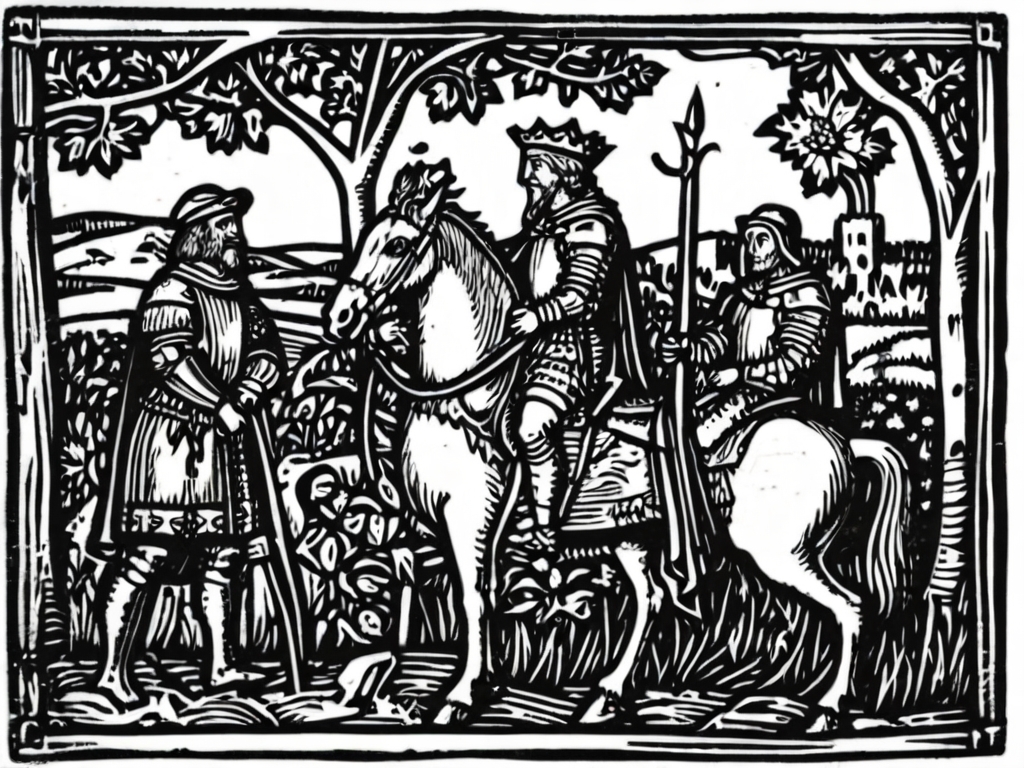


Διασκευή του κειμένου για τη Γεωργία από τη σελ. 2 του βιβλίου Pupil’s Book της ΣΤ’ τάξης
Remember ancient Colchis and that wild myth about Jason and his shiny Golden Fleece? Well, guess what? That’s where I’m from—Georgia! No, not the peachy one in the U.S., but the cool one in the Caucasus region, right by the Black Sea (which the Greeks fancied calling Euxinus Pontus). The weather’s a total delight—mild, sunny, and warm enough to make you forget what a coat is.
Georgia’s got more mountains than you can count, but down by the coast, we’re busy cultivating vineyards, growing tea plants, and enough citrus fruit to make a thousand gallons of lemonade. Oh, and get this! The temperature hardly ever drops below zero. People either work in copper and coal mines, oil wells, or pack up and chase adventure elsewhere. My uncle, though… Well, he’s living it up in Tbilisi, our capital city, probably enjoying some khachapuri right now!


Vocabulary:
ancient – Very old; belonging to the distant past.
vineyards – Areas of land where grapevines are grown, usually for making wine.
citrus – A type of fruit that includes oranges, lemons, limes, and grapefruits, known for their juicy and tangy flavour.
adventure – An exciting experience or journey, often involving risks or unknown outcomes.
khachapuri – A traditional Georgian dish made of bread filled with cheese and sometimes topped with an egg.

Questions:
• What is the main myth mentioned in the text, and who is it about?
• Where is Georgia located in relation to the Black Sea, Armenia, Turkey, and Russia?
• What types of crops are grown in Georgia?
• What does the text say about the weather in Georgia?
• What is Tbilisi, and what is the author’s uncle likely doing there?


Today, my students have had the chance to participate in sports at the 4th Athletic Centre of Ilioupoli, hosted by the Garage Soccer Club. Through play and teamwork, the children developed their sense of cooperation and boosted their self-esteem. It was an exciting experience for all of us!


Αλιμούντος 102
και ζητήματα διδακτικής
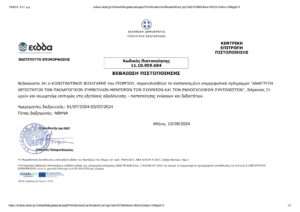
στην Αγγλική Γλώσσα στην Α/βάθμια εκπαίδευση
09/09/2024

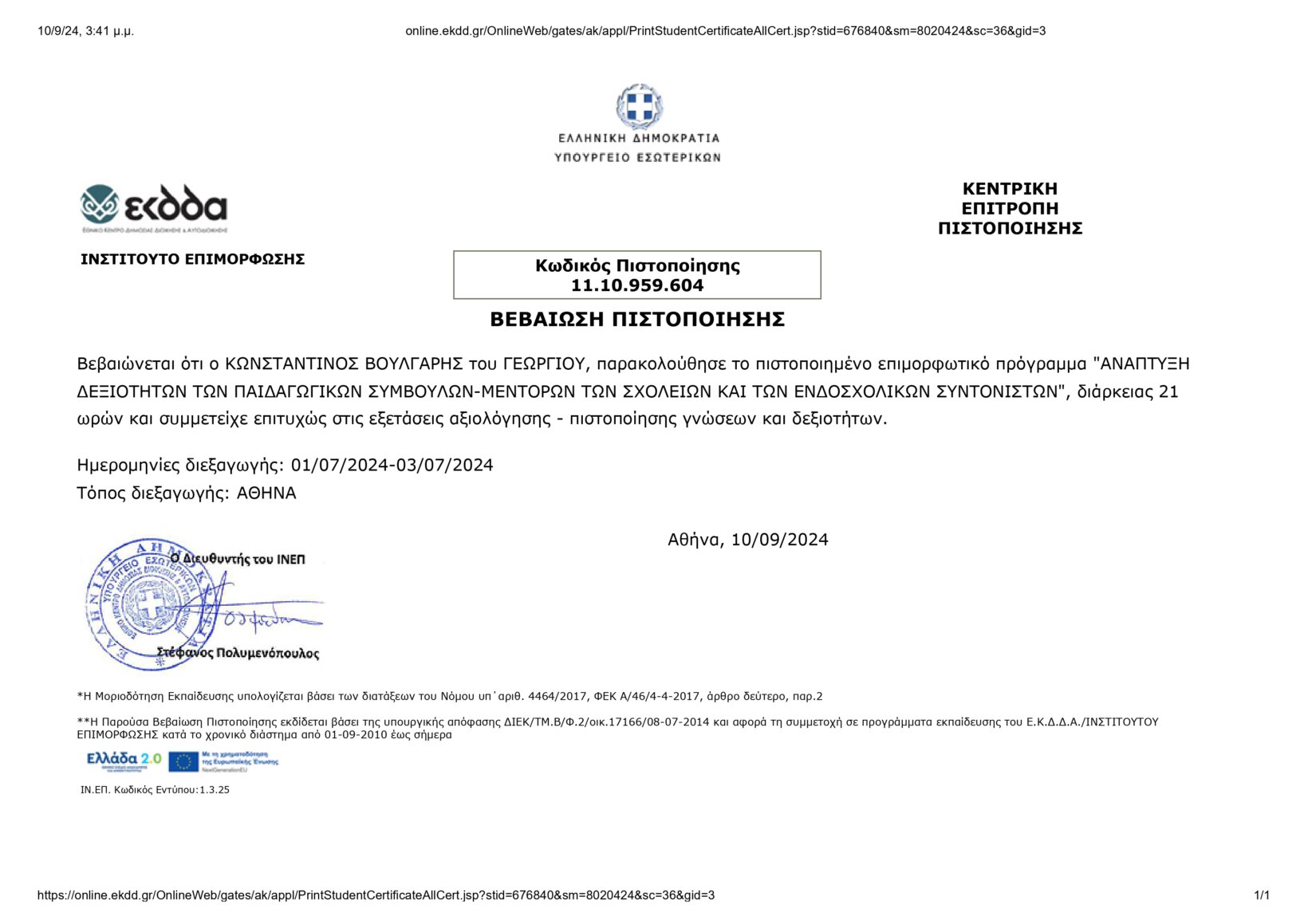
των Παιδαγωγικών Συμβούλων-Μεντόρων των σχολείων
και των Ενδοσχολικών Συντονιστών
01/07/2024 – 03/07/2024


ΠΕ06 Αγγλικής Φιλολογίας
eTwinning


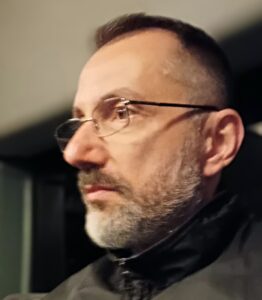
Hi, I’m Kostas, short for “Constantine.”
Born and raised in Athens, Greece,
I have studied English and Journalism
(Σχολή Δημοσιογραφίας ANT1)
and I teach English at a state primary school in the Greek capital.
Wishing to provide my students with a wider view of the world, I am searching for interesting international opportunities to learn about different cultures and global issues.
Επιθυμώντας να προσφέρω στους μαθητές και τις μαθήτριές μου μία ευρύτερη θεώρηση του κόσμου, αναζητώ ευκαιρίες συνεργασίας στην Ελλάδα/Κύπρο και το εξωτερικό προκειμένου να μάθουμε μαζί για διαφορετικούς πολιτισμούς και να ενημερωθούμε για παγκόσμια θέματα.













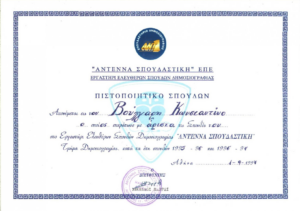
Με κέρδισε όμως η Εκπαίδευση. 🙂





Η χρήση της Τεχνητής Νοημοσύνης
στο μάθημα της Αγγλικής
στην Α/βάθμια Εκπαίδευση

1. Teach.in.G. | Εκπαίδευση εκπαιδευτικών: Γλωσσική και ψυχοπαιδαγωγική διαχείριση πολύγλωσσων και πολυπολιτισμικών τάξεων
2. Ειδική Αγωγή: Διεπιστημονικές πρακτικές σύγκλισης
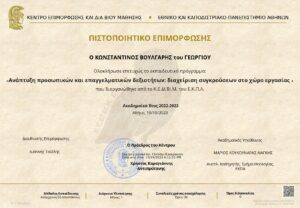
3. Ανάπτυξη προσωπικών και επαγγελματικών δεξιοτήτων: Διαχείριση συγκρούσεων στο χώρο εργασίας
4. Διαπροσωπικές σχέσεις: Το φαινόμενο της μοναξιάς στη σύγχρονη εποχή
Διαχείριση και αντιμετώπιση
5. Από τη μία στην άλλη πλευρά του Αιγαίου:
Η εγκατάσταση των Μικρασιατών προσφύγων στην Ελλάδα μέσα από τη λογοτεχνία
6. Θρησκεία και Ψυχανάλυση
7. Παραπληροφόρηση ή αληθινές ειδήσεις; Μάθετε να τα ξεχωρίζετε
8. Σπουδή στην Ορθόδοξη Θεολογία
9. Τα δικαιώματα του παιδιού
10. Philosophical Life Coaching

1. Εκπαιδευτικός στον 21ο αιώνα: Πώς να ξεχωρίσω
2. Διαχείριση της πολυπολιτισμικότητας στην εκπαίδευση και κοινωνική ένταξη μεταναστών /προσφύγων
3. Σχολική Ψυχολογία
4. Ενδοσχολική βία και εκφοβισμός: Πρόληψη και αντιμετώπιση
5. Μέθοδοι της Μετασχηματίζουσας Μάθησης στο πλαίσιο της Διά Βίου Μάθησης

Σύγχρονες αρχές και πρακτικές στην Ειδική Αγωγή και Εκπαίδευση

1. Σχολική Νοσηλευτική και Ψυχική Υγεία
2. Πρόληψη και αντιμετώπιση της επιθετικότητας στο σχολικό περιβάλλον: Εργαλεία και στρατηγικές διαχείρισης
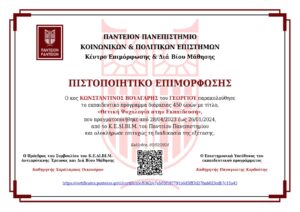
1. Πρόληψη και αντιμετώπιση ρατσισμού
στα δημοτικά σχολεία
2. Θετική Ψυχολογία στην Εκπαίδευση
3. Ενισχύστε την εκπαίδευσή σας με τη δύναμη
της Τεχνητής Νοημοσύνης (AI)

Διαχείριση σχολικής ζωής: Ηγεσία, κρίσεις, διαφορετικότητα, συμπερίληψη

Αγωγή και ετερότητα: Αξιοποιώντας την Τέχνη
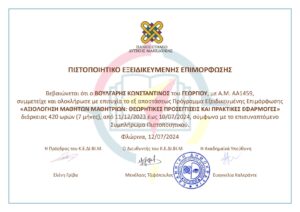
1. Αξιολόγηση μαθητών/μαθητριών: Θεωρητικές προσεγγίσεις και πρακτικές εφαρμογές
2. Έμφυλες σχέσεις και ενδυνάμωση μέσα από αφηγηματικές τεχνικές
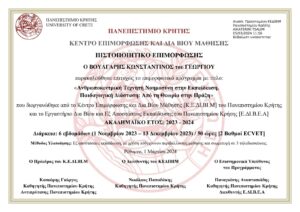
1. Ο/Η άνθρωπος-πολίτης/πολίτιδα
απέναντι στο θάνατο και την απώλεια:
Παιδαγωγικές και κοινωνικές προσεγγίσεις
2. Ανθρωποκεντρική Τεχνητή Νοημοσύνη στην Εκπαίδευση: Παιδαγωγική διάσταση
Από τη θεωρία στην πράξη
3. Γνωριμία με το Magic School στην εκπαιδευτική πράξη
4. LIFE on mARTs
5. Ανθρωποκεντρική Τεχνητή Νοημοσύνη στην Εκπαίδευση: Μετασχηματίζοντας τον τρόπο με τον οποίο διδάσκουμε και μαθαίνουμε

1. Επιμορφώνοντας τους εκπαιδευτικούς στο Ολοκαύτωμα: Ανθρωπολογικές αναγνώσεις
του κινηματογράφου
2. Εισαγωγή στην αλβανική γλώσσα

1. Σπουδές στον Ποντιακό Ελληνισμό
2. STEAM Education for All Learners: Incorporating STEAM and Inclusive Education Practices in Everyday Teaching
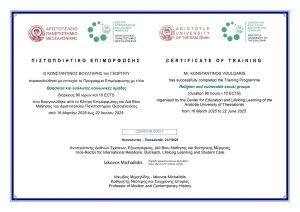
Θρησκεία και ευάλωτες κοινωνικές ομάδες
1. Ψυχολογικές προσεγγίσεις του παιδικού σχεδίου
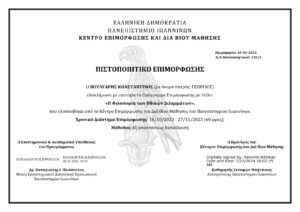
2. Η Φιλοσοφία των Ηθικών Διλημμάτων

Προαγωγή ψυχικής υγείας και ευεξίας
στα σχολεία: Well@School Project
Αξιολόγηση του σχολείου, των εκπαιδευτικών
και ανάπτυξη βέλτιστων λεκπαιδευτικών πρακτικών

1. Επιμόρφωση των Εκπαιδευτικών
στις Δεξιότητες μέσω Εργαστηρίων
2. Εισαγωγή της Αγγλικής Γλώσσας
στο Νηπιαγωγείο (ΕΑΝ)
3. Αναπηρία και διαφορετικότητα,
αυτιστικό φάσμα,
προβλήματα προσοχής και συγκέντρωσης
4. Εκπαίδευση για την Ιδιότητα
του Παγκόσμιου Πολίτη
Ευρωπαϊκό Έργο GENE
(Global Education Network Europe)
5. Διαφοροποιημένη Διδασκαλία:
Πρακτικές υποστήριξης
των μαθητών και των μαθητριών
6. Πρόληψη και αντιμετώπιση περιστατικών ενδοσχολικής βίας και εκφοβισμού

1. Ανάπτυξη δεξιοτήτων των Παιδαγωγικών Συμβούλων-Μεντόρων
2. Ενεργητική ακρόαση και αποτελεσματική επικοινωνία
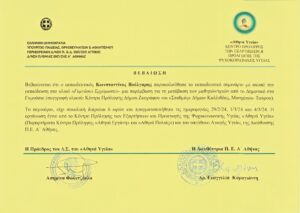
1. Peer Support / Συμβουλευτική Ομηλίκων
2. Εκπαιδευτικός στην τάξη ξανά:
Ενδυναμώνοντας τον εαυτό μου
και το ρόλο μου
3. — Γυμνάσιο, ερχόμαστε!
Μία παρέμβαση για τη μετάβαση
των μαθητών/-τριών
από το Δημοτικό στο Γυμνάσιο
4. Τεχνικές πρόληψης για παιδιά
Neuro-Linguistic Programming
Νευρογλωσσικός Προγραμματισμός

1. Εκμάθηση βασικών τεχνικών NLP
2. Εκμάθηση προχωρημένων τεχνικών NLP
3. NLP – Ο Νευρογλωσσικός Προγραμματισμός στην Ψυχολογία

Δημιουργική γραφή
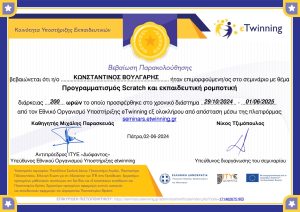
Προγραμματισμός Scratch και εκπαιδευτική ρομποτική

eTwinning και Εργαστήρια Δεξιοτήτων:
Συνεργατικές Δράσεις για την Καλλιέργεια
Γνώσεων, Δεξιοτήτων και Ικανοτήτων
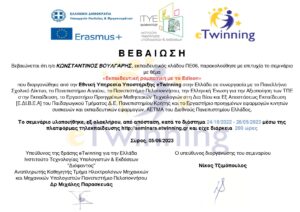
Εκπαιδευτική ρομποτική με το Edison

και για τις μικρότερες τάξεις:
Bee-Bot

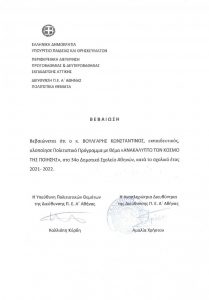
1. Το δικό μας όνειρο
2. Αληθινή φιλία
3. Δύο ευγενικοί άνθρωποι
4. Ανακαλύπτω τον κόσμο της Ποίησης
5. Φύγε άγχος, γίνε χρώματα!

1. True Friends Forever
2. True Friends Forever | France and Greece
3. Be a European Star for a European Christmas
4. Comment fait-on la paix ?
5. Μαθαίνω να βλέπω τον Άνθρωπο | Learning to See the Person #SkillsLabs