Said the little boy, “Sometimes I drop my spoon.” Said the old man, “I do that too.” The little boy whispered, “I wet my pants.” “I do that too,” laughed the little old man. Said the little boy, “I often cry.” The old man nodded, “So do I.” “But worst of all,” said the boy, “it seems Grown-ups don’t pay attention to me.” And he felt the warmth of a wrinkled old hand. “I know what you mean,” said the little old man.
Είπε το αγοράκι: —Μερικές φορές μου πέφτει το κουτάλι. Είπε ο γέρος: —Κι εμένα το ίδιο. Το αγοράκι ψιθύρισε: —Βρέχω το παντελόνι μου. —Μου συμβαίνει κι εμένα, γέλασε ο γεράκος. Είπε το αγοράκι: —Συχνά βάζω τα κλάματα. Ο γέρος έγνεψε καταφατικά: —Κι εγώ… —Μα το χειρότερο απ’ όλα, είπε το αγόρι, απ’ ό,τι φαίνεται οι μεγάλοι δεν μου δίνουν σημασία. Και τότε αισθάνθηκε τη ζεστασιά ενός ρυτιδιασμένου γέρικου χεριού. —Ξέρω τι εννοείς, είπε ο γεράκος.
In the context of the Olympic Games, the abbreviation “EOR” stands for “Équipe Olympique des Réfugiés,” which is French for “Refugee Olympic Team.” This team was first introduced at the 2016 Rio de Janeiro Olympics to provide athletes who are refugees with the opportunity to compete, despite not being able to represent their home countries.
Athletes on the Refugee Olympic Team (EOR) come from various countries where they have faced significant challenges such as conflict, persecution, and human rights violations. The specific countries they come from can vary depending on the geopolitical situation and crises occurring in different parts of the world. However, in recent years, many athletes have come from countries such as:
1.Syria: Due to the prolonged civil war. 2.South Sudan: Owing to ongoing conflict and instability. 3.Democratic Republic of the Congo (DRC): Because of internal conflicts and violence. 4.Afghanistan: Due to prolonged conflict and instability. 5.Eritrea: Because of human rights abuses and forced military conscription.
These athletes are selected by the International Olympic Committee (IOC) based on their sporting performance and personal circumstances, including their refugee status. The Refugee Olympic Team aims to bring attention to the plight of refugees worldwide and to demonstrate the resilience and strength of these individuals.
The team has participated in the 2016 Rio de Janeiro Olympics, the 2020 Tokyo Olympics (held in 2021 due to the COVID-19 pandemic), and is currently competing in the 2024 Paris Olympics.
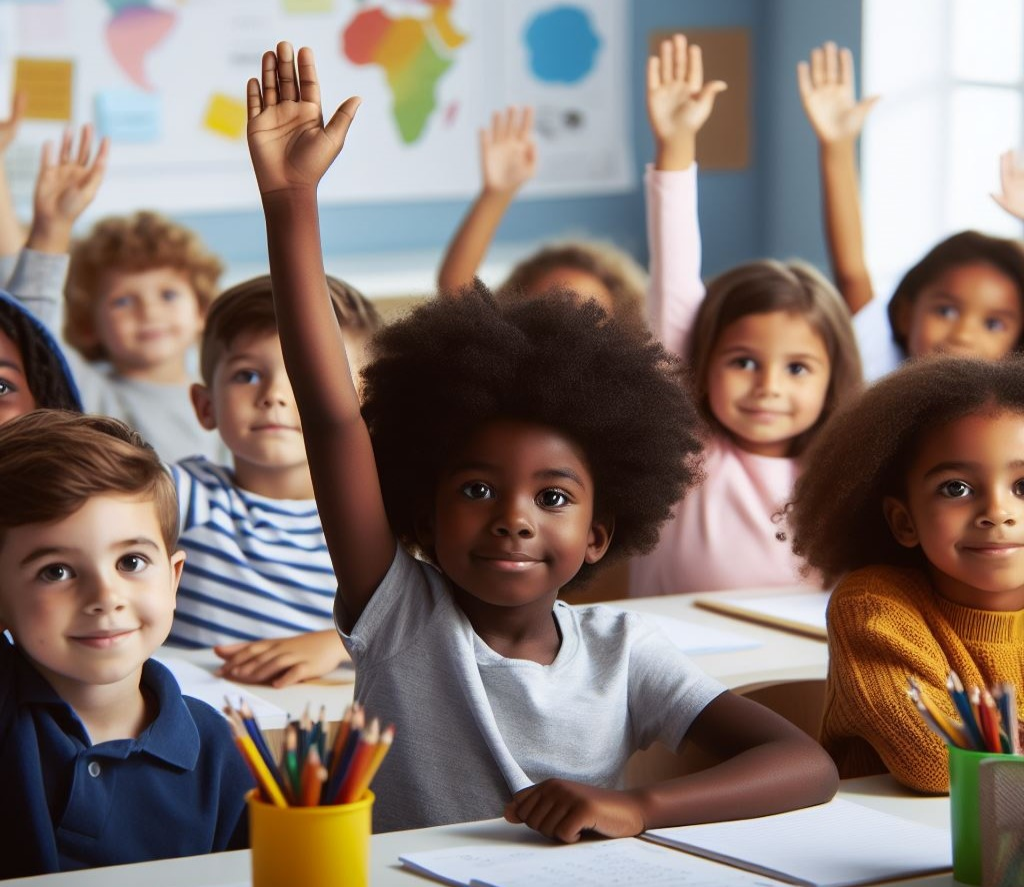
AI-generated image
Cindy Ngamba is a Cameroonian-born boxer who’s made history in Paris by becoming the first athlete to win a medal for the Refugee Olympic Team. Competing in the women’s middleweight (75 kg) boxing category, Ngamba secured a bronze medal. This achievement is especially significant as it marks the first Olympic medal ever for the Refugee Olympic Team.
Ngamba’s journey to the Olympics was marked by numerous challenges. She moved to the United Kingdom at the age of 11 and faced the threat of deportation, which she successfully overcame. Despite these obstacles, she pursued her passion for boxing and trained with GB Boxing, although she was unable to compete for Great Britain due to her refugee status.
Her victory at the Olympics is not only a personal triumph but also a symbol of hope and resilience for refugees around the world.
repechage αγώνας που δίνει την ευκαιρία σε αποτυχόντες των προηγούμενων γύρων να προκριθούν στην επόμενη φάση
In English, “repechage” refers to a second chance given to competitors who did not initially qualify for the next round of a competition. It is commonly used in sports and competitions where multiple rounds are involved. The term originates from the French word “repêchage,” meaning “fishing out” or “recovering an object from water.”
In practice, a repechage allows competitors who failed to advance directly to the next stage to compete in additional rounds for a place in the next round. This system is often seen in sports like rowing, wrestling, judo, and cycling, where it offers a chance for redemption to those who lost in earlier rounds, usually due to narrow margins or other exceptional circumstances.
1. What does the term “repechage” mean in English?
a. A final round of competition
b. A second chance for competitors
c. A type of sports equipment
d. A scoring system
2. Where does the word “repechage” come from?
a. Latin
b. German
c. French
d. Italian
3. In which of the following sports is repechage commonly used?
a. Basketball
b. Soccer
c. Tennis
d. Judo
4. What is the main purpose of a repechage system?
a. To eliminate more competitors
b. To make competitions longer
c. To give another opportunity to those who didn’t initially qualify
d. To determine the overall winner
5. What does the French word “repêchage” literally mean?
a. Second chance
b. Fishing out
c. Fair play
d. Final round
Answer Key
b. A second chance for competitors
c. French
d. Judo
c. To give another opportunity to those who didn’t initially qualify
approach πλησιάζω, προσεγγίζω· προσέγγιση rapprochementεπαναπροσέγγιση και αποκατάσταση σχέσεων, ειδ. μεταξύ κρατών
“Rapprochement” is a word used to describe the process by which two countries or groups that haven’t been getting along decide to become friendly again. For example, imagine two countries that were once enemies and didn’t talk to each other. After some time, they start to talk and work together to solve common problems. This process of becoming friends again is called a rapprochement. It’s like building a bridge between two sides that were far apart. In history, rapprochements have helped create peace and cooperation between countries. It’s an important word because it shows how groups of people or countries can come together and solve their differences. So, when you hear about countries making peace, you can say they are having a rapprochement!
1. What does the word “rapprochement” mean?
a. When two countries go to war
b. When two groups or countries become friendly again after not getting along
c. When a country decides to close its borders
d. When two countries sign a trade agreement
2. In the context of rapprochement, what does “building a bridge” refer to?
a. Constructing a physical bridge between two countries
b. Creating a connection between two sides that were separated
c. Building a wall to separate two groups
d. Designing a new form of transportation
3. How can rapprochement help countries?
a. By increasing their military power
b. By isolating them from other nations
c. By creating peace and cooperation between them
d. By making them more competitive with each other
4. What is a good example of rapprochement?
a. Two countries stopping all communication
b. A country declaring war on another
c. Two former enemy countries starting to work together
d. Countries competing for resources
5. Why is rapprochement considered important?
a. It helps countries become more powerful
b. It shows how groups can solve their differences
c. It creates more conflict between nations
d. It helps countries become more isolated
6. In history, what has rapprochement helped to create?
a. More wars and conflicts
b. Stronger borders between countries
c. Peace and cooperation between countries
d. Economic competition
7. What process does rapprochement describe?
a. Breaking ties between nations
b. Building weapons
c. Becoming friends again
d. Creating new countries
8. When might you use the word “rapprochement”?
a. When describing a natural disaster
b. When talking about countries making peace
c. When discussing sports competitions
d. When describing the weather
9. What does rapprochement involve for the groups or countries?
a. Ignoring each other completely
b. Fighting more intensely
c. Starting to talk and work together
d. Building bigger armies
10. How is rapprochement like solving a problem?
a. It involves creating more difficulties
b. It requires avoiding the issue
c. It brings people together to find solutions
d. It means giving up on finding an answer
Answer Key
b. When two groups or countries become friendly again after not getting along
b. Creating a connection between two sides that were separated
c. By creating peace and cooperation between them
c. Two former enemy countries starting to work together
b. It shows how groups can solve their differences
The Phrygian cap is a soft, conical hat with the top pulled forward. Its origins trace back to ancient Phrygia, a region in Asia Minor.
By the 4th century BC (early Hellenistic period), the Phrygian cap was associated with Attis, the consort of Cybele, the cult of which had by then become popular in Greece. At around the same time, the cap appears in depictions of the legendary king Midas and other Phrygians in Greek vase-paintings and sculpture.
The cap became a symbol of freedom and the pursuit of liberty during the Roman era and was later adopted by revolutionaries during the French Revolution, where it came to be known as the “liberty cap.”
A number of national personifications, in particular France’s Marianne, are commonly depicted wearing the Phrygian cap.
Πώς επικοινωνούμε με την αναπηρία; •Εργαστήρι animation στο πλαίσιο του επιμορφωτικού προγράμματος «Ήφαιστος»
Χρησιμοποιήσαμε τις τεχνικές stop-motion και cutout animation προκειμένου να δημιουργήσουμε μία ταινία μικρής διάρκειας. Το μήνυμά της: Η αναπηρία δεν είναι ανικανότητα, αλλά αφετηρία ανάπτυξης δεξιοτήτων και δράσεων κοινωνικής συνοχής.
The word “touché” is a French term that literally means “touched.”
In the context of fencing, it is an acknowledgment that a valid touch or hit has been made by an opponent. When a fencer successfully lands a touch on their opponent according to the rules of the bout, they might say “touché” to recognize the hit, or an official might declare it to indicate that a point has been scored.
InEnglish, it is commonly used in conversation to acknowledge a good or effective point made by someone else, often in a debate or argument. It signifies that the speaker concedes the validity or cleverness of the other person’s remark. Here are some examples of how “touché” might be used:
In a debate: • Person A: “You always leave the dishes in the sink.” • Person B: “Well, you always leave your clothes on the floor.” • Person A: “Touché!”
In a friendly argument: • Friend 1: “You’re late again!” • Friend 2: “You said we’d meet at 7, but it’s only 6:45.” • Friend 1: “Touché! I got my times mixed up.”
In a discussion about work: • Colleague 1: “I think we should implement this new strategy.” • Colleague 2: “Didn’t you suggest the same strategy last year and it didn’t work?” • Colleague 1: “Touché! But I believe it might work this time with some adjustments.”
In a playful banter: • Person A: “You never win at chess.” • Person B: “That’s because I always let you win.” • Person A: “Touché!”
In each case, “touché” is used to acknowledge thesharpnessorwitof the other person’s comment.
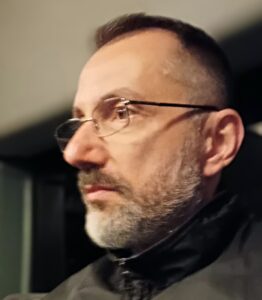
Hi, I’m Kostas, short for “Constantine.” Born and raised in Athens, Greece,
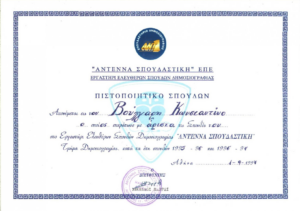
I have studied English and Journalism (Σχολή Δημοσιογραφίας ANT1)
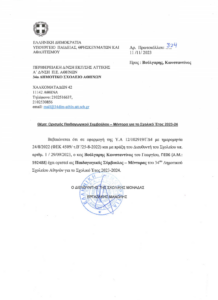
and I teach English at a state primary school in the Greek capital.
Wishing to provide my students with a wider view of the world, I am searching for interesting international opportunities to learn about different cultures and global issues.
Επιθυμώντας να προσφέρω στους μαθητές και τις μαθήτριές μου μία ευρύτερη θεώρηση του κόσμου, αναζητώ ευκαιρίες συνεργασίας στην Ελλάδα/Κύπρο και το εξωτερικό προκειμένου να μάθουμε μαζί για διαφορετικούς πολιτισμούς και να ενημερωθούμε για παγκόσμια θέματα.
Κάποτε ήθελα να γίνω… δημοσιογράφος!
Με κέρδισε όμως η Εκπαίδευση. 🙂
“The time is always right to do what is right.” — Martin Luther King, Jr.
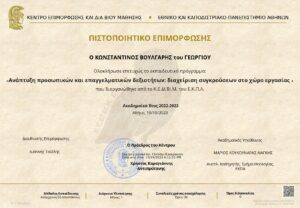
1. Teach.in.G. | Εκπαίδευση εκπαιδευτικών: Γλωσσική και ψυχοπαιδαγωγική διαχείριση πολύγλωσσων και πολυπολιτισμικών τάξεων 2. Ειδική Αγωγή: Διεπιστημονικές πρακτικές σύγκλισης 3. Ανάπτυξη προσωπικών και επαγγελματικών δεξιοτήτων: Διαχείριση συγκρούσεων στο χώρο εργασίας 4. Διαπροσωπικές σχέσεις: Το φαινόμενο της μοναξιάς στη σύγχρονη εποχή Διαχείριση και αντιμετώπιση 5. Από τη μία στην άλλη πλευρά του Αιγαίου: Η εγκατάσταση των Μικρασιατών προσφύγων στην Ελλάδα μέσα από τη λογοτεχνία 6. Θρησκεία και Ψυχανάλυση 7. Παραπληροφόρηση ή αληθινές ειδήσεις; Μάθετε να τα ξεχωρίζετε 8. Σπουδή στην Ορθόδοξη Θεολογία
Πανεπιστήμιο Αιγαίου
1. Εκπαιδευτικός στον 21ο αιώνα: Πώς να ξεχωρίσω 2. Διαχείριση της πολυπολιτισμικότητας στην εκπαίδευση και κοινωνική ένταξη μεταναστών /προσφύγων 3. Σχολική Ψυχολογία 4. Ενδοσχολική βία και εκφοβισμός: Πρόληψη και αντιμετώπιση 5. Μέθοδοι της Μετασχηματίζουσας Μάθησης στο πλαίσιο της Διά Βίου Μάθησης
Ελληνικό Μεσογειακό Πανεπιστήμιο
Σύγχρονες αρχές και πρακτικές στην Ειδική Αγωγή και Εκπαίδευση
Διεθνές Πανεπιστήμιο της Ελλάδος
1. Σχολική Νοσηλευτική και Ψυχική Υγεία 2. Πρόληψη και αντιμετώπιση της επιθετικότητας στο σχολικό περιβάλλον: Εργαλεία και στρατηγικές διαχείρισης
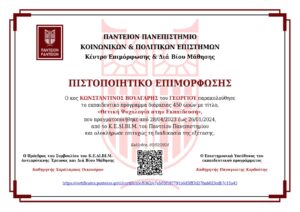
Πάντειον Πανεπιστήμιο Κοινωνικών και Πολιτικών Επιστημών
1. Πρόληψη και αντιμετώπιση ρατσισμού
στα δημοτικά σχολεία 2. Θετική Ψυχολογία στην Εκπαίδευση 3. Ενισχύστε την εκπαίδευσή σας με τη δύναμη
της Τεχνητής Νοημοσύνης (AI)
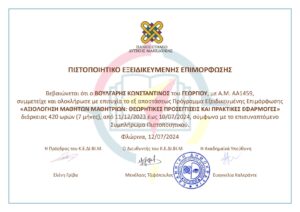
Αξιολόγηση μαθητών/μαθητριών: Θεωρητικές προσεγγίσεις και πρακτικές εφαρμογές
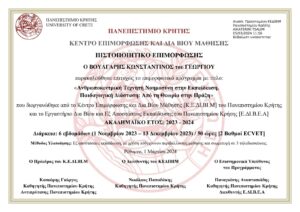
Πανεπιστήμιο Κρήτης
1. Ο/Η άνθρωπος-πολίτης/πολίτιδα απέναντι στο θάνατο και την απώλεια: Παιδαγωγικές και κοινωνικές προσεγγίσεις 2. Ανθρωποκεντρική Τεχνητή Νοημοσύνη στην Εκπαίδευση: Παιδαγωγική διάσταση
Από τη θεωρία στην πράξη 3. Γνωριμία με το Magic School στην εκπαιδευτική πράξη 4. LIFE on mARTs 5. Ανθρωποκεντρική Τεχνητή Νοημοσύνη στην Εκπαίδευση: Μετασχηματίζοντας τον τρόπο με τον οποίο διδάσκουμε και μαθαίνουμε
Πανεπιστήμιο Ιωαννίνων
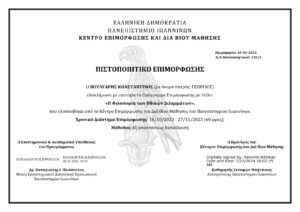
1. Ψυχολογικές προσεγγίσεις του παιδικού σχεδίου 2. Η Φιλοσοφία των Ηθικών Διλημμάτων
Αριστοτέλειο Πανεπιστήμιο Θεσσαλονίκης
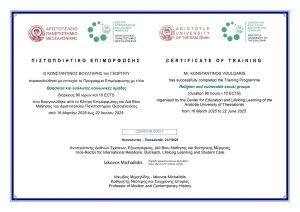
Θρησκεία και ευάλωτες κοινωνικές ομάδες
Ελληνικό Ανοικτό Πανεπιστήμιο
1. Σπουδές στονΠοντιακό Ελληνισμό 2. STEAM Education for All Learners: Incorporating STEAM and Inclusive Education Practices in Everyday Teaching
Δημοκρίτειο Πανεπιστήμιο Θράκης
Επιμορφώνοντας τους εκπαιδευτικούς στο Ολοκαύτωμα: Ανθρωπολογικές αναγνώσεις
του κινηματογράφου
Πανεπιστήμιο Δυτικής Αττικής
Προαγωγή ψυχικής υγείας και ευεξίας
στα σχολεία: Well@School Project
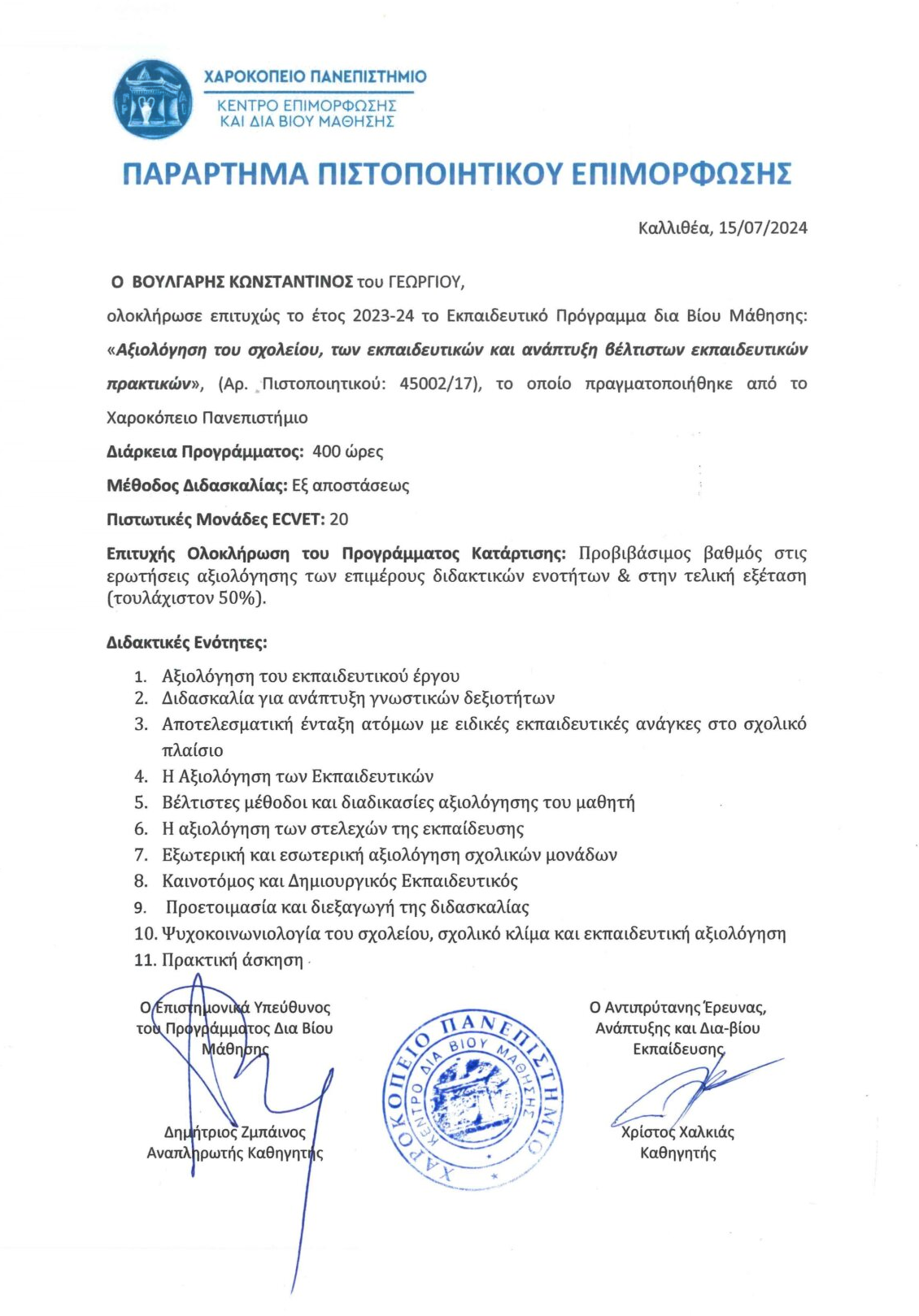
Χαροκόπειο Πανεπιστήμιο
Αξιολόγηση του σχολείου, των εκπαιδευτικών
και ανάπτυξη βέλτιστων λεκπαιδευτικών πρακτικών
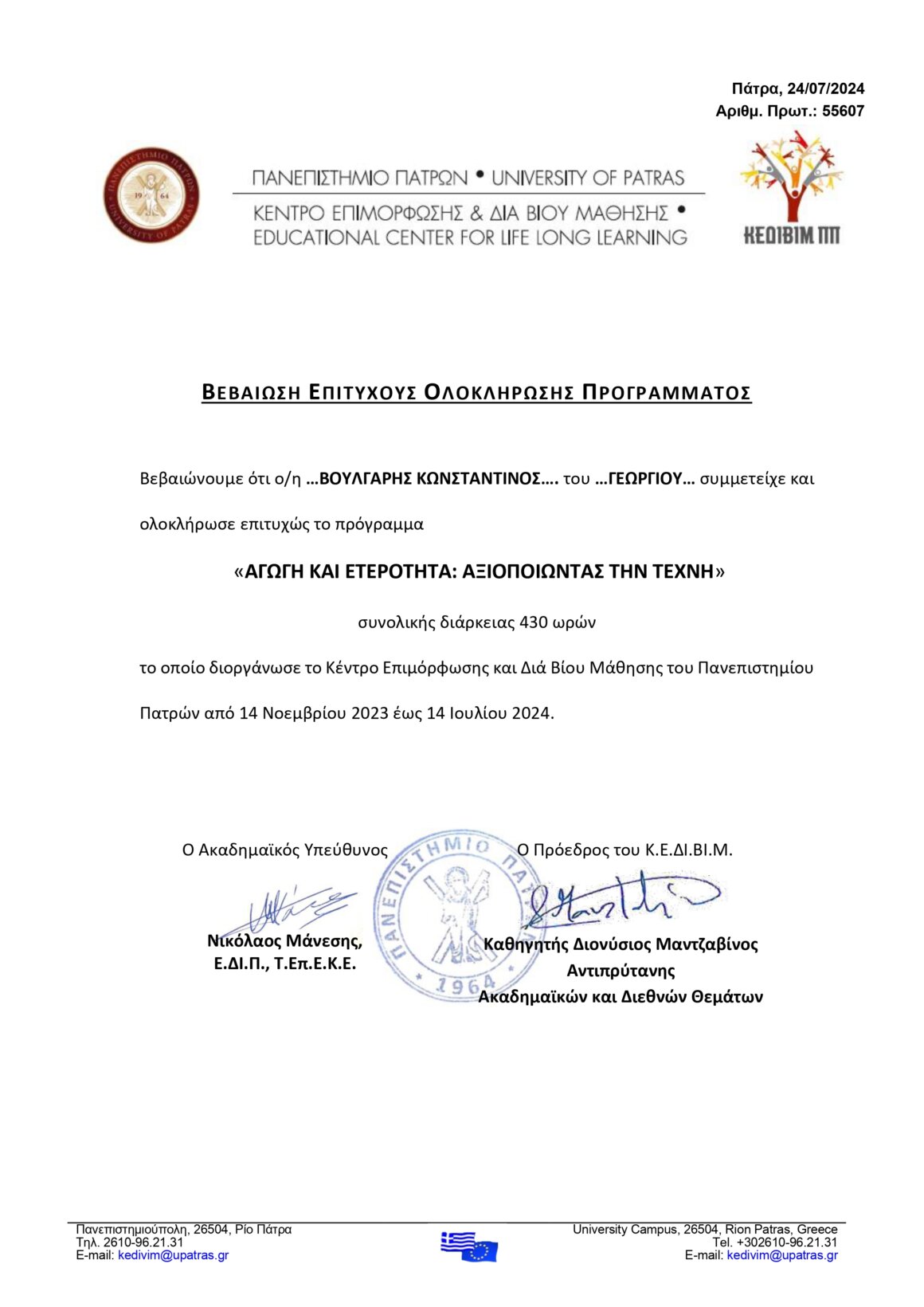
Ινστιτούτο Εκπαιδευτικής Πολιτικής
1. Επιμόρφωση των Εκπαιδευτικών
στις Δεξιότητες μέσω Εργαστηρίων 2. Εισαγωγή της Αγγλικής Γλώσσας
στο Νηπιαγωγείο (ΕΑΝ) 3. Αναπηρία και διαφορετικότητα, αυτιστικό φάσμα, προβλήματα προσοχής και συγκέντρωσης 4. Εκπαίδευση για την Ιδιότητα
του Παγκόσμιου Πολίτη Ευρωπαϊκό Έργο GENE
(Global Education Network Europe) 5. Διαφοροποιημένη Διδασκαλία: Πρακτικές υποστήριξης
των μαθητών και των μαθητριών
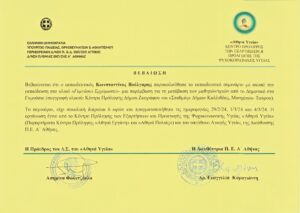
Κέντρο Πρόληψης «Αθηνά Υγεία»
1. Peer Support / Συμβουλευτική Ομηλίκων 2. Εκπαιδευτικός στην τάξη ξανά: Ενδυναμώνοντας τον εαυτό μου
και το ρόλο μου 3. — Γυμνάσιο, ερχόμαστε!
Μία παρέμβαση για τη μετάβαση των μαθητών/-τριών από το Δημοτικό στο Γυμνάσιο
1. Εκμάθηση βασικών τεχνικών NLP 2. Εκμάθηση προχωρημένων τεχνικών NLP 3. NLP – Ο Νευρογλωσσικός Προγραμματισμός στην Ψυχολογία
Ανοιχτή Τέχνη
Δημιουργική γραφή
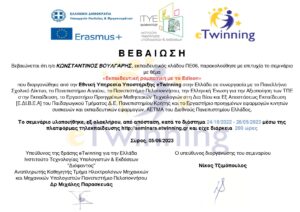
Εθνική Υπηρεσία Υποστήριξης eTwinning
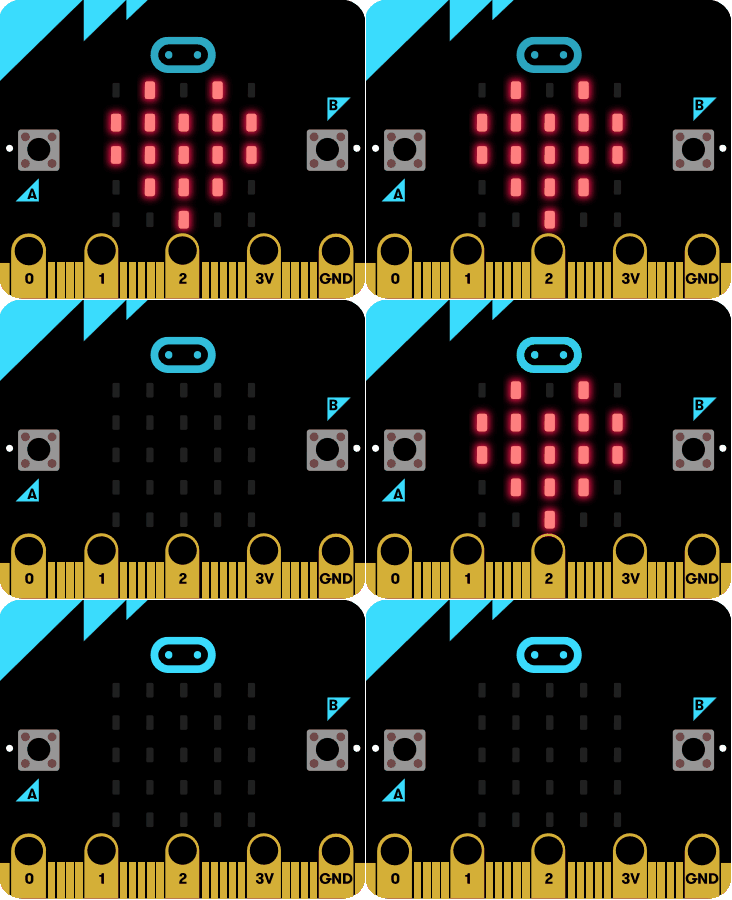
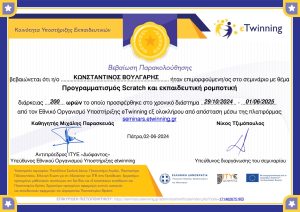
Προγραμματισμός Scratch και εκπαιδευτική ρομποτική
eTwinning και Εργαστήρια Δεξιοτήτων: Συνεργατικές Δράσεις για την Καλλιέργεια Γνώσεων, Δεξιοτήτων και Ικανοτήτων
Εκπαιδευτική ρομποτική με το Edison
και για τις μικρότερες τάξεις:
Bee-Bot
Τα πολιτιστικά μου προγράμματα
1. Το δικό μας όνειρο 2. Αληθινή φιλία 3. Δύο ευγενικοί άνθρωποι 4. Ανακαλύπτω τον κόσμο της Ποίησης 5. Φύγε άγχος, γίνε χρώματα!
Έργα eTwinning
1. True Friends Forever 2. True Friends Forever | France and Greece 3. Be a European Star for a European Christmas 4. Comment fait-on la paix ? 5. Μαθαίνω να βλέπω τον Άνθρωπο | Learning to See the Person #SkillsLabs