Διευθύνσεις WEBEX Εκπαιδευτικών 2ου Γυμνασίου Μοσχάτου


Λήψη αρχείου

Κατηγορίες: Χωρίς κατηγορία | Δεν επιτρέπεται σχολιασμός στο Διευθύνσεις WEBEX Εκπαιδευτικών 2ου Γυμνασίου Μοσχάτου

Φοράω τη χριστουγεννιάτικη στολή μου και εύχομαι να βρω μια θέση στην καρδιά σας…

Φοράω τη χριστουγεννιάτικη στολή μου και εύχομαι να βρω μια θέση στην καρδιά σας…

03

littlerefugee.com 
Κατηγορίες: Καλά Χριστούγεννα, Χριστουγεννιάτικα | Ετικέτες: , | Γράψτε σχόλιο

Wolfgang Iser. Ένα φωτεινό αστέρι στο σύμπαν τής λογοτεχνίας (Συμμετοχή σε συλλογικό τόμο)

Wolfgang Iser. Ένα φωτεινό αστέρι στο σύμπαν τής λογοτεχνίας

τής Ελένης Α. Ηλία

από τον συλλογικό τόμο Άνθρωποι Φάροι (2025)

τού Μη Κυβερνητικού – Ανθρωπιστικού Οργανισμού Άνθρωποι αγάπης
www.lovepeople.gr

ISBN: 978-618-82801-4-4

Σελίδες: 122-128.

Το πρόσωπο στο οποίο θα αναφερθώ, για να αναδείξω την εξαιρετικά πολύτιμη συμβολή του στην ανθρωπότητα, προέρχεται από το χώρο τής Λογοτεχνίας. Υποθέτω πως οι περισσότεροι πιθανολογείτε πως θα εστίαζα σε έναν διάσημο ποιητή ή πεζογράφο, που το έργο του έχει καταξιωθεί διαχρονικά και οικουμενικά. Όμως η λογοτεχνία δεν περιορίζεται μόνο στους συγγραφείς. Αφορά εξίσου και τους αναγνώστες. Ποιος από εμάς δεν έχει έρθει σε επαφή με κάποιο λογοτεχνικό έργο στα σχολικά θρανία ή και αργότερα, καθισμένος αναπαυτικά στον καναπέ του ή ευρισκόμενος σε μια παραλία, ακόμα και σε ένα μέσο μεταφοράς;

Ανοίγοντας ένα έντυπο ή ψηφιακό λογοτεχνικό βιβλίο, επιδιώκουμε να ξεφύγουμε από την καθημερινότητα, να ξεχάσουμε κάθε μικρό ή μεγάλο πρόβλημα που μάς απασχολεί, να βιώσουμε μια συναρπαστική περιπέτεια, να αποκομίσουμε εμπειρίες από άλλους τόπους και να ταξιδέψουμε στο χρόνο. Καθώς ωστόσο εμείς διαβάζουμε το λογοτεχνικό κείμενο, κάποιος έχει στραμμένη την προσοχή του επάνω μας, φωτίζει σαν προβολέας καθετί που συμβαίνει στη σκέψη μας, στην αντίληψή μας, καθετί που ενεργοποιεί τις αισθήσεις μας, που μάς προκαλεί συναισθήματα, που μάς συγκινεί. Δεν ρίχνει το φως του επάνω στις λέξεις τού έργου ούτε επάνω σε εκείνον που τις έγραψε. Ρίχνει το φως του επάνω σε εμάς τους αναγνώστες, προσφέροντάς μας τη δυνατότητα να δούμε βαθιά μέσα μας και έτσι να γνωρίσουμε τον εαυτό μας. Γίνεται ο φάρος μας στο ταξίδι τής ανάγνωσης, που απελευθερώνει τη φαντασία μας. Μάς παρακινεί να λάμψουμε κι εμείς, να γίνουμε επίσης φάροι για τους άλλους αναγνώστες, εφόσον ο καθένας μας με το δικό του ξεχωριστό φως, θα φωτίσει διαφορετικά, μοναδικά το λογοτεχνικό έργο, αναδεικνύοντας την ανεξάντλητη ομορφιά τού τελευταίου.

Αυτό το πρόσωπο για του οποίου την προσφορά στους αναγνώστες των λογοτεχνικών έργων θα ήθελα να αναφερθώ, καθώς  τη θεωρώ ανεκτίμητη, είναι ο Wolfgang Iser, καθηγητής Λογοτεχνίας. Πρόκειται για τον επιστήμονα που εξέφρασε και τεκμηρίωσε τη θέση ότι ο αναγνωστικός ρόλος στη λογοτεχνική διαδικασία είναι κατεξοχήν δημιουργικός. Κατέστησε τον αναγνώστη συνδημιουργό τού λογοτεχνήματος. Προσδιόρισε λεπτομερώς, με σαφήνεια, το δημιουργικό ρόλο που ο αναγνώστης επιτελεί, ώστε αβίαστα αναδεικνύεται μέσα από το έργο του η αισιόδοξη άποψη ότι η δημιουργικότητα είναι κοινό χαρακτηριστικό κάθε ανθρώπινης ύπαρξης.

Για να βοηθήσει να αντιληφθούμε τη σημασία του αναγνωστικού ρόλου για το λογοτεχνικό έργο, ο Iser αξιοποιεί τη μεταφορική χρήση της γλώσσας, που συναντάται στα λογοτεχνικά κείμενα, παρομοιάζοντας κάποτε την αναγνωστική διαδικασία με πικνίκ, όπου ο συγγραφέας φέρνει τις λέξεις κι ο αναγνώστης το νόημα. Άλλοτε, για να κάνει κατανοητή τη θεωρία του, παραλληλίζει το λογοτεχνικό έργο με τον έναστρο ουρανό. Όπως ακριβώς δύο άνθρωποι που έχουν στραμμένο το βλέμμα τους στα αστέρια, τα βλέπουν να σχηματίζουν διαφορετικές εικόνες, έτσι και όταν δυο άνθρωποι διαβάζουν τις ίδιες λέξεις σε ένα κείμενο, προσδίδουν σε αυτό διαφορετικά νοήματα. Από αυτή την αλληγορική αναφορά τού Iser στους αστερισμούς, εμπνεύστηκα τον τίτλο του παρόντος κειμένου.

Γίνεται προφανές από τα παραδείγματα που ο Iser χρησιμοποιεί, ότι δεν είναι μόνον φωτισμένος επιστήμονας αλλά και εξίσου φωτισμένος δάσκαλος, που κατόρθωσε να παρουσιάσει απλά και κατανοητά τις αντιληπτικές διεργασίες οι οποίες συμβαίνουν κατά την ανάγνωση. Χωρίς ποτέ να έχω παρακολουθήσει προφορική διδασκαλία του αλλά μονάχα διαβάζοντας μερικά από τα πολλά βιβλία του, προκειμένου να εκπονήσω τη διδακτορική διατριβή μου, διδάχθηκα από αυτόν τα περισσότερα, τα σημαντικότερα, τα πιο ουσιαστικά, ώστε να τον θεωρώ τον κατεξοχήν δάσκαλό μου.

Σχετικά με την εφαρμογή της θεωρίας του καταρχάς στη λογοτεχνική ανάγνωση και έπειτα στη λογοτεχνική διδασκαλία, θα σημείωνα συνοπτικά τα εξής:

To λογοτεχνικό κείμενο δεν διαβάζεται όπως οποιοδήποτε άλλο. Αντλούνται από αυτό όχι μόνο πληροφορίες αλλά κυρίως βιώματα. Το χαρακτηριστικότερο στοιχείο της λογοτεχνικής ανάγνωσης είναι η δραστηριοποίηση τής αντίληψης τού αναγνώστη, για να ανακαλύψει το νόημα που λανθάνει σε πολλά σημεία του κειμένου. Οι υποδηλώσεις, οι ενδείξεις και οι λοιπές αφηγηματικές τεχνικές κρατούν τον αναγνώστη σε διαρκή εγρήγορση, προκειμένου να δομήσει ένα συνεκτικό νόημα. Η δραστηριότητά μας κατά την αναγνωστική διαδικασία περιλαμβάνει επίσης τη διαμόρφωση θετικής ή αρνητικής στάσης απέναντι στους διάφορους αφηγηματικούς ήρωες. Επιπλέον, τη δημιουργία προσδοκιών για την εξέλιξη της υπόθεσης, μια διαδικασία που είναι διαρκής, αφού οποιοδήποτε νέο στοιχείο μπορεί να ενισχύσει ή να διαφοροποιήσει τις προηγούμενες προσδοκίες μας, να τις επιβεβαιώσει ή να τις ματαιώσει. Οι αναγνώστες μέσα από αυτήν την εντατική πνευματική δραστηριότητα που συνιστά η λογοτεχνική ανάγνωση, αποκομίζουμε την εντύπωση ότι εμπλεκόμαστε προσωπικά στην αφηγηματική υπόθεση. Προσαρμόζουμε τους ήρωες στη δική μας προσωπικότητα, τους προσδίδουμε τη δική μας ταυτότητα. Η εμπλοκή μας ωστόσο συνυπάρχει με την αποστασιοποίηση. Έχοντας τη δυνατότητα να παρακολουθούμε τους εαυτούς μας  ως δρώντα υποκείμενα, οδεύουμε προς την αυτογνωσία μας.

Ο συνειδητοποιημένος, δημιουργικός αναγνώστης, που πλήρως απελευθερωμένος προβαίνει σε προσωπικές επιλογές, κατή την επαφή του με το κείμενο, είναι αποτέλεσμα τής διδασκαλίας της λογοτεχνίας, με βάση τη θεωρία τού Iser. Αυτό που προέχει στο συγκεκριμένο διδακτικό πλαίσιο, είναι οι διδασκόμενοι, μαθητές, φοιτητές κ.ά. να συνειδητοποιήσουν το δημιουργικό ρόλο που επιτελούν κατά τη λογοτεχνική ανάγνωση και να αντιληφθούν, να εκτιμήσουν τη σπουδαιότητα αυτής της δημιουργικής δραστηριότητάς τους. Προκειμένου ο συγκεκριμένος διδακτικός στόχος να επιτευχθεί, οι εκπαιδευτικοί θα αντιμετωπίσουν τους συμμετέχοντες στη λογοτεχνική διδασκαλία, μαθητές και φοιτητές τους, με ίσους όρους, ως συναναγνώστες τους. Θα τους δείξουν ότι η προσωπική αναγνωστική εμπειρία των τελευταίων, είναι μοναδική και κατά συνέπεια αξιόλογη. Θα τους παρέχουν τη δυνατότητα, το κατάλληλο κίνητρο και γενικότερα το υποστηρικτικό πλαίσιο, για να εκφράσουν, να μοιραστούν, να ανταλλάξουν τις αναγνωστικές εντυπώσεις τους αναφορικά με το λογοτεχνικό έργο.

Η δημιουργική γραφή με ερέθισμα το λογοτέχνημα, θα μπορούσε ανεπιφύλακτα να αποδοθεί στον Iser. Οι εκπαιδευτικοί σχεδιάζοντας και εφαρμόζοντας δραστηριότητες δημιουργικής γραφής, σύμφωνες με την ευχέρεια των εκάστοτε μαθητών να εκφράζονται προφορικά ή γραπτά, διευκολύνουν τους πάντες να συμμετέχουν σε αυτές. Αναλυτικότερα, ενδεχομένως αν χρειαστεί διατυπώνουν ειδικότερες, διευκρινιστικές ερωτήσεις ή καταγράφουν οι ίδιοι τις απαντήσεις και αφηγήσεις των μαθητών, ώστε αυτές να διασωθούν. Η επιδίωξη ή ακόμη και ο εθισμός μαθητών/φοιτητών-αναγνωστών να γράφουν και να επικοινωνούν τις προσεγγίσεις τους στα λογοτεχνικά κείμενα, θα συνιστούσε το φυσικό επακόλουθο, τη συνήθη εξέλιξη αυτής της διδακτικής επιλογής.

Ο  Iser δεν αρκέστηκε ως προς τη συνεισφορά του στη λογοτεχνία, στους νέους δρόμους προσέγγισης και ερμηνείας των λογοτεχνικών κειμένων, που άνοιξε για κάθε μεμονωμένο αναγνώστη. Αναζητώντας την ουσία, τον πυρήνα της συνδιαλλαγής τού αναγνώστη με το κείμενο, οδηγήθηκε στη «λογοτεχνική ανθρωπολογία». Κατέληξε να διερευνά πώς λειτουργεί η λογοτεχνία στην ανθρώπινη εμπειρία. Προβληματίστηκε ως προς το γιατί οι άνθρωποι έχουν ανάγκη τη μυθοπλασία.

Από όλα τα παραπάνω γίνεται φανερό ότι η αναγνωστική θεωρία που εισηγήθηκε ο Iser, συμβάλλει ώστε όλοι οι αναγνώστες να αγαπήσουν περισσότερο τη λογοτεχνία, που τους απελευθερώνει και τους προσφέρει τόσο έντονα αναγνωστικά βιώματα. Επίσης να αγαπήσουν τον εαυτό τους, καθώς έχουν την ευκαιρία να τον γνωρίσουν βαθιά και ουσιαστικά, μέσα από την εμπλοκή και την αποστασιοποίηση. Τέλος, να επικοινωνήσουν με τους γύρω τους, να χτίσουν στέρεες σχέσεις μαζί τους, θεμελιωμένες πάνω στα λογοτεχνικά κείμενα, αναφορικά με τα οποία μοιράζονται και ανταλλάσσουν τις αναγνωστικές εντυπώσεις τους.


Βιογραφία

Ο Wolfgang Iser (Βόλφγκανγκ Ίζερ) γεννήθηκε το  1926 στη λουτρόπολη Μάριενμπεργκ, στο κρατίδιο της Σαξονίας, στη Γερμανία. Σπούδασε αγγλική και γερμανική λογοτεχνία και φιλοσοφία στο Πανεπιστήμιο της Λειψίας. Έλαβε το διδακτορικό του από το Πανεπιστήμιο της Χαϊδελβέργης. Δίδαξε αρχικά στη Χαϊδελβέργη, στη Γλασκόβη, στην Κολωνία, στο Βίρτσμπουργκ. Το έργο του άρχισε να γίνεται περισσότερο γνωστό κατά τη θητεία του στο Πανεπιστήμιο της Κωνσταντίας, που βρίσκεται στα σύνορα Γερμανίας-Ελβετίας. Στις Ηνωμένες Πολιτείες ο Iser εξέδωσε μεταξύ άλλων τα βιβλία The Implied Reader (1972) και The Act of Reading (1978), που γνώρισαν μεγάλη επιτυχία. Το 1978 έγινε μόνιμο μέλος του διδακτικού προσωπικού του UC (Πανεπιστημίου τής Καλιφόρνια) Irvine, στο Τμήμα Αγγλικής και Συγκριτικής Λογοτεχνίας και συνέβαλε σημαντικά στην ανάδειξή του σε ένα από τα σημαντικότερα κέντρα λογοτεχνικής θεωρίας παγκοσμίως. Το 1991 συνταξιοδοτήθηκε από το Πανεπιστήμιο της Κωνσταντίας ενώ συνέχισε να διδάσκει στο UCI μέχρι το 2005. Σύζυγός του ήταν η Lore Iser.  Οι θεωρίες του εκτός από τη λογοτεχνία έχουν επηρεάσει επίσης τη φιλοσοφία, τις πολιτισμικές επιστήμες, την εκπαίδευση και άλλους τομείς. Το μεταγενέστερο έργο του που αναφέρεται στη Λογοτεχνική Ανθρωπολογία, θεωρείται εξαιρετικά πρωτοποριακό. Τού απονεμήθηκαν παγκοσμίως πλήθος τιμητικών τίτλων. Απεβίωσε το 2007.

Κατηγορίες: Wolfgang Iser, Αναγνωστική ανταπόκριση, Δημοσιευμένα άρθρα, Θεωρίες Λογοτεχνίας, Λογοτεχνία, Πεζογραφία | Ετικέτες: | Δεν επιτρέπεται σχολιασμός στο Wolfgang Iser. Ένα φωτεινό αστέρι στο σύμπαν τής λογοτεχνίας (Συμμετοχή σε συλλογικό τόμο)

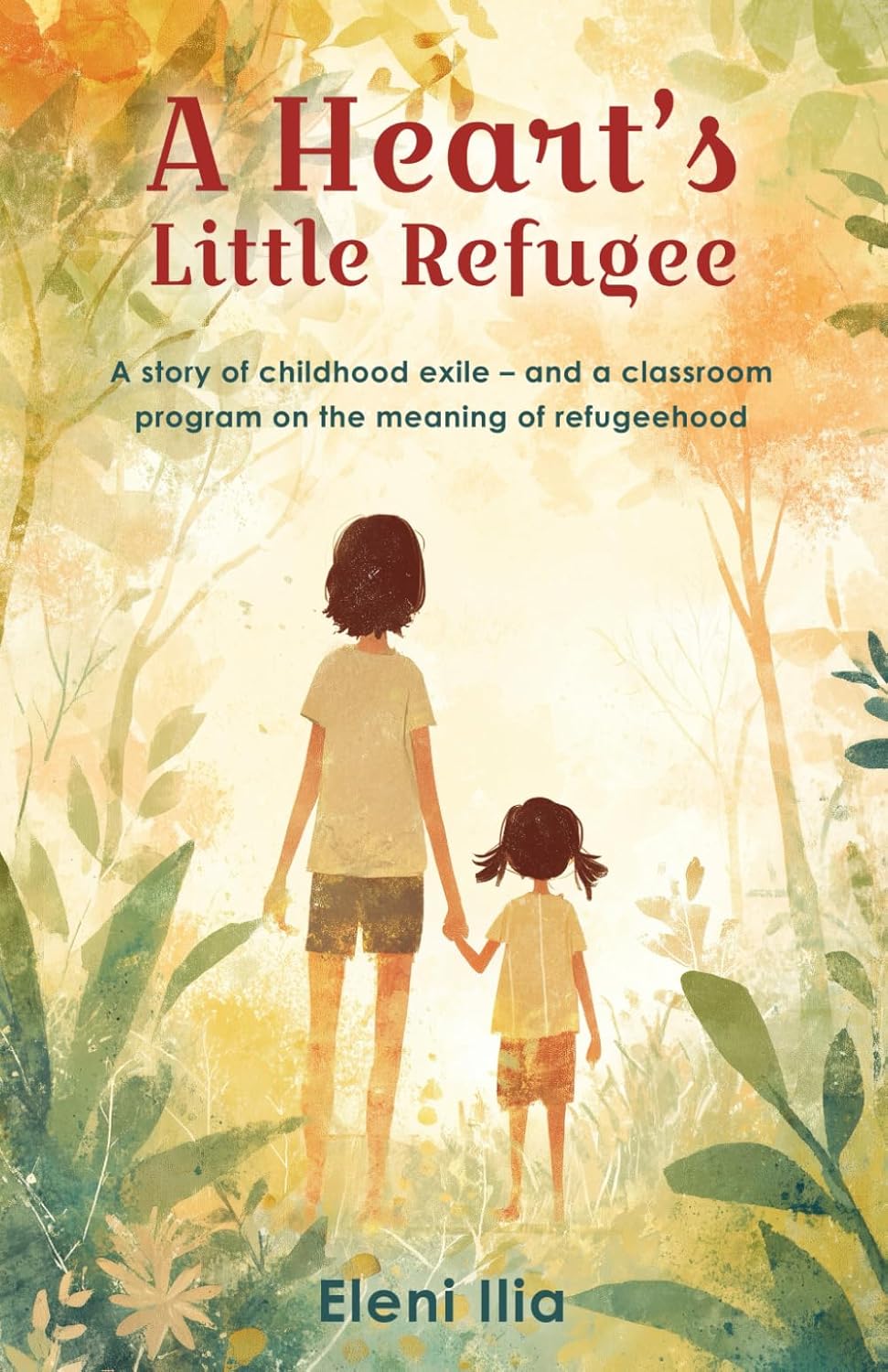
A Heart’s Little Refugee by Eleni Ilia

A Heart’s Little Refugee by Eleni Ilia

A Heart’s Little Refugee by Eleni Ilia
A book to be read, shared, and explored—both in the heart and in the classroom.
Book Preview
από τη Σελίδα littlerefugee.com
papyros1
papyroe2
papyros3

papyros4
papyros6

papyros7

Children’s texts inspired by the book A heart’s little refugee

The readers’ texts constitute creative imitation or modification or reversal of the literary model

1. The little garden girl goes to school. When she returns to her garden, spring has
suddenly come and flowers have sprouted. In the garden, when she plays her
favorite game with the sweet peas, the rainbow appears. She wishes the sky
would be full of color every day. She sits on the swing and picks the flowers with
her feet. She makes rain of flowers. A flower falls on her and she is scared. (“The
Garden of Memories”)
2. A girl and her parents pass by the little garden girl. They stop in front of the shop
windows and look at things. They talk about the Christmas holidays. The little
garden girl dreams that she is playing with the other girl with water guns in an
indoor hotel pool. Because it had snowed a lot, they decide they do not need any
more toys. They make snowballs and throw them at each other. They also make
snowmen instead of dolls. (“The Shopaholics”)
3. The little garden girl asked another girl to go out and play with her. But the other
girl wouldn’t go because she preferred to watch commercials. This girl had asked
her parents to buy her windmills and dolls. She left them outside because the
house was full of toys. Next day, as soon as she started playing, she went back
in to watch the commercials in order to choose new toys. Every day, she ignored
the new toys in order to watch the commercials. So the little garden girl was
alone in the garden. One time, the garden girl fell off the swing. The other girl
went to help her. Then, both of them saw a pink flower. The girls loved this color
very much. So they took care of the flower to help it grow and fill with pink
blossoms. The two girls started playing together in the garden to be near the
flower. But whenever the weather was rainy and dark, they would watch
commercials together inside the house. (“The Shopaholics”)
4. In the mornings, the famous man took his dog for a walk. Whenever he passed
by the garden, he would take the little girl by the hand and they would go buy
milk. He was a singer and earned a lot of money. He told the little garden girl that
he liked to fly kites and swim. But he couldn’t go to the beach because people
would ask for autographs and bother him. So, he had built a swimming pool in his
house. (“The Fame Addict”)
5. A singer destroyed his garden to build a swimming pool. So, he lived in the gray.
There was no more sun and it was never spring, only autumn and winter. At
Christmas, Santa Claus didn’t come, nor did children sing carols. At pet shops,
they wouldn’t let him get a dog or a cat, because there was no sun or space for
the animals to play. He had no fans anymore. So, people didn’t invite him to give
concerts. He grew a beard and got fat. He became an unemployed bachelor,
playing video games and watching TV, eating chips and ordering pizza with all
the lights off and the curtains closed. (“The Fame Addict”)
6. In the illuminated shopping street, there is a shop with computers, tablets and
mobile phones. Two twin boys enter. They pass by the little girl without noticing
her because they are both looking at their screens. The little girl says, “Hello,” but
they do not hear it. They are absorbed in the video games they are playing.
When the two boys pass, the little girl dreams that she is playing with them. She
holds a brand-new tablet in her hands. She is excited. When night falls, they plug
in their tablets to charge and look at the sky together. They talk about the moon
and the stars. Their parents are currently working in their restaurant. During the
day, they search for new recipes on their own tablets. (“The Screenaholics”)
7. When the twin brothers moved to the new neighborhood, they played games on
their mobile phones all the time. During a trip, they were constantly playing
games on their tablet. After they returned home, they played video games on the
computer. Then they turned on the TV but fell asleep in front of the screen.
That’s what they were called, “The Screen Brothers.” (“The Screenaholics”)
8. One day the two brothers took their video games and went into the garden.
Because they were looking at the screens and not paying attention to where they
were stepping, one of the boys slipped and fell. The tape came out and the
screen went dark. As the boy was looking for the tape, his mother, who was on
her way to work, passed by. She was also looking at her screen, so she didn’t
see him as he was bent over and she tripped over him. When she realized it, she
wrote “Sorry” on the screen. While the boy was looking for the tape, the little
garden girl helped him. So the boy fell in love with her. He stopped playing
games on the screen and picked flowers for the little girl. The two children play
together or go to the theater. (“The Screenaholics”)
9. When the phobics left the garden, they went to live in a city without gardens. But
their neighbor had many plants and even trees on the roof of their building. When
the elderly couple went to talk to him about it, the neighbor explained to them that
he just had to take care of his plants. Immediately an idea crossed the old man’s
mind: to cut down all the plants. Then a butterfly landed on his hand. The old
man started screaming but soon he realized that the butterfly had not harmed
him. So, he and his wife returned to the countryside, where they lived without
fear anymore. (“The Phobics”)
10. A beautiful, busy lady comes out of the flower shop, loaded with an armful of
flowers and enters the crystal shop next door, which is hers. As she passes by
the little girl, she smiles at her. How sweet her smile is! The little girl dreams that
she lives near her. They have a huge garden, with many different flowers and
they take care of them every afternoon, when the little girl returns from school
and the woman returns from her shop. The lady promises the little girl that she                                                                          will throw her a birthday party, where she will invite all her friends from school
and serve food and a huge cake. But even this beautiful dream ends for the little
girl. (“The Workaholic”)
11. One day, the busy lady cooked chicken and potatoes for the little garden girl.
That day, when she arrived at work, she took out her keys and started trying
them out. But she had too many keys and couldn’t find the right one. Time
passed and she got tired of continuing. So, she returned home. She watered the
flowers, took care of the frog and did many other chores, such as feeding the
little girl. (“The Workaholic”)
12. The know-it-alls pruned the garden and threw the branches into their fireplace.
Then the man left the garden. In the garden there was an apple tree. The woman
asked the little garden girl to help her pick the apples. When the man returned,
he found his wife giving the girl an injection because she had fallen ill when they
were picking the apples. (“The Know-it-alls”)
13. Three little sisters pass by on the street. They are going to their dad’s shop,
which sells sportswear and shoes. The little girl dreams that these girls are also
her little sisters. They all live together in the same room. They have their
breakfast and plan the games of the day. Because the weather is very cold, they
decide not to go out to play. They remember that the last time they played in the
cold, they got sick. So, they suggested playing with their playdough. They will
make ice cream, pizza and cookies from playdough. In the afternoon, they will
drive to dad’s shop to help. They will take him whatever they make to treat the
children of the customers. (“The Tormentor”)
14. The Tormentor had a bull. Whenever he had time, he would take the bull into the
forest to find other animals and fight them. When this man met the little garden
girl, instead of greeting her, he scared her. One day, his bull entered the garden
and hit the little garden girl. (“The Tormentor”)

Eleni Ilia

When the children’s imagination opens up roads for the little refugee to cross…

1. The little refugee dreams of making another garden that is much bigger than the old
one. She wants to have a horse, a cow, butterflies, cats and a dog. The little refugee
dreams of taking care of her animals with the Little Prince. She wishes the two of
them lived in a place where there were no other people and where they could take
walks together in the playground.
2. The little refugee dreams of making a little flower garden in the house of the Little
Prince so that the Little Prince can feel happy. The snow will fall all night but every
morning when they wake up, the sun will have melted the snow.
3. One night, while on her way, the little refugee saw a red dragon with fire coming out
of its mouth. The dragon set fire to a house. The family inside alerted the fire
department, which arrived quickly. They managed to extinguish the fire before the
whole house burned down. This dragon had wings. It started flying high and
throwing stones at people’s houses. The little refugee saw the people doing chores
to fix the dragon’s destruction and went into the houses and helped. In one house,
she told the little child and his parents: “Your house looks nice.” And then they told
her that she could stay with them. When the sun came up, the police chased the
dragon but it escaped. The little refugee remembered a friend of hers, who knew a
lot about dragons. She had learned from him that when a dragon rules a city, it is
because it wants to eat. She told the family and the mother made soup for the
dragon. Since then, every time the dragon was hungry, it went and ate in the house
where the little refugee lived. So, it did not hurt people again.
4. The little girl saw a house that was in the shape of a rose. The carpenters had made
it this way for a girl who liked flowers. The house smelled like roses because the girl
who lived there sprayed it with her own rose perfume. When the little refugee was
walking by the house, she saw that the door was open and entered. Whenever the
girl who owned this home was away, she left the door open for anyone who liked
flowers to enter. When the little refugee went in, she saw that there were flowers
painted on the walls. The little refugee lay on the bed to rest. Then, she ate two
yoghurts she found in the fridge and a whole pineapple she saw on the table, and
continued the journey.
5. The little refugee, along with other little refugees, arrives in a forest to relax and cut
fruit. There, they see an amazing house. They make a wish for the door to open and
it opens immediately. They realize that the house is magical. They see a fountain in
the garden changing colors and find paintings for the children to paint. They wish
they could stay in this house and have lots of books and toys, and their wish comes
true! The last wish made by the little refugee was for all the children to have many
pairs of shoes, one for winter, another for spring, another for summer, and another
for autumn.
6. The little refugee likes her new homeland, which is England. Her cousin has also
gone there and they spend time together. She has dolls that talk; they say what the
little refugee wants them to. In England, the little refugee finds telescopes to look at
the planets. She also buys antiques to decorate her house. She cannot find one pink                                                              and white flower, which she had in her homeland. Whenever the little refugee
remembers her mother, she cries. But because she arranges to go out, she quickly
stops crying to get ready.
7. The little refugee is in Greece. She goes to a shop that has a beautiful doll and they
play “family” with a little boy. They have the doll for their baby. The little refugee
lost her family when her house was destroyed. On the day the little refugee has her
birthday, the boy she plays with in the shop gets some money from his dad and gives
the little refugee the doll as a gift. Whenever the little refugee remembers her old
life, she feels sad. She then thinks of her friend and feels happy.
8. The little refugee is happy because she can play “He loves me, he loves me not”
about her old garden with the flowers and then throw the flowers high in the air and
feel them fall on her. She looks out of the window at the children in the square and
greets them. She has made five friends. She plays with them when she finds their
games easy. In difficult games, such as “tag”, she does not play because she is afraid
of being hit. An easy game is when they play “family” or when they play “the sun,
the earth, and other planets.” The little refugee wears clothes embroidered with
threads the colors of the earth, so the other kids always ask the little refugee to play
the role of Earth.
9. The little refugee girl came to stay in a castle near our school. This castle was built
for a man who wanted to give it to his wife as a present for her birthday, because
the castle they lived in was old. Because the girl’s garden in her own home had
withered, she was crying and this man and his wife felt sorry for her and invited her
to stay with them. The new castle has a garden with poppies, an apple tree,
ladybugs and snails, which the little girl really likes. But also inside the castle they
have vases with the most beautiful pink roses, with raindrops. The woman buys new
roses every Wednesday at the street market. A pilot brought Little Prince to the
castle. Now, the two children are playing together in the castle garden with balls and
other exercise equipment and when they grow up they will come to our school too.
10. The little refugee girl met a boy from our class at a children’s hospital. The boy did
stunts in the street and fell and broke his leg. At the hospital, they placed a splint
around his leg and put him in a wheelchair. Then, the little girl thought of helping
him. She pushed his wheelchair to her house to stay close to him until he was well
again. Then, she bought seeds. She planted them in the soil and watered them
together with the boy. So, they sprouted slowly and a garden was made. The boy
said, “This garden is perfect.” They will stay here together for a long time. But when
the sun stops burning so much, the refugee girl will return to her place to find her
things, which she has left there.
11. I found a pirate telescope on the beach. The pirate had laid it down to build a
sandcastle. When he left the beach, he forgot to take his telescope with him. I look
at the moon through this telescope. I play “Freeze” with it day and night. Then, I see
a little girl coming towards me. She is alone. I start singing and dancing the mambo
and the little girl dances with me. We dance to many songs all night. In the morning,
we lie down on the sand. We sleep all day because we are very tired. In the evening,
we start dancing again. We stay there for four days. We eat the fruit I have with me.
When we eat them all, we go to the street market. We buy fruit and toys from there                                                                   to go back to the beach and continue to dance. Passing by the house where I live, I
call my parents and tell them: “Mom, dad, let me introduce you to a new friend of
mine.” They say, “Wow” and I leave with the little refugee girl for the beach again.
12. I met the little refugee girl in a shop where they sell shoes. I had gone to this store
with my mom and brother. My brother had chosen shoes and we were waiting at
the checkout. Then, the little girl came to buy shoes. She says to me: “You are very
beautiful. Do you want to be friends?” I said, “Yes.” My uncle was waiting in the car
outside the store. My mom and brother left with him and I stayed to leave with my
new friend. The little girl chose the pink shoes with butterflies on them. Then, we
walked to my house. We played with my toys and drank orange and strawberry
juice, which my mother had prepared. We slept together and the next day the little
refugee girl left for her hotel. She invited me to visit her. I went there by bus. We
played with her toys and took walks in the garden. Every Thursday or Friday that I
don’t have ballet lessons, I’ll go to the hotel and play with her.
13. I met the little refugee girl in the meadow when I went to pick flowers. I pick flowers
to decorate the vases at my mom’s restaurant. The restaurant is called “Love” and is
next to this meadow. The little refugee girl comes to the restaurant to eat her
favorite food: cooked meat and fries. When we found ourselves in the meadow, she
told me, “I took a walk here, to get some air.” She was anxious about the time. She
wanted to take the plane. She’s going to Paris to see the Eiffel Tower.
14. The little refugee girl comes to my house every day to play. She doesn’t know
anyone else here, only me. First, the little girl and I play with my dolls. Her favorite
doll is Super Diva and my favorite doll is Barbie.  Then, we draw and play hide-and-
seek together in my yard. When night falls, the little refugee girl goes to bed. I have
never been to where she lives because she likes playing in my house.

Eleni Ilia

Κατηγορίες: Χωρίς κατηγορία | Δεν επιτρέπεται σχολιασμός στο A Heart’s Little Refugee by Eleni Ilia

Eleni Ilia, A Heart’s Little Refugee

Eleni Ilia, A Heart’s Little Refugee
A  Heart’s Little Refugee is a poignant literary tale that intertwines childhood innocence with themes of displacement, memory, and resilience. Through poetic storytelling, Eleni Ilia crafts an allegorical journey where a mysterious little girl emerges from the sea, carrying the echoes of a lost paradise—a once-vibrant garden that now exists only in memory.
This book is more than a work of fiction; it is also a powerful educational tool. The second part introduces an innovative teaching program, designed to help educators engage young students in discussions about refugees, loss, and belonging through storytelling and creative expression. Rooted in literature’s ability to foster empathy, the program encourages children to extend the story, imagining their own narratives of resilience and hope.
Whether you are a reader drawn to literary fiction or an educator seeking meaningful classroom activities, A Heart’s Little Refugee offers both a moving narrative and a practical framework for teaching social awareness through literature.
A book to be read, shared, and explored—both in the heart and in the classroom.
exofyllo agglikoy biblioy moy
stoicheia biblioy 1
stoicheia biblioy
periechomena 2periechomena 1
Κατηγορίες: Βιβλία, Δημιουργική Γραφή, Εισήγηση σε συνέδριο, Εκπαιδευτικό πρόγραμμα, Πεζογραφία, Φιλαναγνωσία | Δεν επιτρέπεται σχολιασμός στο Eleni Ilia, A Heart’s Little Refugee

“ΕΚΔΗΛΩΣΕΙΣ ΛΗΞΗΣ 2025-26′

Αγαπητοί  γονείς  &  κηδεμόνες

Σας πληροφορούμε ότι:

  • Την Τετάρτη 11 Ιουνίου 2024 στις 06:30 μ.μ., θα γίνει η καθιερωμένη γιορτή στην αυλή του σχολείου μας για να αποχαιρετήσουμε τους μαθητές της ΣΤ΄τάξης και να υποδεχτούμε το Καλοκαίρι.

(Οι μαθητές θα φορούν

  1. Α΄ τάξη: ότι ρούχα θέλουν και κάθε παιδί θα κρατά 2 λουλούδια
  2. Β΄ τάξη: άσπρο μπλουζάκι, γαλάζια βερμούδα ή σορτς
  3. Γ΄ τάξη: άσπρο μπλουζάκι, φούστα ή παντελόνι παρέλασης
  4. Δ΄ και Ε΄ τάξη: ότι ρούχα θέλουν
  5. ΣΤ΄ τάξη: τα κορίτσια φούστα παρέλασης – μπλούζα Αθήνας ή άσπρη, τα αγόρια της ΣΤ1 υφασμάτινο παντελόνι – πουκάμισο – τιράντες – τραγιάσκα. Τα αγόρια της ΣΤ2 υφασμάτινο παντελόνι – μπλούζα Αθήνας – τιράντες – τραγιάσκα.)
  • Την Παρασκευή 13 Ιουνίου 2025 και ώρα 09:00 -10:00 π.μ. θα δοθούν οι τίτλοι προόδου και σπουδών στους μαθητές του σχολείου μας.

( Η μεταφορά  των μαθητών την Παρασκευή 13/6 θα γίνει κανονικά με αφετηρία το Παρθένιο στις 08:30 π.μ. και επιστροφή με τη λήξη στις 10:00 π.μ.)

Κατηγορίες: Χωρίς κατηγορία | Δεν επιτρέπεται σχολιασμός στο “ΕΚΔΗΛΩΣΕΙΣ ΛΗΞΗΣ 2025-26′

Η μητέρα μου στις παιδικές ζωγραφιές μου… (Συμμετοχή σε συλλογικό τόμο)

Από τον τόμο ΜΗΤΕΡΑ… Κορίνθιοι συγγραφείς σκιαγραφούν τη μητρική φιγούρα, ΕΤΑΙΡΕΙΑ ΚΟΡΙΝΘΙΩΝ ΣΥΓΓΡΑΦΕΩΝ, Κόρινθος, 2025, εκδ. ΠΟΛΥΦΕΓΓΟΣ, ISBN: 978-618-5041-23-6, σσ. 39-40:

Η μητέρα μου στις παιδικές ζωγραφιές μου…

Ελένη Α. Ηλία

«Μια μητέρα και μια κόρη δεν μπορούν να είναι φίλες», συμφωνούν όλες οι παριστάμενες στο στρογγυλό τραπέζι, παιδαγωγοί στην ειδικότητα, παραθέτοντας «επιστημονικά» δεδομένα. Εγώ έχω αντίθετη άποψη, οπότε μου δίνουν το λόγο, για να επιχειρηματολογήσω σχετικά.

Ανακαλώ τότε στη μνήμη μου παιδικές ζωγραφιές μου, που πρόσφατα είχα ξαναδεί, και τις περιγράφω. «Η μαμά κι εγώ» έγραφε η νηπιαγωγός μου κάθε φορά στην άκρη τής σελίδας, όποτε το θέμα τής ζωγραφιάς ήταν ελεύθερο. Ουσιαστικά μία ήταν η ζωγραφιά και την επαναλάμβανα, αλλάζοντας μόνο τα χρώματα και τα σχέδια στα φορέματα της μαμάς και στα δικά μου. Στο κέντρο της λευκής σελίδας απεικόνιζα τη μαμά μου και δίπλα της εμένα, στο ίδιο ακριβώς μέγεθος. Ίδιο ύψος, ίδια χαρακτηριστικά, με κοντά μαλλιά και οι δύο, χρωματισμένα με την ίδια ξυλομπογιά. Μάς ζωγράφιζα όχι απλώς να είμαστε «ίσα» αλλά σαν «δίδυμες» θα έλεγα. Το μοναδικό στοιχείο που διαφοροποιεί τις δύο φιγούρες μας, είναι το χτένισμά μας. Η μαμά προσδιορίζεται στη ζωγραφιά από το ότι τα μαλλιά της είναι χτενισμένα σε μπούκλες, επειδή τα έφτιαχναν στο κομμωτήριο ενώ εγώ είμαι εκείνη με τα ίσια μαλλιά, γιατί με χτένιζαν απλώς με τσατσάρα.

Οι συνάδερφοι «διαβάζοντας» αυτές τις ζωγραφιές καταλήγουν στο συμπέρασμα ότι εγώ και η μητέρα μου συνιστούμε την εξαίρεση, που επιβεβαιώνει τον κανόνα.

Έχουν περάσει αρκετά χρόνια από τη συζήτηση με τις συναδέρφους και πολύ περισσότερα από την εποχή που ζωγράφιζα εμένα και τη μητέρα μου. Τώρα που εκείνη κλείνει τα ενενήντα κι εγώ πλησιάζω τα εξήντα, εξακολουθώ να απορώ και η ίδια. Πώς το κατάφερες αυτό μαμά; Πώς με έκανες να σε βλέπω πάντα συνομήλική μου, φίλη μου, ακόμα και όταν λόγω ηλικίας ήμουν τόσο ευάλωτη και εξαρτημένη από σένα… Τότε που μού μάθαινες τον κόσμο με αστείρευτη έμπνευση… Τότε που αφιέρωνες ώρες για να με ταΐζεις, επιδεικνύοντας  απίστευτη υπομονή, καθώς για μένα το πιο δυσάρεστο πράγμα ήταν να τρώω…

Κι αν αναρωτιέστε για την εξέλιξη αυτής της φιλίας, σας διαβεβαιώνω ότι έχω την τύχη όχι μόνο να αντέχει στο χρόνο αλλά και να δυναμώνει μέρα με τη μέρα!

Κατηγορίες: Δημιουργική Γραφή, Πεζογραφία | Ετικέτες: , , | Δεν επιτρέπεται σχολιασμός στο Η μητέρα μου στις παιδικές ζωγραφιές μου… (Συμμετοχή σε συλλογικό τόμο)

Η ΦΥΣΗ ΣΤΗ ΛΟΓΟΤΕΧΝΙΑ. ΔΙΑΜΟΡΦΩΝΟΝΤΑΣ ΠΕΡΙΒΑΛΛΟΝΤΙΚΗ ΣΥΝΕΙΔΗΣΗ ΣΕ ΠΑΙΔΙΑ ΚΑΙ ΕΦΗΒΟΥΣ, ΜΕΣΑ ΑΠΟ ΑΝΑΓΝΩΣΤΙΚΑ ΒΙΩΜΑΤΑ (Εισήγηση σε διεθνές επιστημονικό συνέδριο)

11 o Διεθνές Επιστημονικό Συνέδριο: ΚΟΙΝΟΤΗΤΕΣ ΔΗΜΙΟΥΡΓΙΑΣ. Συμμετοχή και πρωτοβουλία στις θεσμικές συλλογικότητες: Κοινωνία, εκπαίδευση, πολιτική διαβούλευση
P027
ΠΕΡΙΛΗΨΕΙΣ ΕΙΣΗΓΗΣΕΩΝ ΣΥΝΕΔΡΙΟΥ
ISBN: 978-618-5506-24-7
B12. ΕΚΠΑΙΔΕΥΤΙΚΕΣ ΠΡΟΣΕΓΓΙΣΕΙΣ ΓΙΑ ΤΗ ΔΙΑΜΟΡΦΩΣΗ ΕΝΕΡΓΩΝ ΠΟΛΙΤΩΝ,
σσ. 334-335:
Η ΦΥΣΗ ΣΤΗ ΛΟΓΟΤΕΧΝΙΑ. ΔΙΑΜΟΡΦΩΝΟΝΤΑΣ ΠΕΡΙΒΑΛΛΟΝΤΙΚΗ
ΣΥΝΕΙΔΗΣΗ ΣΕ ΠΑΙΔΙΑ ΚΑΙ ΕΦΗΒΟΥΣ, ΜΕΣΑ ΑΠΟ ΑΝΑΓΝΩΣΤΙΚΑ
ΒΙΩΜΑΤΑ
Ηλία Ελένη, Δρ. Νεοελληνικής Λογοτεχνίας Ε.Κ.Π.Α.

Περίληψη εισήγησης

Κατά τη λογοτεχνική ανάγνωση επιτελείται εντατική αντιληπτική δραστηριότητα λόγω της μεταφορικής χρήσης της γλώσσας, των υποδηλώσεων και των διαφόρων αφηγηματικών τεχνικών, όπως η ειρωνεία, η τραγική ειρωνεία, οι αντιθέσεις. Ο αναγνώστης διαμορφώνει στάσεις απέναντι στους λογοτεχνικούς ήρωες και δημιουργεί διαρκώς προσδοκίες για την εξέλιξη της αφηγηματικής υπόθεσης, με βάση τις ενδείξεις του κειμένου, σε συνδυασμό με τη ματαίωση των προηγούμενων προσδοκιών του. Αποτέλεσμα της αναγνωστικής δραστηριοποίησης είναι η αίσθηση της προσωπικής εμπλοκής στα αφηγηματικά δρώμενα. Οπότε τα λογοτεχνικά αναγνώσματα συνιστούν βιώματα, γεγονός που επιτρέπει την αξιοποίηση της λογοτεχνίας για τη μετάδοση ιδεών και αξιών. Στην παρούσα εισήγηση επιλέγονται λογοτεχνικά έργα, τα οποία επικεντρώνονται στη σχέση και επαφή ανθρώπου-φύσης, προκειμένου να συμβάλλουν στη διαμόρφωση περιβαλλοντικής συνείδησης στα σημερινά παιδιά και εφήβους, που συνηθίζουν την πολύωρη χρήση των μέσων κοινωνικής δικτύωσης, τη συνεχή ενασχόληση με τα ελκυστικά προϊόντα της ραγδαία εξελισσόμενης ψηφιακής τεχνολογίας. Στο πλαίσιο τόσο της τυπικής όσο και της άτυπης εκπαίδευσης, τα αναγνωστικά αυτά βιώματα όχι μόνο θα αντισταθμίσουν τις μειωμένες εμπειρίες από το φυσικό περιβάλλον αλλά ενδεχομένως και θα οδηγήσουν στην αναζήτηση ανάλογων εμπειριών στην πραγματική ζωή. Σε πεζά κείμενα των Βενέζη, Μυριβήλη, Καζαντζάκη, Κόντογλου, Έλλης Αλεξίου, Αγγελικής Βαρελλά, καθώς και σε ποιήματα του Σολωμού, του Καρυωτάκη και άλλων αλλά και στη Δημοτική ποίηση, η φύση αναδεικνύεται πηγή δύναμης και αγωνιστικότητας απέναντι σε κάθε δυσκολία, ελευθερία και λύτρωση από ιστορικές συμφορές και υπαρξιακά αδιέξοδα, πλαίσιο αγωγής, έμπνευση, συντροφιά, πεδίο ανάδυσης και επίλυσης προβληματισμών και αναζητήσεων, με αποτέλεσμα την αυτογνωσία και την ευτυχία. Για την αποτελεσματικότερη επίτευξη του εκπαιδευτικού στόχου της οικολογικής ευαισθητοποίησης μέσα από τη λογοτεχνία, προτείνεται ως μέθοδος διδακτικής προσέγγισης η δημιουργική γραφή των μαθητών-αναγνωστών. Με ερέθισμα τα επιλεγμένα λογοτεχνήματα, εκφράζουν τις αναγνωστικές εντυπώσεις τους, παράγοντας και ανταλλάσσοντας αφηγηματικά κείμενα, που συνιστούν δημιουργική μίμηση, τροποποίηση ή και ανατροπή του λογοτεχνικού προτύπου, σύμφωνα με την αρχή της φθίνουσας καθοδήγησης.
Κατηγορίες: Δημιουργική Γραφή, Εισήγηση σε συνέδριο, Λογοτεχνία, Πεζογραφία, Ποίηση, Φιλαναγνωσία | Ετικέτες: , , , , , , , , , , | Δεν επιτρέπεται σχολιασμός στο Η ΦΥΣΗ ΣΤΗ ΛΟΓΟΤΕΧΝΙΑ. ΔΙΑΜΟΡΦΩΝΟΝΤΑΣ ΠΕΡΙΒΑΛΛΟΝΤΙΚΗ ΣΥΝΕΙΔΗΣΗ ΣΕ ΠΑΙΔΙΑ ΚΑΙ ΕΦΗΒΟΥΣ, ΜΕΣΑ ΑΠΟ ΑΝΑΓΝΩΣΤΙΚΑ ΒΙΩΜΑΤΑ (Εισήγηση σε διεθνές επιστημονικό συνέδριο)

Μικρά θαύματα…

Μικρά θαύματα…

ημεριδες εθν. ετ

Ο Παναγιώτης Δ. Μαστροδημήτρης (1934-2024), τακτικός καθηγητής Νεοελληνικής Φιλολογίας της Φιλοσοφικής Σχολής του Εθνικού και Καποδιστριακού Πανεπιστημίου Αθηνών από το 1981 και ομότιμος καθηγητής από το 2001, αν και δεν υπήρξε ποτέ καθηγητής μου, στάθηκε ωστόσο εξαιρετικά γενναιόδωρος απέναντί μου. Όχι μόνο γιατί συνυπάρχουμε σε αυτόν τον τόμο, όπου δημοσιεύτηκε η εργασία μου “Η επικαιρότητα της αφηγηματογραφίας του Ηλία Βενέζη” (σελ. 12-17) με δική του πρωτοβουλία αλλά κυρίως για την παρακάτω εκτενή αναφορά του στο βιβλίο μου:

“Σε πρόσφατη μελέτη της, η Ελένη Α. Ηλία έχει προσθέσει και μιαν άλλη ενδιαφέρουσα παράμετρο της καλλιτεχνικής νοοτροπίας του Βενέζη. Όπως παρατηρεί: «Στο έργο του Βενέζη, εκτός από τις ιστορικές συνθήκες, ο κοινωνικός ρόλος των ηρώων και ο κοινωνικός τους περίγυρος συνιστούν, επίσης βασικούς παράγοντες δέσμευσης. Ωστόσο συναντάμε συχνά περιπτώσεις όπου η ανθρώπινη ύπαρξη καταλύει τα δεσμά που δημιουργούν τα κοινωνικά δεδομένα» (υποσ. 3: Στο Ηλία, Ελένη, Α. (2000). Ο Αναγνώστης και η Λογοτεχνική Δημιουργία του Ηλία Βενέζη, εκδ. Αστήρ, Αθήνα, σ. 31).
Η Ηλία παραθέτει μια σειρά χαρακτήρων από την Αιολική Γη, τη Γαλήνη και από ορισμένα άλλα διηγήματα του Βενέζη, όπου εγκαταλείπεται η «μοιρολατρία» του συγγραφέα και ο άνθρωπος αναμετριέται με τον κοινωνικό του περίγυρο με τρόπο αγωνιστικό και ασυμβίβαστο”.
(Απόσπασμα από τη δημοσίευση του Π. Δ. Μαστροδημήτρη, Η Γαλήνη ως ενδιάμεσο και συγκεφαλαιωτικό έργο του Ηλία Βενέζη, στον τόμο “Ημερίδες για τους ΗΛΙΑ ΒΕΝΕΖΗ, ΑΓΓΕΛΟ ΤΕΡΖΑΚΗ, ΣΤΡΑΤΗ ΜΥΡΙΒΗΛΗ”, της Εθνικής Εταιρίας των Ελλήνων Λογοτεχνών, Αθήνα 2009, σσ. 25-31. Η ίδια εργασία του έχει επίσης δημοσιευτεί στο περιοδικό Νέα Εστία, τ. 161, τχ. 1800, Μάιος 2007, σσ. 859-867).

Βλέπε περισσότερα στην Ιστοσελίδα www.eilia.gr στις Ετεροαναφορές.

Αναζητήστε τον τόμο “Ημερίδες για τους Ηλία Βενέζη…” στο Αρχείο Ηλία Βενέζη – Περιεχόμενα Καταλόγου (Elias Venezis Papers – Content), του American School of Classical Studies at Athens, στην Ενότητα IIβ: ΑΝΑΦΟΡΕΣ ΠΕΡΙ ΤΟΥ ΗΛΙΑ ΒΕΝΕΖΗ, ΦΑΚΕΛΟΣ 1, ΥΠΟΦ.2: Τεύχη ελληνικών περιοδικών με αναφορές στο πρόσωπο του Η.Β.

https://www.ascsa.edu.gr/index.php/archives/elias-venezis-contents


Κατηγορίες: Βιβλιογραφικές παραπομπές, Δημοσιευμένα άρθρα, Ηλίας Βενέζης, Λογοτεχνία, Πεζογραφία | Ετικέτες: | Δεν επιτρέπεται σχολιασμός στο Μικρά θαύματα…

Ο δάσκαλός μου Wolfgang Iser

ΜΝΗΜΟΣΥΝΟ…
iser
Είχα την τύχη να ανακαλύψω τη θεωρία του Wolfgang Iser και να την εφαρμόσω στη διδακτορική διατριβή μου για τον Ηλία Βενέζη, που ολοκλήρωσα το 1996, καθώς και σε όλες τις λογοτεχνικές προσεγγίσεις που ακολούθησαν. Βασιζόμενη στη θεωρία του, που επικεντρώνεται στον αναγνώστη, διαμόρφωσα επίσης και αξιοποίησα συστηματικά από το 2000 έναν προσωπικό τρόπο διδακτικής της λογοτεχνίας μέσα από τη δημιουργική γραφή, που αποδείχθηκε σε κάθε περίπτωση εξαιρετικά επιτυχής. Ο Iser έφυγε από τη ζωή στις 24 Ιανουαρίου του 2007, αφήνοντας στην ανθρωπότητα τα πολύτιμα βιβλία του. Αν και δεν τον συνάντησα ποτέ, τον θεωρώ δάσκαλό μου. Είμαι ευτυχής και ευγνώμων, γιατί χάραξε το δρόμο που εξακολουθώ να πορεύομαι. Την τεράστια επίδρασή του στο έργο μου εύκολα θα διαπιστώσει όποιος επισκεφτεί την Ιστοσελίδα www.eilia.gr
Ελένη Α. Ηλία
Κατηγορίες: Wolfgang Iser, Αναγνωστική ανταπόκριση, Θεωρίες Λογοτεχνίας | Δεν επιτρέπεται σχολιασμός στο Ο δάσκαλός μου Wolfgang Iser