“Αίσωπε και Potter, παραμυθοβγαίνουμε;” – Η Ιστορία του Πήτερ Ράμπιτ και Η Ιστορία του Μπέντζαμιν Μπάνυ

Πρώτα μεταφράζεις. Μετά μεταφράζεις ξανά. Και έπειτα, καταλήγεις να διαβάζεις δυνατά και φιλάρεσκα τις μεταφράσεις σου, με κάθε ευκαιρία. Τώρα, η ώρα της αλήθειας!

Τα παιδιά έχουν στρογγυλοκάτσει στο χαλί που έχει τοποθετήσει η δασκάλα τους στο πίσω μέρος της τάξης. Ξεκινάω να διαβάζω την ελληνική μετάφρασή μου για την Ιστορία του Πήτερ Ράμπιτ, ενώ παράλληλα τους δείχνω τις εικόνες της Beatrix. Μία ανάγνωση είναι αρκετή για να εθιστούν. Τις επόμενες δυο μέρες φτιάχνουν κι άλλες ιστορίες με ήρωα τον Πήτερ Ράμπιτ.

Πρώτη δραστηριότητα, ζωγραφίζουνε σε ζευγάρια εικόνες από το βιβλίο, με στόχο να τις βάλουν στη σειρά και να αφηγηθούν την ιστορία. Λεπτομέρεια: Καθώς ζωγραφίζουν, γεμίζουν την κόλλα με χρώμα από άκρη σε άκρη, τοποθετώντας τη δράση σε φόντο. Όπως ακριβώς έμαθαν πέρυσι με την δασκάλα των εικαστικών τους -φέτος δυστυχώς το σχολείο δε διαθέτει (προς το παρόν) δασκάλα εικαστικών. Συγκινητικό!

Δεύτερη δραστηριότητα, μαθαίνουν και επαναλαμβάνουν λέξεις όπως garden, rabbit, parsley κ.λπ., κάποιες από τις οποίες γνωρίζουν από τη Β’ τάξη, μέσω flashcards.

Τρίτη δραστηριότητα, συζητούν για το τί έγινε μετά, όπου φυσικά διαφωνούν.

Επιφυλάσσομαι για πολλές ακόμη δραστηριότητες, αλλά πρέπει να προχωρήσω, να τους διαβάσω τη μετάφραση της Ιστορίας του Μπέντζαμιν Μπάνυ. Εδώ επικρατεί ενθουσιασμός, συμμετέχουν στην ιστορία μιλώντας στους δυο πρωταγωνιστές και γενικά παθιάζονται. Καλό.

Ως πρώτη δραστηριότητα εδώ, επιλέγω να μάθουν λεξιλόγιο σχετικό με τον κήπο του κυρίου Μακ Γκρέγκορ, και φτιάχνουμε όλοι μαζί μια τεράστια αφίσα στο ταμπλώ της κεντρικής εισόδου του σχολείου, που προκαλεί την περιέργεια και τα σχόλια και των υπολοίπων μαθητών του σχολείου.

20161222_123136

20161219_100852

Τα παιδιά του Στ2 ιδιαίτερα ευαισθητοποιούνται από την αφίσα και προθυμοποιούνται να βοηθήσουν σε μια πιθανή δημιουργία και πραγματικού “κήπου του κυρίου Μακ Γκρέγκορ”. Ενδιαφέρον, ακριβώς εξαιτίας του δημιουργικού παρελθόντος των παιδιών αυτών στον κήπο του σχολείου! Ο δάσκαλος του Στ2, κύριος Άγγελος Μιχαλόπουλος, και η κυρία Όλγα επίσης εμπλέκονται στο πρόγραμμα, καθώς η κυρία Όλγα υπόσχεται να μας προμηθεύσει με παραδοσιακούς σπόρους για όλα αυτά τα φυτά, κινητοποιώντας και τα παιδιά του Γ1 να μάθουν περισσότερα πράγματα για την κηπουρική! Κι έτσι, ενώ αυτές οι δραστηριότητες υλοποιήθηκαν στο διάστημα Νοεμβρίου-Δεκεμβρίου, η καινούρια χρονιά προβλέπεται να ξεκινήσει με τους καλύτερους οιωνούς!

Αν πάλι θέλετε να θυμηθείτε τι άλλο είχε προηγηθεί σε αυτό το πρόγραμμα, δεν έχετε παρά να διαβάσετε εδώ και έπειτα εδώ. Καλή χρονιά να έχουμε, γεμάτη έμπνευση και χαρά!
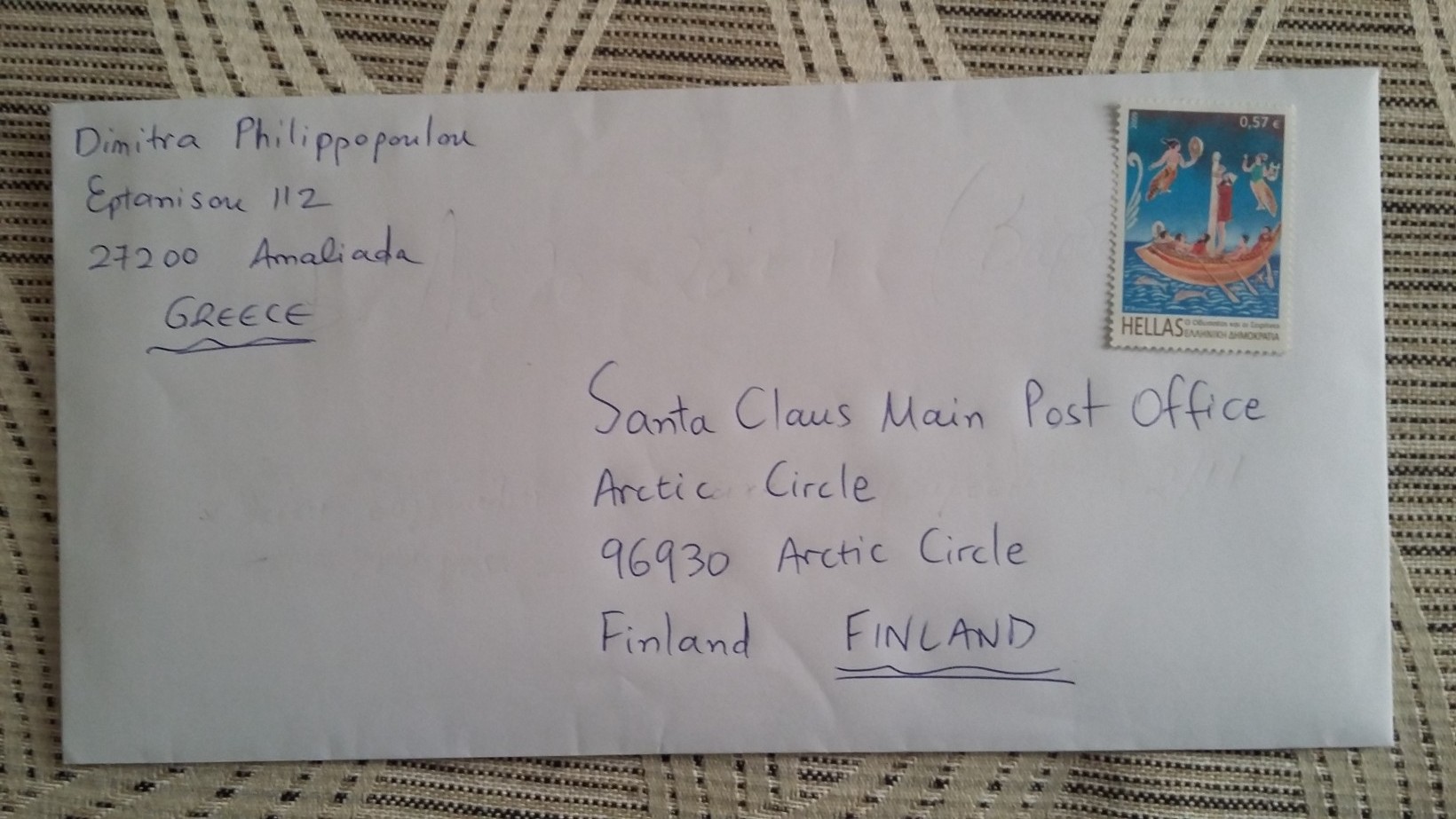
A letter to Santa Claus in Lapland!

Every year, with my D class students, we will normally send at least one letter to Santa Claus in Lapland around December. The “elves” from the Santa Claus main post office in the Arctic Circle will normally answer; of course, the children don’t believe they will, because “There is no Santa Claus!!!!” (as they say), but they always do, which is lovely!

20161227_093322

This year, we have a new student in class, who came from China last summer and used to go to school there. So, we are on a “get to know other countries” mode, and in this context the kids wanted to know more about Finland. So, why not ask Santa Claus?! You know, the good old “let’s ask the locals” Greek policy, instead of doing the homework. But if Santa replies, then voila! There’s the motivation they need to start doing some homework indeed.

20161227_092725

Needless to say, the students like to draw Christmasy stuff to go with their letter, and they all sign the letter, which is written by the one with the best handwriting (the choice is theirs).

20161227_092847

And this is a very nice picture with a boat; “because we are traditionally a nautical people.” And “the Finns should know it’s not always sunny in Greece.” Don’t you love how innocent and straightforward kids are?


Christmas cards for young learners: Square shapes, lettering and ribbon!

Ho ho ho! It’s this time of year when kids like to bring their wishes home after school, especially if they have written them in the new language they are learning… English!

I found this lovely printed cardboard in my local bookstore, bought two sheets and cut each sheet into 20 squares; then I paired these squares with 40 more from simple red canson, binding each pair with red ribbon! The students wrote their Merry Christmas wishes and their names in English on a piece of simple white paper, which they glued on the red canson inside. Lovely! They even said they would hang their cards from their Christmas trees at home!

So… why don’t you try and see how many words in English you will find on this card:

20161222_122850

Merry Christmas everyone!

“Αίσωπε και Potter, παραμυθοβγαίνουμε;” – Happy birthday, Beatrix Potter!

Το 2016 είναι η χρονιά που συμπληρώνονται 150 χρόνια από τη γέννηση της Beatrix Potter, μίας από τους πιο πολυαγαπημένους συγγραφείς παιδικών βιβλίων, που έχει αιχμαλωτίσει τη φαντασία των παιδιών για πάνω από 100 χρόνια με τις υπέροχα εικονογραφημένες ιστορίες της. Όμως, λίγοι γνωρίζουν το πόσο συναρπαστική γυναίκα ήταν η Beatrix, ή τα επιτεύγματα της ζωής της, σε μια εποχή που οι φιλόδοξες γυναίκες έβρισκαν εμπόδια στο να ευδοκιμήσουν. Ακόμη λιγότεροι τη γνωρίζουν στην Ελλάδα, ειδικά από τη στιγμή που τα έργα της παραμένουν αμετάφραστα. (Για το θέμα αυτό, μπορείτε να δείτε εδώ.)

Καλλιτέχνις, παραμυθού, βοτανολόγος, περιβαλλοντολόγος, αγρότισσα και άψογη επιχειρηματίας, η Potter υπήρξε οραματίστρια και πρωτοπόρος. Ισχυρογνώμων, αποφασιστική και φιλόδοξη ξεπέρασε την επαγγελματική απόρριψη, την ακαδημαϊκή ταπείνωση και τον προσωπικό της σπαραγμό, προχωρώντας στο να κάνει την περιουσία της και μια τρομερή φήμη.

Ποια καλύτερη λοιπόν ευκαιρία για να γνωρίσουν τα παιδιά αυτήν την σημαντική γυναίκα; Ιδού μερικοί σύνδεσμοι που επισκεφτήκαμε:

http://www.peterrabbit.com/

https://learnenglishkids.britishcouncil.org/en/short-stories/beatrix-potter

https://www.nationaltrust.org.uk/lists/celebrating-beatrix-potters-anniversary-in-the-lake-district

http://beatrixpottersociety.org.uk/about-beatrix/

http://www.vam.ac.uk/content/articles/b/biography-beatrix-potter/

Έπειτα, γιορτάσαμε την επέτειο των 150 χρόνων από τη γέννησή της, ζωγραφίζοντας τούρτες γενεθλίων!

20161209_133505

Θέλετε να μάθετε τι κάναμε μετά; Stay tuned!


School survey shows good news about students habits

The students of E class in the 4th Primary School of Amaliada surveyed students of all the other classes in the school, about some of their habits. The aim was to show how healthy or unhealthy students habits are, and this is how we did it:

20161130_122656

First I gave each student of E1 and E2 a handout with the following questions:

How often do you eat souvlaki?

  1. Four or more times a week
  2. Once a week
  3. Once every two weeks
  4. Once a month or less

Do you eat healthy snacks (fruit, dried nuts, sesame bar, yoghurt, home-made pies etc.) at school?

  1. Yes, I usually eat healthy snacks.
  2. Yes, but I sometimes eat unhealthy snacks.
  3. No, never, because I don’t like healthy snacks.
  4. No, because my friends always eat unhealthy snacks, too.

Do you drink 8 cups of water every day?

  1. Yes, I usually do.
  2. No, I don’t. I always prefer soft drinks.
  3. Yes, but I sometimes drink soft drinks, too.
  4. No, I don’t. I forget to drink water.

Do you exercise?

  1. Yes, I play a lot of football!
  2. Yes, I go to my dance class / swim at the swimming pool / go to my tae kwon do class etc. two or three times a week.
  3. No, not really. I only walk a little.
  4. No, I don’t. I don’t exercise at all.

What time do you sleep at night?

  1. I sleep at 9 o’clock in the evening, because I am always tired at that time.
  2. I go to bed at 10:30 p.m., because I have a lot of homework to finish before bedtime.
  3. I go to sleep at 11:30 because I want to play a lot of computer games before I sleep.
  4. I go to bed after midnight, because I watch TV till early in the morning. I find it hard to wake up the next day!

Then, we carried out an in-class mini survey, and in both E1 and E2 the results were almost identical: Most children have habits that tend to be healthy, as they mostly eat souvlaki once a week, they usually eat healthy snacks, they usually drink 8 cups of water every day, they exercise systematically and they sleep between 9-10:30 p.m., which is appropriate. There were exceptions, of course, but the vast majority is found in the “healthy habits” category.

After the in-class survey, the students were willing to conduct a larger one, where I would divide them in teams and send them off to interview students from another class. All the rest eight classes of our school were interviewed, at least a sample of 10 students (or more) from each one. I was really surprised by how fast it happened, since I had given them 5 working days to complete this phase. I was also surprised by how talkative some shy students became, for the sake of their project.

20161201_092337

When they finally came back with their answers, we concentrated and grouped them. I thought it would be a tedious procedure, but it turned out they were paying enough attention to count the As, Bs, Cs and Ds corrently!

These are the sentences they wrote:

  • Most kids eat souvlaki once a week.
  • Most kids eat healthy snacks at school.
  • Most kids drink 8 cups of water every day.
  • Most kids exercise 2-3 times a week.
  • Most kids sleep early.

Good job! And above all, this is very good news!


“Αίσωπε και Potter, παραμυθοβγαίνουμε;” -Η εκκίνηση

Με μεγάλη μου χαρά γράφω αυτό το άρθρο στα ελληνικά, διότι αναφέρεται σε ένα πολυαγαπημένο μου αντικείμενο: Τη λογοτεχνική μετάφραση! Είναι κάτι που το έχω σπουδάσει, εξασκήσει, μα κυρίως, κάτι που υπεραγαπώ! Ιδανικά, πάντοτε φανταζόμουν τον εαυτό μου ως «γέφυρα», και το να μεταφράζω λογοτεχνικά κείμενα είναι τελικά πολύ συναφές με το να διδάσκω…

Φέτος συμπληρώνονται 150 χρόνια από τη γέννηση της Beatrix Potter.  Της πιο αγαπημένης παιδικής συγγραφέως του 20ού αιώνα, που παραμένει άγνωστη στην Ελλάδα. Προσπάθησα να βρω τυχόν παλιότερες μεταφράσεις στα ελληνικά, όμως στάθηκε αδύνατο, καθώς τα βιβλία με τους –ομολογουμένως– όχι και τόσο εμπνευσμένους τίτλους ήταν «μη διαθέσιμα» από τους εκδότες. Πολτοποίηση;

Κι όμως, η Potter είναι εξόχως σημαντική. Η ζωή της, τα έργα της,  η εικονογράφηση που έκανε στα έργα της, η επιστημοσύνη της, η σχέση των ιστοριών της με αυτές του Αισώπου… Κι εμείς στα ελληνικά ούτε μυρωδιά. Τι κρίμα!

Τότε, μου περνάει από το μυαλό η σκέψη ότι έχω διαθέσιμους τους πιο αυστηρούς κριτές για τις μεταφράσεις μου (όπως άλλωστε και για τα μαλλιά μου, το ντύσιμό μου, καταλαβαίνετε…): Τα ίδια τα παιδιά, τους μαθητές μου!

Φέτος λοιπόν, που συμπληρώνονται 150 χρόνια από τη γέννηση της Beatrix Potter, δασκάλα στο Γ1 είναι η Πετρούλα. Η εκλεκτή συνάδελφος και φίλη, Πετρούλα Κουρτέση (το “εκλεκτή” είναι understatement). Στα πλαίσια της συνεργασίας μας, μου προτείνει να κάνουμε πρόγραμμα φιλαναγνωσίας μαζί. Εκείνη θα αναλάβει Αίσωπο & σύγχρονους παραμυθάδες, εγώ Potter, συν-συντονίστριες και άλλων εκπαιδευτικών ειδικοτήτων, πληροφορικής, θεατρικής αγωγής.  Δυο κούπες καφέ κάποιο απόγευμα που έγινε βράδυ, πολλά βιβλία στο τραπέζι, και  φύγαμε!

Στόχοι γνωστικοί, συναισθηματικοί, ψυχοκινητικοί. Δραστηριότητες καλά σχεδιασμένες. Προκλήσεις πολλές. Ισχυρότερο κίνητρο: Να νικήσουμε τη μιζέρια της εποχής μας, να απαντήσουμε με παιδεία στο έλλειμμα παιδείας που μας καταδυναστεύει.


20161118_132626

Ωραία η αφίσα μας; Έπεται συνέχεια! Stay tuned!

The Merchant of Venice, presented in our school show!

The time finally came, in the evening of the 14th of June, for my other (E1) 5th grade students to present all the work they did the last few months. Almost all of them knew their English lines by heart, and only one student needed his sheet of paper in order to feel more confident, even though he could remember most of his words.

We did have some problems with the sound, as the sound expert the school had hired arrived late, but other than that the kids enjoyed it a lot, they got plenty of kudos, and eventually they felt more bonded.  Mission accomplished!


20160607_132239

20160607_103326

20160614_193104

You can see my shadow on the right of the last picture, along with the shadow of my dear colleague Maria Dimitrakopoulou, who was so amazing and kind as to come to our school show just to be by our side! Thank you so much, Maria! Happy summer, everyone!

The class garden book – finished!

Mr. Angelos Michalopoulos and his E2 class did a wonderful job creating an amazing botanical garden and then hosting an event of guiding other classes through the various plants, talking about the qualities that they have, explaining the procedure of composting, helping each student plant a seed and then give them the pot to take at home, showing students how to make a homemade mosquito repellant, how to make a herbal mixture to send off unwanted insects and protect new plants, talking about healthy eating habits and even playing a game to illustrate them. Finally, students had a chance to see the garden book the E2 class created during our English lessons, with the names of the plants in Greek and English and the qualities that they have, in both languages. My students were so proud to present their book and everything else they did with their teacher.


20160613_085608

20160613_113045


Great job, everybody!

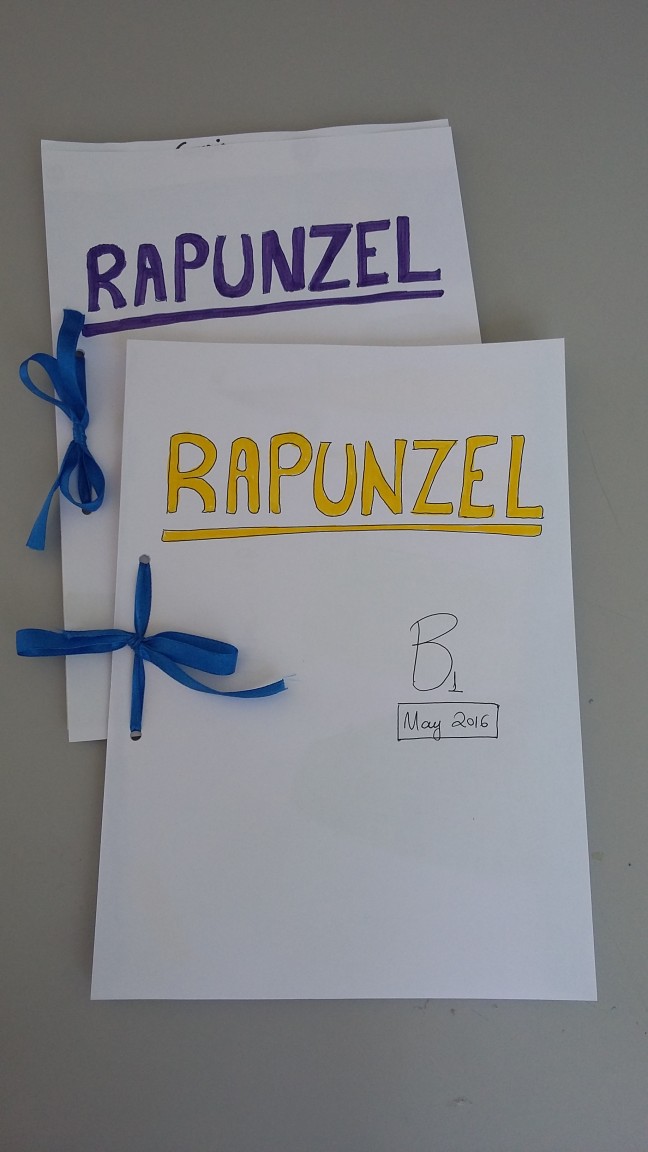
Rapunzel, illustrated

I love telling stories and fairy tales to my younger pupils, in B Class. I also love reading them from the original, and they often love to listen, especially if it’s the last hour of the day and they are too tired to do anything else; it’s relaxing. I tell them a few things about the story before I start, and I ask them a few questions about it when I finish, to see if they have understood the basics, and they usually have. On such a day, I brought Rapunzel to class, and they were totally absorbed!

We also discussed the plot, analyzed the characters and shared our feelings about this tale. The next time we had a lesson, I wrote a few sentences, excerpts from the story, on the board, and asked them if they could guess what they meant. Indeed they could, for most of them, they have a way of remembering clusters of meanings that I repeat, so then I asked them to copy them to their notebooks and see if they could tell me which sentence goes first, second etc. I had to switch to Greek here a lot, if I was to get any answers, but in general they were able to number the sentences correctly.

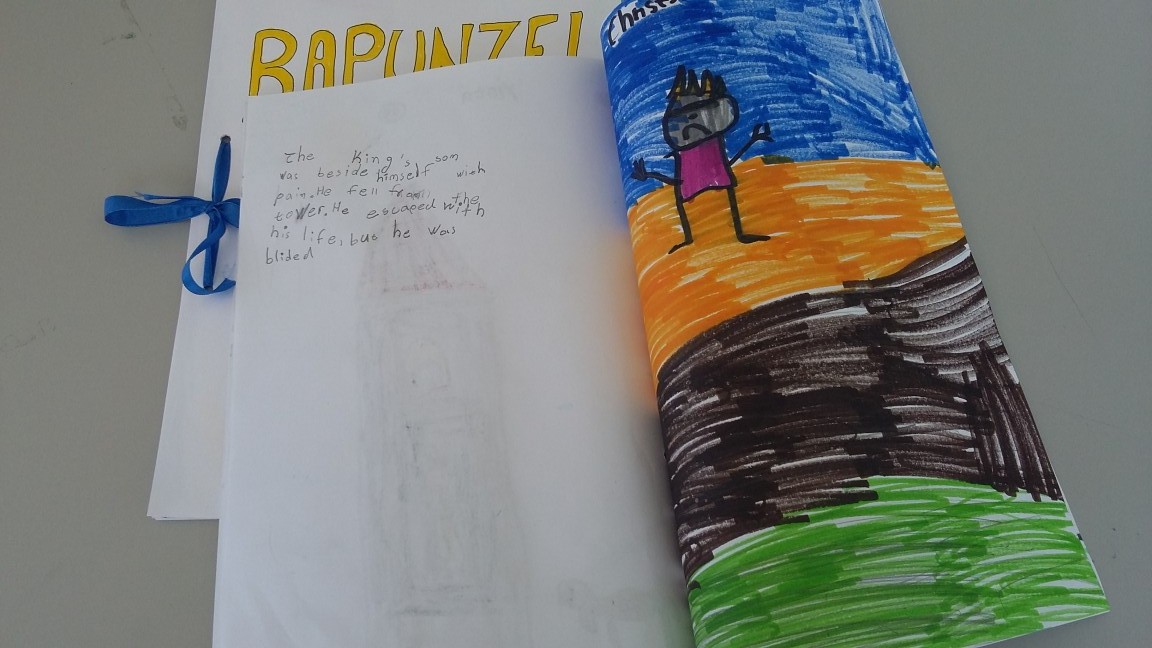
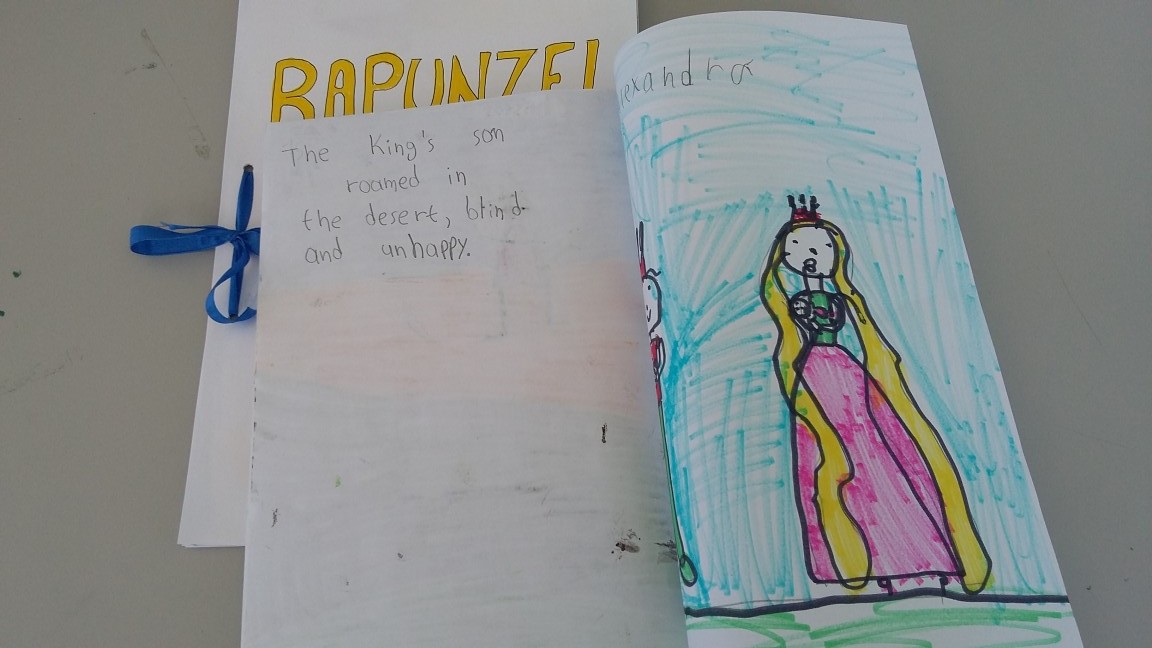
On the third time we had our Rapunzel lesson, it was time for them to draw! Each student was given a sentence from the story, told which scene to draw, and asked to copy that sentence at the back of the piece of paper. We put all the drawings together, in the order the sentences appear in the story. This was the result (some of it, anyway):

20160526_112012

20160526_112042  20160526_112052

20160526_112231  20160526_112349

20160526_112400  20160526_112413

This endeavour came after I attended a seminar with Mr. Nikos Toumazatos, about how to illustrate a children’s book. I was definitely inspired, what can I say! I just hope I can ask my students to illustrate more in the future, it definitely seems to be making a difference when it comes to involvement in the story!

The Merchant of Venice experiment: The way the characters look, according to the students who play them

So… my E1 students have grown a bit wild after Easter. Luckily, I know I can calm them down when I shout: “Rehearsal!”. Last Friday they were willing to share with me the way they think the character they play looks. Here is the result: From left to right, top to bottom, you can see Antonio, Portia, Shakespeare, the Duke, translator 1, narrator, the clerk, translator 2 and Shylock. Nice!

pizap.com14635794776261