Μεταμορφώνοντας τις διαδικτυακές συνεδρίες


Μεταμορφώνοντας τις διαδικτυακές συνεδρίες
“Mandinka” was released as a single on 1 December 1987.
In an April 1988 interview with The Tech, Sinéad O’Connor said: “Mandinkas are an African tribe. They’re mentioned in a book called Roots by Alex Haley, which is what the song is about. In order to understand it you must read the book.”
In fact, the Mandinka or Malinke are a West African ethnic group primarily found in southern Mali, the Gambia and eastern Guinea. Numbering about 11 million, they are the largest subgroup of the Mandé peoples and one of the largest ethnic-linguistic groups in Africa.
Even if the Mandinka are the inspiration behind this track, they aren’t its subject per se. Being victims of the Transatlantic Slave Trade—as made known through Roots—they had to put personal pride aside, if you will, in the name of surviving that harrowing ordeal.
So when Sinéad asserts that “she knows Mandinka,” what she appears to be referring to, in context, is likening said people to someone who has transcended “shame” and “pain.” We can reasonably assume that she identifies with the suffering of those people.
Or at least, that’s one way of trying to make sense out of the lyrics. It’s obvious that the songstress didn’t go out of her way to make her song easily understandable. The listener is forced to do some theorizing on his or her own part.
I’m dancing the seven veils
Want you to pick up my scarf
See how the black moon fades
Soon I can give you my heart
I don’t know no shame
I feel no pain
I can’t see the flame
But I do know Man-din-ka
I do know Man-din-ka
I do know Man-din-ka
I do
They’re throwing it all this way
Dragging it back to the start
And they say, “See how the glass is raised?”
I have refused to take part
I told them “drink something new”
Please let me pull something through
I don’t know no shame
I feel no pain
I can’t
I don’t know no shame
I feel no pain
I can’t see the flame
But I do know Man-din-ka
I do know Man-din-ka
I do know Man-din-ka
I do
I do
I do
I say I do
Soon I can give you my heart
I swear I do
Soon I can give you my heart
I do
Mandinka
Soon I can give you my heart
Soon I can give you my heart
Ευρωπαϊκό Έργο GENE (Global Education Network Europe)
Μάρτιος – Ιούλιος 2023

“That’s one small step for man, one giant leap for mankind.”
— Neil Armstrong
Ένα μικρό βήμα για τον άνθρωπο, ένα γιγάντιο άλμα για την ανθρωπότητα.
Ο πατέρας λέει στο γιο του να μην πλησιάσει και να μην ακουμπήσει το φρουρό
επειδή κάτι τέτοιο δεν επιτρέπεται.
Ο φρουρός ξέρουμε ότι απαγορεύεται να κινηθεί.
Σπάει το πρωτόκολλο και κινείται για να βγει καλή η φωτογραφία με το παιδί.
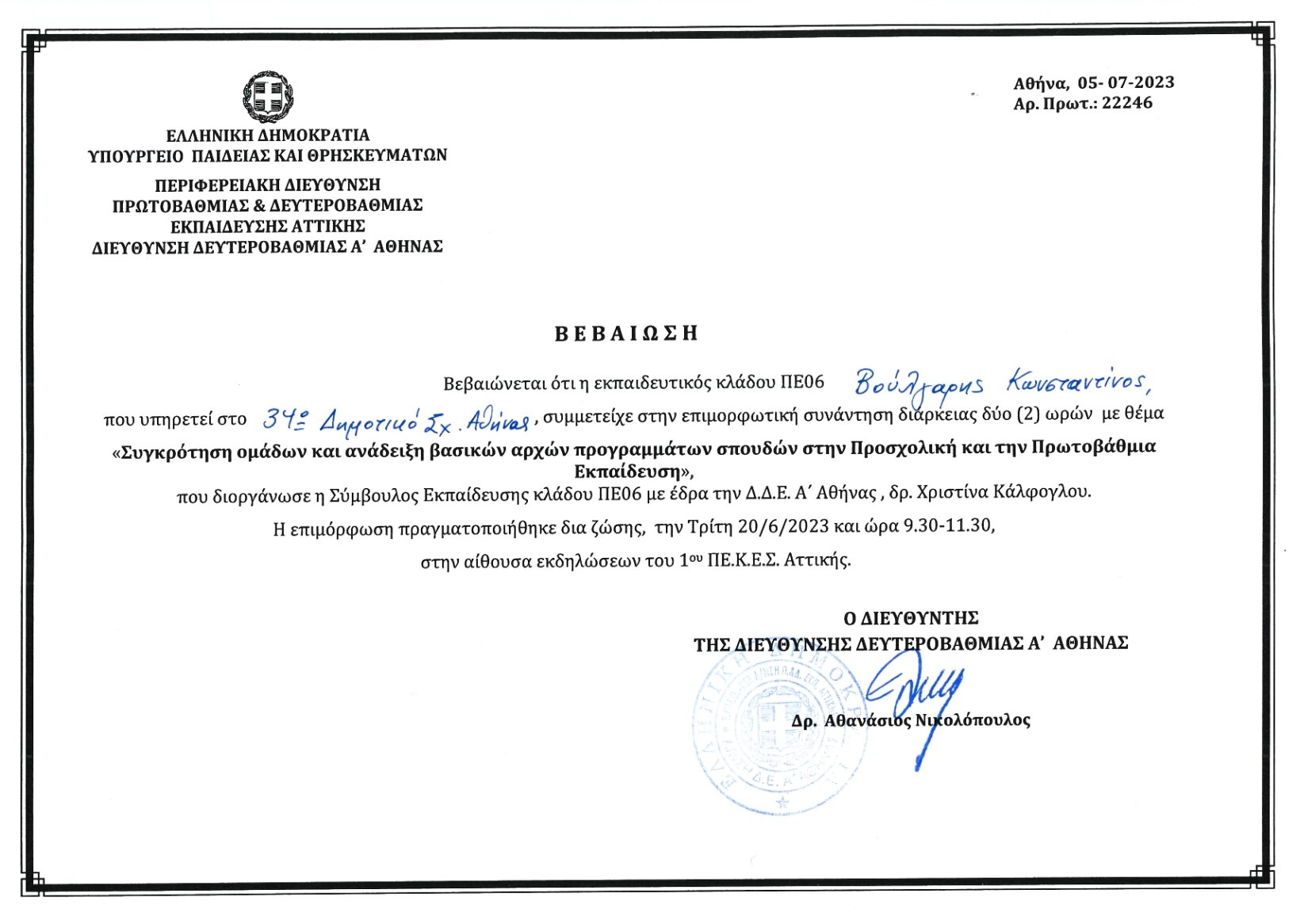
και ανάδειξη βασικών αρχών προγραμμάτων σπουδών
στην Προσχολική και την Πρωτοβάθμια Εκπαίδευση
20/6/2023
Francisco X. Alarcón (1954-2016) was a Chicano poet and educator
born in Wilmington, California.
In a Neighborhood in Los Angeles
Τranslated by Francisco Aragón
I learned
Spanish
from my grandma
mijito
don’t cry
she’d tell me
on the mornings
my parents
would leave
to work
at the fish
canneries
my grandma
would chat
with chairs
sing them
old
songs
dance
waltzes with them
in the kitchen
when she’d say
niño barrigón
she’d laugh
with my grandma
I learned
to count clouds
to recognize
mint leaves
in flowerpots
my grandma
wore moons
on her dress
Mexico’s mountains
deserts
ocean
in her eyes
I’d see them
in her braids
I’d touch them
in her voice
smell them
one day
I was told:
she went far away
but still
I feel her
with me
whispering
in my ear:
mijito
En un barrio de Los Ángeles
el español
lo aprendí
de mi abuela
mijito
no llores
me decía
en las mañanas
cuando salían
mis padres
a trabajar
en las canerías
de pescado
mi abuela
platicaba
con las sillas
les cantaba
canciones
antiguas
les bailaba
valses en
la cocina
cuando decía
niño barrigón
se reía
con mi abuela
aprendí
a contar nubes
a reconocer
en las macetas
la yerbabuena
mi abuela
llevaba lunas
en el vestido
la montaña
el desierto
el mar de México
en sus ojos
yo los veía
en sus trenzas
yo los tocaba
con su voz
yo los olía
un día
me dijeron:
se fue muy lejos
pero yo aún
la siento
conmigo
diciéndome
quedito al oído:
mijito
Σε μια γειτονιά του Λος Άντζελες
έμαθα
ισπανικά
από τη γιαγιά μου
mijito
μην κλαις
μου έλεγε
κάθε πρωί
οι γονείς μου
έφευγαν
για δουλειά
στην «κονσερβοποιία
ιχθυηρών»
η γιαγιά μου
κουβέντιαζε
με τις καρέκλες
τους έλεγε
παλιά
τραγουδάκια
χόρευε
μαζί τους βαλς
στην κουζίνα
με φώναζε
niño barrigón
και μου γελούσε
με τη γιαγιά μου
έμαθα
να μετρώ τα σύννεφα
να αναγνωρίζω
τα φύλλα της μέντας
στις γλάστρες
η γιαγιά μου
φορούσε ένα φόρεμα
με φεγγάρια
τα βουνά του Μεξικού
τις ερήμους
τον ωκεανό
στα μάτια της
τα έβλεπα
στις πλεξούδες της
τα άγγιζα
στη φωνή της
τα μύριζα
μια μέρα
μου είπαν:
έφυγε μακριά
μα ακόμα
τη νοιώθω
μαζί μου
να μου ψιθυρίζει
στο αυτί:
mijito

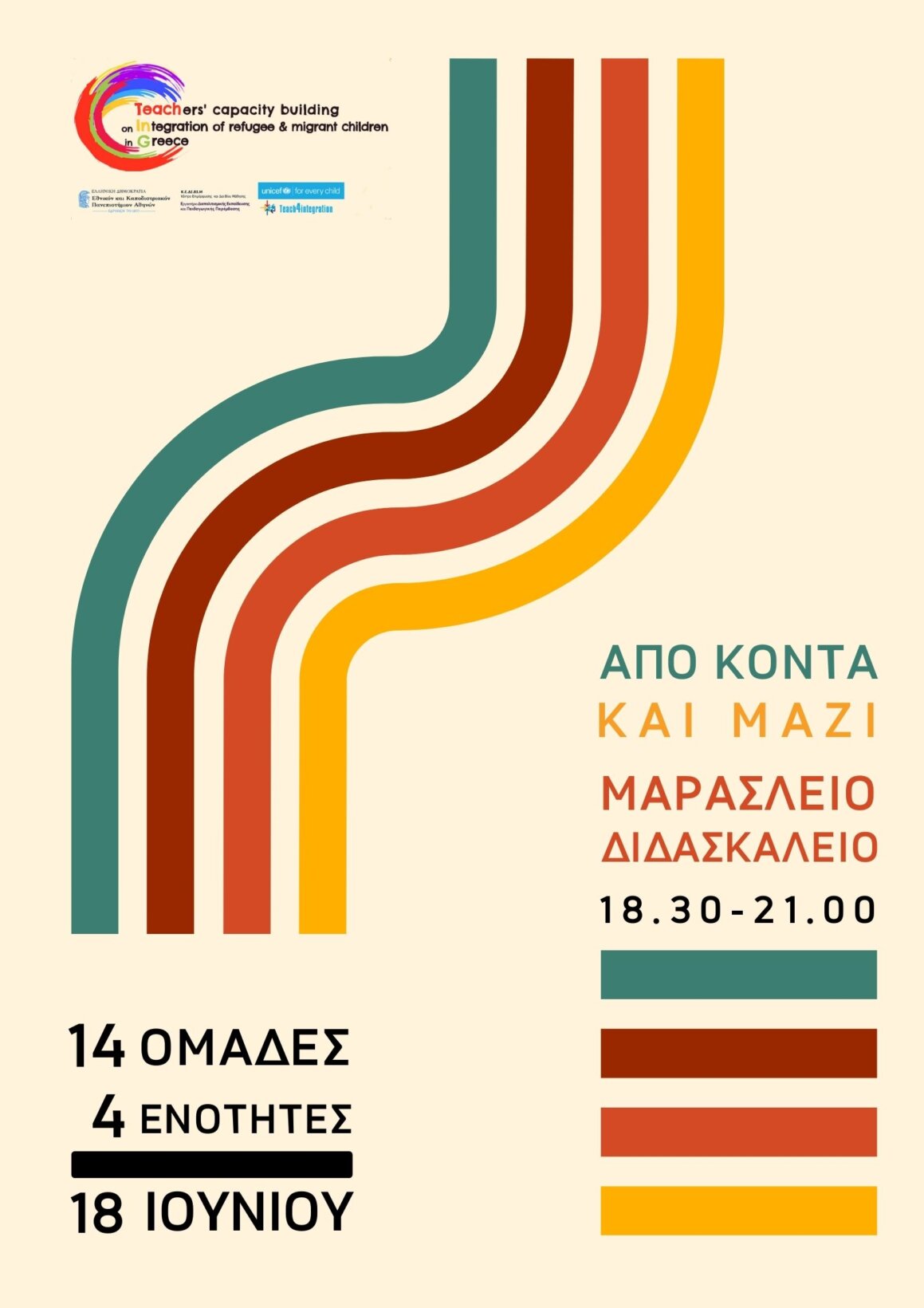
Μαράσλειο Διδασκαλείο Δημοτικής Εκπαίδευσης
Μαρασλή 4, Αθήνα
Λήξη επιμόρφωσης
Teach.in.G.
Teachers’ Capacity Building
on the Integration of Refugee and Migrant Children
in Greece
Ανάπτυξη δεξιοτήτων των διδασκόντων
για την ένταξη των παιδιών προσφύγων και μεταναστών
στην Ελλάδα



Πώς να ξεχωρίσω
24/10/2022 – 28/05/2023


Ενδυναμώνοντας τον εαυτό μου και το ρόλο μου
Δήμος Αθηναίων
Κέντρο Πρόληψης των Εξαρτήσεων
και Προαγωγής της Ψυχοκοινωνικής Υγείας
«Αθηνά Υγεία»
«Παλλάς Αθηνά», 1η Δημοτική Κοινότητα
Βίκτωρος Ουγκώ 30


Έφτασαν στο δημοτικό σχολείο Sprankel
της βελγικής πόλης Roeselare (Ρούσελαρε)
τα γράμματα των μαθητριών και μαθητών μου της Ε’ τάξης,
μαζί με τις εργασίες που κάναμε στο μάθημα των Αγγλικών,
οι οποίες είχαν ως θέμα —μεταξύ άλλων— το Μέγα Αλέξανδρο, τον Οιδίποδα Τύραννο, τον William Shakespeare και την Anne Boleyn.
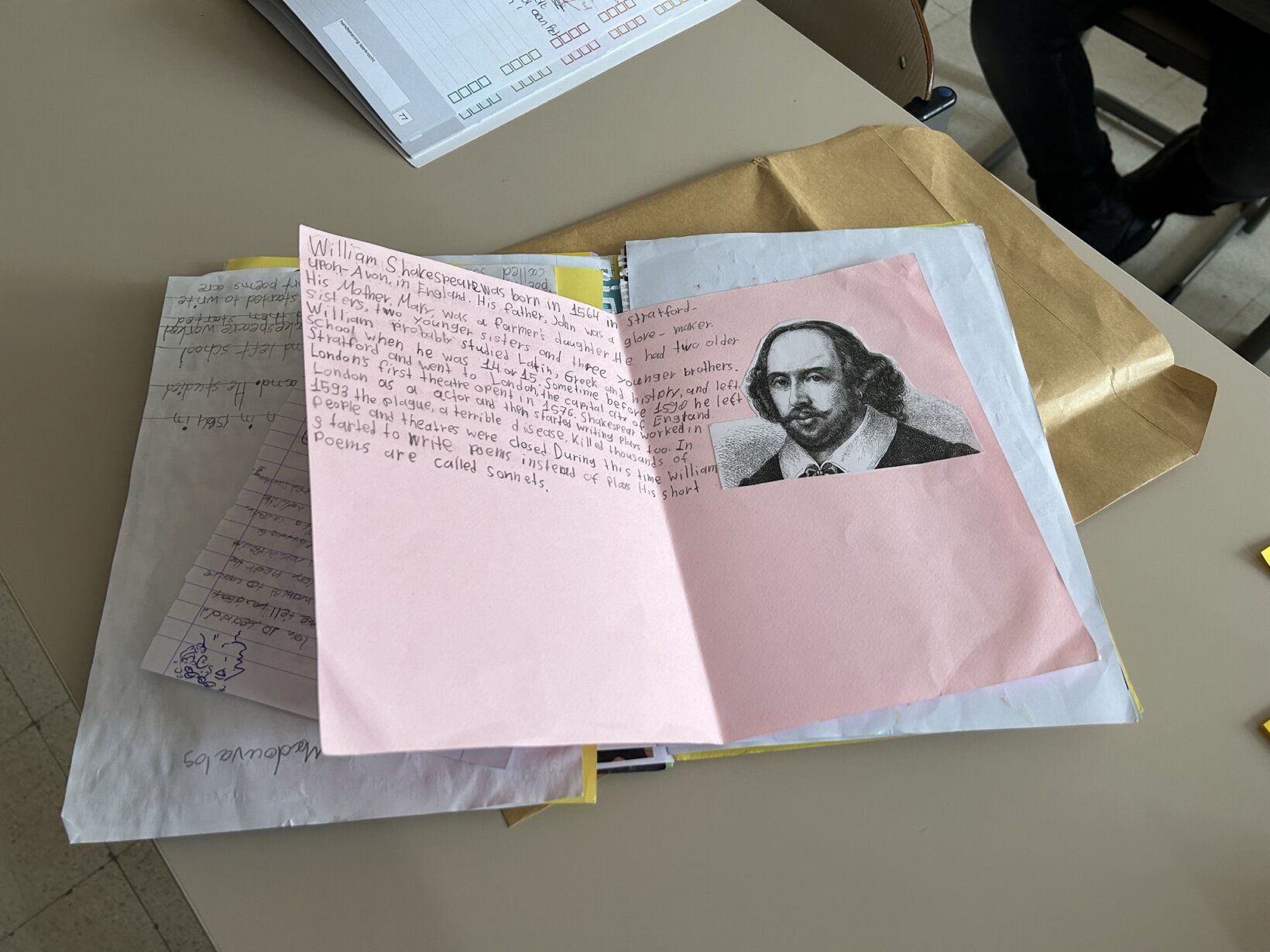


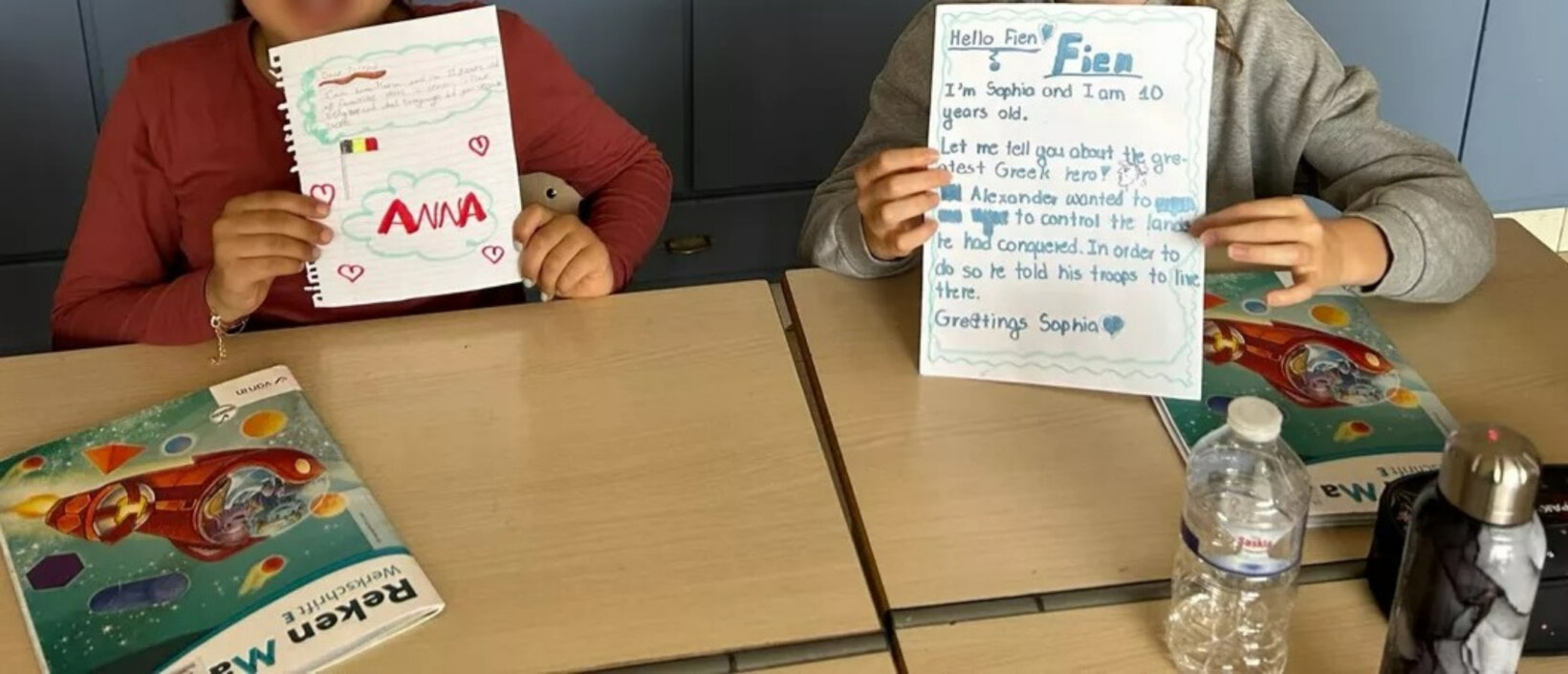


Brieven uit Athene / Letters from Athens
Een verrassende kennismaking met enkele belangrijke figuren uit de Europese geschiedenis dankzij onze Griekse vrienden.
A surprising introduction to some important figures in European history thanks to our Greek friends.
Bart Mallezie
Πρόβλημα και Προστασία

Αν η αποτυχία είναι τόσο σημαντική, γιατί δεν μιλάμε γι’ αυτήν;
Πόσο συχνά μιλάμε για τις αποτυχίες μας, για τα λάθη μας;
Πώς το κάνουμε;
5 Απρ. 2023

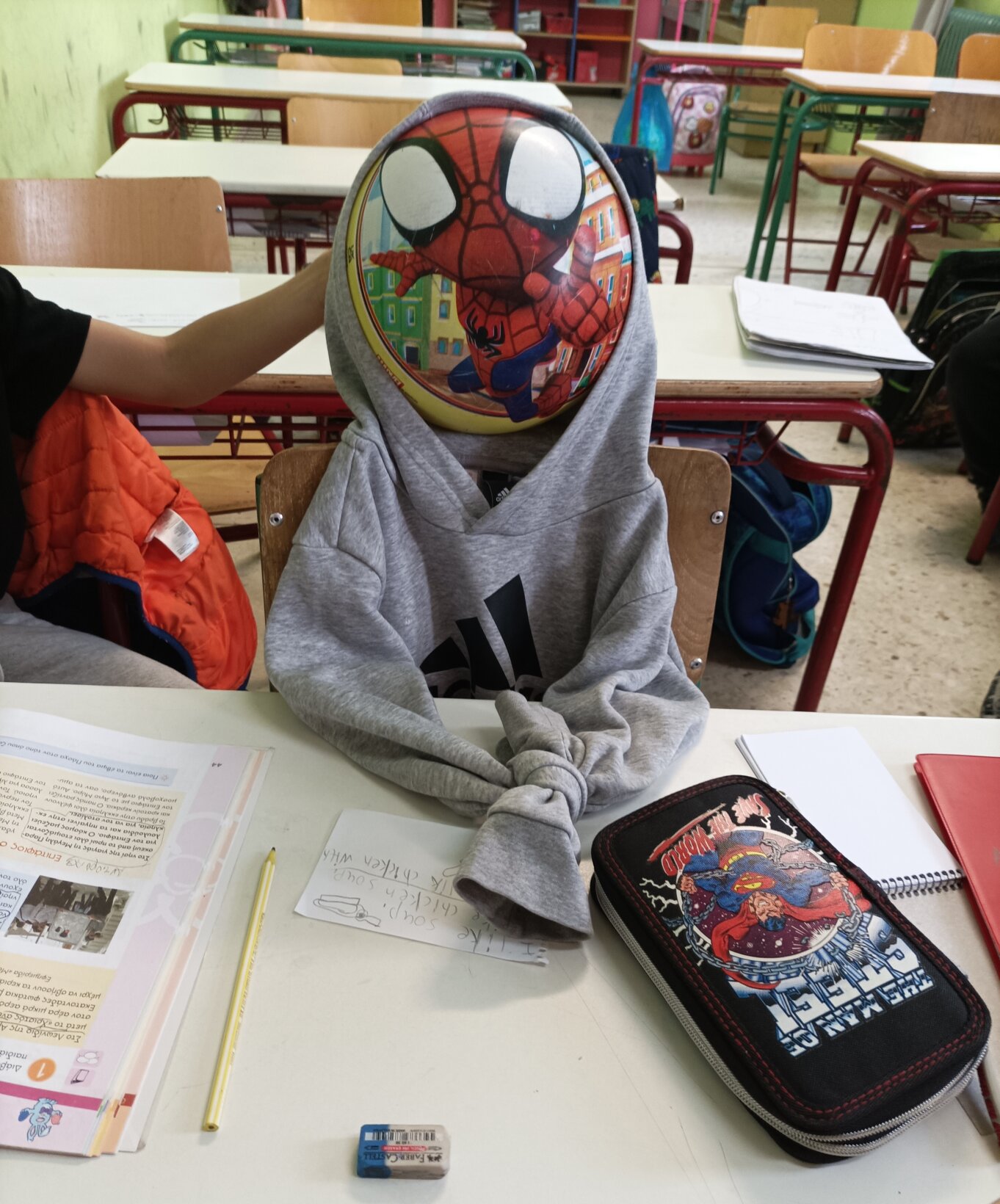
Ο νέος μας συμμαθητής
Δεξιότητες επικοινωνίας για εκπαιδευτικούς


ΠΕ06 Αγγλικής Φιλολογίας
eTwinning


Hi, I’m Kostas, short for “Constantine.”
Born and raised in Athens, Greece,
I have studied English and Journalism
(Σχολή Δημοσιογραφίας ANT1)
and I teach English at a state primary school in the Greek capital.
Wishing to provide my students with a wider view of the world, I am searching for interesting international opportunities to learn about different cultures and global issues.
Επιθυμώντας να προσφέρω στους μαθητές και τις μαθήτριές μου μία ευρύτερη θεώρηση του κόσμου, αναζητώ ευκαιρίες συνεργασίας στην Ελλάδα/Κύπρο και το εξωτερικό προκειμένου να μάθουμε μαζί για διαφορετικούς πολιτισμούς και να ενημερωθούμε για παγκόσμια θέματα.













Με κέρδισε όμως η Εκπαίδευση. 🙂








Η χρήση της Τεχνητής Νοημοσύνης
στο μάθημα της Αγγλικής
στην Α/βάθμια Εκπαίδευση

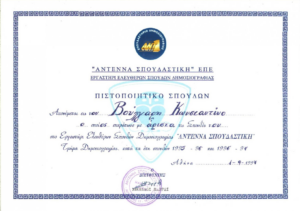
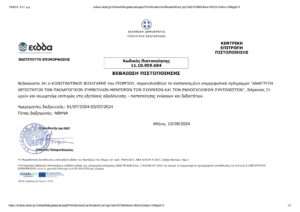
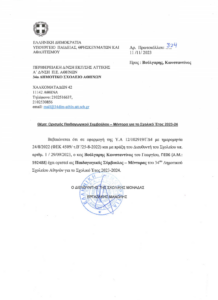
1. Teach.in.G. | Εκπαίδευση εκπαιδευτικών: Γλωσσική και ψυχοπαιδαγωγική διαχείριση πολύγλωσσων και πολυπολιτισμικών τάξεων
2. Ειδική Αγωγή: Διεπιστημονικές πρακτικές σύγκλισης
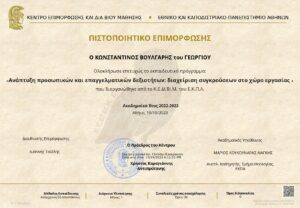
3. Ανάπτυξη προσωπικών και επαγγελματικών δεξιοτήτων: Διαχείριση συγκρούσεων στο χώρο εργασίας
4. Διαπροσωπικές σχέσεις: Το φαινόμενο της μοναξιάς στη σύγχρονη εποχή
Διαχείριση και αντιμετώπιση
5. Από τη μία στην άλλη πλευρά του Αιγαίου:
Η εγκατάσταση των Μικρασιατών προσφύγων στην Ελλάδα μέσα από τη λογοτεχνία
6. Θρησκεία και Ψυχανάλυση
7. Παραπληροφόρηση ή αληθινές ειδήσεις; Μάθετε να τα ξεχωρίζετε
8. Σπουδή στην Ορθόδοξη Θεολογία
9. Τα δικαιώματα του παιδιού
10. Philosophical Life Coaching

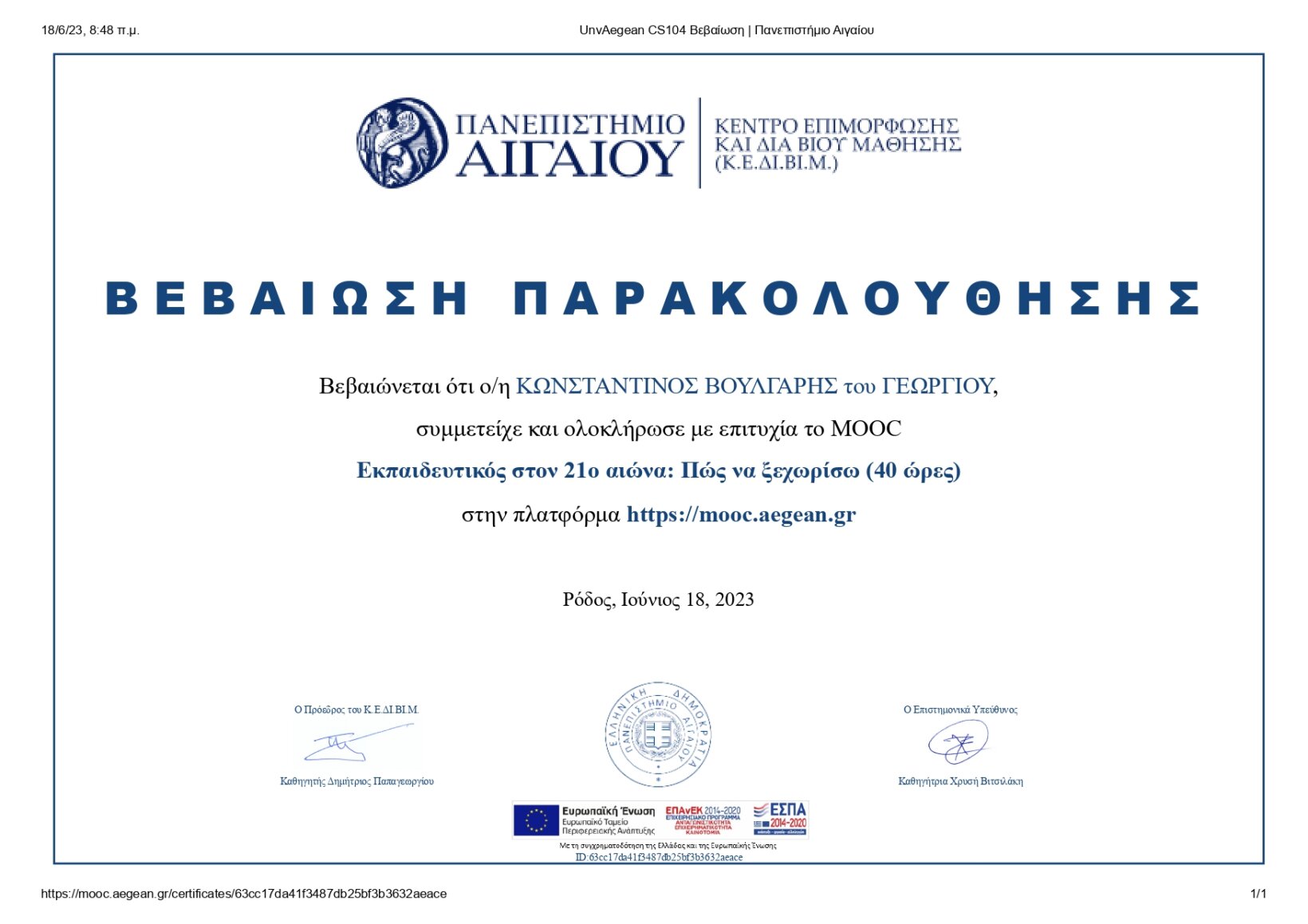
1. Εκπαιδευτικός στον 21ο αιώνα: Πώς να ξεχωρίσω
2. Διαχείριση της πολυπολιτισμικότητας στην εκπαίδευση και κοινωνική ένταξη μεταναστών /προσφύγων
3. Σχολική Ψυχολογία
4. Ενδοσχολική βία και εκφοβισμός: Πρόληψη και αντιμετώπιση
5. Μέθοδοι της Μετασχηματίζουσας Μάθησης στο πλαίσιο της Διά Βίου Μάθησης

Σύγχρονες αρχές και πρακτικές στην Ειδική Αγωγή και Εκπαίδευση

1. Σχολική Νοσηλευτική και Ψυχική Υγεία
2. Πρόληψη και αντιμετώπιση της επιθετικότητας στο σχολικό περιβάλλον: Εργαλεία και στρατηγικές διαχείρισης
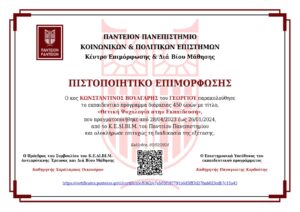
1. Πρόληψη και αντιμετώπιση ρατσισμού
στα δημοτικά σχολεία
2. Θετική Ψυχολογία στην Εκπαίδευση
3. Ενισχύστε την εκπαίδευσή σας με τη δύναμη
της Τεχνητής Νοημοσύνης (AI)

Διαχείριση σχολικής ζωής: Ηγεσία, κρίσεις, διαφορετικότητα, συμπερίληψη

Αγωγή και ετερότητα: Αξιοποιώντας την Τέχνη
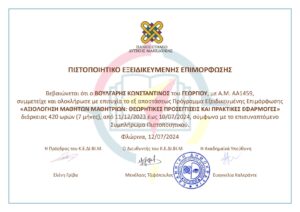
1. Αξιολόγηση μαθητών/μαθητριών: Θεωρητικές προσεγγίσεις και πρακτικές εφαρμογές
2. Έμφυλες σχέσεις και ενδυνάμωση μέσα από αφηγηματικές τεχνικές
1. Ο/Η άνθρωπος-πολίτης/πολίτιδα
απέναντι στο θάνατο και την απώλεια:
Παιδαγωγικές και κοινωνικές προσεγγίσεις
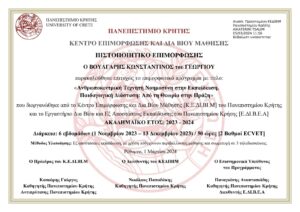
2. Ανθρωποκεντρική Τεχνητή Νοημοσύνη στην Εκπαίδευση: Παιδαγωγική διάσταση
Από τη θεωρία στην πράξη
3. Γνωριμία με το Magic School στην εκπαιδευτική πράξη
4. LIFE on mARTs
5. Ανθρωποκεντρική Τεχνητή Νοημοσύνη στην Εκπαίδευση: Μετασχηματίζοντας τον τρόπο με τον οποίο διδάσκουμε και μαθαίνουμε

1. Επιμορφώνοντας τους εκπαιδευτικούς στο Ολοκαύτωμα: Ανθρωπολογικές αναγνώσεις
του κινηματογράφου
2. Εισαγωγή στην αλβανική γλώσσα

1. Σπουδές στον Ποντιακό Ελληνισμό
2. STEAM Education for All Learners: Incorporating STEAM and Inclusive Education Practices in Everyday Teaching
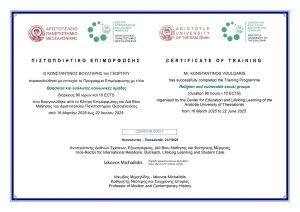
Θρησκεία και ευάλωτες κοινωνικές ομάδες
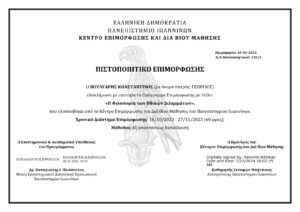
1. Ψυχολογικές προσεγγίσεις του παιδικού σχεδίου
2. Η Φιλοσοφία των Ηθικών Διλημμάτων

Προαγωγή ψυχικής υγείας και ευεξίας
στα σχολεία: Well@School Project
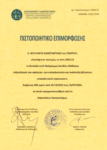
Αξιολόγηση του σχολείου, των εκπαιδευτικών
και ανάπτυξη βέλτιστων λεκπαιδευτικών πρακτικών

1. Επιμόρφωση των Εκπαιδευτικών
στις Δεξιότητες μέσω Εργαστηρίων
2. Εισαγωγή της Αγγλικής Γλώσσας
στο Νηπιαγωγείο (ΕΑΝ)
3. Αναπηρία και διαφορετικότητα,
αυτιστικό φάσμα,
προβλήματα προσοχής και συγκέντρωσης
4. Εκπαίδευση για την Ιδιότητα
του Παγκόσμιου Πολίτη
Ευρωπαϊκό Έργο GENE
(Global Education Network Europe)
5. Διαφοροποιημένη Διδασκαλία:
Πρακτικές υποστήριξης
των μαθητών και των μαθητριών
6. Πρόληψη και αντιμετώπιση περιστατικών ενδοσχολικής βίας και εκφοβισμού

1. Ανάπτυξη δεξιοτήτων των Παιδαγωγικών Συμβούλων-Μεντόρων
2. Ενεργητική ακρόαση και αποτελεσματική επικοινωνία
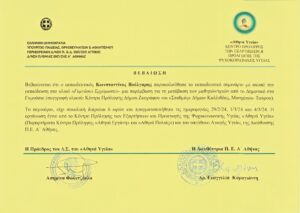
1. Peer Support / Συμβουλευτική Ομηλίκων
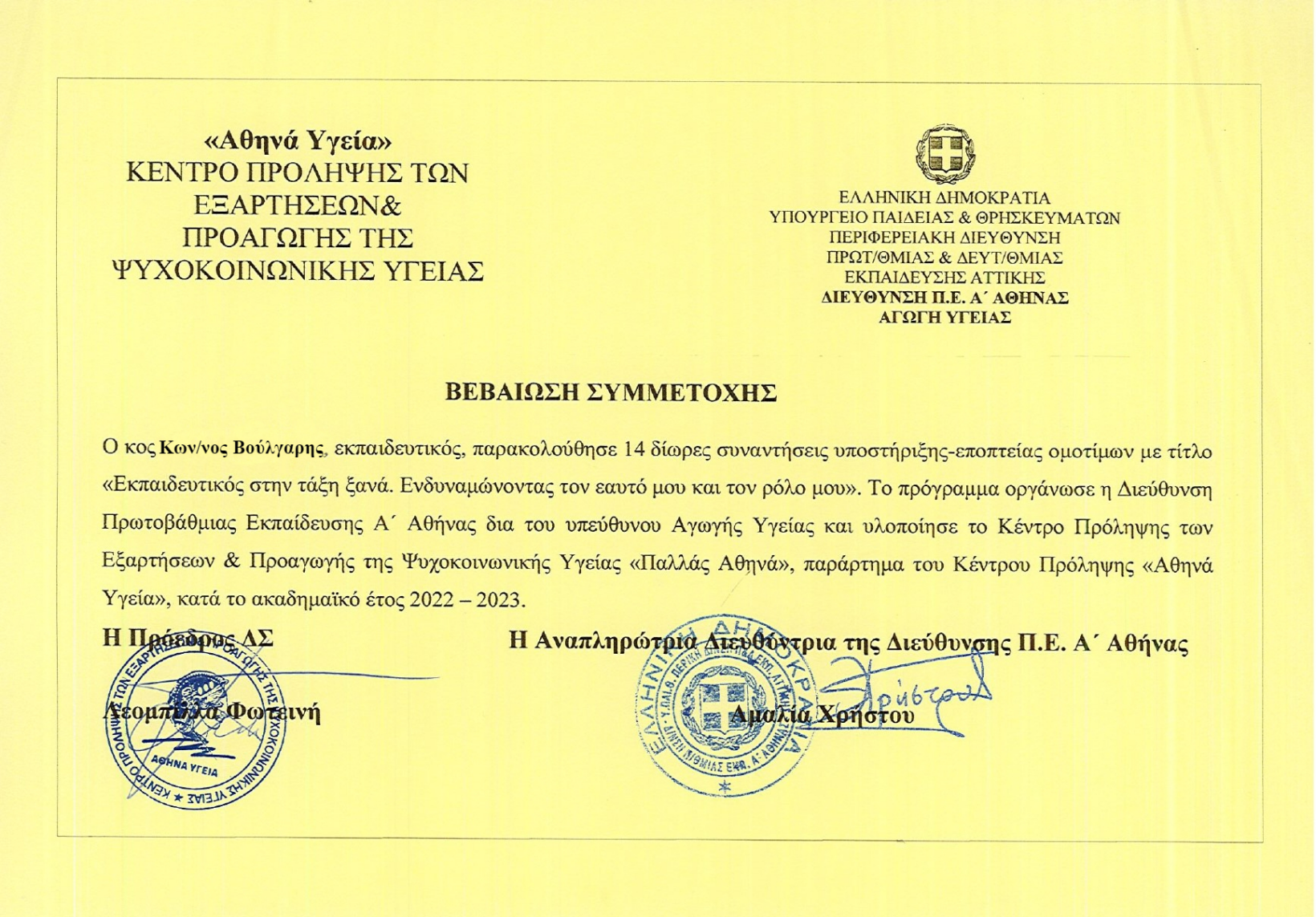
2. Εκπαιδευτικός στην τάξη ξανά:
Ενδυναμώνοντας τον εαυτό μου
και το ρόλο μου
3. — Γυμνάσιο, ερχόμαστε!
Μία παρέμβαση για τη μετάβαση
των μαθητών/-τριών
από το Δημοτικό στο Γυμνάσιο
4. Τεχνικές πρόληψης για παιδιά
Neuro-Linguistic Programming
Νευρογλωσσικός Προγραμματισμός

1. Εκμάθηση βασικών τεχνικών NLP
2. Εκμάθηση προχωρημένων τεχνικών NLP
3. NLP – Ο Νευρογλωσσικός Προγραμματισμός στην Ψυχολογία

Δημιουργική γραφή
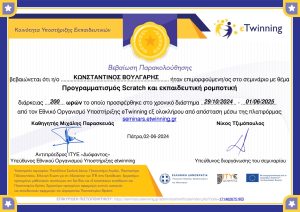
Προγραμματισμός Scratch και εκπαιδευτική ρομποτική

eTwinning και Εργαστήρια Δεξιοτήτων:
Συνεργατικές Δράσεις για την Καλλιέργεια
Γνώσεων, Δεξιοτήτων και Ικανοτήτων
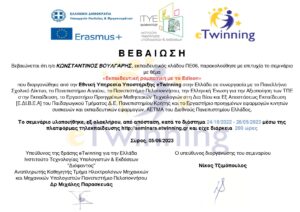
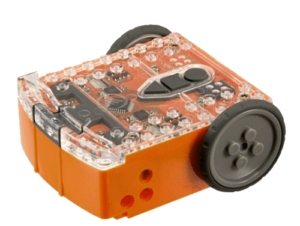
Εκπαιδευτική ρομποτική με το Edison

και για τις μικρότερες τάξεις:
Bee-Bot

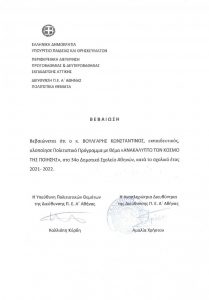
1. Το δικό μας όνειρο
2. Αληθινή φιλία
3. Δύο ευγενικοί άνθρωποι
4. Ανακαλύπτω τον κόσμο της Ποίησης
5. Φύγε άγχος, γίνε χρώματα!

1. True Friends Forever
2. True Friends Forever | France and Greece
3. Be a European Star for a European Christmas
4. Comment fait-on la paix ?
5. Μαθαίνω να βλέπω τον Άνθρωπο | Learning to See the Person #SkillsLabs