The children in Spino d’Adda, Italy, a town near Milan, have received our drawings.


The children in Spino d’Adda, Italy, a town near Milan, have received our drawings.
Axolotls are famous for:
• their permanent “smiles”
• their feathery external gills
• their ability to regenerate limbs and even parts of their hearts and brains
• staying in their larval form for life
They originally come from lakes near Mexico City and are critically endangered in the wild.


https://www.youtube.com/watch?v=xnls0LHAJLg
[Verse 1]
So sick of doing the whole 9 to 5
I pay my dues, I’m just stayin’ alive
And I’m so bored of it, bored of it
Oh, what’s the point of it, point of it? (Oh, ja, ja, ja)
A paracetamol to quench the pain
The office cubicle has trapped me again
Am I a mouse in a cage, am I
D-d-d-demotivational?
[Pre-Chorus]
Ah, if only there was a language that I could count in
That would make me feel better (Oh, ja, oh, ja)
[Chorus]
Eins, zwei, drei
Darlin’, I need something salty
Eins, zwei, drei
With a slice of pepperoni
I’ll pay, you can owe me
That’ll be a pony
Eins, zwei, drei
I’m comin’ back to life
Eins, zwei, drei
Got me feeling okеy-dokey
Eins, zwei, drei
Goodbyе drudgery, hello me
So light you can throw me
Kill at karaoke
Eins, zwei, drei
I’m comin’ back to life
[Verse 2]
Countin’ in English doesn’t cut the mustard
So sick of munching roly-poly with custard
I’m so bored with it, bored with it
Oh, what’s the point of it, point of it? (Oh, ja, ja, ja)
I’ve always been a fan of aviation
I’m jumpin’ on a plane to another nation
And all my pounds, they feel counterfeit
I need some euros to counter it
[Chorus]
Eins, zwei, drei
Darlin’, I need something salty
Eins, zwei, drei
With a slice of pepperoni
I’ll pay, you can owe me
That’ll be a pony
Eins, zwei, drei
I’m comin’ back to life
Eins, zwei, drei
Got me feeling okey-dokey
Eins, zwei, drei
Goodbye drudgery, hello me
So light you can throw me
Kill at karaoke
Eins, zwei, drei
I’m comin’ back to life
[Bridge]
Eins
Zwei
Drei
Eins, zwei
Eins, zwei, drei
[Chorus]
Eins, zwei, drei
Darlin’, I need something salty
Eins, zwei, drei
With a slice of pepperoni
I’ll pay, you can owe me
That’ll be a pony
Eins, zwei, drei
I’m comin’ back to life
Eins, zwei, drei
Darlin’, I need something salty
Eins, zwei, drei
With a slice of pepperoni
I’ll pay, you can owe me
That’ll be a pony
Eins, zwei, drei
I’m comin’ back to life
[Outro]
Eins, zwei, drei
Eins, zwei, drei
I’m comin’ back to life


We were delighted to receive beautiful drawings today from the Istituto Comprensivo “Luigi Chiesa,” a school in the town of Spino d’Adda, near Cremona, Italy.


The greater area of Heraklion has been continuously inhabited since at least 7000 BC, making it one of the oldest inhabited regions in Europe. Heraklion is a vibrant and charming city, home to Minoan palaces, Venetian fortresses, crystal-clear beaches, luxurious hotels where visitors can unwind, and fascinating museums. What’s more, the city is renowned for its excellent local cuisine.


During my trip to Heraklion, the weather wasn’t exactly the best. It was very mixed—sometimes gloomy and rainy, then cloudy, and later sunny again. But despite the changing weather, I loved this place like I always have. Walking through the streets, feeling the sea breeze, and enjoying the atmosphere made every moment special. Heraklion has a unique charm that always makes me feel happy and connected to Crete.


Δήμος Αθηναίων
Κέντρο Πρόληψης των Εξαρτήσεων
και Προαγωγής της Ψυχοκοινωνικής Υγείας
«Αθηνά Υγεία»
«Αθηνά Αφαία», 4η Δημοτική Κοινότητα
Αθανάτων 35 & Δυρραχίου, Σεπόλια
4/3/2026 – 1/4/2026


 Cottbus is the largest bilingual city in Germany. Signage is mostly in German and Lower Sorbian. The city is the political and cultural centre of the Lower Sorbian-speaking Sorbs, who are also known as the Wends in Lower Lusatia, Brandenburg.


Der Cottbuser Postkutscher putzt den Cottbuser Postkutschkasten.
This is a famous German tongue twister (Zungenbrecher).
Literal translation: “The Cottbus post coachman cleans the Cottbus post coach box.”


The Wassermann (water goblin) is a mystical figure who plays his mischievous tricks in the waters of the Spreewald (Spree Forest). Today, he adorns the forecourt of the Sorbian Museum and invites visitors to discover the fascinating Sorbian/Wendish history and culture.
This impressive sculpture, created by Peter Buth in 2005, reflects the richness of Sorbian/Wendish folktales. These are deeply rooted in Lusatia and, therefore, also in Cottbus.


Η κάρτα που έφτιαξα για το μαθητή μου, Δημήτρη Π.
Ποια φιγούρα μέσα στον πίνακα δείχνει εσένα, το θεατή;
My name is Morgan Haigh. I’m an art historian, writer and lecturer, and the painting that I’ve chosen is El Greco’s Disrobing of Christ. This is a painting from the late 16th century, painted by this artist who was born in Crete, moved to Venice and then Rome to complete his artistic training, and ultimately ends up in Toledo in Spain, where the locals couldn’t pronounce his Greek name, so they called him “The Greek,” or El Greco.
This painting is still in the place that it was painted for, the sacristy of Toledo Cathedral, and as such I’ve never managed to actually get to see it. But even just in reproduction, these painting— this painting has absolutely fascinated me. In the middle of this tall portrait scene, we have Christ, the main subject here, in this amazing red robe that is about to be taken off Him by the torturers on His way to His crucifixion. He is the central focus, but around Him we have arranged this amazing crowd of faces—of soldiers, of members of the public.
In the foreground, we have the three Marys on the bottom left, and a figure clearly preparing the cross itself, drilling holes into it ready for the crucifixion. But what I’ve always loved about this painting are two details:
The soldier on the left-hand side has the most amazing reflective metal armour—the way El Greco has achieved the light bouncing off that shiny metal surface I’ve always found just exceptional.
And the other figure who really brings this painting alive for me is hidden away in the crowd just behind the shoulder of Christ to the right, and he’s hard to make out at first. He’s this chap, older man with a beard, wearing a kind of floppy red hat, and he doesn’t jump out at you at first. But then, when you spot him, and you see that he’s the only figure in the scene who’s looking dead at you, the viewer… And he raises his hand above the crowd and points out to you—he seems to be accusing you, the viewer, of the misfortune that has befallen Christ. He’s saying you, as a sinful human, have done this to the Son of God, and it has this amazing powerful atmosphere about it—just this one face in the crowd. And like I say, once you spot him, you can never unsee him, and it changes the painting forever!
El Greco’s style is something I find really interesting. I mean, he seems so ahead of his time, so avant-garde, and so different to many of the painters who were working around the same time. It’s— will be no surprise to those of you who are familiar with other works by El Greco that, in the 20th century, painters like Pablo Picasso were hugely influenced by the style of El Greco.
Picasso saw many El Greco works when he was a young boy being trained in art in Madrid in the Prado Museum. He would have been to Toledo and seen this, no doubt, in the cathedral—as one day I hope to do, because I think this is one of the most extraordinary paintings of its era.


Δομήνικος Θεοτοκόπουλος, Κρης εποίει

Julien Cohen
Tchaikovsky’s piano concerto in the streets of Paris
Pyotr Ilyich Tchaikovsky was a Russian composer of the Romantic period. He was the first Russian composer whose music made a lasting impression internationally. Tchaikovsky wrote some of the most popular concert and theatrical music in the classical repertoire, including the 1812 Overture, his First Piano Concerto, the Violin Concerto, the Romeo and Juliet Overture-Fantasy, several symphonies, the opera Eugene Onegin, and the ballets Swan Lake, The Sleeping Beauty and The Nutcracker.
Κύκλος ασύγχρονης επιμόρφωσης
13/02/2026 – 20/02/2026

Εκφοβισμός, εξαναγκασμός, εθισμός
και κακόβουλη χρήση της Τεχνητής Νοημοσύνης

22/09/2025 – 09/02/2026


Jugendstil (“Youth Style”) was an artistic movement, particularly in the decorative arts, that was influential primarily in Germany, Austria, and elsewhere in Europe to a lesser extent from about 1895 until about 1910. It was the German and Austrian counterpart of Art Nouveau.
The Darmstadt Artists’ Colony was a group of Jugendstil artists who lived and worked near Rosenhöhe Park in Mathildenhöhe, Darmstadt, in the late nineteenth and early twentieth centuries. Supported mainly by patrons, they collaborated closely with one another whenever their artistic tastes aligned.
The artists’ colony was founded in 1899 by Ernest Ludwig, Grand Duke of Hesse.
UNESCO recognised the Mathildenhöhe artists’ colony in Darmstadt as a World Heritage Site in 2021, because of its testimony to early modern architecture and landscape design, and its influence in the reform movements of the early 20th century.


Michel, listen, the sea wind is whistling.
An engraved verse from Gottfried Schwab’s poem Genius des Gesangs (Genius of Song).


The Waldspirale is a residential complex in Darmstadt, Germany, built in the 1990s. Its name means “forest spiral” in English, referring both to the building’s curved layout and its green roof. It was designed by the Austrian artist Friedensreich Hundertwasser, planned and realised by the architect Heinz M. Springmann, and constructed by the company Bauverein Darmstadt. The project was completed in 2000.
From the outside, the typical elements of Hundertwasser’s personal style attract attention: the gilded onion domes, the absence of straight lines and sharp corners, the multicoloured painting of the building in earth tones and the colourful ceramic columns.


18 years old

HIER WOHNTE
JOSEF STRAUSS
JG: 1924
FLUCHT 1938 HOLLAND
INTERNIERT WESTERBORK
DEPORTIERT 1942
AUSCHWITZ
ERMORDET 16.8.1942
Here lived
Josef Strauss
Born in 1924
Fled to Holland in 1938
Interned in Westerbork
Deported to Auschwitz in 1942
Murdered on 16 August 1942
This is the text from a Stolperstein (“stumbling stone”)—a small memorial plaque placed in the pavement outside the last freely chosen home of a Holocaust victim.
The Stolpersteine project was created by the German artist Gunter Demnig and commemorates individuals who were persecuted and murdered by the Nazis.
Auschwitz was a Nazi concentration and extermination camp where over a million people were murdered during the Holocaust.
Westerbork was a transit camp in the Netherlands from which many Jewish people were deported to extermination camps in occupied Poland.




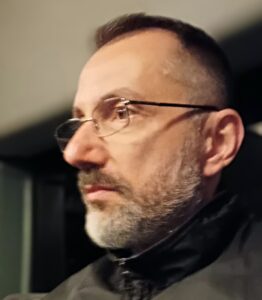
ΠΕ06 Αγγλικής Φιλολογίας
eTwinning


Hi, I’m Kostas, short for “Constantine.”
Born and raised in Athens, Greece,
I have studied English and Journalism
(Σχολή Δημοσιογραφίας ANT1)
and I teach English at a state primary school in the Greek capital.
Wishing to provide my students with a wider view of the world, I am searching for interesting international opportunities to learn about different cultures and global issues.
Επιθυμώντας να προσφέρω στους μαθητές και τις μαθήτριές μου μία ευρύτερη θεώρηση του κόσμου, αναζητώ ευκαιρίες συνεργασίας στην Ελλάδα/Κύπρο και το εξωτερικό προκειμένου να μάθουμε μαζί για διαφορετικούς πολιτισμούς και να ενημερωθούμε για παγκόσμια θέματα.












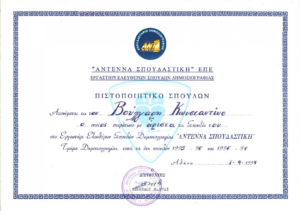
Με κέρδισε όμως η Εκπαίδευση. 🙂








Η χρήση της Τεχνητής Νοημοσύνης
στο μάθημα της Αγγλικής
στην Α/βάθμια Εκπαίδευση

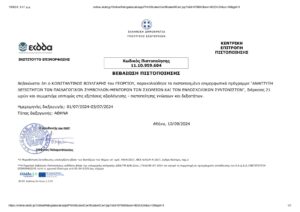
1. Teach.in.G. | Εκπαίδευση εκπαιδευτικών: Γλωσσική και ψυχοπαιδαγωγική διαχείριση πολύγλωσσων και πολυπολιτισμικών τάξεων
2. Ειδική Αγωγή: Διεπιστημονικές πρακτικές σύγκλισης
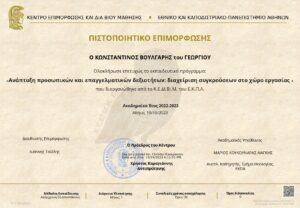
3. Ανάπτυξη προσωπικών και επαγγελματικών δεξιοτήτων: Διαχείριση συγκρούσεων στο χώρο εργασίας
4. Διαπροσωπικές σχέσεις: Το φαινόμενο της μοναξιάς στη σύγχρονη εποχή
Διαχείριση και αντιμετώπιση
5. Από τη μία στην άλλη πλευρά του Αιγαίου:
Η εγκατάσταση των Μικρασιατών προσφύγων στην Ελλάδα μέσα από τη λογοτεχνία
6. Θρησκεία και Ψυχανάλυση
7. Παραπληροφόρηση ή αληθινές ειδήσεις; Μάθετε να τα ξεχωρίζετε
8. Σπουδή στην Ορθόδοξη Θεολογία
9. Τα δικαιώματα του παιδιού
10. Philosophical Life Coaching

1. Εκπαιδευτικός στον 21ο αιώνα: Πώς να ξεχωρίσω
2. Διαχείριση της πολυπολιτισμικότητας στην εκπαίδευση και κοινωνική ένταξη μεταναστών /προσφύγων
3. Σχολική Ψυχολογία
4. Ενδοσχολική βία και εκφοβισμός: Πρόληψη και αντιμετώπιση
5. Μέθοδοι της Μετασχηματίζουσας Μάθησης στο πλαίσιο της Διά Βίου Μάθησης

Σύγχρονες αρχές και πρακτικές στην Ειδική Αγωγή και Εκπαίδευση

1. Σχολική Νοσηλευτική και Ψυχική Υγεία
2. Πρόληψη και αντιμετώπιση της επιθετικότητας στο σχολικό περιβάλλον: Εργαλεία και στρατηγικές διαχείρισης
1. Πρόληψη και αντιμετώπιση ρατσισμού
στα δημοτικά σχολεία
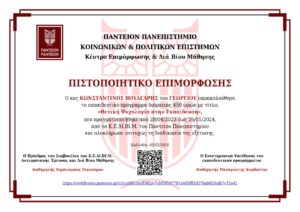
2. Θετική Ψυχολογία στην Εκπαίδευση
3. Ενισχύστε την εκπαίδευσή σας με τη δύναμη
της Τεχνητής Νοημοσύνης (AI)

Διαχείριση σχολικής ζωής: Ηγεσία, κρίσεις, διαφορετικότητα, συμπερίληψη

Αγωγή και ετερότητα: Αξιοποιώντας την Τέχνη
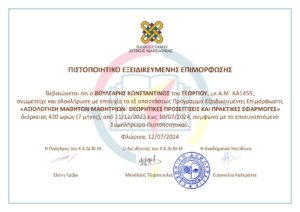
1. Αξιολόγηση μαθητών/μαθητριών: Θεωρητικές προσεγγίσεις και πρακτικές εφαρμογές
2. Έμφυλες σχέσεις και ενδυνάμωση μέσα από αφηγηματικές τεχνικές
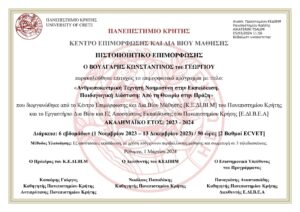
1. Ο/Η άνθρωπος-πολίτης/πολίτιδα
απέναντι στο θάνατο και την απώλεια:
Παιδαγωγικές και κοινωνικές προσεγγίσεις
2. Ανθρωποκεντρική Τεχνητή Νοημοσύνη στην Εκπαίδευση: Παιδαγωγική διάσταση
Από τη θεωρία στην πράξη
3. Γνωριμία με το Magic School στην εκπαιδευτική πράξη
4. LIFE on mARTs
5. Ανθρωποκεντρική Τεχνητή Νοημοσύνη στην Εκπαίδευση: Μετασχηματίζοντας τον τρόπο με τον οποίο διδάσκουμε και μαθαίνουμε

1. Επιμορφώνοντας τους εκπαιδευτικούς στο Ολοκαύτωμα: Ανθρωπολογικές αναγνώσεις
του κινηματογράφου
2. Εισαγωγή στην αλβανική γλώσσα
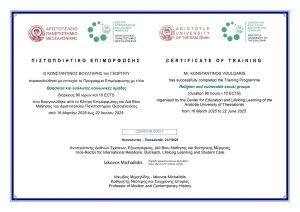
Θρησκεία και ευάλωτες κοινωνικές ομάδες

1. Σπουδές στον Ποντιακό Ελληνισμό
2. STEAM Education for All Learners: Incorporating STEAM and Inclusive Education Practices in Everyday Teaching
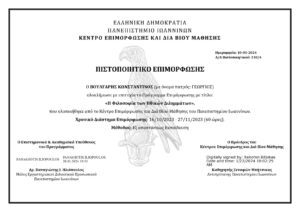
1. Ψυχολογικές προσεγγίσεις του παιδικού σχεδίου
2. Η Φιλοσοφία των Ηθικών Διλημμάτων
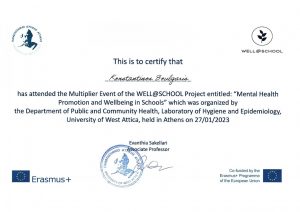
Προαγωγή ψυχικής υγείας και ευεξίας
στα σχολεία: Well@School Project
Αξιολόγηση του σχολείου, των εκπαιδευτικών
και ανάπτυξη βέλτιστων εκπαιδευτικών πρακτικών

1. Επιμόρφωση των Εκπαιδευτικών
στις Δεξιότητες μέσω Εργαστηρίων
2. Εισαγωγή της Αγγλικής Γλώσσας
στο Νηπιαγωγείο (ΕΑΝ)
3. Αναπηρία και διαφορετικότητα,
αυτιστικό φάσμα,
προβλήματα προσοχής και συγκέντρωσης
4. Εκπαίδευση για την Ιδιότητα
του Παγκόσμιου Πολίτη
Ευρωπαϊκό Έργο GENE
(Global Education Network Europe)
5. Διαφοροποιημένη Διδασκαλία:
Πρακτικές υποστήριξης
των μαθητών και των μαθητριών
6. Πρόληψη και αντιμετώπιση περιστατικών ενδοσχολικής βίας και εκφοβισμού
7. Ξένες Γλώσσες Πρωτοβάθμιας

1. Ανάπτυξη δεξιοτήτων των Παιδαγωγικών Συμβούλων-Μεντόρων
2. Ενεργητική ακρόαση και αποτελεσματική επικοινωνία
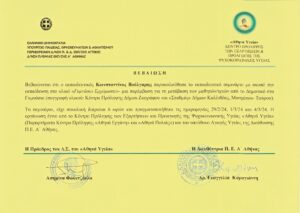
1. Peer Support / Συμβουλευτική Ομηλίκων
2. Εκπαιδευτικός στην τάξη ξανά:
Ενδυναμώνοντας τον εαυτό μου
και το ρόλο μου
3. — Γυμνάσιο, ερχόμαστε!
Μία παρέμβαση για τη μετάβαση
των μαθητών/-τριών
από το Δημοτικό στο Γυμνάσιο
4. Τεχνικές πρόληψης για παιδιά
Neuro-Linguistic Programming
Νευρογλωσσικός Προγραμματισμός

1. Εκμάθηση βασικών τεχνικών NLP
2. Εκμάθηση προχωρημένων τεχνικών NLP
3. NLP – Ο Νευρογλωσσικός Προγραμματισμός στην Ψυχολογία

Δημιουργική γραφή
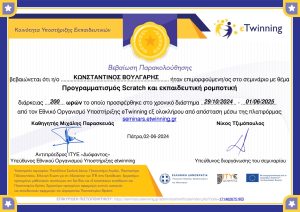
Προγραμματισμός Scratch και εκπαιδευτική ρομποτική
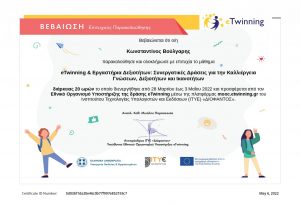
eTwinning και Εργαστήρια Δεξιοτήτων:
Συνεργατικές Δράσεις για την Καλλιέργεια
Γνώσεων, Δεξιοτήτων και Ικανοτήτων
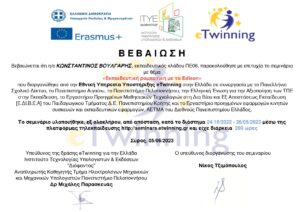
Εκπαιδευτική ρομποτική με το Edison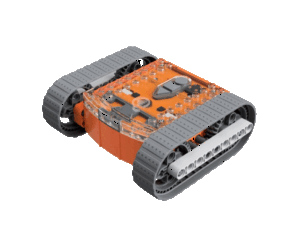

και για τις μικρότερες τάξεις:
Bee-Bot

1. Το δικό μας όνειρο
2. Αληθινή φιλία
3. Δύο ευγενικοί άνθρωποι
4. Ανακαλύπτω τον κόσμο της Ποίησης
5. Φύγε άγχος, γίνε χρώματα!

1. True Friends Forever
2. True Friends Forever | France and Greece
3. Be a European Star for a European Christmas
4. Comment fait-on la paix ?
5. Μαθαίνω να βλέπω τον Άνθρωπο | Learning to See the Person #SkillsLabs