Τρόποι προστασίας των παιδιών από επαφή με αγνώστους


Τρόποι προστασίας των παιδιών από επαφή με αγνώστους


 Η κάρτα που έφτιαξα για το μαθητή μου Κωνσταντίνο Μ. της Α’ τάξης
Get Well Soon and
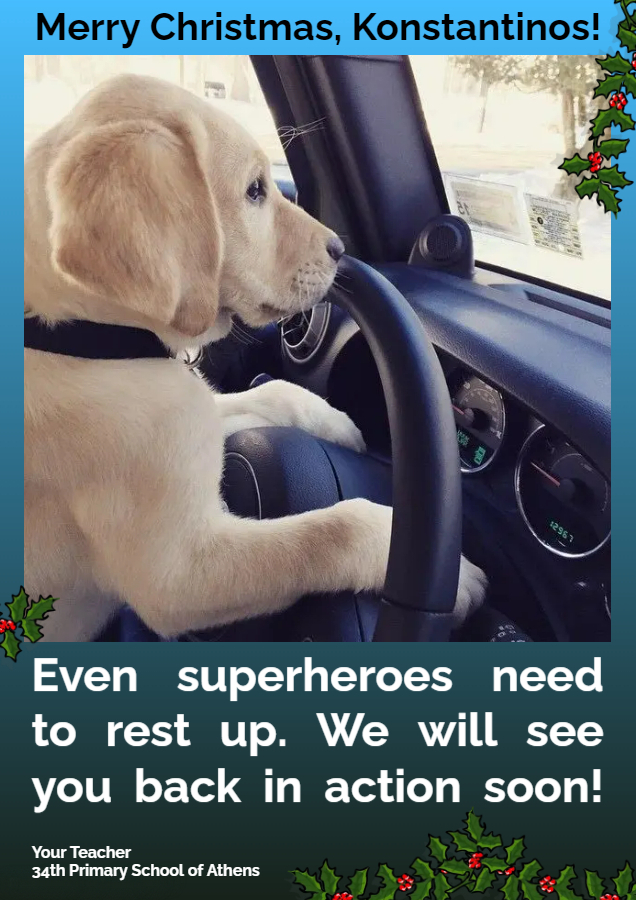
— Ακόμα και οι υπερήρωες χρειάζεται να ξεκουράζονται. Σύντομα θα σε δούμε ξανά εν δράσει!

Karen Carpenter (1950-1983)
Teachers’ Capacity Building
on the Integration of Refugee and Migrant Children
in Greece
Ανάπτυξη δεξιοτήτων των διδασκόντων
για την ένταξη των παιδιών προσφύγων και μεταναστών
στην Ελλάδα
Έναρξη επιμόρφωσης
Πανεπιστημιακή Λέσχη του ΕΚΠΑ
Αίθουσα Ίρις
Ιπποκράτους 15 & Ακαδημίας, Αθήνα

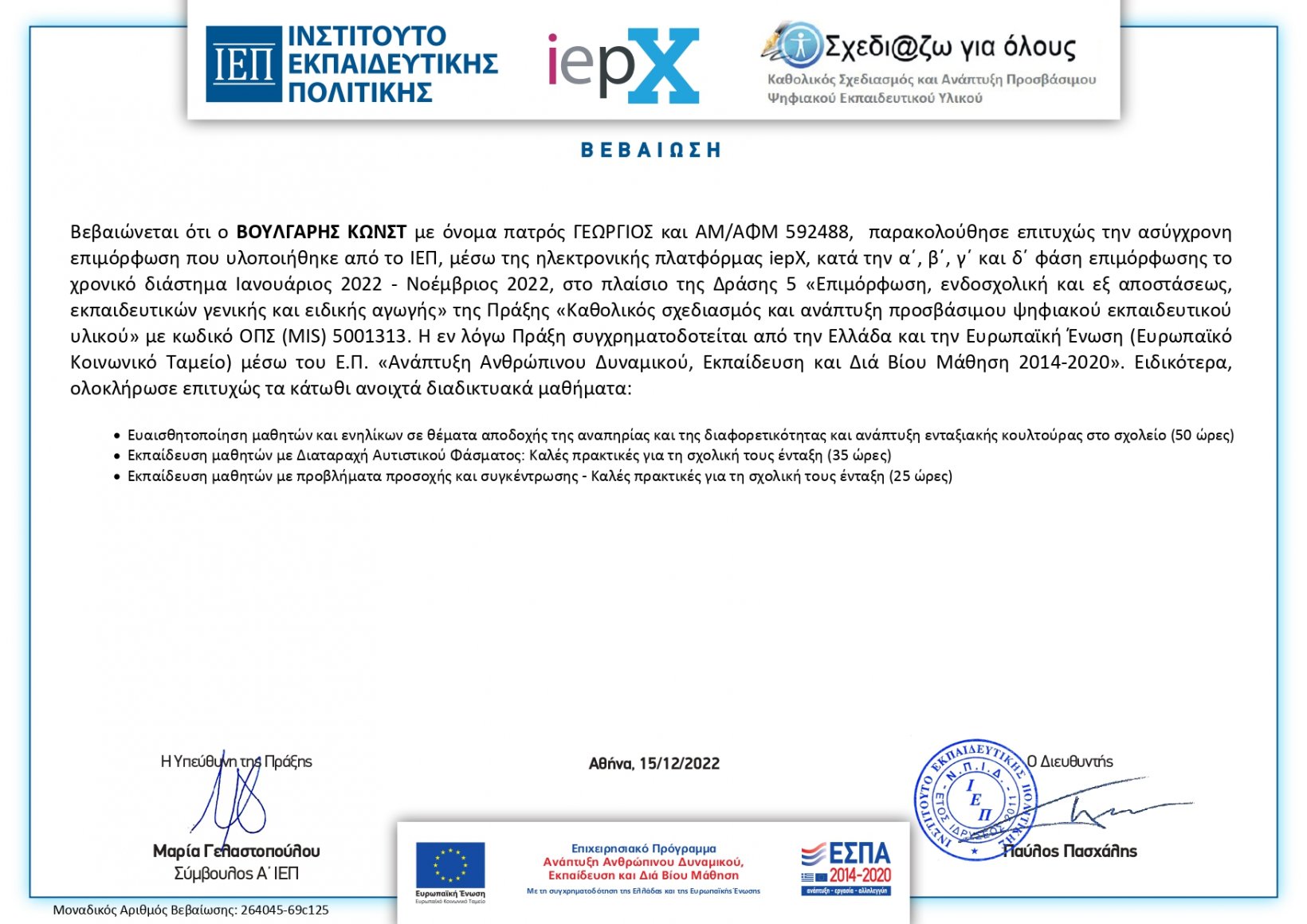
• Ευαισθητοποίηση μαθητών και ενηλίκων
σε θέματα αποδοχής της αναπηρίας και της διαφορετικότητας
και ανάπτυξη ενταξιακής κουλτούρας στο σχολείο
• Εκπαίδευση μαθητών με Διαταραχή Αυτιστικού Φάσματος:
Καλές πρακτικές για τη σχολική τους ένταξη
• Εκπαίδευση μαθητών με προβλήματα προσοχής και συγκέντρωσης:
Καλές πρακτικές για τη σχολική τους ένταξη

Reimagining Education
Ο ρόλος της Εκπαίδευσης σε έναν κόσμο που διαρκώς αλλάζει
Η κάρτα που έφτιαξα για το μαθητή μου Φώτη Δ. (Α’ τάξη)

— Μου λείπουν τα αστεία σου στην τάξη. Γρήγορα περαστικά, Φώτη!

BY VICTORIA HISLOP
| AUG 08, 2022
The UK newspapers have all been buzzing this week with the suggestion that the British Museum may be ready to discuss the return of the Parthenon Sculptures with Greece. This all arose after the new chairman of the BM Trustees, George Osborne, said that there is a “deal to be done” over sharing these ancient treasures with the country of their origin. This comment was followed by an interview for the Sunday Times with the deputy director of the museum, who said that they are interested in an active Parthenon partnership with Greece and a “really dynamic and positive conversation within which new ways of working together can be found.” But what this actually means is very open to interpretation and time will tell if words become action.
Nowadays we question all of that. Many in Britain are reconsidering the actions that were taken in the past by the British. We can’t undo most of them (slavery being the most enormous and terrible example) but already we are apologizing for some of the many mistakes made by our ancestors. Even the gesture of doing this is important.
Going back to the Sculptures specifically, this was a case for me of questioning all the facts and circumstances surrounding how they ended up in a gloomy, badly lit gallery in the British Museum, thousands of miles from the translucent Hellenic light where they were created.
I read everything I could find (including Christopher Hitchens and Geoffrey Robertson) and went from darkness into light, realizing that much of the Elgin story that many in the UK believe is entirely untrue. He was given permission in the form of a letter (not an officially stamped Firman from the sultan as so many think) to take impressions and drawings of the sculptures so that they could be reproduced to decorate his new house. He was not given permission to violently hack and saw them off the building, a task which took 300 men an entire year to achieve and required massive bribes to local guards. Elgin’s desire to have these originals for his private house was only thwarted when he finally returned home and found himself with massive debts. The British Museum paid him £35,000 (less than half his expenses for removal and transport) to help resolve his money problems and pay divorce expenses. The one unquestionable thing in this long debate is that the British government did hand over money for these priceless objects. But not to their rightful owners.
Many years after acquisition, Henry Duveen (another figure with his own shadowy story) gave money for the gallery where they now live and instructed them to be scrubbed with wire wool to make them whiter, an act which by anyone’s standards is seen as an act of destruction not conservation today.
There is not enough space to express all my emotions on the subject of the mistreatment of these beautiful objects but, needless to say, a small amount of reading was enough to shift my opinion completely and Boris Johnson’s interview last year for a Greek newspaper in which he implied that the Sculptures would never go back to Athens spurred me to join the British Committee for the Reunification of the Parthenon Marbles, a group which passionately and continuously lobbies for their aim. I am now one of at least 59% of the British population who believe that the Sculptures should be returned to Athens.

Linda Ronstadt (b. 1946)
29 Νοεμ. 2022

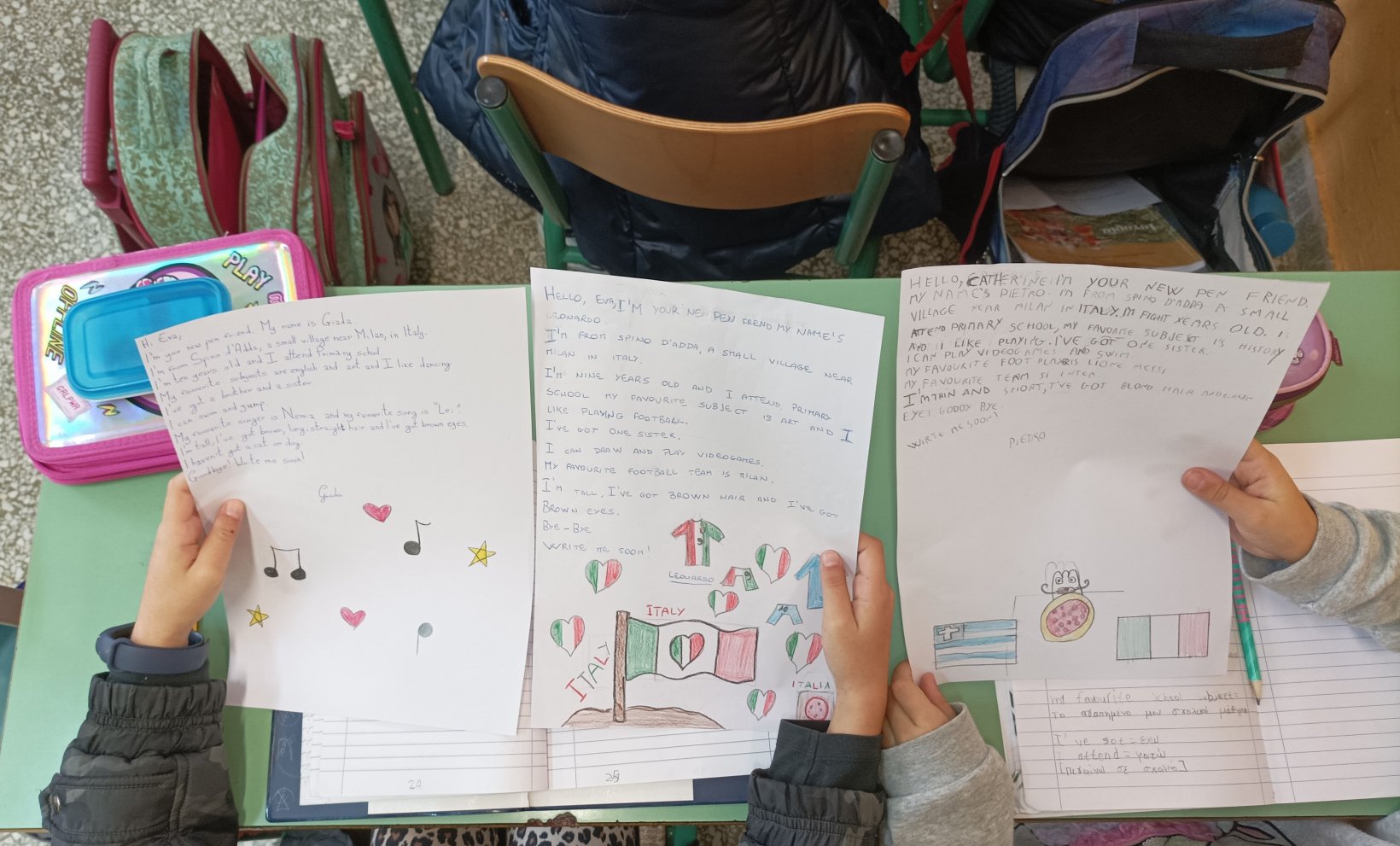
Γράμματα και ζωγραφιές
που μας ήρθαν από το σχολείο Istituto Comprensivo “Luigi Chiesa”
της ιταλικής πόλης Spino d’Adda (κοντά στην Κρεμόνα) για τους μαθητές και τις μαθήτριές μου της Γ’ τάξης.



MacArthur Park (originally Westlake Park) is a park dating back to the late 19th century in the Westlake neighbourhood of Los Angeles. In the early 1940s, it was renamed after General Douglas MacArthur.
The song was written by American singer-songwriter Jimmy Webb—when he was 21 years old!—and first recorded by Irish actor and singer Richard Harris in late 1967.
Richard Harris insisted on singing the lyric as “MacArthur‘s Park.”
Spring was never waiting for us, girl
It ran one step ahead as we followed in the dance
Between the parted pages and were pressed
In love’s hot, fevered iron like a striped pair of pants
MacArthur’s Park is melting in the dark
All the sweet, green icing flowing down
Someone left the cake out in the rain
I don’t think that I can take it
‘Cause it took so long to bake it
And I’ll never have that recipe again
Oh no!
I recall the yellow cotton dress foaming like a wave
On the ground around your knees
The birds, like tender babies in your hands
And the old men playing checkers by the trees
MacArthur’s Park is melting in the dark
All the sweet, green icing flowing down
Someone left the cake out in the rain
I don’t think that I can take it
‘Cause it took so long to bake it
And I’ll never have that recipe again
Oh no!
There will be another song for me
For I will sing it
There will be another dream for me
Someone will bring it
I will drink the wine while it is warm
And never let you catch me looking at the sun
And after all the loves of my life
After all the loves of my life
You’ll still be the one
I will take my life into my hands and I will use it
I will win the worship in their eyes and I will lose it
I will have the things that I desire
And my passion flow like rivers through the sky
And after all the loves of my life
Oh, after all the loves of my life
I’ll be thinking of you
And wondering why…
MacArthur’s Park is melting in the dark
All the sweet, green icing flowing down
Someone left the cake out in the rain
I don’t think that I can take it
‘Cause it took so long to bake it
And I’ll never have that recipe again
Oh no!
Oh no
No
Oh no!

Richard Harris (1930–2002)
This Grammy-winning song, which hit number one in October of 1973, is told from the point of view of a woman, whose close friend is giving up on his dreams of Hollywood stardom and heading back home to Georgia.

Gladys Knight (b. 1944)
Official trailer starring Harrison Ford
και παράγοντες ενδυνάμωσης των εκπαιδευτικών





Η κάρτα που έφτιαξα για το μαθητή μου Δημήτρη Τ. της Ε’ τάξης.
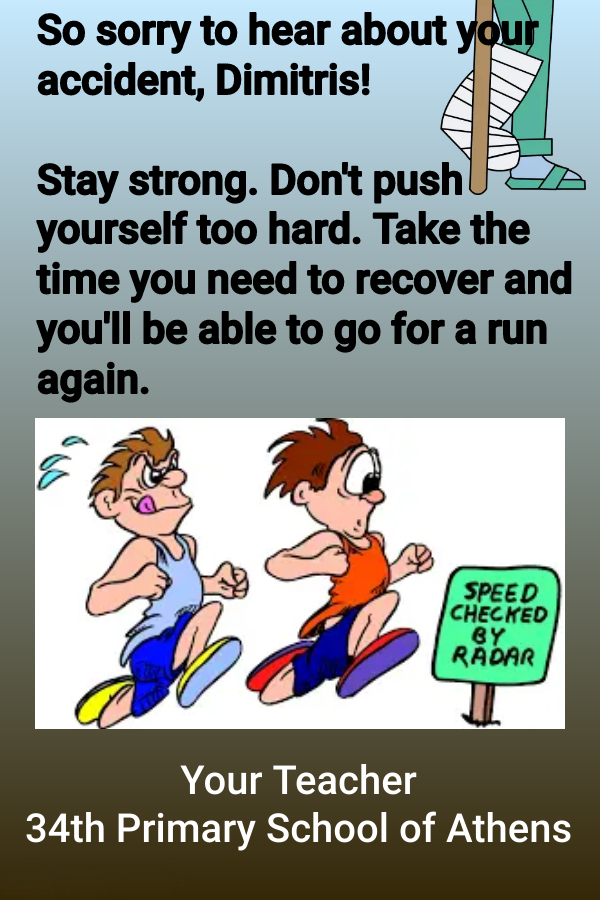
— Πολύ λυπήθηκα όταν έμαθα για το ατύχημά σου, Δημήτρη!
Μείνε δυνατός. Μην πιέσεις τον εαυτό σου υπερβολικά. Πάρε το χρόνο που χρειάζεσαι για να αναρρώσεις και θα μπορέσεις πάλι να πας για τρέξιμο.
(Η ΤΑΧΥΤΗΤΑ ΕΛΕΓΧΕΤΑΙ ΑΠΟ ΡΑΝΤΑΡ.)
Ο δάσκαλός σου
34ο Δημοτικό Σχολείο Αθηνών



ΠΕ06 Αγγλικής Φιλολογίας
eTwinning


Hi, I’m Kostas, short for “Constantine.”
Born and raised in Athens, Greece,
I have studied English and Journalism
(Σχολή Δημοσιογραφίας ANT1)
and I teach English at a state primary school in the Greek capital.
Wishing to provide my students with a wider view of the world, I am searching for interesting international opportunities to learn about different cultures and global issues.
Επιθυμώντας να προσφέρω στους μαθητές και τις μαθήτριές μου μία ευρύτερη θεώρηση του κόσμου, αναζητώ ευκαιρίες συνεργασίας στην Ελλάδα/Κύπρο και το εξωτερικό προκειμένου να μάθουμε μαζί για διαφορετικούς πολιτισμούς και να ενημερωθούμε για παγκόσμια θέματα.












Με κέρδισε όμως η Εκπαίδευση. 🙂







Η χρήση της Τεχνητής Νοημοσύνης
στο μάθημα της Αγγλικής
στην Α/βάθμια Εκπαίδευση

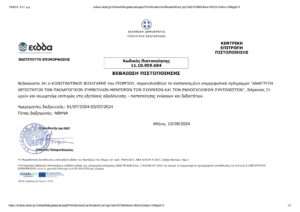
1. Teach.in.G. | Εκπαίδευση εκπαιδευτικών: Γλωσσική και ψυχοπαιδαγωγική διαχείριση πολύγλωσσων και πολυπολιτισμικών τάξεων
2. Ειδική Αγωγή: Διεπιστημονικές πρακτικές σύγκλισης
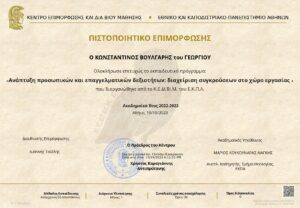
3. Ανάπτυξη προσωπικών και επαγγελματικών δεξιοτήτων: Διαχείριση συγκρούσεων στο χώρο εργασίας
4. Διαπροσωπικές σχέσεις: Το φαινόμενο της μοναξιάς στη σύγχρονη εποχή
Διαχείριση και αντιμετώπιση
5. Από τη μία στην άλλη πλευρά του Αιγαίου:
Η εγκατάσταση των Μικρασιατών προσφύγων στην Ελλάδα μέσα από τη λογοτεχνία
6. Θρησκεία και Ψυχανάλυση
7. Παραπληροφόρηση ή αληθινές ειδήσεις; Μάθετε να τα ξεχωρίζετε
8. Σπουδή στην Ορθόδοξη Θεολογία
9. Τα δικαιώματα του παιδιού
10. Philosophical Life Coaching

1. Εκπαιδευτικός στον 21ο αιώνα: Πώς να ξεχωρίσω
2. Διαχείριση της πολυπολιτισμικότητας στην εκπαίδευση και κοινωνική ένταξη μεταναστών /προσφύγων
3. Σχολική Ψυχολογία
4. Ενδοσχολική βία και εκφοβισμός: Πρόληψη και αντιμετώπιση
5. Μέθοδοι της Μετασχηματίζουσας Μάθησης στο πλαίσιο της Διά Βίου Μάθησης

Σύγχρονες αρχές και πρακτικές στην Ειδική Αγωγή και Εκπαίδευση

1. Σχολική Νοσηλευτική και Ψυχική Υγεία
2. Πρόληψη και αντιμετώπιση της επιθετικότητας στο σχολικό περιβάλλον: Εργαλεία και στρατηγικές διαχείρισης
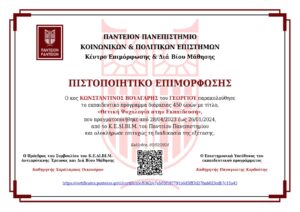
1. Πρόληψη και αντιμετώπιση ρατσισμού
στα δημοτικά σχολεία
2. Θετική Ψυχολογία στην Εκπαίδευση
3. Ενισχύστε την εκπαίδευσή σας με τη δύναμη
της Τεχνητής Νοημοσύνης (AI)

Διαχείριση σχολικής ζωής: Ηγεσία, κρίσεις, διαφορετικότητα, συμπερίληψη

Αγωγή και ετερότητα: Αξιοποιώντας την Τέχνη
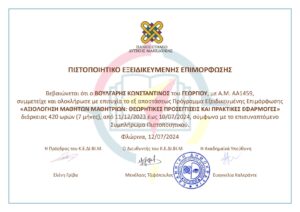
1. Αξιολόγηση μαθητών/μαθητριών: Θεωρητικές προσεγγίσεις και πρακτικές εφαρμογές
2. Έμφυλες σχέσεις και ενδυνάμωση μέσα από αφηγηματικές τεχνικές
1. Ο/Η άνθρωπος-πολίτης/πολίτιδα
απέναντι στο θάνατο και την απώλεια:
Παιδαγωγικές και κοινωνικές προσεγγίσεις
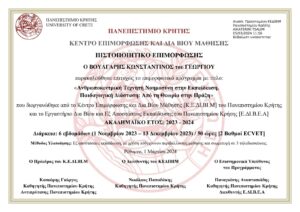
2. Ανθρωποκεντρική Τεχνητή Νοημοσύνη στην Εκπαίδευση: Παιδαγωγική διάσταση
Από τη θεωρία στην πράξη
3. Γνωριμία με το Magic School στην εκπαιδευτική πράξη
4. LIFE on mARTs
5. Ανθρωποκεντρική Τεχνητή Νοημοσύνη στην Εκπαίδευση: Μετασχηματίζοντας τον τρόπο με τον οποίο διδάσκουμε και μαθαίνουμε

1. Επιμορφώνοντας τους εκπαιδευτικούς στο Ολοκαύτωμα: Ανθρωπολογικές αναγνώσεις
του κινηματογράφου
2. Εισαγωγή στην αλβανική γλώσσα

1. Σπουδές στον Ποντιακό Ελληνισμό
2. STEAM Education for All Learners: Incorporating STEAM and Inclusive Education Practices in Everyday Teaching
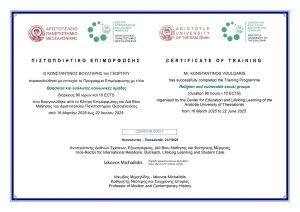
Θρησκεία και ευάλωτες κοινωνικές ομάδες
1. Ψυχολογικές προσεγγίσεις του παιδικού σχεδίου
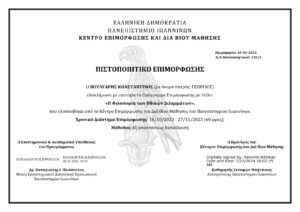
2. Η Φιλοσοφία των Ηθικών Διλημμάτων

Προαγωγή ψυχικής υγείας και ευεξίας
στα σχολεία: Well@School Project
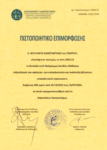
Αξιολόγηση του σχολείου, των εκπαιδευτικών
και ανάπτυξη βέλτιστων λεκπαιδευτικών πρακτικών

1. Επιμόρφωση των Εκπαιδευτικών
στις Δεξιότητες μέσω Εργαστηρίων
2. Εισαγωγή της Αγγλικής Γλώσσας
στο Νηπιαγωγείο (ΕΑΝ)
3. Αναπηρία και διαφορετικότητα,
αυτιστικό φάσμα,
προβλήματα προσοχής και συγκέντρωσης
4. Εκπαίδευση για την Ιδιότητα
του Παγκόσμιου Πολίτη
Ευρωπαϊκό Έργο GENE
(Global Education Network Europe)
5. Διαφοροποιημένη Διδασκαλία:
Πρακτικές υποστήριξης
των μαθητών και των μαθητριών
6. Πρόληψη και αντιμετώπιση περιστατικών ενδοσχολικής βίας και εκφοβισμού

1. Ανάπτυξη δεξιοτήτων των Παιδαγωγικών Συμβούλων-Μεντόρων
2. Ενεργητική ακρόαση και αποτελεσματική επικοινωνία
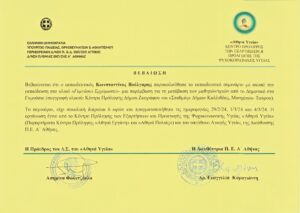
1. Peer Support / Συμβουλευτική Ομηλίκων
2. Εκπαιδευτικός στην τάξη ξανά:
Ενδυναμώνοντας τον εαυτό μου
και το ρόλο μου
3. — Γυμνάσιο, ερχόμαστε!
Μία παρέμβαση για τη μετάβαση
των μαθητών/-τριών
από το Δημοτικό στο Γυμνάσιο
4. Τεχνικές πρόληψης για παιδιά
Neuro-Linguistic Programming
Νευρογλωσσικός Προγραμματισμός

1. Εκμάθηση βασικών τεχνικών NLP
2. Εκμάθηση προχωρημένων τεχνικών NLP
3. NLP – Ο Νευρογλωσσικός Προγραμματισμός στην Ψυχολογία

Δημιουργική γραφή
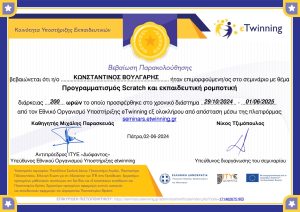
Προγραμματισμός Scratch και εκπαιδευτική ρομποτική

eTwinning και Εργαστήρια Δεξιοτήτων:
Συνεργατικές Δράσεις για την Καλλιέργεια
Γνώσεων, Δεξιοτήτων και Ικανοτήτων
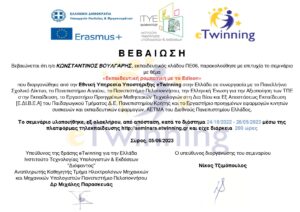
Εκπαιδευτική ρομποτική με το Edison

και για τις μικρότερες τάξεις:
Bee-Bot

1. Το δικό μας όνειρο
2. Αληθινή φιλία
3. Δύο ευγενικοί άνθρωποι
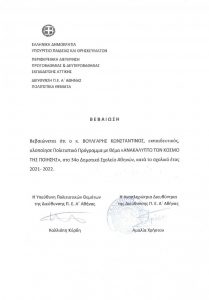
4. Ανακαλύπτω τον κόσμο της Ποίησης
5. Φύγε άγχος, γίνε χρώματα!

1. True Friends Forever
2. True Friends Forever | France and Greece
3. Be a European Star for a European Christmas
4. Comment fait-on la paix ?
5. Μαθαίνω να βλέπω τον Άνθρωπο | Learning to See the Person #SkillsLabs