Aim: to write the story chosen by France
Objectives:
- To familiarize pupils with the structure of stories
- Enable pupils to write a story on their own
- Enable pupils to use pictures to illustrate a story
- Pupils should be able to evaluate their story
Learning outcomes:
- To be able to read a story and answer reading comprehension questions
- To be able to distinguish the main characters and the temporal sequence of events
- To be able to discern the “imaginary” element (magic means, personification) in the story
- To be able to modify information from the story using their ideas thus affecting the plot of the story
- To be able to narrate the “reversed” version of the story
- To be able to summarize the story (orally)
- To be able to continue the story after a certain point
- To be able to write with correct spelling, using basic punctuation marks, adjectives in description, dialogue and paragraphs
- To evaluate their writing in terms of grammar, syntax, structure and content.
- To cooperate with other pupils in order to produce a story. To be able to listen to and accept other ideas.
- To be able to depict the scene of a story by painting
- To be able to use their imagination, express their ideas and have fun at the same time.
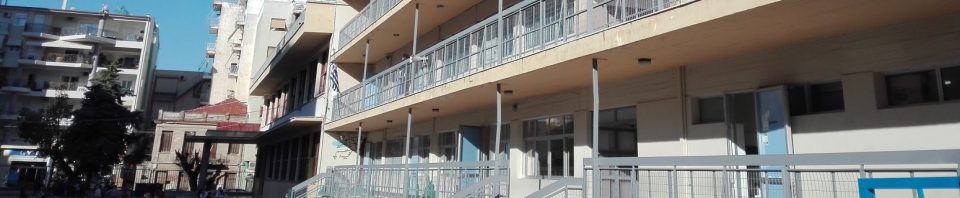
The story was written by pupils of two classes of third grade of the 6th Primary School of Patras, Greece, who cooperated during January 2013.The timetable followed for the writing of the story is described in full detail in the next paragraph. It contains the techniques and the means used for writing the story. The teachers used the pupils’ existing knowledge and their capabilities (children aged 8-9 years).The project was integrated into the subject of ‘Language” and the school curriculum. Our suggestions provide ideas that every teacher can use in order to make writing easier for our pupils.
1st activity –Starting point
- Pupils were asked to read at home a folk tale from their book (Anthology of Greek Literature, p.50), entitled: “The mouse and his daughter”.
- The following day, the teacher read the story loud in the classroom and then asked pupils to tell the story in a few words (orally).The teacher emphasized the fact that it was a folk tale which meant that this story was not written in a book but was passed from generation to generation orally.
Allocated time: 1 teaching hour
Alternatively, the other class teacher narrated well-known stories like Little Red Riding Hood, Snow White, etc. The aim was to make pupils familiar with the structure of fairytales. During the narration, pupils were asked to fill in a table with the most significant information.
2nd activity
The pupils were given the following table with the structure of stories to complete. Then the tables were read in the classroom.
Table 1
TITLE:___________________________________________________________
Think and write your ideas
|
1. Place |
|
5. What happened initially? |
|
7. What did the hero do to surpass the difficulties? |
|
8. Solution to the problem |
|
6. The difficulties faced by the hero |
|
4. Other characters |
|
3. Main characters |
|
2. Time |

Allocated time: 1 teaching hour
3rd activity
· Pupils were asked to rewrite the story using Gianni Rodari’s technique “Making mistakes in the story” (from his book ‘The Grammar of Fantasy”). The students had to alter the fact that the mouse had a beautiful daughter .Now each pupil had to rewrite the story with the daughter being ugly. They were also given the following assessment plan which they should keep in mind during writing.
Allocated time: 2 teaching hours
The other class (C2), worked on Norway’s story in order for their teacher to see if they posses narrative skills and if they could assess it. The story was then written in groups.
Assessing my story
|
1. Have I given enough details so that my classmates can imagine the story? |
|
|
2. Have I used adjectives in my description? |
|
|
3. Have I divided my story into distinctive paragraphs? |
|
|
4. Did I pay attention to my spelling? |
|
|
5. Have I used punctuation marks correctly? |
|
|
6. If you could change something in your writing what would that be? |
|
4th activity
Each pupil read out loud his/her story in the classroom and the rest of the pupils shared their opinion about the story. Afterwards, each pupil filled in the assessment plan.
Allocated time: 2 teaching hours.
5th activity
The story of France was presented in the classroom. The teacher wrote on the board the title and the characters. Then she explained to the children why they were going to write this particular story. Since it is a fairly common story (most of the pupils know the story of the wolf and the seven little goats) we decided all together that we would totally alter the plot of the story using the aforementioned ‘Making mistakes in the story” technique.
Every pupil wrote his/her ideas in the speech bubbles (table 1).
Allocated time: 1 teaching hour
6th activity
All of the students sat on the floor in a circle (we would return to our desks afterwards to write).Every child had their notebook and the speech bubbles in front of them. We agreed that all ideas would be acceptable. One student started telling the story and another one would go on from that point. Gradually, the pupils started working as a team. We produced the story and wrote it down. The teacher instructed the pupils how to write correctly, to use commas and full stops, adjectives and paragraphs. They had difficulty in using dialogues in the story. Each class went on from where the other class had stopped.
Allocated time: 4 teaching hours for each class
7th activity
Each child drew a scene of the story (the ones they liked the most or the ones they thought they could make better).They painted during Art, in they free time and at home. They literally lived for a while (both at school and at home) having the story in their minds.
8th activity
We took the kid’s drawings and we made a collage choosing whatever we liked (the aim was to choose something from every child) and in this way we illustrated the story.
Allocated time: 2 teaching hours
Conclusion
As far as the assessment of the story is concerned, it took place in the classroom, orally, based on table 2. This particular project required several teaching hours (approximately 15 hours) but was really interesting and the children liked it a lot. We consider that the initial objectives were met to a great extend. It also promoted collaboration and cooperation among the three teachers and the pupils who participated. It is a teaching suggestion for the subject of Language or can be applied as a cross curricular project. We photocopied the final product, we bound a handmade book and each pupil took a copy. That was our “recipe”! Good luck!