
Music works its magic whenever we let ourselves embrace the moment and stop what we’re doing and give some time to melody and/or lyrics to unwind our soul and thought. Here’s the feelings and thoughts of 6th Graders as they were hearing three songs I played for them in class.
UNIT 4. “The Fall of Icarus” Project (6th GRADE)
Based on a project of Unit 4, Coursebook of 6th Grade Primary Schoolbook, my two classes of 6th Graders created poems and paintings inspired by the story of Icarus. Following, you can find the sways presenting their amazing work.
CLASS 1
CLASS 2
HAPPY EASTER!
This week my 4th Graders and I decided to create Easter bunny cups to fill with love and candies for an Easter gift to welcome spring and enjoy the spring break. We used an idea from the internet, yet we added our personal element on the creation. It’s always better to enrich, improve, adjust an idea to your personal tastes.
Enjoy!
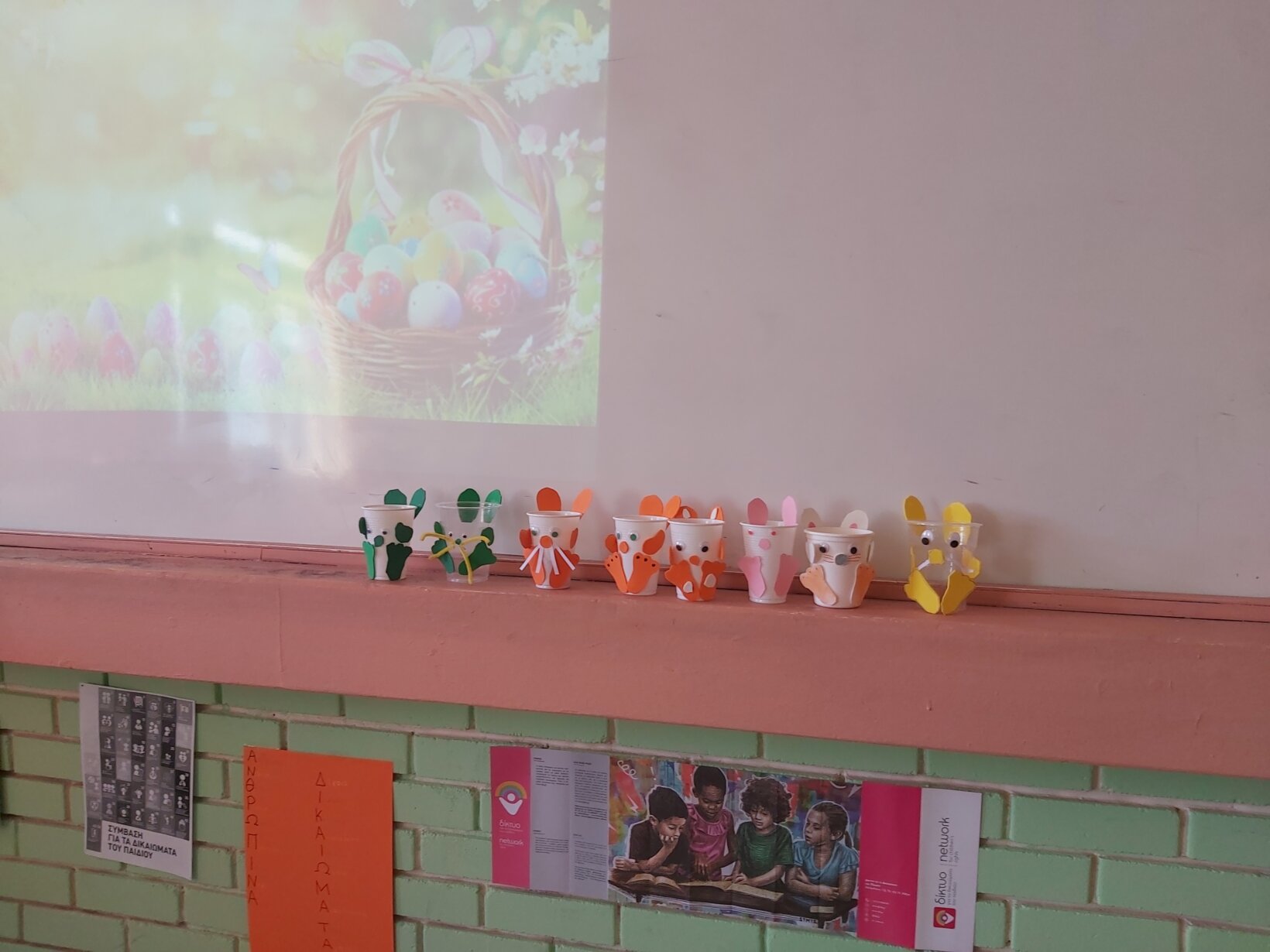
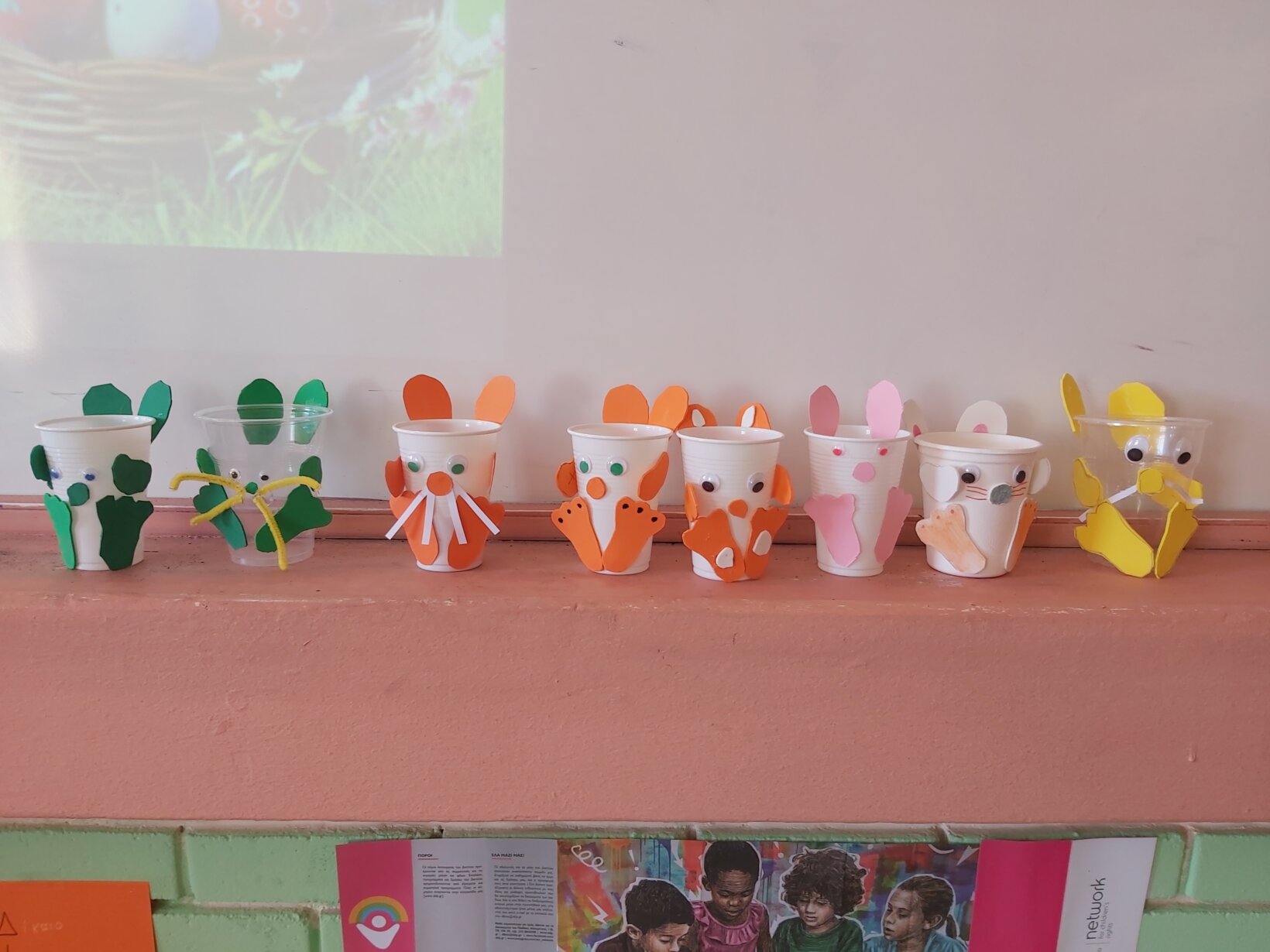
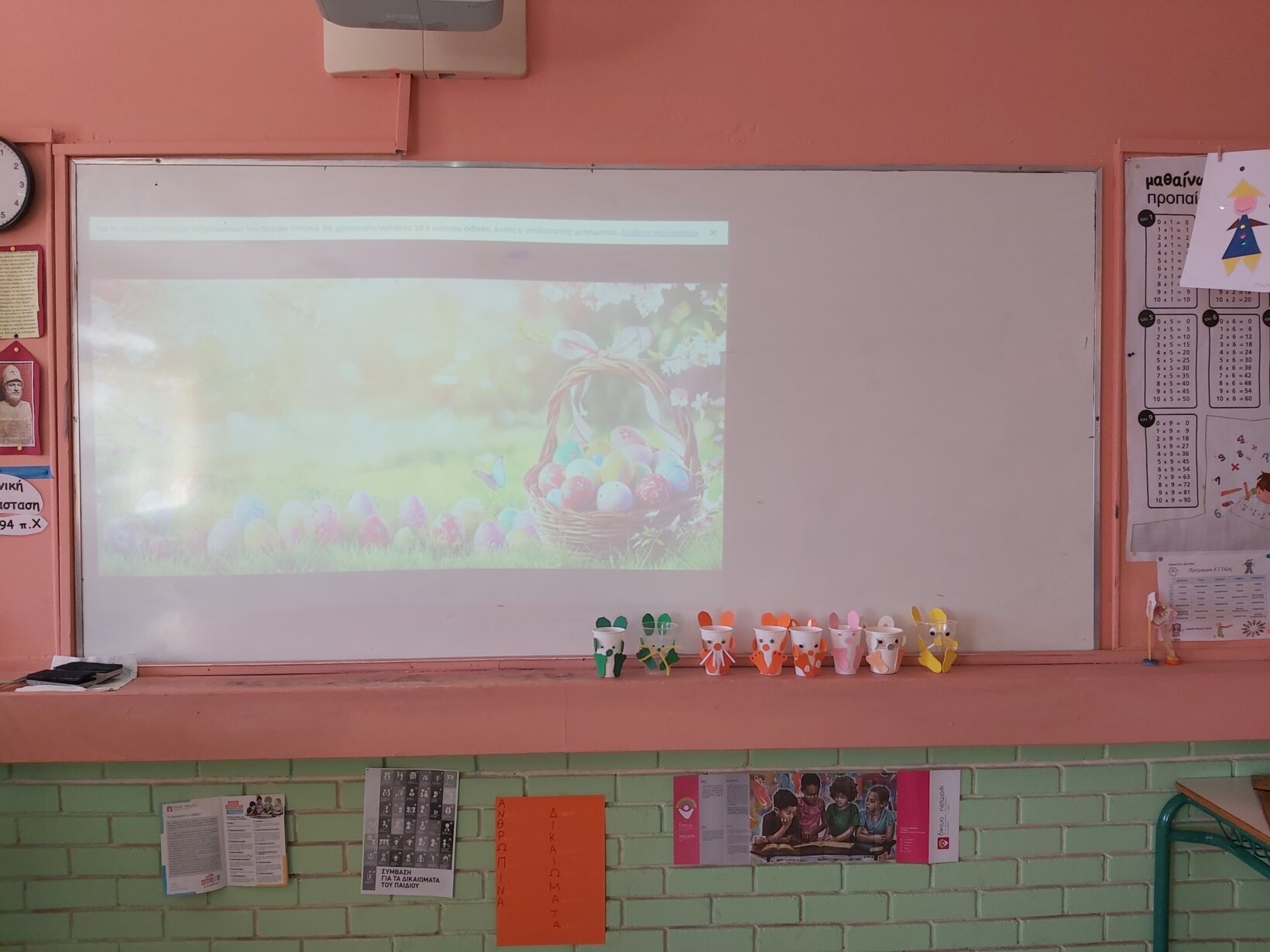

4th Grade Unit 4 Project: Seasons
This is a project based on the task of Unit 4, 4th Grade Coursebook. It was about writing a poem and/or creating a picture inspired by seasons which was the topic and its related vocabulary we covered in Unit 4.
Following, you can find the sway in which their work is presented:
UNIT 2. Shakespeare’s Midsummer Night’s Dream Project (6th GRADE)
6TH GRADE
PROJECT
WILLIAM SHAKESPEARE’S A MIDSUMMER NIGHT’S DREAM
EDUCATIONAL SCENARIO AND PURPOSE:
Students familiarize themselves with the play of the most well known English play writer William Shakespeare (1564-1616) and have the chance to read a literature text. With the help of the FLIPGRID app, they will also practise their speaking and presentation skills by recording their roles on FLIPGRID TOPIC designed exclusively for their class on FLIPGRID APPLICATION.
Before you start, make sure you have your parents’ consent!
Parent Consent signature
_______________________________________________
STEP 1:
Read the text so that get familiar with the text.
STEP 2:
Decide on the roles each one is going to perform.
STEP 3:
Practise lines.
STEP 4:
Decide on the material to use. For example, costumes ,wigs and masks.
STEP 5:
Visit FLIPGRID
and enter the join code ( I will give you in class) on the upper right corner.
Then you have three options to log in:
- by using a GOOGLE ACCOUNT by entering your CREDENTIALS
- by using a MICROSOFT ACCOUNT by entering your CREDENTIALS
- by using an APPLE ACCOUNT by using your CREDENTIALS
STEP 6:
Once you GET IN the topic you can go to ADD TO TOPIC and click on it to record your video or audio.
Then you click on ADD TO TOPIC BUTTON the following will appear and you will have the option of recording by choosing either the video button (number 1 on the following picture) or the audio button (number 2). Then you click on the central button (number 3) to record. AFTER your recording you click on button number 4 to go to the next page.
Here you can listen to or watch your recording and check it or you can even add to that if you click the + symbol. If you feel that you have finished then click on the NEXT button to move on.
On the next page you add a title (which is optional) for your recording (number 1) and then you click POST TO TOPIC (number 2).
Then the above message appears. You have successfully added your recording to topic and you can click the GO TO TOPIC BUTTON to visit it.
On the page of the topic your response appears!
It is a great application to practise your speaking skills and a wonderful opportunity for your teacher to comment on your responses!
Enjoy!
Your English Teacher
Claire Dagoula
| 1. Narrator:
In Ancient Greece there is a girl named Hermia who loves a young man Lysander. However, her father says she must marry Demetrius but she does not want to. She and Lysander escape to a forest. Helena is Hermia’s friend and loves Demetrius. Helena and Demetrius also run away to the forest. Soon, they get tired and they fall asleep under the trees. In the forest, there is Nick Bottom, an actor and his group, who are putting on a play. Farther through the forest the queen of fairies Titania is arguing with her husband, Oberon who is very angry with her. So, he sends Puck, the playful sprite, to bring the juice from the love flower to make her love him again. 2. Puck: Ha, ha! I’ll play a trick on all these people! I’ll turn this man to a donkey. Abracadabra! You, Nick Bottom, are a donkey! (Nick becomes a donkey) 3. Oberon: (angrily) Give me the magic juice. I’ll put some of it in Titania’s eyes myself. When she wakes up, she will fall in love with the first one she sees. This will be me. 4. Titania: Where am I? (Looking at Nick Bottom) Oh, my love! Who are you? You are so handsome! 5. Nick: (running away) Help! Help! |
4. Titania:
Where are you going my love! Come back to me! 2. Puck: Ha, ha, ha! Let me put some flower juice in Lysander’s eyes now. Lysander: (wakes up and sees Helena) Oh, I am desperately in love with you! How beautiful you are! 6. Helena: What’s wrong with you? Don’t you love Hermia any longer? 7. Lysander: Hermia? Who is she? You are my love! 2. Puck: Ha, ha, ha! Let me put some flower juice in Demetrius’ eyes now. 8. Demetrius: (wakes up and sees Hermia) Oh, my darling Hermia! You are the prettiest girl in the world. I love you deeply and truly! 9. Hermia: (sadly) Oh, where is Lysander? Why isn’t he with me? He is my true love! (She is crying) 3. Oberon: (angrily) Come here Puck! Put everything back to normal. 2. Puck: All the play is just a dream! Everything that happens on a midsummer night in a magic forest is a dream. |
Midsummer Night’s Dream
Adapted text from the original play of William Shakespeare.
Resource: http://ebooks.edu.gr/ebooks/v/html/8547/2270/Agglika_ST-Dimotikou_html-empl/index3_3.html
Project, 5th Grade, Coursebook, Unit 2, Lesson 1
This is the form you can use in order to conduct your class survey and practise ADVERBS OF FREQUENCY. Following you can create a piechart to depict in a more colourful and schematic way the results of the class.
Student’s book
Unit 2
Lesson 1
E1
Class Survey
Student’s Name:____________________________________
Do you enjoy school? Find out if you have good or bad habits and see what you can do to become better at school. Put a tick next to the answer that is appropriate for you.
| 1. How often are you late for school? | ||||
| a. often | b. never | c. sometimes | ||
| 2. How often do you forget to do your homework? | ||||
| a. always | b. usually | c. sometimes | ||
| 3. Do you do your projects? | ||||
| a. always | b. sometimes | c. never | ||
| 4. Do you follow your teacher’s advice? | ||||
| a. usually | b. seldom | c. sometimes | ||
| 5. Do you ask your teacher to help you understand difficult things? | ||||
| a. sometimes | b. seldom | c. never | ||
| 6. How often do you look up things in dictionaries , encyclopedias, the internet , biographies, etc. | ||||
| a. seldom | b. sometimes | c. usually | ||
| 7. How often do you let your parents/sisters and brothers/friends do your homework for you? | ||||
| a. never | b. often | c. sometimes | ||
| 8. Do you watch TV late at night instead of going to bed? | ||||
| a. often | b. always | c. never | ||
WRITING & SPEAKING
You will prepare a class survey. On a separate piece of paper
- Write down how many pupils in your classroom answered often / usually / never / seldom / sometimes / always.
- Then in pairs, for each question, draw and colour a pie chart, like the one on the right. The pie represents the whole class.
- What conclusions can you cometo about the “personality”/profile of your class?
- Discuss with your teacher about other charts you can use.

6th GRADE GRAMMAR PRACTICE

Merry Christmas & A Happy New Year!
This year I decided to create Christmas cards with my 3rd and 4th Graders by using simple materials and by playing a little with two words spellingwise.
So for the 3rd Graders I used a simple pattern which I created on a Word document inspired by another pattern I found on the Internet and we created the simplest and cutest Santa Claus card.
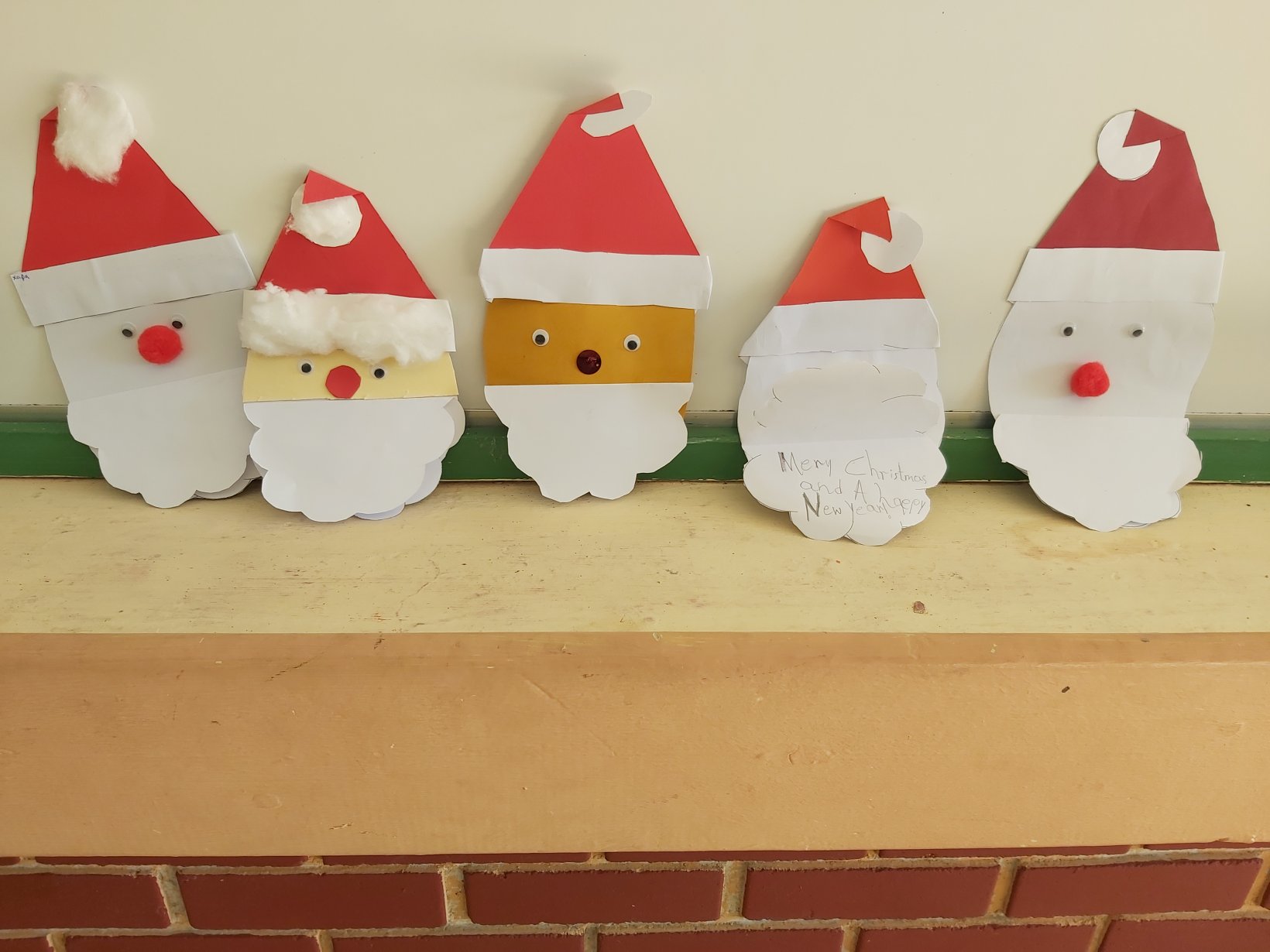
With my 4th Graders we played a little with the word “dear” and “deer” so we created the following reeindeer card

in which a pun (which I also found on the Internet ) was written as a wish: “You are deer to me!” Students really enjoyed the whole christmas spirit and I was surprised by how clever and funny they found the pun we used.

Merry Christmas & A Happy New Year to everyone!
Dictation? Not my cup of tea!
The problem:
Dictation has always been a troubling issue for students in the process of learning new words. It is an obsolete way of studying the new words and it does not involve students constructively in the learning process, let alone in the position to “own” the word, that is to say to be able to recall and use it in the proper context. So not only it is unproductive and discouraging but it also requires most of the times parental involvement which makes it even more complicated and demanding for every day school life.
The solution:
So how do I get to solve this problem? No more dictation! Except for my 3rd Graders and a few words each week as they need to familiarize themselves with the process of learning and recalling a word in English progressively, I do not dictate any words to the rest of the grades. Instead, we use QUIZLET flashcards and WORDWALL exercises to drill and learn the words of the Unit.
How do YOU teach and practise the new vocabulary?
Project: Customs
This project is for my 4th Graders and it is based on the Coursebook Unit 5 Lesson 3 Habits and Customs. Firstly, using the Quest button on my interactive book in class I gave my students the stimulus and the idea to look for more information. Because this would be a presentation project I decided to use flipgrid app so they can get the chance to enjoy and practise at the same time. After, students formed their own groups and I structured the project in steps which I gave them in writing.
STEP 1:
Find information about Christmas customs in other countries and talk about similarities and differences.
You can look at:
- www.gnto.gr, the site of the Greek National Tourism Organization.
- http://dim-sapon.rod.sch.gr, the website of the Primary School of Sapes.
- http://11dim-evosm.thess.sch.gr, the site of the 11th Primary School of
Evosmos, Thessaloniki. - http://dim-rizou.pel.sch.gr, the website of the Primary School of Rizos.
- www.haef.gr, the site of the Athens College.
http://ebooks.edu.gr/ebooks/v/html/8547/2266/Agglika_D-Dimotikou_html-empl/index5_3.html
STEP 2:
Write down your information and separate it into parts so that everybody in your team can present one part.
For example,
- Season and the weather
- Decorations
- Food and drinks
- Events
You can use expressions like “In Greece, people ….. whereas in Great Britain ……”
Once you have all the necessary information organized you should practise your presentation.
STEP 3:
You visit https://info.flip.com and you use the join code to join the course and the particular topic to record your PRESENTATION! REMEMBER YOU CAN RECORD ON OR OFF CAMERA!
Parent consent signature:
JOIN CODE: