powerpoint presentation


Frankenstein by Mary Shelly Powerpoint Presentation

25 Φεβρουάριος 2026
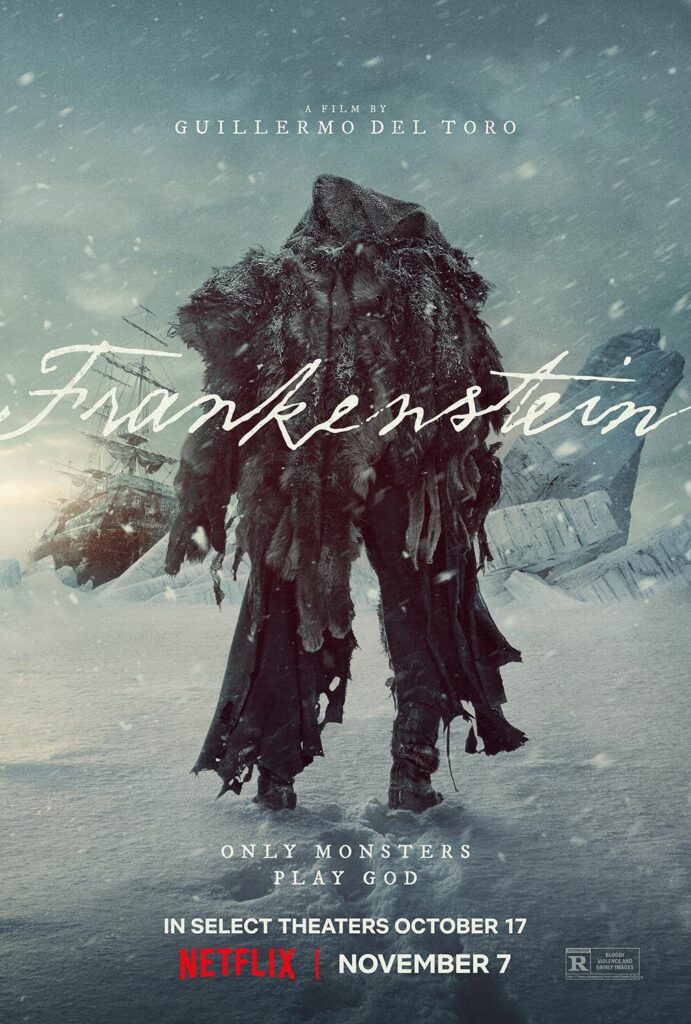
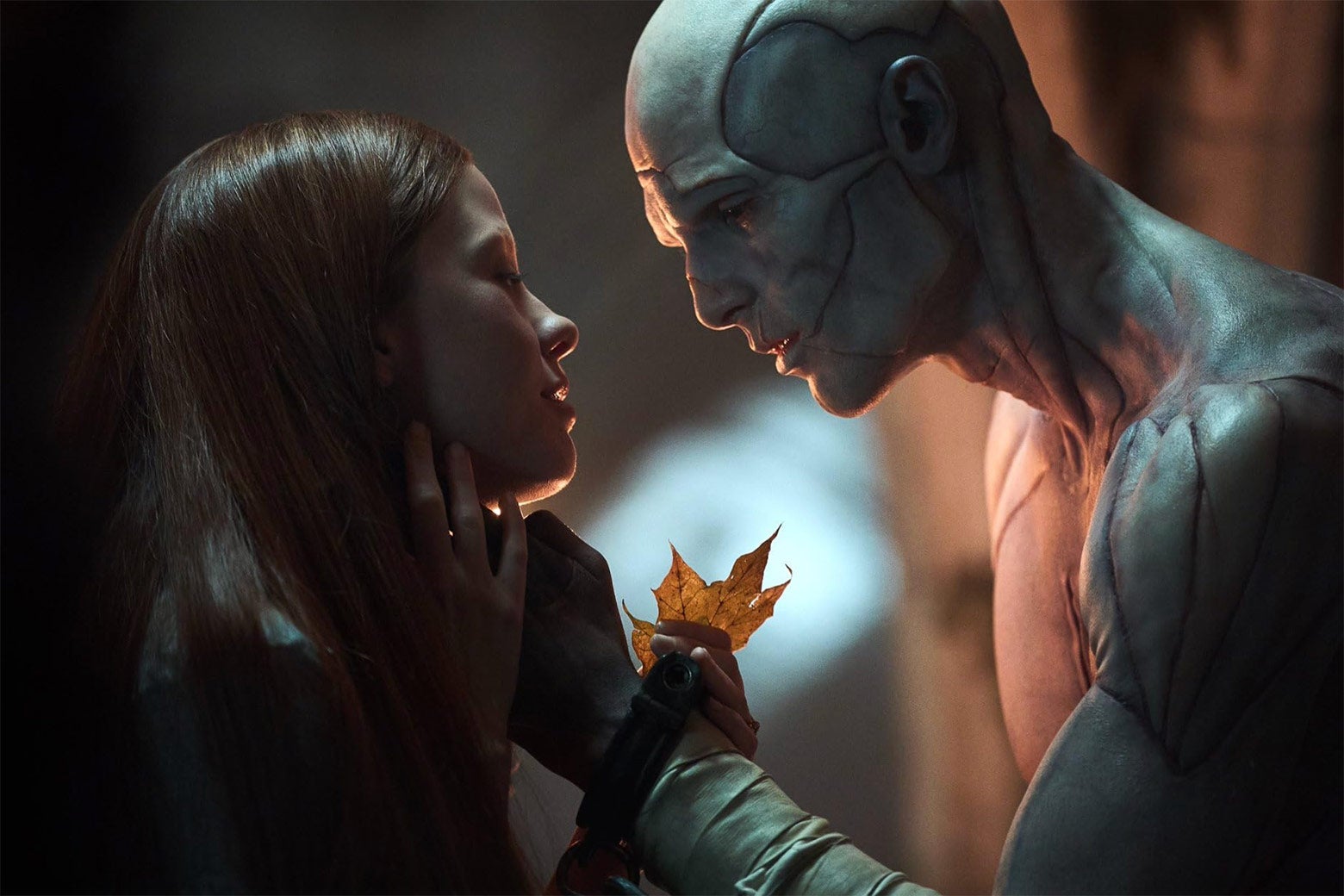
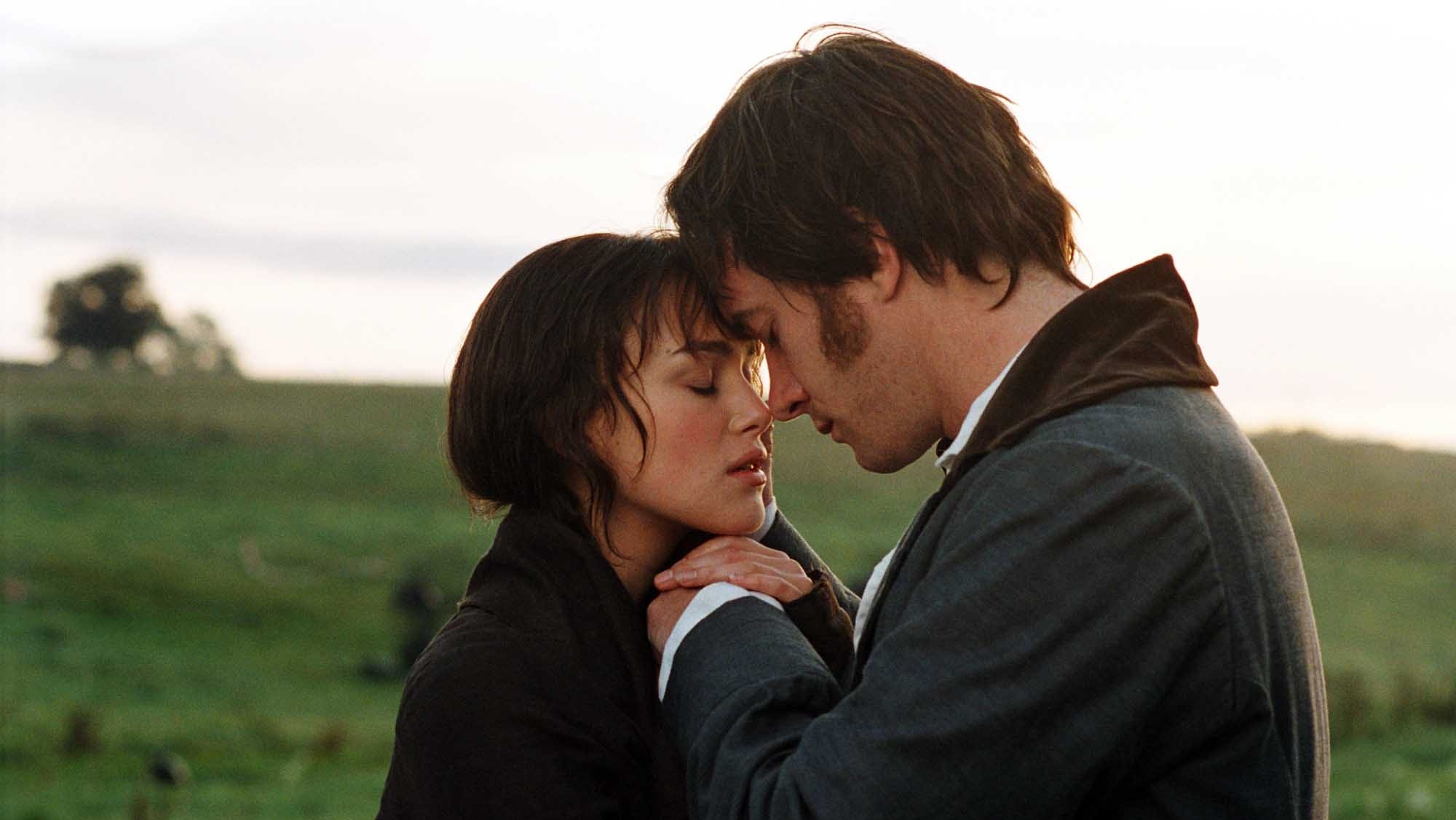
Frankenstein (2025) – Gateway Film Center  Frankenstein 2025, dir. Guillermo del Toro – @very-straight-blog on TumblrFrankenstein 2025: Jacob Elordi's monster is hot. It's unlike we've ever seen him before.

‘Frankenstein’ | Anatomy of a Scene 50 Quotes from Mary Shelley's Frankenstein - Parade

Frankenstein Powerpoint

Themes to Explore 

  • How does isolation shape both Victor and the Creature. How does loneliness transform them differently?

In Frankenstein by Mary Shelley, isolation shapes Victor and the Creature in profoundly different ways, revealing contrasting responses to loneliness. Victor chooses isolation, withdrawing from family and society in obsessive pursuit of scientific achievement. His self-imposed solitude narrows his empathy and moral judgment, transforming ambition into destructive obsession. Cut off from emotional support, he becomes increasingly paranoid, guilt-ridden, and consumed by secrecy. In contrast, the Creature experiences enforced isolation: he longs for companionship but is rejected solely because of his appearance. At first, loneliness deepens his sensitivity and desire for connection, as seen in his careful observation of human relationships. However, repeated rejection turns his hope into bitterness and rage. Unlike Victor, whose isolation stems from pride, the Creature’s arises from exclusion. Ultimately, Victor’s solitude dehumanizes him emotionally, while the Creature’s isolation corrupts an originally compassionate nature, suggesting that loneliness can either erode responsibility or distort innocence depending on its source.

  • Who is truly portrayed as more “monstrous” by the end of the story — Victor or the Creature — and why?

In Frankenstein by Mary Shelley, Victor is ultimately portrayed as more “monstrous” than the Creature, not because of his appearance but because of his moral failures. The Creature commits violent acts, yet these arise after repeated rejection, abandonment, and suffering. He begins as sensitive, curious, and capable of love; it is society’s cruelty—and Victor’s refusal to accept responsibility—that twist his pain into vengeance. Victor, by contrast, consciously chooses ambition over compassion. He creates life but immediately rejects his creation, denying it guidance, care, or accountability. Even when given opportunities to prevent further tragedy, he prioritizes pride and fear over ethical responsibility. By the end, the Creature shows remorse and self-awareness, while Victor remains consumed by blame and obsession. Shelley suggests that true monstrosity lies not in physical form but in the failure to act with empathy and responsibility—qualities Victor repeatedly lacks.

  • Obsession vs. Compassion Compare Victor’s ambition with his capacity for empathy. How does this imbalance drive the tragedy?

In Frankenstein by Mary Shelley, Victor’s ambition vastly outweighs his capacity for empathy, and this imbalance propels the novel’s tragedy. His obsessive desire to conquer death and achieve scientific glory blinds him to the ethical consequences of his actions. While he possesses the intellectual brilliance to create life, he lacks the emotional maturity to care for what he brings into existence. The moment the Creature awakens, Victor responds not with responsibility or compassion but with horror and abandonment. This failure of empathy becomes the catalyst for the Creature’s suffering and eventual violence. Even after witnessing the destruction that follows, Victor remains driven more by pride and revenge than understanding. His ambition isolates him from family, friends, and moral accountability, reinforcing a cycle of secrecy and guilt. Ultimately, it is not knowledge itself that causes the tragedy, but Victor’s inability to balance scientific aspiration with humane responsibility.

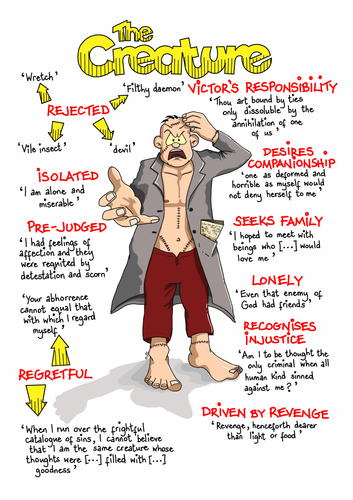
        One of my favorite quotes from the original #Frankenstein. And take a close  look at that hand … I found the image on a sewing site online; it's  embroidered—made entirely of thread.          FRANKENSTEIN Quotes GCSE REVISION Poster THE CREATURE | Teaching Resources

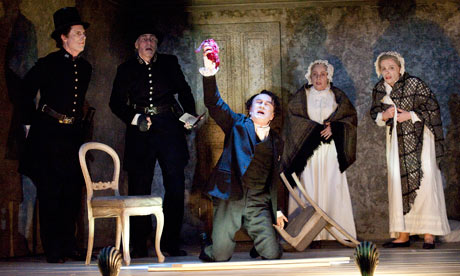
Powerpoint Presentation : The Tell Tale Heart Edgar Allan Poe

8 Ιούνιος 2015
    

TRUE! –nervous –very, very dreadfully nervous I had been and am; but why will you say that I am mad? The disease had sharpened my senses –not destroyed –not dulled them. Above all was the sense of hearing acute. I heard all things in the heaven and in the earth. I heard many things in hell. How, then, am I mad? Hearken! and observe how healthily –how calmly I can tell you the whole story.

The Tell Tale Heart,  has always been one of my favorite stories by Edgar Allan Poe. Poe has managed to capture wonderfully the whole concept of madness in a macabre way that I find very fascinating. In the story a lodger goes mad and haunted by his evil eye, kills his landlord, burying the body under the floorboards. When the police come to investigate, the narrator killer is horrified to hear his victim’s heartbeat still beating in its burial place.

Powerpoint presentation ->Enjoy  😆

the tell tale heart

Αλλαγή μεγέθους γραμματοσειράς
Αντίθεση