
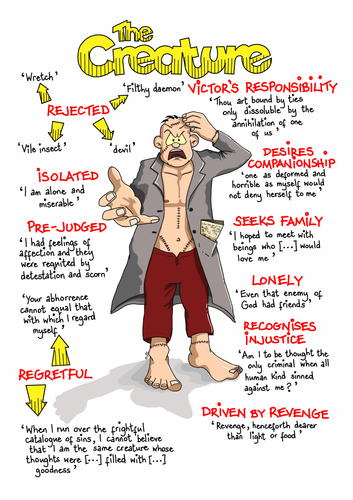
- How does isolation shape both Victor and the Creature. How does loneliness transform them differently?
Inversion exercises
25 Φεβρουάριος 2026
Inversion
We use inversion in several different situations in English. Inversion just means putting the verb
before the subject. We usually do it in question forms:
Normal sentence: You are tired. (The subject is ‘you’. It’s before the verb ‘are’.)
Question form: Are you tired? (The verb ‘are’ is before the subject ‘you’. They have changed
places. This is called ‘inversion’.)
In most English verb tenses, when we want to use inversion, we just move the verb to before the
subject. If there’s more than one verb, because a verb tense has auxiliary verbs for example, we move
the first verb.
There are two verb tenses where we just change the places of the verb and subject:
Present simple with ‘be’: am I / are you / is he
Past simple with ‘be’: were you / was she
With other verb tenses, we change the place of the subject and the auxiliary verb (the first auxiliary
verb if there is more than one). We don’t move the other parts of the verb:
Present continuous: am I going / are you going
Past continuous: was he going / were they going
Present perfect: have we gone / has she gone
Present perfect continuous: has she been going / have they been going
Past perfect: had you gone
Past perfect continuous: had he been going
Future simple: will they go
Future continuous: will you be going
Future perfect: will they have gone
Future perfect continuous: will she have been going
Modal verbs: should I go / would you go
There are two tenses where we need to add do / does / did to make the question form. This is usually
still called inversion.
Present simple with any verb except ‘be’ (add ‘do’ or ‘does’): do you go / does he go
Past simple with any verb except ‘be’ (add ‘did’): did we go / did they go
When do we use inversion?
Of course, we use inversion in questions. But we also sometimes use inversion in other cases, when
we are not making a question.
1: When we use a negative adverb or adverb phrase at the beginning of the sentence.
Usually, we put the expression at the beginning of the sentence to emphasise what we’re saying. It
makes our sentence sound surprising or striking or unusual. It also sounds quite formal. If you don’t
want to give this impression, you can put the negative expression later in the sentence in the normal
way:
Seldom have I seen such beautiful work.
(‘Seldom’ is at the beginning, so we use inversion. This sentence emphasizes what beautiful
work it is.)
I have seldom seen such beautiful work.
(‘Seldom’ is in the normal place, so we don’t use inversion. This is a normal sentence with no
special emphasis.)
We only use inversion when the adverb modifies the whole phrase and not when it modifies the noun:
Hardly anyone passed the exam. (No inversion.)
Here are some negative adverbs and adverb phrases that we often use with inversion:
Hardly
Hardly had I got into bed when the telephone rang.
Never
Never had she seen such a beautiful sight before.
Seldom
Seldom do we see such an amazing display of dance.© 2014 www.perfect-english-grammar.com
May be freely copied for personal or classroom use.
Rarely
Rarely will you hear such beautiful music.
Only then
Only then did I understand why the tragedy had happened.
Not only … but
Not only does he love chocolate and sweets but he also smokes.
No sooner
No sooner had we arrived home than the police rang the doorbell.
Scarcely
Scarcely had I got off the bus when it crashed into the back of a car.
Only later
Only later did she really think about the situation.
Nowhere
Nowhere have I ever had such bad service.
Little
Little did he know!
Only in this way
Only in this way could John earn enough money to survive.
In no way
In no way do I agree with what you’re saying.
On no account
On no account should you do anything without asking me first.
In the following expressions, the inversion comes in the second part of the sentence:
Not until
Not until I saw John with my own eyes did I really believe he was safe.
Not since
Not since Lucy left college had she had such a wonderful time.
Only after
Only after I’d seen her flat did I understand why she wanted to live there.
Only when
Only when we’d all arrived home did I feel calm.
Only by
Only by working extremely hard could we afford to eat.
2: We can use inversion instead of ‘if’ in conditionals with ‘had’ ‘were’ and ‘should’. This is quite
formal:
Normal conditional: If I had been there, this problem wouldn’t have happened.
Conditional with inversion: Had I been there, this problem wouldn’t have happened.
Normal conditional: If we had arrived sooner, we could have prevented this tragedy!
Conditional with inversion: Had we arrived sooner, we could have prevented this tragedy!
3: We can use inversion if we put an adverbial expression of place at the beginning on the sentence.
This is also quite formal or literary:
On the table was all the money we had lost. (Normal sentence: All the money we had lost
was on the table.)
Round the corner came the knights. (Normal sentence: The knights came round the corner.)
4: We can use inversion after ‘so + adjective … that’:
So beautiful was the girl that nobody could talk of anything else. (Normal sentence: the girl
was so beautiful that nobody could talk of anything else.)
So delicious was the food that we ate every last bite. (Normal sentence: the food was so
delicious that we ate every last bite.)
Exercise
1 We can go on with the plan only if you agree.
Only if ………………………………………………….
2 Esther won’t leave the house under any circumstances.
Under…………………………………………………………
3 If the river rises any higher, the town will be flooded.
Should………………………………………………………..
4 If you’d paid on time, you wouldn’t have been cut off.
Had…………………………………………………………..
5 He had just recovered from flu when he caught a bad cold.
No……………………………………………………………
6 He took such a long holiday that he forgot how to do his job.
Such a long holiday………………………………………
7 They managed to get our attention only by shouting and waving their arms.
Only by………………………………………………………
8 He only asks for help when he is really desperate.
Only when……………………………………………………..
9 If I see him, I’ll give him your message.
I’ll give him your message………………………………..
10 Tom never seems worried about his future.
Never…………………………………………………………
11 I’ve never had such fun anywhere else.
Nowhere ……………………………………………….
12 Lynne didn’t realise that her mother was so worried about her.
Little…………………………………………………….
13 The army marched forward into the battle.
Forward………………………………………………..
14 Her parents and her friends warned her not to go alone.
Her parents warned her not to go alone as ……………….
15 She sang so well that she was offered a record deal.
So well ……………………………………….
16 I only watch television when I have nothing else to do.
Only when I have …………………………………..
17 The door to the basement isn’t to be left open on any account.
On…………………………………………………….
18 Bob forgot his mother’s birthday and his sister’s too.
Bob didn’t remember his mother’s birthday; neither……………..
19 He was so anxious that he kept biting his nails.
Such ………………………………………………
20 He didn’t thank me once for feeding his cat.
Not………………………………………………………….
Κάτω από grammar | 0 Σχόλια
Frankenstein by Mary Shelly Powerpoint Presentation
25 Φεβρουάριος 2026




Themes to Explore
Mamma Mia! Freud, Oedipus, and the Greek Art of Overmothering
4 Δεκέμβριος 2025


Mamma Mia! Freud, Oedipus, and the Greek Art of Overmothering
If you’ve ever seen a grown man shivering on a sunny day because his mother told him to “put on a jacket,” you’ve witnessed one of the most ancient and persistent forces in human civilization: the protective mother. Particularly in Mediterranean cultures—where mothers are part guardian angel, part private detective—the bond between mother and son isn’t just emotional; it’s cultural, psychological, and sometimes mythological.
Let’s take a closer (and slightly Freudian) look at why mothers guard their sons so fiercely—and what happens when love turns into control.
The Eternal Greek Drama: Mother, Son, and the World
In Greek culture, motherhood has always been sacred. From Demeter mourning Persephone to the modern Greek mama who calls her thirty-year-old son five times a day to ask if he’s eaten, the theme hasn’t changed much. The Greek mother is a pillar of love and anxiety combined: she feeds, shields, guides, and sometimes—without realizing it—smothers.
Socially speaking, this protective instinct evolved from real necessity. For centuries, families were tight-knit survival units. The mother’s role was not only emotional but strategic—ensuring her son’s success, health, and marriageability. A protective mother meant family continuity and social stability. But in today’s world—where sons no longer go off to battle but to university dorms and corporate jobs—this same instinct can feel… a little outdated.
Freud, Meet the Feta Cheese
Enter Sigmund Freud, the man who forever complicated family dinners. His theory of the Oedipus complex—named after that most unfortunate of Theban princes—suggests that young boys unconsciously desire their mothers and compete with their fathers for affection. In psychological terms, the boy’s first emotional attachment becomes a prototype for all future relationships.
Now, in ancient Greece, Oedipus accidentally killed his father and married his mother, which, granted, is an extreme case of not cutting the umbilical cord. But the myth endures because it dramatizes a universal truth: the difficulty of emotional separation between parent and child.
In modern Greek (and not only Greek) households, Freud might observe that the son’s desire is not to marry his mother, but to please her forever. The mother, in turn, experiences a subtle emotional reward in being needed. The result? A dynamic that keeps both from fully letting go. Freud would call it fixation; a sociologist might call it co-dependence; a stand-up comedian would call it Tuesday.
Helicopters, Aprons, and Emotional GPS
The modern term for this behavior is the “helicopter mother”—hovering constantly, ready to intervene at the first sign of discomfort or danger. In many societies, this has become almost a badge of pride. Mothers are expected to be omnipresent: managing diets, emotions, education, social lives, and even romantic choices.
But psychologists warn that excessive protection can backfire. Sons raised under constant supervision often struggle with independence, decision-making, and emotional resilience. They may fear failure because they’ve never experienced it without a safety net. Ironically, in trying to shield her son from pain, the mother may be keeping him from strength.
This doesn’t mean mothers shouldn’t care—it means that love needs to evolve as the child grows. Protection should gradually give way to trust. The hardest lesson for a mother to learn is that letting go doesn’t mean losing; it means transforming the relationship from control to confidence.
The Mediterranean Mama vs. Modern Psychology
In Mediterranean cultures, this transformation is especially hard. The family is the center of life; emotional expression is loud, physical, and constant. A Greek mother will cook, clean, call, and cry—all in one afternoon—and consider it her sacred duty. Sons, meanwhile, learn to read the emotional weather of their mothers like sailors reading the sea: “Is she calm? Is she stormy? Did I forget to text her goodnight?”
Yet beneath the humor lies something profound: the cultural ideal of unconditional love. For many Greek (and Italian, Spanish, or Middle Eastern) mothers, love is measured not in freedom but in presence. “I worry because I care,” she’ll say—and she means it. The challenge for the next generation is to reinterpret that love in modern terms—to turn care into encouragement, and guilt into gratitude.
Oedipus Revisited: Cutting the Modern Umbilical Cord
If Oedipus were alive today, he probably wouldn’t kill his father; he’d just move into his mother’s guest room after university and never leave. In fact, sociologists have coined terms like “failure to launch” and “boomerang generation” to describe young adults who return home instead of achieving independence. Economic struggles play a role, of course—but emotional dependence often plays an equal part.
The modern son, raised under the careful eye of a loving but controlling mother, may feel safe but unprepared for life’s uncertainties. He’s learned how to be loved, but not always how to stand alone.
The Punchline and the Paradox
Here’s the paradox: protective mothers are not wrong. Their instincts come from love, biology, and centuries of cultural wisdom. The problem isn’t protection itself—it’s the inability to adapt. The Greek mother shouting, “Wear a jacket!” is not just worried about pneumonia; she’s expressing the oldest human fear: that the child will leave and never come back.
So yes, laugh at her if you must—but also recognize the poetry behind the panic. The same voice that scolds also prays, cooks, sacrifices, and dreams. Behind every overprotective mother is a heart that once held a newborn and decided that nothing bad should ever happen to him.
In the End…
Freud might analyze it, Oedipus might dramatize it, and comedians might satirize it—but the truth is simple: A mother’s love, in all its protective, overwhelming, and sometimes suffocating glory, is one of the strongest forces in human nature.
Perhaps the goal is not to silence that voice, but to help it evolve—from “Don’t go, you’ll catch a cold” to “Go, and if you fall, I’ll still be here.”
And yes—take the jacket. It makes her happy.
Reading Comprehension Questions
- According to the text, why were mothers historically highly protective in Greek and Mediterranean cultures?
- How does the text connect Freud’s Oedipus complex to modern family dynamics?
- What is the main problem associated with “helicopter parenting,” according to the text?
- What paradox does the author describe about protective mothers?
- How should a mother’s form of love change as her child grows older?
We Real Cool by Gwendolyn Brooks
13 Νοέμβριος 2025
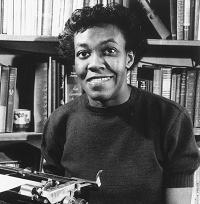


We Real Cool Gwendolyn Brooks ,1917 –2000
THE POOL PLAYERS.
SEVEN AT THE GOLDEN SHOVEL.
We real cool. We
Left school. We
Lurk late. We
Strike straight. We
Sing sin. We
Thin gin. We
Jazz June. We
Die soon.
1 Main Idea. Summarize the main idea of the poem? Who or what is the poem about?
________________________________________________________________________________________________________________________________________________________________________________________________________________________________________________________________________________________________________________________________
2 Identify Theme. What is the theme of the poem? What is the message that the author is trying to send and how do you know it?
________________________________________________________________________________________________________________________________________________________________________________________________________________________________________________________________________________________________________________________________________________________________________________________
3 Make Inferences. How do you think the speaker of the poem feels about the people he/she is observing? How can you tell?
________________________________________________________________________________________________________________________________________________________________________________________________________________________________________________________________________________________________________________________________________________________________________________________
4 Compare and Contrast. Think back to the short story Jonathan Livingston Seagull by Richard Bach from the unit Learning to Fly that we recently completed ? What are the similarities and differences between the people of the poem and the bird of the short story?
________________________________________________________________________________________________________________________________________________________________________________________________________________________________________________________________________________________________________________________________________________________________________________________________________________________________________________________________________________________________________________________________________________________________________________
Κάτω από poetry | 0 Σχόλια

The impact of social media on our youth – Open cloze text
3 Οκτώβριος 2022

Online social media open cloze text
Κάτω από jokes | 0 Σχόλια



The Creation Of The Teacher (A Lyceum Students)
15 Σεπτέμβριος 2022







The Creation of the Teacher-worksheet
Κάτω από article +worksheet | 0 Σχόλια