>GO ON (1)

>

go on (with) = continue
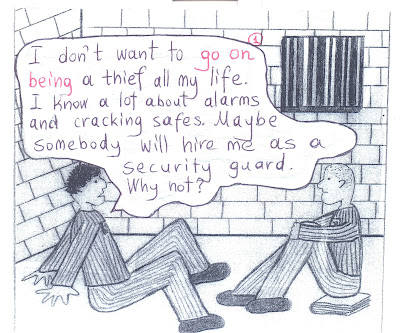
examples:

  • You can’t go on lying to your parents.
  •  Go on with your story! I want to know what happened in the end.
  • He looked at his watch and then went on talking on his cell phone.
  • The film will go on after the break.
  • She became a mother but she went on with her studies at the same time.
  • Every month you spend more money than you make. You can’t go on like this.
Posted in GO ON (1) | Leave a comment

>GO ON (1)

>

go on (with) = continue

examples:

  • You can’t go on lying to your parents.
  •  Go on with your story! I want to know what happened in the end.
  • He looked at his watch and then went on talking on his cell phone.
  • The film will go on after the break.
  • She became a mother but she went on with her studies at the same time.
  • Every month you spend more money than you make. You can’t go on like this.
Posted in GO ON (1) | Leave a comment

>GO AHEAD (1)

>

go ahead (with something) = start doing something

examples:

  • Go ahead and do your work before the baby wakes up.
  • We don’t have much money right now but we are going ahead with our plans to build a new house.
  • Go ahead and eat before your food gets cold.
  • If you want to come with us on the trip, just go ahead now.
  • Before I go ahead, I have to ask for my mother’s permission.
  • The government cannot go ahead with its plans, as there is strong opposition from the people.
Posted in GO AHEAD (1) | Leave a comment

>GO AHEAD (1)

>

go ahead (with something) = start doing something

examples:

  • Go ahead and do your work before the baby wakes up.
  • We don’t have much money right now but we are going ahead with our plans to build a new house.
  • Go ahead and eat before your food gets cold.
  • If you want to come with us on the trip, just go ahead now.
  • Before I go ahead, I have to ask for my mother’s permission.
  • The government cannot go ahead with its plans, as there is strong opposition from the people.
Posted in GO AHEAD (1) | Leave a comment

>COME BY (1)

>

come by = get something

examples:

  • I don’t know how he came by all that money.
  • Good friends are hard to come by.
  • How did you come by that bump on your head?
  • The unemployment rate is very high. Jobs are hard to come by.
  • How did the baby come by that scratch on his face?
  • Restaurant recipes are difficult to come by. They are kept a secret.
  • Information on the new virus is difficult to come by. We don’t know much about it yet.
Posted in COME BY (1) | Leave a comment

>COME BY (1)

>

come by = get something

examples:

  • I don’t know how he came by all that money.
  • Good friends are hard to come by.
  • How did you come by that bump on your head?
  • The unemployment rate is very high. Jobs are hard to come by.
  • How did the baby come by that scratch on his face?
  • Restaurant recipes are difficult to come by. They are kept a secret.
  • Information on the new virus is difficult to come by. We don’t know much about it yet.
Posted in COME BY (1) | Leave a comment

>COME FROM (2)

>

come from = have my home in

examples:

  • She comes from England, that’s why she has such a different accent from Ben who comes from the USA.
  • We all come from different backgrounds.
  • She comes from a very rich family.
  • She comes from a poor family.
  • He comes from a long line of artists. His parents were writers and his grandparents a painter and a playwright.
  • He comes from a long line of politicians.
  • He comes from a notorious family of convicts and thieves!
Posted in COME FROM (2) | Leave a comment

>COME FROM (2)

>

come from = have my home in

examples:

  • She comes from England, that’s why she has such a different accent from Ben who comes from the USA.
  • We all come from different backgrounds.
  • She comes from a very rich family.
  • She comes from a poor family.
  • He comes from a long line of artists. His parents were writers and his grandparents a painter and a playwright.
  • He comes from a long line of politicians.
  • He comes from a notorious family of convicts and thieves!
Posted in COME FROM (2) | Leave a comment

>CARRY ON (1)

>

carry on = continue

examples:

  • Carry on talking, please. I ‘m listening, I ‘m all ears!
  • You shouldn’t carry on fighting when the children are around.
  • Shall I carry on with my story? Are you listening?
  • If you carry on eating sugar every day, your teeth will soon decay.
  • The teacher took a look at my test while I was writing and said: “Carry on, you ‘re doing fine!”
Posted in CARRY ON (1) | Leave a comment

>CARRY ON (1)

>

carry on = continue

examples:

  • Carry on talking, please. I ‘m listening, I ‘m all ears!
  • You shouldn’t carry on fighting when the children are around.
  • Shall I carry on with my story? Are you listening?
  • If you carry on eating sugar every day, your teeth will soon decay.
  • The teacher took a look at my test while I was writing and said: “Carry on, you ‘re doing fine!”
Posted in CARRY ON (1) | Leave a comment