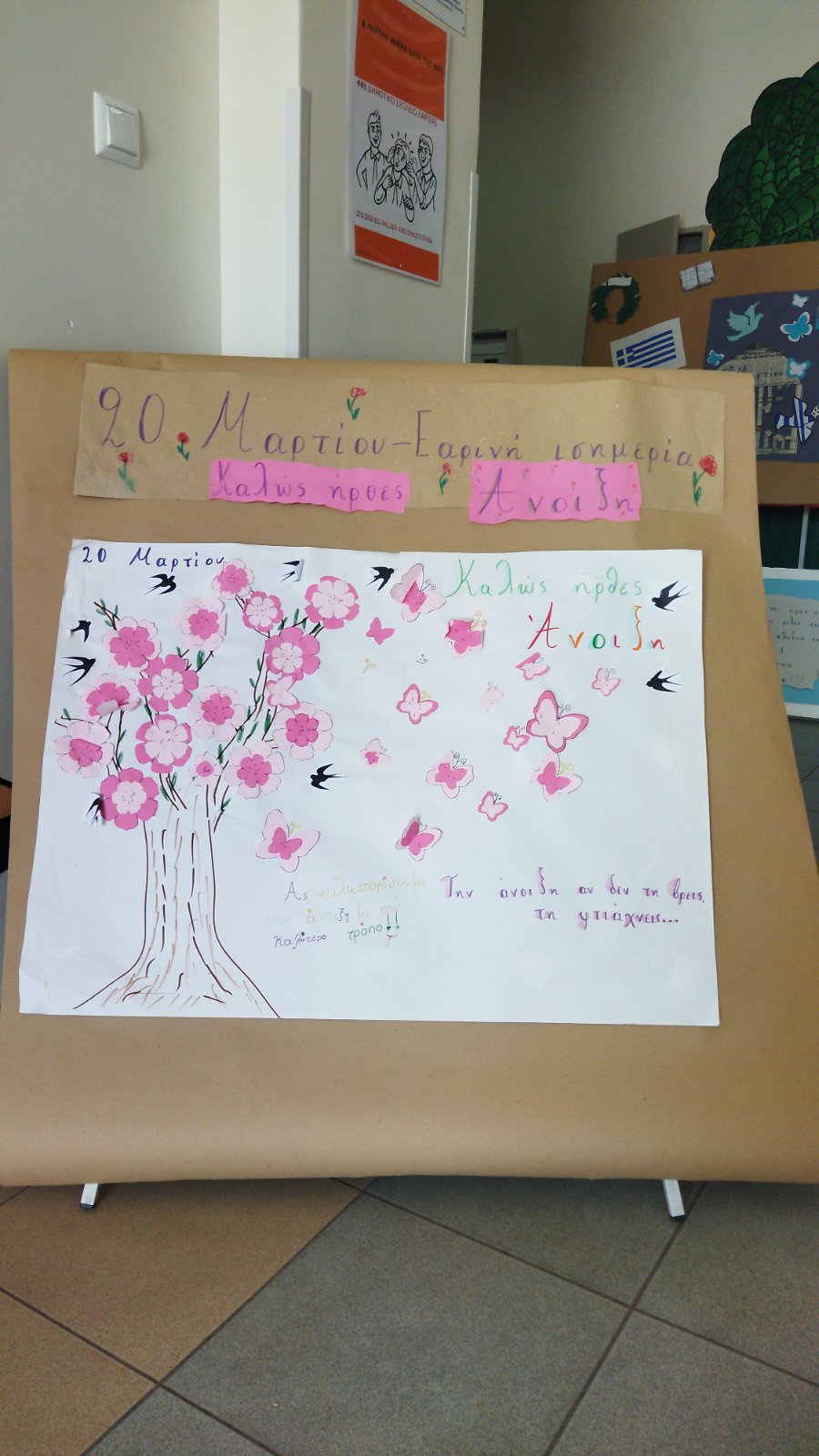
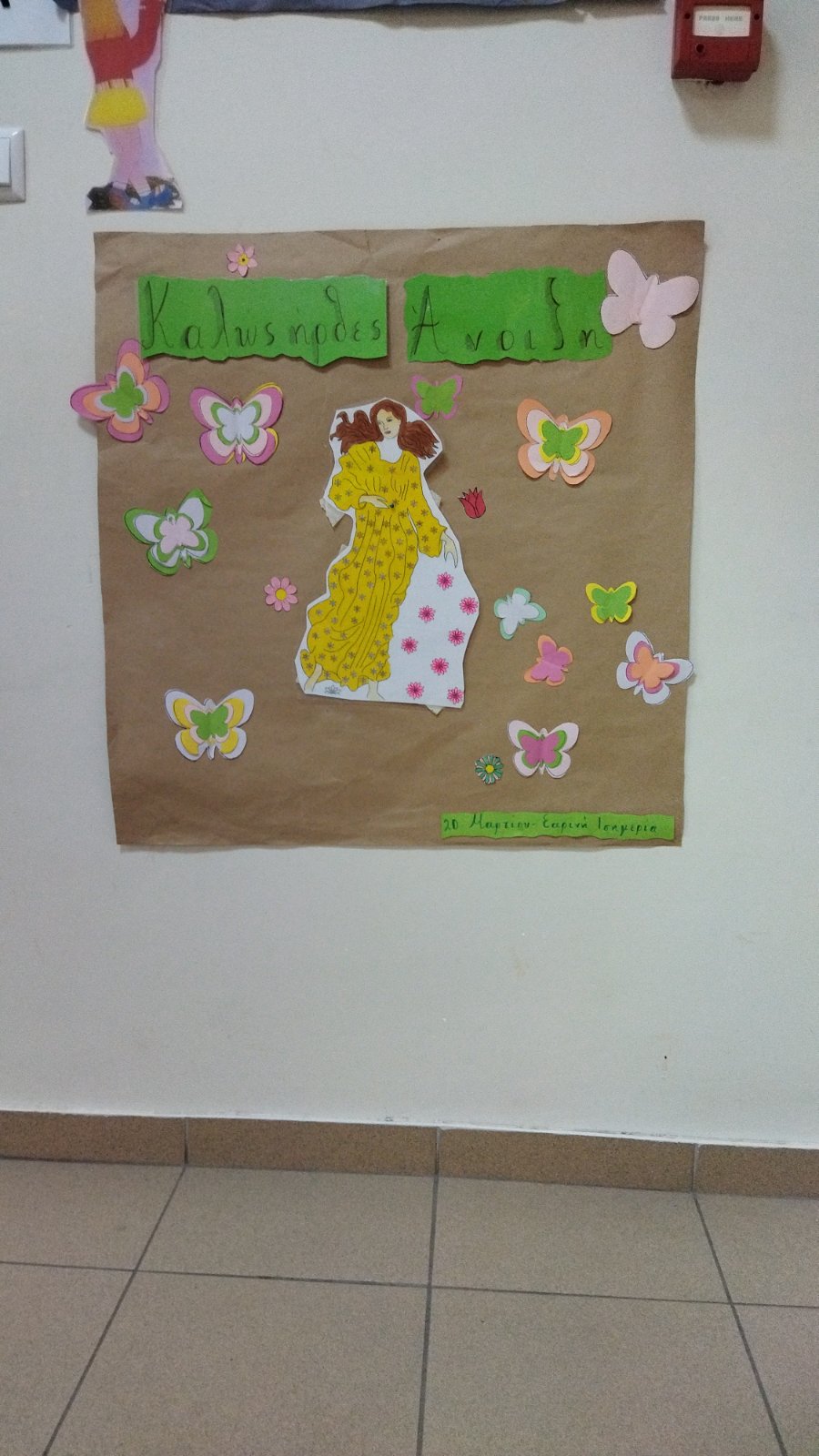
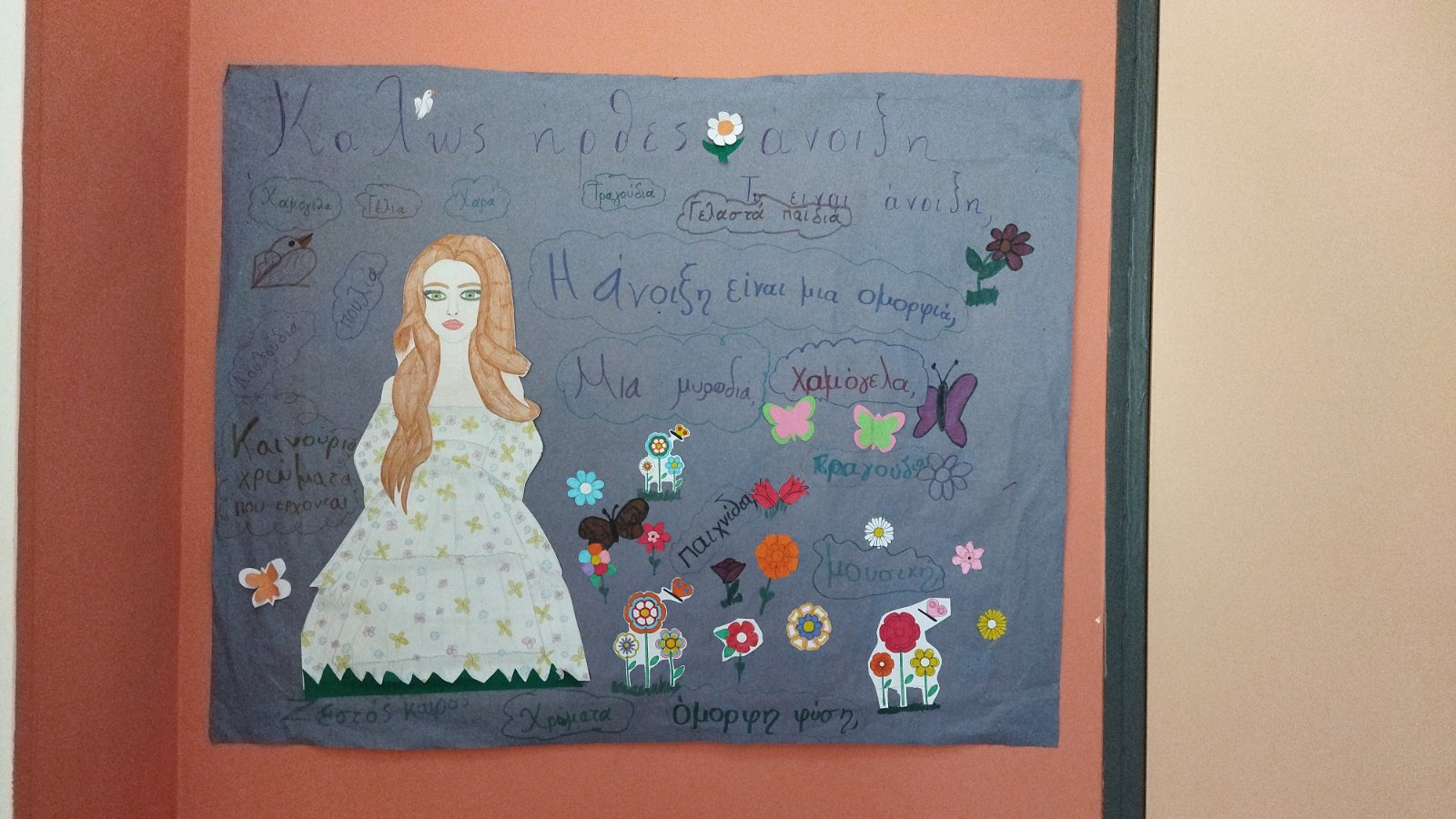
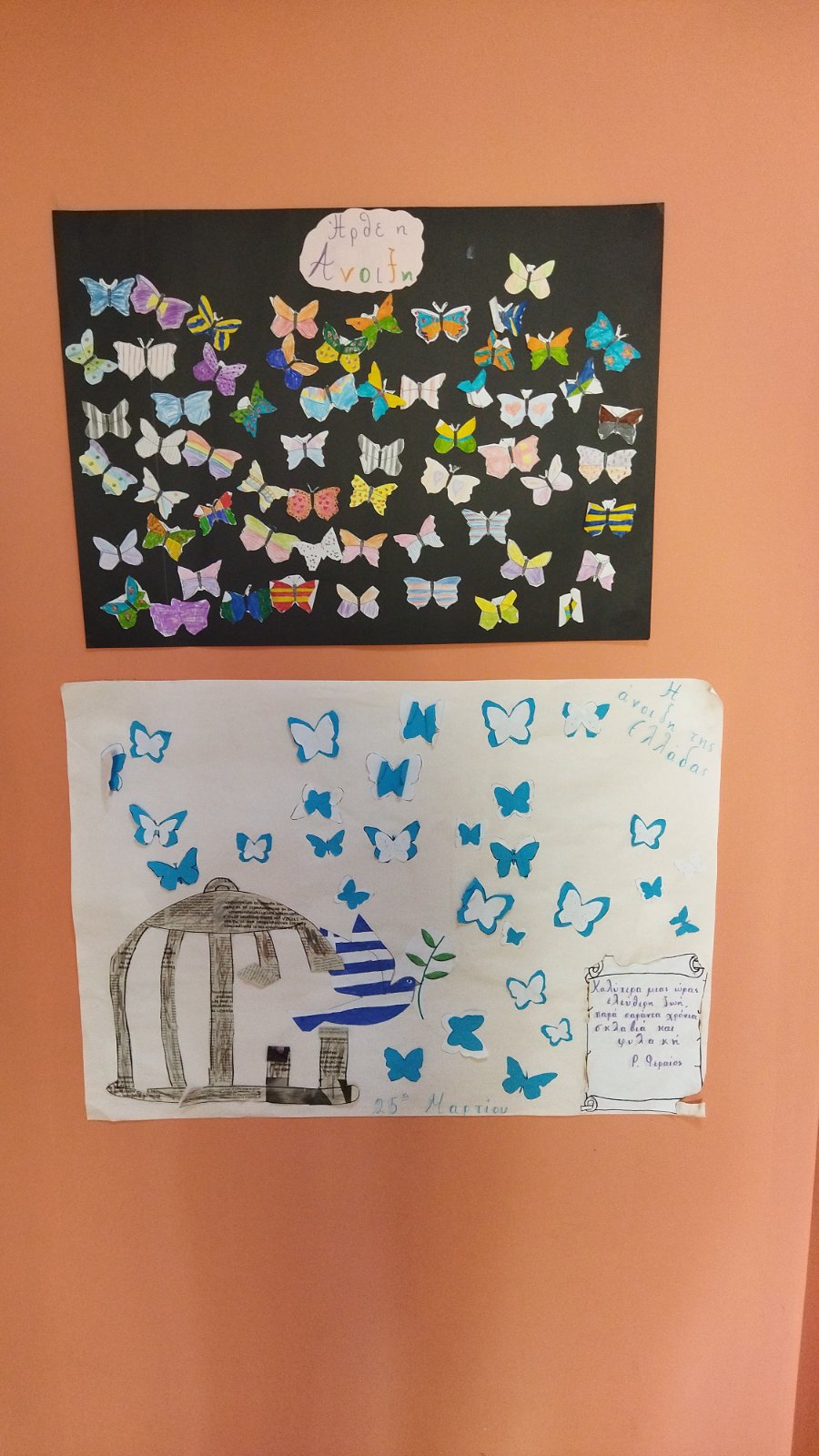
Η 20η Μαρτίου σηματοδοτεί την εαρινή ισημερία, την επίσημη έναρξη της πιο πολύχρωμης και ζωντανής εποχής του χρόνου: της άνοιξης! Η φύση ξυπνά από τον χειμερινό της λήθαργο, τα λουλούδια ανθίζουν, τα πουλιά κελαηδούν και ο ήλιος λάμπει πιο ζεστά, φέρνοντας μαζί του φως και ελπίδα.
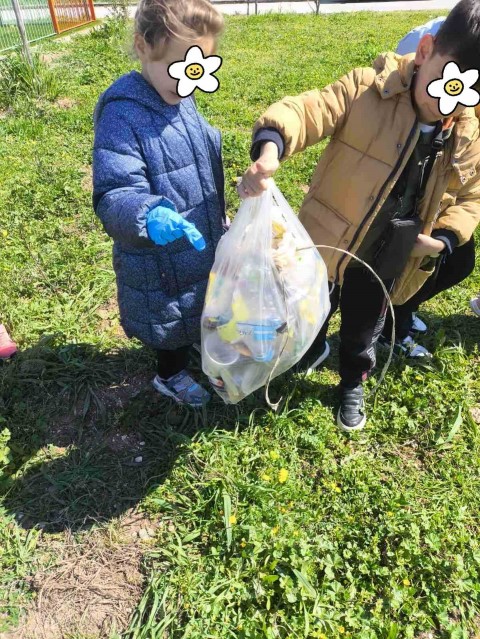
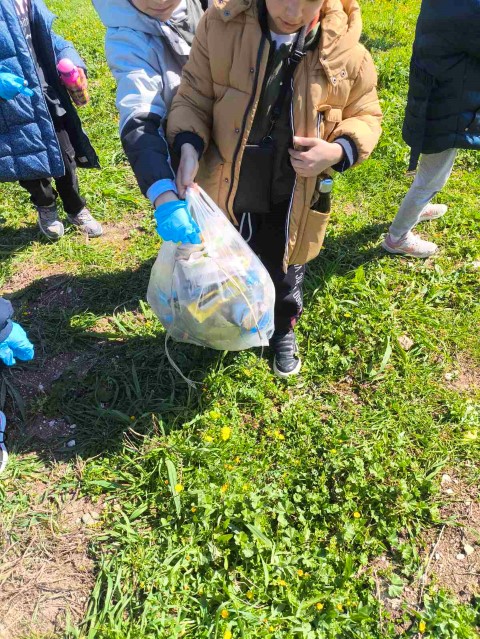
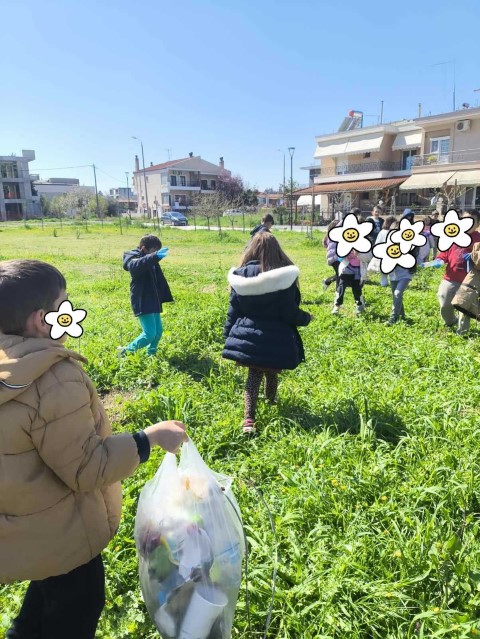
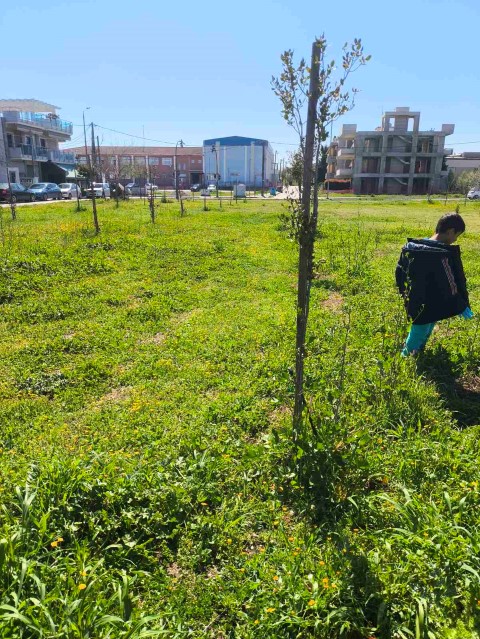
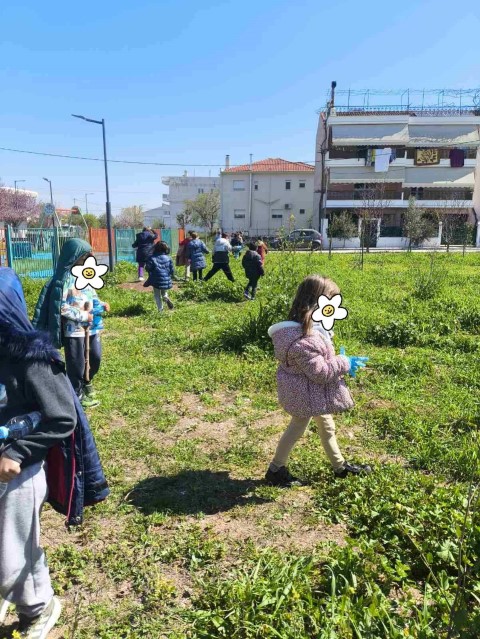
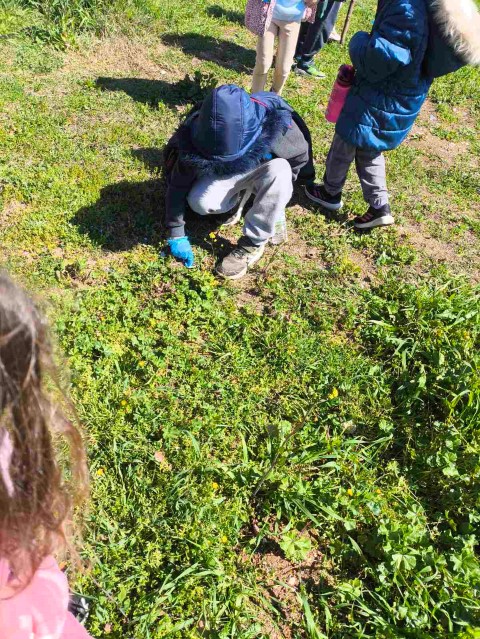
Μια υπέροχη μέρα πέρασαν οι μαθητές της Α’ τάξης, επισκεπτόμενοι το πάρκο της γειτονιάς μας! Τα παιδιά είχαν την ευκαιρία να γνωρίσουν από κοντά τα φυτά και τα δέντρα του πάρκου, να μάθουν για τη σημασία τους για το περιβάλλον να απολαύσουν τη φύση και να την καθαρίσουν από σκουλιδάκια!
Με πολλή χαρά, οι μικροί μας φίλοι ανέλαβαν και μια σημαντική αποστολή: να βοηθήσουν τα αδέσποτα ζωάκια που ζουν στο πάρκο! Τοποθέτησαν ειδικά δοχεία με νερό, ώστε τα ζωάκια να μπορούν να ξεδιψάσουν τις ζεστές μέρες.
Η επίσκεψη στο πάρκο ήταν μια πολύτιμη εμπειρία για τα παιδιά, που έμαθαν να αγαπούν και να φροντίζουν το περιβάλλον και τα ζώα.
Με χαμόγελα και ενθουσιασμό, οι μαθητές της Α’ τάξης πραγματοποίησαν μια ξεχωριστή επίσκεψη στο πάρκο της γειτονιάς μας. Σκοπός μας; Να γνωρίσουμε από κοντά την πλούσια χλωρίδα του πάρκου και να προσφέρουμε ένα χέρι βοηθείας στα αδέσποτα ζωάκια που το επισκέπτονται.
Η Α’ τάξη δεσμεύεται να συνεχίσει τις δράσεις που προάγουν την περιβαλλοντική συνείδηση και την αγάπη για τα ζώα. Στόχος μας είναι να γίνουμε ενεργοί πολίτες, που φροντίζουν για το περιβάλλον και τους συνανθρώπους μας.
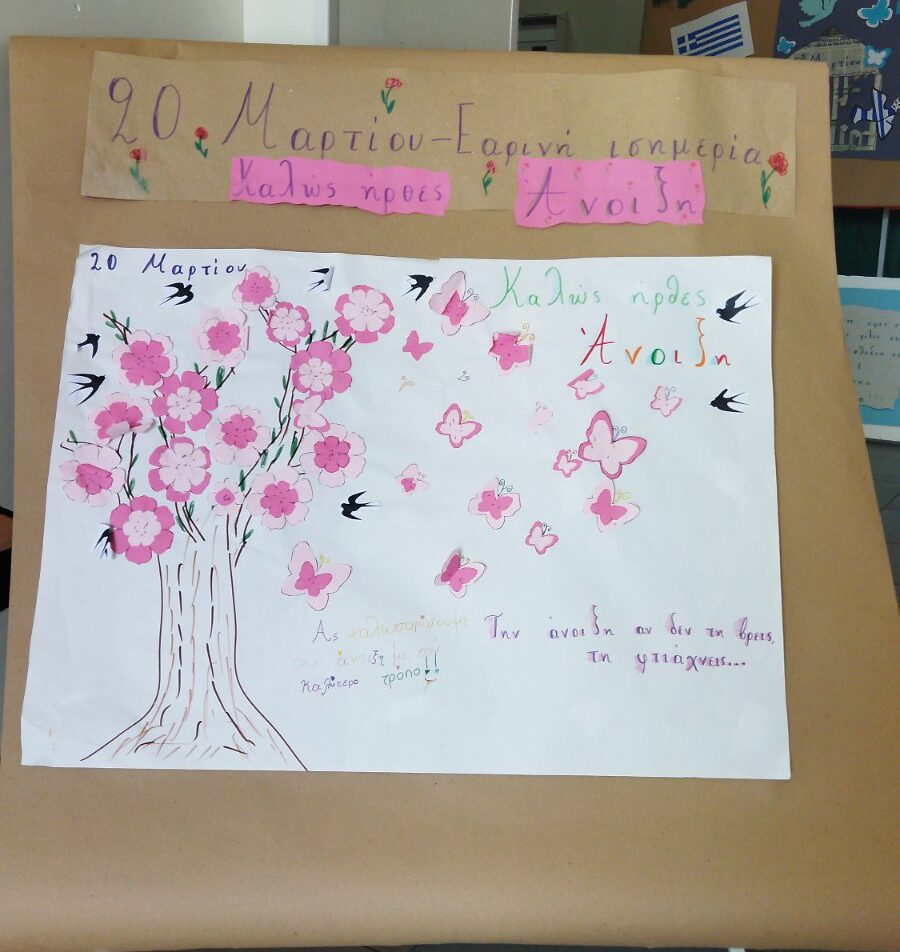
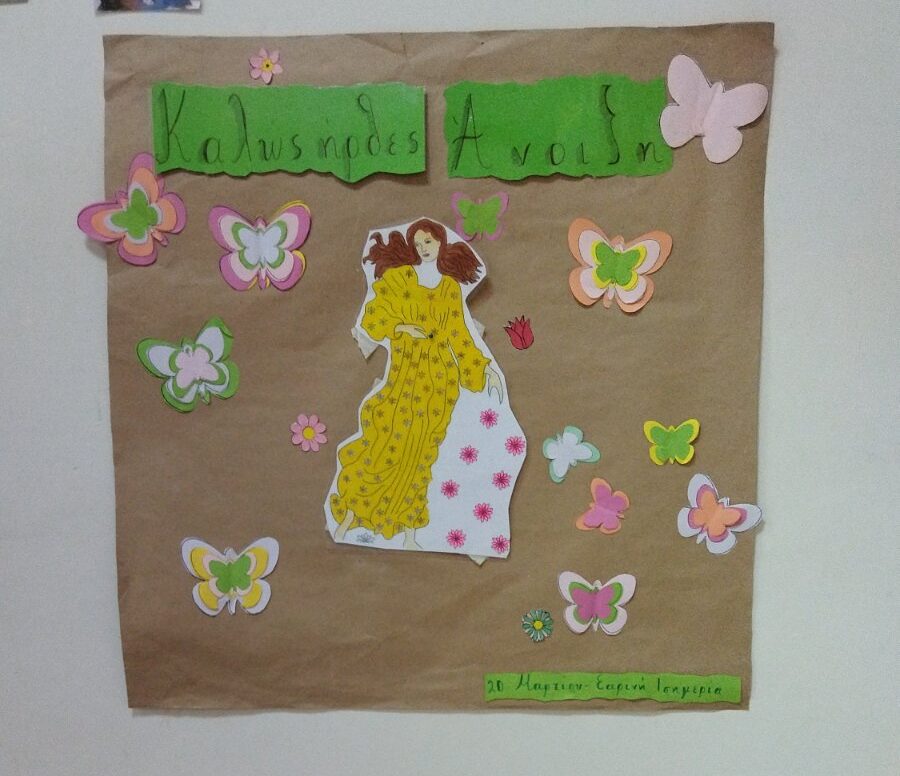
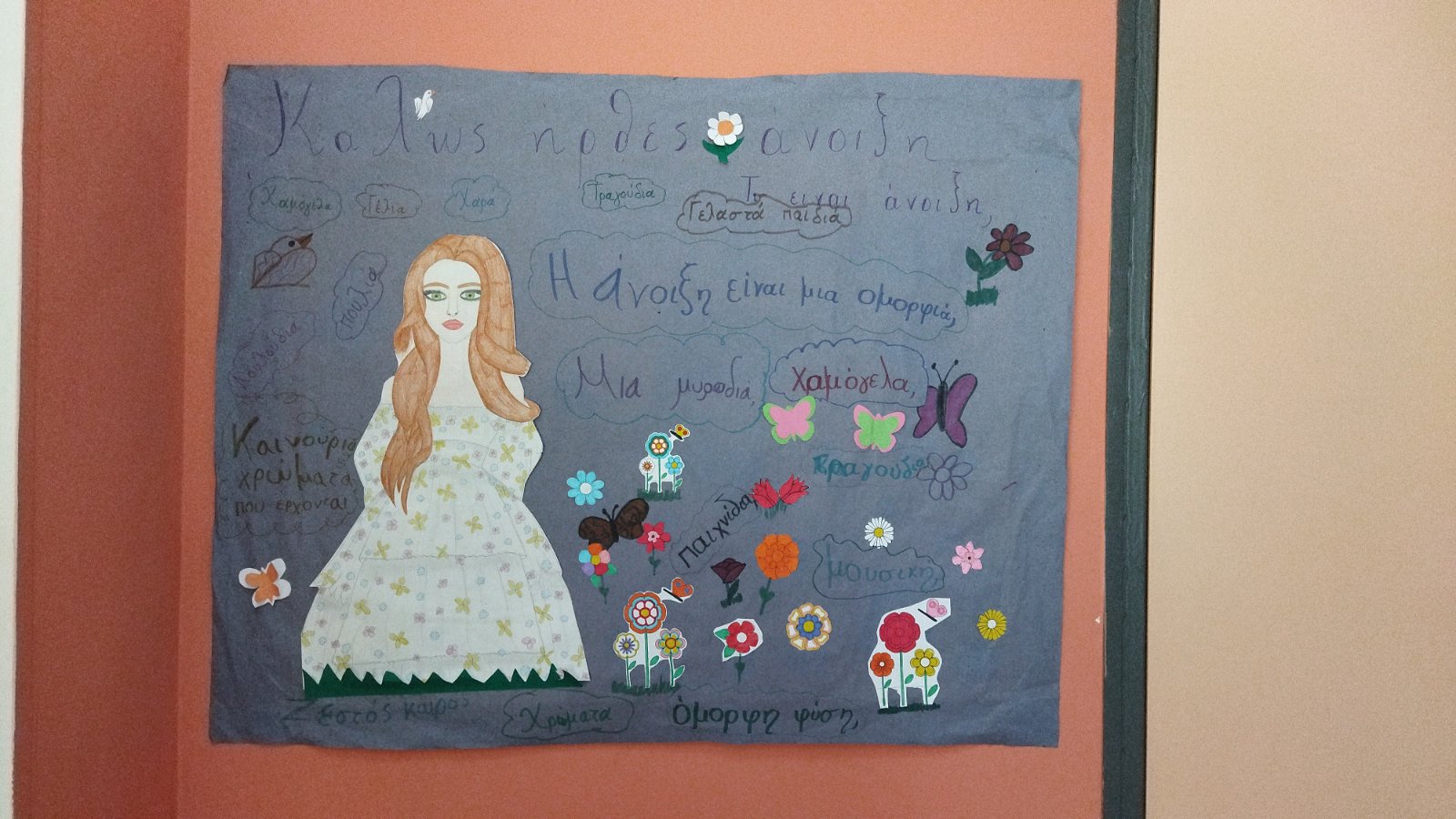
Με χαρά και ενθουσιασμό, οι μαθητές του σχολείου μας υποδέχονται την άνοιξη και την εαρινή ισημερία, στις 20 Μαρτίου! Η φύση ξυπνά, τα χρώματα ζωντανεύουν και η αισιοδοξία ανθίζει στις καρδιές μας.
Μαζί με τα πρώτα χελιδόνια και τα ανθισμένα λουλούδια, οι μαθητές του σχολείου μας ανοίγουν διάπλατα τις καρδιές τους και υποδέχονται την πιο χαρούμενη εποχή του χρόνου. Η άνοιξη είναι εδώ, γεμάτη χρώματα, αρώματα και ελπίδα, και εμείς, με ενθουσιασμό και δημιουργικότητα, σας προσκαλούμε να την απολαύσετε μαζί μας.
Τι είναι η Εαρινή Ισημερία; 7 πραγματάκια που δεν γνωρίζατε
Σήμερα, Δευτέρα 20 Μαρτίου του 2023, η ημέρα και η νύχτα θα έχουν σχεδόν ίση διάρκεια στις περισσότερες ζώνες ώρας στον κόσμο (ισημερία). Το φαινόμενο έλαβε χώρα ακριβώς στις 23:24 ώρα Ελλάδας, ενώ για τοποθεσίες που έχουν 10 ώρες ή περισσότερες μπροστά από την ώρα UTC, θα ξεκινήσει στις 21 Μαρτίου. Αυτό οφείλεται προφανώς στη διαφορά ζώνης ώρας.
Τι είναι όμως η ισημερία;
Η ισημερία είναι η στιγμή στο χρόνο και στο χώρο, όπου ο ήλιος τοποθετείται ακριβώς πάνω από τον ισημερινό της Γης, γεγονός που συμβαίνει μόλις δύο φορές το χρόνο γύρω στις 21 Μαρτίου και 23 Σεπτεμβρίου. Τον Μάρτιο ο ήλιος διασχίζει τον ισημερινό από νότο προς βορρά, φέρνοντας τη ζεστασιά και το φως πίσω στο Βόρειο ημισφαίριο και βυθίζοντας το νότιο Ημισφαίριο στο σκοτάδι του φθινοπώρου και του χειμώνα. Τον Σεπτέμβριο ο ήλιος ακολουθεί αντίστροφη πορεία προαναγγέλλοντας την αρχή του φθινοπώρου στο Βόρειο Ημισφαίριο και την αρχή της άνοιξης στο Νότιο.
Ισημερία. Η ακτινοβολία του ήλιου προσπίπτει κάθετα στον άξονα της γης, έτσι ώστε νύχτα και ημέρα έχουν ίση διάρκεια.
Ακολουθούν 7 πραγματάκια που ίσως δεν γνωρίζετε για την εαρινή ισημερία.
1. Η ισημερία Μαρτίου είναι η εαρινή ισημερία για το Βόρειο Ημισφαίριο και αντίστοιχα η φθινοπωρινή ισημερία για το Νότιο Ημισφαίριο.
2. Η ισημερία του Μαρτίου είναι η πρώτη ισημερία της χρονιάς. Η δεύτερη ισημερία, η ισημερία Σεπτεμβρίου, λαμβάνει χώρα περίπου στις 23 Σεπτεμβρίου κάθε χρόνο και είναι η αφετηρία της άνοιξης για το Νότιο Ημισφαίριο και αντίστοιχα η έναρξη του φθινοπώρου για το Βόρειο Ημισφαίριο.
3. Το όνομα ισημερία προέρχεται από τις ελληνικές λέξεις ίσος και ημέρα, ενώ το διεθνές αντίστοιχο όνομα, equinox, προέρχεται από το λατινικό aequus (ίσος) και nox (νύχτα).
4. Στο Βόρειο Ημισφαίριο, οι αστρονόμοι και οι επιστήμονες χρησιμοποιούν την ισημερία του Μαρτίου ως την αρχή της άνοιξης, η οποία τελειώνει στο ηλιοστάσιο του Ιουνίου, όταν πια ξεκινά το καλοκαίρι αστρονομικά. Για τους μετεωρολόγους, από την άλλη πλευρά, η άνοιξη στο Βόρειο Ημισφαίριο ξεκινά τρεις εβδομάδες πριν από την ισημερία του Μαρτίου την 1η Μαρτίου και λήγει στις 31 Μαΐου.
5. Στα ερείπια της πόλης των Μάγια Chichén Itzá, στο Μεξικό, πλήθη συγκεντρώνονται στην αρχαία πυραμίδα El Castillo κάθε άνοιξη και φθινόπωρο στους εορτασμούς της ισημερίας που χρονολογούνται από την κατασκευή της, γύρω στο 1000 μ.Χ. Οι Μάγια ήταν εξαιρετικοί αστρονόμοι, και η πυραμίδα είναι αφιερωμένη στον Θεό-Φτερωτό Φίδι, τον Κετζαλκόατλ (Quetzalcoatl). Κατά το ηλιοβασίλεμα στις ισημερίες, η γωνία του ήλιου δημιουργεί τέτοιες σκιές που μοιάζουν με ένα γιγαντιαίο φίδι το οποίο γλιστρά πάνω στα επίπεδα της πυραμίδας μέχρι να συγχωνευθεί με ένα γλυπτό ενός κεφαλιού φιδιού στο κάτω μέρος της.
Η αρχαία πυραμίδα των Μάγια, El Castillo (πηγή: IBON BASTIDA/EYEEM/GETTY IMAGES)
6. Όλοι γνωρίζουμε ότι η άνοιξη είναι μια εποχή ανανέωσης και νέας ανάπτυξης. Οι βροχές του Μαρτίου μπορούν να φέρνουν λουλούδια τον Απρίλη, αλλά επίσης οδηγούν τα σκουλήκια έξω από το χώμα.
Οι γαιοσκώληκες συνήθως περνούν το χειμώνα θαμμένοι βαθιά κάτω από τη γη για να προστατευτούν από τον παγετό, αλλά οι βροχές μειώνουν το οξυγόνο στο έδαφος και τους αναγκάζουν να σκάψουν προς την επιφάνεια. Γι’ αυτό και η πρώτη πανσέληνος τον Μάρτιο είναι γνωστή ως το φεγγάρι των σκουληκιών.
Το φεγγάρι των σκουληκιών (πηγή: AD OCULOS/SHUTTERSTOCK)
7. Η λαϊκή παράδοση ισχυρίζεται ότι ειδικές μαγνητικές ή ενεργειακές αλλαγές την ημέρα της εαρινής ισημερίας καθιστούν δυνατή τη στερέωση ενός αυγού στην άκρη του. Όσο τέλειο κι αν ακούγεται, δυστυχώς πρόκειται για μύθο.
Μπορείτε να ισορροπήσετε ωμά αυγά στην άκρη τους μεν, αλλά θα μπορούσατε να το κάνετε οποιαδήποτε στιγμή του χρόνου.
Οι Δικοί μας Οικοκώδικες: Η Δέσμευση της Νέας Γενιάς
Οι μαθητές μας δεν έμειναν απλοί θεατές, αλλά έγιναν οι νομοθέτες του δικού τους μέλλοντος. Κάθε τάξη δημιούργησε τους δικούς της Οικοκώδικες.
Τι είναι όμως ένας Οικοκώδικας; Είναι ένα σύνολο από κανόνες, αξίες και καθημερινές συνήθειες που τα ίδια τα παιδιά συμφώνησαν να ακολουθούν. Δεν είναι κανόνες που επιβλήθηκαν από τους μεγάλους, αλλά υποσχέσεις που έδωσαν οι μαθητές μεταξύ τους:
Για ένα σχολείο χωρίς πλαστικά.
Για μια τάξη που ανακυκλώνει σωστά.
Για μια κοινότητα που σέβεται το πράσινο και την ενέργεια.
Αυτοί οι κώδικες είναι η πυξίδα μας. Μεταμορφώνουν το 44ο Δημοτικό Λάρισας από ένα κτίριο σε ένα ζωντανό εργαστήριο αειφορίας, όπου η βιωσιμότητα δεν είναι μάθημα, αλλά τρόπος ζωής. Σας προσκαλούμε να δείτε τους κώδικες που κοσμούν τους τοίχους μας και, γιατί όχι, να υιοθετήσετε μερικούς από αυτούς και στο δικό σας σπίτι!
Building a Zero Waste community is bigger than just changing individual behavior, and it’s bigger than just recycling or composting. Zero Waste addresses the entire social system of how we make, consume, and dispose of our “stuff.”
Through local Zero Waste actions, we can directly and positively impact the biggest global challenges of our time—climate change, human health risks, ecosystem collapse, and social/political conflicts over access to resources.
Here’s Where We Are Now . . .
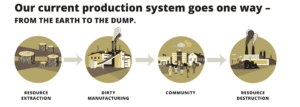
. . . and why we need to change the entire system of how we make, use, and dispose of the stuff in our lives. Currently, our production system goes one way—from the earth to the dump:
We extract natural resources such as trees, precious metals, and petroleum.
We manufacture them—often through polluting, toxic, and wasteful practices—into products designed primarily for convenience . . . and destined for the dump.
We distribute them to communities, often shipping them long distances—from manufacturing to sale.
After we buy and use products, we pitch them into a landfill or burn them in an incinerator, which destroys the value of the resources used to make those products. When we need new products, we just head back to the natural resources like they’re in infinite supply.
When we think about the problem of “waste,” we usually think about what’s in our trash cans, and we focus on how to make that waste “go away.” But the waste you see in your trash can is only a fraction of the REAL problem (1/87, to be exact).
For every can of garbage at the curb, there are 87 cans’ worth of materials that come from this linear production system and the way we extract, manufacture, and destroy our resources.
This system is broken, and here’s why:
Climate Change: The way we produce, consume, and dispose of our products and our food accounts for 42% of all US greenhouse gas emissions. A rapidly changing climate will fundamentally affect the life of every global citizen (and species) including our water and food supplies, our health, and more.
A Global Population of Eight Billion People (and Untold Numbers of Other Species): In the past 50 years, our population has more than doubled, and it continues to grow. We’re all dependent upon a limited number of natural resources for survival.
Resource and Ecosystem Destruction: If everyone on the globe followed this system and consumed resources at the rate we do in the US, we’d need five planets to keep up.
Resource Wars: As quantities of resources such as petroleum, minerals, and fresh water shrink, wars are being waged to grab control of what remains.
Future Generations: The resources we’re squandering don’t belong to us. If we can’t feed, clothe, and house people peacefully today, how will future generations do so on far fewer resources?
Zero Waste Systems: Meeting the Needs of the 21st Century and Beyond
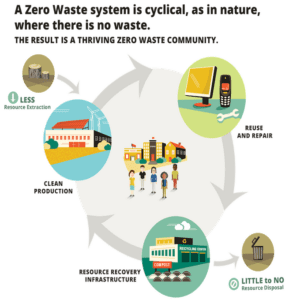
A Zero Waste system is cyclical, as in nature, and does two fundamental things: it redesigns our systems and resource use—from product design to disposal—to prevent the careless and polluting practices that lead to so much waste. It then captures discards and uses them, instead of natural resources, to make new products, creating a much cleaner manufacturing process with far less pollution. This new system carries with it new businesses and jobs to feed local economies.
A Zero Waste system has:
New community-wide policies that take a responsible approach to using fewer natural resources, urging participation from all sectors, putting public dollars toward conservation programs, and investing in resource recovery infrastructure.
New programs in every sector of our society to shift our culture away from wasting and toward a sense of responsibility for our planet and its future.
Resource-recovery infrastructure to replace landfills and incinerators and recover 90% or more of our discards through reuse, composting, and recycling.
An empowered community where everyone has a role and participates in a system that supports their values and priorities, while calling for Zero Waste progress in the community.
International Definition of Zero Waste
The Zero Waste International Alliance adopted the first peer-reviewed, internationally accepted definition of Zero Waste. Eco-Cycle stands by this as the official definition of Zero Waste:
“Zero Waste is a goal that is ethical, economical, efficient and visionary, to guide people in changing their lifestyles and practices to emulate sustainable natural cycles, where all discarded materials are designed to become resources for others to use. Zero Waste means designing and managing products and processes to systematically avoid and eliminate the volume and toxicity of waste and materials, conserve and recover all resources, and not burn or bury them. Implementing Zero Waste will eliminate all discharges to land, water or air that are a threat to planetary, human, animal or plant health.”
What Zero Waste Is Not
Let’s dig deeper into discovering what Zero Waste IS by talking about what Zero Waste IS NOT:
Zero Waste Is Not Just 100% Recycling
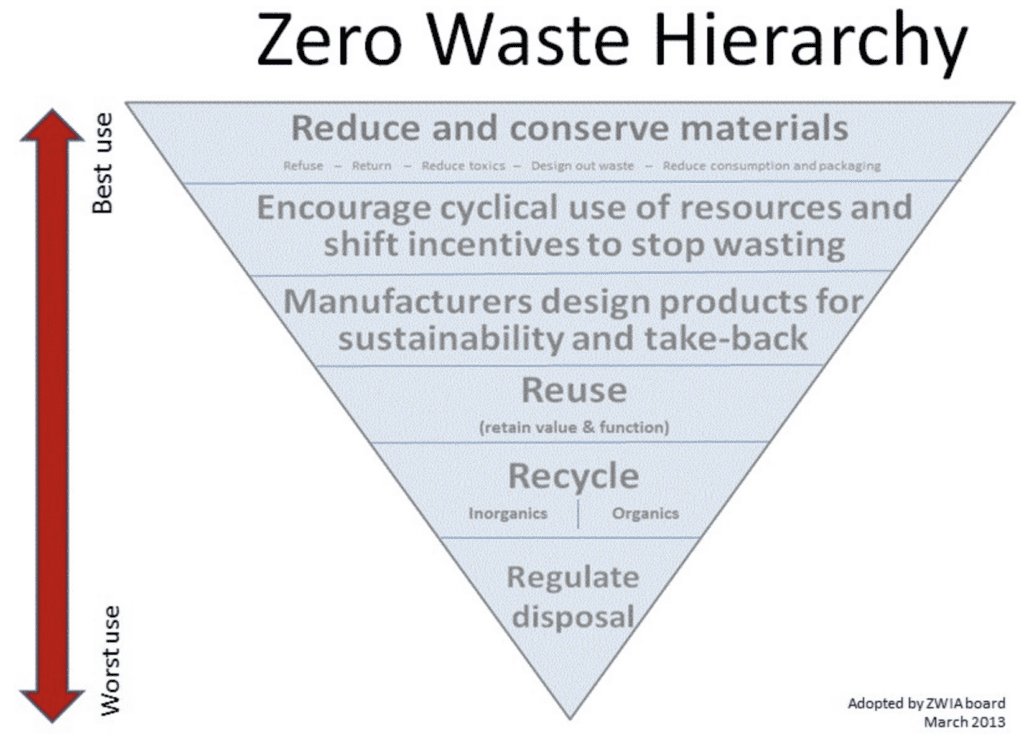
Yes, we do want to recycle everything . . . but recycling comes AFTER waste prevention, product redesign, and reuse. Even when everything is recycled, there can still be unnecessary or poorly designed products or packaging that waste energy, water, and other scarce resources.
Take bottled water, for example. Even if we recycled 100% of our bottled water containers, it would be better to have avoided creating the container in the first place by refilling a reusable water bottle. Tap water uses far fewer resources, produces far fewer greenhouse gas emissions, and greatly reduces toxic emissions.
A Zero Waste approach evaluates a product’s entire life cycle, not just whether it can be recycled or composted.
Zero Waste Does Not Require Getting to Absolute Zero
The Zero Waste International Alliance defines Zero Waste as 90% diversion from landfills and incinerators. We can make a dramatic shift toward Zero Waste today by setting up policies and infrastructure to redesign our production system to use fewer resources and design products for recovery, not the dump. And while we’re moving toward Zero Waste, we can work with industries to fulfill their role by redesigning their products and packaging so there are no more leftover, toxic, and nonrecyclable items.
When we choose Zero Waste, it does not require getting to absolute zero. We are committing to pursue the goal of zero.
Zero Waste Does Not Include Waste Incineration, “Chemical Recycling,” or Current Waste-to-Energy (WTE) Practices
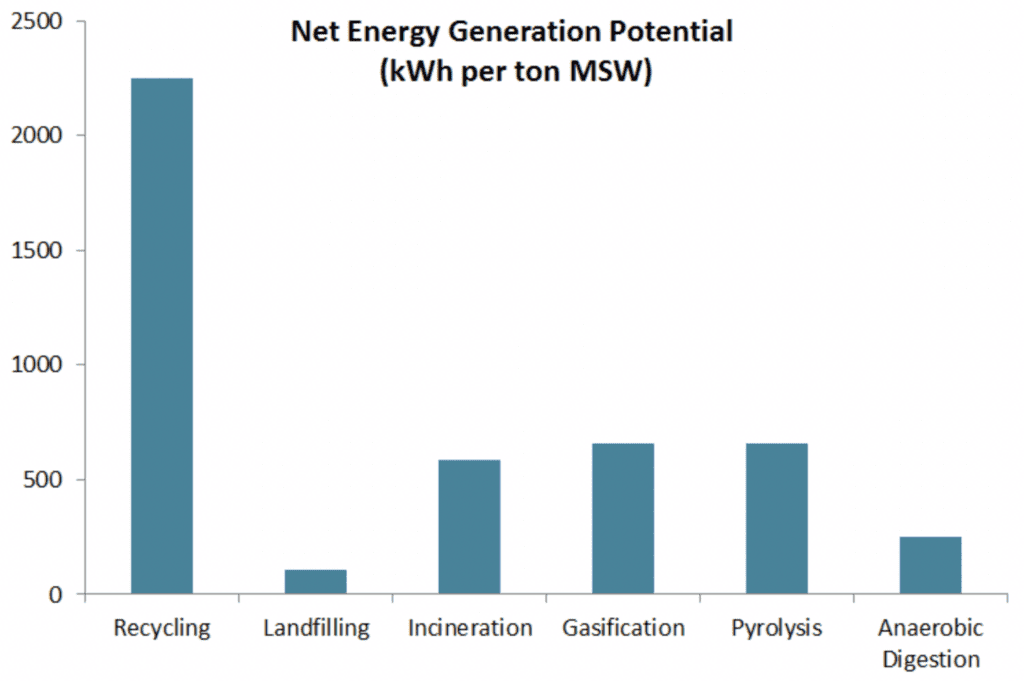
When you burn something to make energy, it can’t be used again, and that is the ultimate act of wasting. Waste-to-energy (WTE) systems perpetuate our throw-away society and unsustainable consumption. When we burn materials to produce energy, the resources used to make those products and packaging are destroyed, which means we must continue to extract more resources from the Earth to make new products. And we’ll use MORE energy in the process—more than was generated in the WTE facility. That is not moving us toward a circular economy, and that is not Zero Waste.
recycling saves far more energy than is produced from waste incineration
Mass burn incineration, pyrolysis, gasification, so-called “chemical recycling,” and plasma arc systems are all WTE systems that destroy resources and are not part of Zero Waste. Get the facts on why these technologies are bad for our environment, economy, and communities through the position papers on chemical recycling and so-called “plastics-to-fuel” technologies we authored as founding members of the Alliance of Mission-Based Recyclers.
Zero Waste only accepts one current technology for making energy from waste: anaerobic digestion. Anaerobic digesters use a low-temperature thermal process to speed up the decomposition of biodegradable, organic materials. The resulting biogas can be used to produce energy and the remaining solids, called digestate, can be conventionally composted.
Many companies and communities are adopting a “zero waste to landfill” goal (which focuses on reducing waste going to landfills) instead of a Zero Waste goal. The problem with having a singular focus on reducing landfill waste implies that making energy by burning waste is preferable. Waste-to-energy (WTE) is a disposal technology that destroys resources forever—it doesn’t reduce waste or protect natural resources, and in the end we will use more energy to manufacture new products from virgin materials than we produced burning trash for energy.
The true goal of Zero Waste is not just zero waste to landfill or zero waste-to-energy, but redesigning our entire cycle of resource extraction, consumption, and discard management so no resources are wasted at any point along the way.
There are legitimate businesses making great strides toward Zero Waste: Nearly half of General Motors (GM) factories recycle and reuse an average of 97% of their discards. But companies or communities that tout “zero waste to landfill” and then burn half of their discards are greenwashing their efforts, and we need to demand that they aim for true Zero Waste.
Zero Waste Is Not Waste Management—It Is Resource Management
The modern waste industry was born out of the need to reduce public health risks from waste. Its goal is to manage waste in an economically and environmentally acceptable way. It accepts waste as a given.
The Zero Waste industry aims to eliminate the very concept of waste. There is no such thing as waste in nature, only resources—so we need a paradigm shift from managing waste to managing resources. And to get there, we need everyone on board, from citizens to government officials to industrial designers.
Nearly half of our global greenhouse gas emissions come from the extraction and processing of materials, fuels, and food (not including climate impacts related to land use). This means adopting a Zero Waste system and changing the way we produce, consume, and dispose of our stuff is critical to reducing global carbon pollution. Yet too often, Zero Waste is not even a part of the climate discussion.
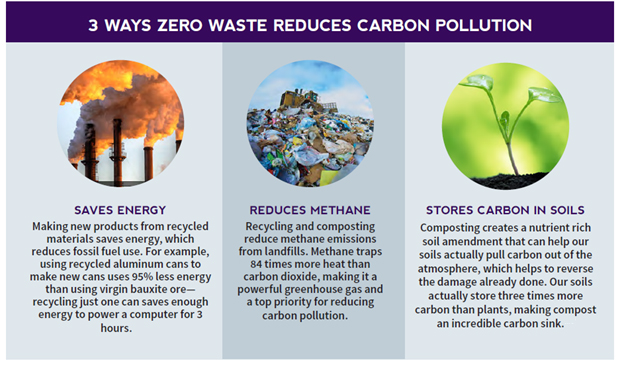
A Zero Waste system can reduce carbon pollution in three ways:
saving energy (and thus emissions) by using recycled materials to make new products;
reducing methane emissions from landfills, which results when organic matter is landfilled; and
pulling carbon out of the atmosphere by applying finished compost to our soils to increase their ability to sequester carbon.
Together, these solutions offer a tremendous opportunity to reduce greenhouse gas (GHG) emissions. By 2030, Zero Waste strategies could reduce GHG emissions by more than 400 million metric tons of CO2 per year, the equivalent of taking over 80 US coal-fired power plants off the grid! To put this in context, Zero Waste offers greater annual GHG savings than many other prominent climate strategies such as expanding nuclear power or significantly improving vehicle efficiency.
This video highlights the importance of Zero Waste as a local and global climate solution, and offers four critical steps to moving forward. (PS—Share it with your community leaders to help introduce Zero Waste into the climate discussion.)
Zero Waste Is One of the Fastest, Easiest, Most Cost-Effective Short-Term Climate Solutions
Solving our climate crisis means completely transforming our energy sources and transportation systems. These are both big and complex problems, and time is needed to develop comprehensive solutions. Unfortunately, time is in short supply as the impacts of climate change accelerate. Fortunately, Zero Waste strategies can be implemented TODAY, using existing technologies and proven programs, to produce immediate results. Zero Waste can essentially help buy us some time as we work to implement other systemic changes around energy use and transportation.
Communities around the world are actively investing in Zero Waste as a priority climate action. One of California’s first actions in its landmark statewide climate change policy was to require businesses and apartment complexes to recycle, a move that will reduce GHG emissions by five million metric tons.
“Recycling is already making a major contribution to keeping down emissions. Indeed, its scale is so little appreciated that it might be described as one of the ‘best kept secrets’ in energy and climate change . . .”
We use a LOT of energy to heat our homes, to transport ourselves, and to make stuff. Energy went into making the computer you’re using right now, the clothes you’re wearing, the food you ate for breakfast, and pretty much everything you’ve ever bought, used, or thrown away. While communities tend to focus on cleaning up their energy production and transitioning to renewable energy sources when addressing climate change, we often overlook how we use all that energy that we produce and why we need it in the first place. It turns out a huge portion of our energy generation is used to make our stuff, which means our consumption is a primary driver of our climate emissions. And the more we buy and throw away stuff, the more energy it takes to make new stuff, and the faster climate change accelerates.
“Using more renewable energy and mass transit won’t be enough to reverse this. We have to reduce our consumption.”
Zero Waste addresses the entire system of how we make, consume, and dispose of our stuff, and can substantially reduce climate emissions by changing what and how much we buy, what resources went into making it, how long it’s designed to last, how much gets reused, recycled, or composted, and what we throw away.
Three Ways Zero Waste Reduces Carbon Pollution
Zero Waste reduces carbon pollution in three critical ways: saving energy, reducing methane emissions from landfills, and pulling carbon out of the atmosphere by applying finished compost to our soils. These solutions are covered in detail below.
Zero Waste Saves Energy
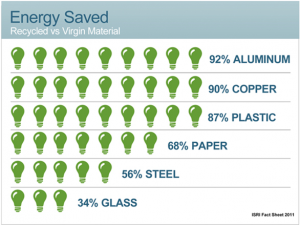
The immediate and largest climate savings from Zero Waste come from the energy we save when we use recycled materials to make new products. Using recyclables such as old newspapers, plastic bottles, and aluminum cans to make new products requires 30–90% less energy than making products from trees, fossil fuels, or metal ores. This means we burn fewer fossil fuels—including oil, natural gas, and coal—and produce fewer GHG emissions. Recycling one ton of materials saves an average of three tons of carbon emissions.
Composting Can Reverse Damage from Carbon Pollution
Composting is a critical part of a Zero Waste system and provides two tremendous benefits for reducing climate pollution. First, we can reduce GHG emissions from landfills by composting organic materials instead. Then, when we add finished compost to our soils on our farms and gardens, these healthier soils and plants are better able to absorb carbon from the atmosphere and store it in our soils. This means composting not only reduces the emissions going up into our atmosphere, but it can actually decrease our current levels of carbon dioxide, making composting one of the easiest actions a community can take to reduce its climate footprint.
Zero Waste Reduces Methane Emissions
Modern landfills are designed so there is no oxygen inside the landfill once it’s covered. This means biodegradable materials, such as leftover food and grass clippings, decompose anaerobically, or in the absence of oxygen. This process creates methane, a greenhouse gas that traps 84 times more heat in our atmosphere than carbon dioxide in the short term. By contrast, composting breaks down biodegradable materials in the presence of oxygen and water, just like what happens in nature, and doesn’t produce potent methane emissions.
Landfills are the third largest source of methane emissions in the US. In 2017, they emitted 107 million metric tons of CO2 equivalent (MMTCO2e) as measured in terms of climate warming potential over 100 years. However, because warming from methane happens over a shorter period of time than warming from CO2, it is more meaningful to look at the impact of methane over the short term (e.g., over 20 years), than to average it over 100 years. When we consider the impacts of methane over the short term, we see that landfills are emitting 308 MMTCO2e every year—the amount of CO2 that would be produced annually by 79 coal-fired power plants.
Reducing methane emissions from landfills represents a huge opportunity to fight climate change, and the timing couldn’t be more important. There is global consensus that we need to rapidly reduce climate emissions by 80% by 2050. We need fast solutions to meet this rapidly approaching deadline, and reducing methane has been flagged as a critical focus in the next decade.
Methane is one of three special greenhouse gases called Short-Lived Climate Pollutants (SLCPs). True to their name, these gases are very short-lived, but they have an outsized impact on our climate: SLCPs are responsible for 40–45% of global warming to date. The good news is that if we can reduce SLCPs such as methane in the near term, we can see rapid results. Aggressive actions to reduce SLCP emissions could cut in half the amount of warming that would occur over the next few decades.
The best way to reduce methane emissions from landfills is simple: keep organic materials OUT of landfills by composting leftover food and yard debris and reducing food waste.
Composting not only reduces the powerful climate impacts of methane, it also creates an incredible carbon sink.
When compost is applied to soil, it provides several important benefits. First, compost creates healthier soil by adding carbon to the ground, which in turn grows healthier plants that photosynthesize more, thereby directly pulling more carbon out of the atmosphere. In addition, these healthier plants store more carbon in the soil and directly nourish soil ecosystems. All told, soils store three times more carbon than our atmosphere, making soil carbon storage one of our best strategies to reduce carbon levels in our atmosphere.
Modern agriculture has greatly depleted the amount of soil carbon around the world, which opens up the possibility to restore carbon in our soils through better agricultural practices and land use management. In addition to adding compost, manure, or other soil amendments that directly add carbon to the soil, other primary ways to increase carbon storage in our soil include:
Reduced-tillage or no-tillage practices, which reduce carbon loss by lowering decay rates and building stronger, healthier plant roots.
Use of cover crops to reduce carbon loss and increase carbon storage through enhanced plant photosynthesis.
Reduce erosion and carbon loss by contour plowing, terracing, and other techniques.
Increasing soil carbon produces other important benefits as well, including improving soil fertility, water retention, and greater crop resilience, all of which would help agriculture adapt to a warming world. More soil carbon would also reduce the amount of fertilizer needed, decreasing emissions of another powerful GHG—nitrous oxide.
This dual-action benefit of reducing methane emissions and pulling carbon dioxide down out of the atmosphere makes composting one of the most important, immediate actions a community can take to reduce its climate impacts.
Nearly half of our global greenhouse gas emissions come from the extraction and processing of materials, fuels, and food (not including climate impacts related to land use). This means adopting a Zero Waste system and changing the way we produce, consume, and dispose of our stuff is critical to reducing global carbon pollution. Yet too often, Zero Waste is not even a part of the climate discussion.
A Zero Waste system can reduce carbon pollution in three ways:
saving energy (and thus emissions) by using recycled materials to make new products;
reducing methane emissions from landfills, which results when organic matter is landfilled; and
pulling carbon out of the atmosphere by applying finished compost to our soils to increase their ability to sequester carbon.
Together, these solutions offer a tremendous opportunity to reduce greenhouse gas (GHG) emissions. By 2030, Zero Waste strategies could reduce GHG emissions by more than 400 million metric tons of CO2 per year, the equivalent of taking over 80 US coal-fired power plants off the grid! To put this in context, Zero Waste offers greater annual GHG savings than many other prominent climate strategies such as expanding nuclear power or significantly improving vehicle efficiency.
This video highlights the importance of Zero Waste as a local and global climate solution, and offers four critical steps to moving forward. (PS—Share it with your community leaders to help introduce Zero Waste into the climate discussion.)
Zero Waste Is One of the Fastest, Easiest, Most Cost-Effective Short-Term Climate Solutions
Solving our climate crisis means completely transforming our energy sources and transportation systems. These are both big and complex problems, and time is needed to develop comprehensive solutions. Unfortunately, time is in short supply as the impacts of climate change accelerate. Fortunately, Zero Waste strategies can be implemented TODAY, using existing technologies and proven programs, to produce immediate results. Zero Waste can essentially help buy us some time as we work to implement other systemic changes around energy use and transportation.
Communities around the world are actively investing in Zero Waste as a priority climate action. One of California’s first actions in its landmark statewide climate change policy was to require businesses and apartment complexes to recycle, a move that will reduce GHG emissions by five million metric tons.
“Recycling is already making a major contribution to keeping down emissions. Indeed, its scale is so little appreciated that it might be described as one of the ‘best kept secrets’ in energy and climate change . . .”
We use a LOT of energy to heat our homes, to transport ourselves, and to make stuff. Energy went into making the computer you’re using right now, the clothes you’re wearing, the food you ate for breakfast, and pretty much everything you’ve ever bought, used, or thrown away. While communities tend to focus on cleaning up their energy production and transitioning to renewable energy sources when addressing climate change, we often overlook how we use all that energy that we produce and why we need it in the first place. It turns out a huge portion of our energy generation is used to make our stuff, which means our consumption is a primary driver of our climate emissions. And the more we buy and throw away stuff, the more energy it takes to make new stuff, and the faster climate change accelerates.
“Using more renewable energy and mass transit won’t be enough to reverse this. We have to reduce our consumption.”
Zero Waste addresses the entire system of how we make, consume, and dispose of our stuff, and can substantially reduce climate emissions by changing what and how much we buy, what resources went into making it, how long it’s designed to last, how much gets reused, recycled, or composted, and what we throw away.
Three Ways Zero Waste Reduces Carbon Pollution
Zero Waste reduces carbon pollution in three critical ways: saving energy, reducing methane emissions from landfills, and pulling carbon out of the atmosphere by applying finished compost to our soils. These solutions are covered in detail below.
Zero Waste Saves Energy
The immediate and largest climate savings from Zero Waste come from the energy we save when we use recycled materials to make new products. Using recyclables such as old newspapers, plastic bottles, and aluminum cans to make new products requires 30–90% less energy than making products from trees, fossil fuels, or metal ores. This means we burn fewer fossil fuels—including oil, natural gas, and coal—and produce fewer GHG emissions. Recycling one ton of materials saves an average of three tons of carbon emissions.
Composting Can Reverse Damage from Carbon Pollution
Composting is a critical part of a Zero Waste system and provides two tremendous benefits for reducing climate pollution. First, we can reduce GHG emissions from landfills by composting organic materials instead. Then, when we add finished compost to our soils on our farms and gardens, these healthier soils and plants are better able to absorb carbon from the atmosphere and store it in our soils. This means composting not only reduces the emissions going up into our atmosphere, but it can actually decrease our current levels of carbon dioxide, making composting one of the easiest actions a community can take to reduce its climate footprint.
Zero Waste Reduces Methane Emissions
Modern landfills are designed so there is no oxygen inside the landfill once it’s covered. This means biodegradable materials, such as leftover food and grass clippings, decompose anaerobically, or in the absence of oxygen. This process creates methane, a greenhouse gas that traps 84 times more heat in our atmosphere than carbon dioxide in the short term. By contrast, composting breaks down biodegradable materials in the presence of oxygen and water, just like what happens in nature, and doesn’t produce potent methane emissions.
Landfills are the third largest source of methane emissions in the US. In 2017, they emitted 107 million metric tons of CO2 equivalent (MMTCO2e) as measured in terms of climate warming potential over 100 years. However, because warming from methane happens over a shorter period of time than warming from CO2, it is more meaningful to look at the impact of methane over the short term (e.g., over 20 years), than to average it over 100 years. When we consider the impacts of methane over the short term, we see that landfills are emitting 308 MMTCO2e every year—the amount of CO2 that would be produced annually by 79 coal-fired power plants.
Reducing methane emissions from landfills represents a huge opportunity to fight climate change, and the timing couldn’t be more important. There is global consensus that we need to rapidly reduce climate emissions by 80% by 2050. We need fast solutions to meet this rapidly approaching deadline, and reducing methane has been flagged as a critical focus in the next decade.
Methane is one of three special greenhouse gases called Short-Lived Climate Pollutants (SLCPs). True to their name, these gases are very short-lived, but they have an outsized impact on our climate: SLCPs are responsible for 40–45% of global warming to date. The good news is that if we can reduce SLCPs such as methane in the near term, we can see rapid results. Aggressive actions to reduce SLCP emissions could cut in half the amount of warming that would occur over the next few decades.
The best way to reduce methane emissions from landfills is simple: keep organic materials OUT of landfills by composting leftover food and yard debris and reducing food waste.
Composting not only reduces the powerful climate impacts of methane, it also creates an incredible carbon sink.
When compost is applied to soil, it provides several important benefits. First, compost creates healthier soil by adding carbon to the ground, which in turn grows healthier plants that photosynthesize more, thereby directly pulling more carbon out of the atmosphere. In addition, these healthier plants store more carbon in the soil and directly nourish soil ecosystems. All told, soils store three times more carbon than our atmosphere, making soil carbon storage one of our best strategies to reduce carbon levels in our atmosphere.
Modern agriculture has greatly depleted the amount of soil carbon around the world, which opens up the possibility to restore carbon in our soils through better agricultural practices and land use management. In addition to adding compost, manure, or other soil amendments that directly add carbon to the soil, other primary ways to increase carbon storage in our soil include:
Reduced-tillage or no-tillage practices, which reduce carbon loss by lowering decay rates and building stronger, healthier plant roots.
Use of cover crops to reduce carbon loss and increase carbon storage through enhanced plant photosynthesis.
Reduce erosion and carbon loss by contour plowing, terracing, and other techniques.
Increasing soil carbon produces other important benefits as well, including improving soil fertility, water retention, and greater crop resilience, all of which would help agriculture adapt to a warming world. More soil carbon would also reduce the amount of fertilizer needed, decreasing emissions of another powerful GHG—nitrous oxide.
This dual-action benefit of reducing methane emissions and pulling carbon dioxide down out of the atmosphere makes composting one of the most important, immediate actions a community can take to reduce its climate impacts.
Zero Waste Programs Create Green Jobs and a Strong Local Economy
Zero Waste programs can create jobs in your community—whether you’re in a large or small, urban or rural area. And, Zero Waste programs strengthen your economy by keeping dollars and materials circulating through your region. Here’s why everyone from small towns all the way up to the United Nations is embracing Zero Waste programs as a strategy to drive economic development.
Zero Waste Creates More Jobs Than Trash
Zero Waste programs that reuse, repair, recycle, and compost materials create more jobs than landfills and incinerators per ton of materials handled:
This equates to 1.17 jobs for every 1,000 tons of materials recycled.
Economic Impacts of Recycling at the State Level
More than a dozen states have reports on the economic benefits and job creation from recycling within the state. Here are a few highlights and resources for more information:
South Carolina: The state’s investment in recycling businesses has been highly successful in driving job growth—from 2006 to 2014, the economic impact nearly doubled and job growth grew 44%. Recycling in SC now accounts for $13 billion in total economic impact, pays $329 million in state and local taxes, and provides 54,121 jobs.
Minnesota: Almost 46,000 people are directly employed by the state’s reuse sector, which annually generates more than $4 billion in gross sales, amounting to 1.6% of Minnesota’s gross domestic product and employment base.
Delaware, Maine, Massachusetts, New York, and Pennsylvania: Recycling and reuse drive a $35 billion per year industry in these 5 states with more than 11,000 recycling and reuse businesses that employ more than 100,000 individuals and pay over $4.2 billion in wages.
The US Could Create 1.1 Million New Jobs by Recycling 75% of Our Discards
Recycling, reuse, and manufacturing jobs are critical to meeting our local, state, and national goals to create more green jobs. Recycling creates strong job growth and opportunities for entry-level and mid-level workers, and can replace jobs lost in manufacturing. Jobs in the recycling industry typically have a low barrier to entry and offer an average of over $70,000 in wages and benefits.
In addition to providing jobs directly in the recycling sector, Zero Waste gives value back to the community by keeping materials—and dollars—out of the landfill. Every ton of trash that gets buried in your local landfill contains products like paper, plastic, and metal that could have been sold for recycling. That’s money that could have supported community and local businesses. The US buries over $11 billion every year in potential revenue from materials that were trashed instead of being sold for recycling.
Three Ways Zero Waste Creates Jobs
1) Collecting, processing, and preparing materials. Your discarded materials are picked up and then brought to processing facilities where they are sorted and prepared to sell to markets.
2) Making new products from recycles materials (remanufacturing). Your recyclables then head to paper mills, metal smelters, and plastic manufacturing facilities that use recycled materials to make new products. Compost facilities turn your discarded yard and food scraps into valuable soil amendments or energy (through the anaerobic digestion process).
3) Reuse and repair businesses that sell reclaimed products. These include antique stores, thrift stores, tailors, auto salvage yards, computer refurbishers, used book stores, and more.
Examples of Jobs from Recycling and Reuse
Blue Star Recyclers: Electronics Recycling and Local Job Creation Blue Star Recyclers in Colorado and Illinois is a social enterprise that employs people with autism and other developmental disabilities through electronics recycling. Blue Star has provided over 40 local jobs through its three Front Range locations and contributed $4 million in new local revenues while saving taxpayers $1.5 million. In places without permanent recycling facilities, such as Steamboat Springs in Colorado, Blue Star partners with local communities to put on annual collection events. Blue Star demonstrates how social enterprises can align environmental goals with social and fiscal contributions.
Rebuilding Exchange: Building Materials Reuse and Job Training Rebuilding Exchange, a social enterprise in Chicago, Illinois, was founded in 2009 to repurpose building materials and provide job training to people with barriers to employment. Since then, the organization has diverted over 9,400 tons of building materials from the landfill and created a strong local market for reclamation and reuse. Rebuilding Exchange has trained over 80 people with barriers to employment for jobs in an increasingly circular economy and serves over 16,000 customers each year with access to reclaimed building materials and educational workshops. The Rebuilding Exchange illustrates how sustainable enterprises can strengthen every facet of a community.
Florence, Alabama: Local Recycling Program Leading the Way in Serving Rural Communities The city of Florence, Alabama, began curbside recycling in 1988, founding one of the oldest recycling programs in the state. The recycling center in Florence is owned and operated by the city and processes about 3,300 tons of material per year from the city, nearby institutions, and surrounding rural areas. Mayor Steve Holt has noted that Florence avoided more than $1 million in landfill fees from 2009 to 2019 while bringing in revenue from the sale of materials to nearby manufacturers. The program contributes to regional jobs, including the 1,200 people employed at the aluminum recycling center Florence delivers to, and is a leading model of a recycling program that serves rural areas while supporting local economies.
Το παιδί μου πήρε κακούς βαθμούς. Τι να κάνω για να το βοηθήσω;
Πολλοί γονείς δίνουν εξαιρετική βαρύτητα στη βαθμολογία, γιατί πιστεύουν ότι έτσι το παιδί τους θα επιβιώσει πιο εύκολα στους δύσκολους καιρούς μας.
Δώστε του να καταλάβει ότι είναι δική του δουλειά
να τα πηγαίνει καλά με το σχολείο
Αν η αντίδρασή σας είναι άσχημη μόλις δείτε την καρτέλα με τους κακούς βαθμούς, τότε δεν θα μάθετε ποτέ για ποιους λόγους, το παιδί έφτασε σε αυτό το σημείο.
Τι πρέπει να κάνετε;
Διατηρείτε στενή σχέση με το παιδί. Στηρίζετέ το με ουσιαστικό τρόπο, χωρίς υπερπροστασία. Η «συνταγή της επιτυχίας» φαίνεται πως είναι η δημοκρατική και «ζεστή» παρουσία σας στη ζωή του παιδιού, δίπλα του, μα όχι ασφυκτικά πάνω του. Τα παιδιά τα οποία βελτιώνουν την εικόνα που έχουν τα ίδια για το άτομό τους συνήθως βελτιώνουν και την επίδοσή τους στο σχολείο.
Αφήνετε στον έφηβό σας περιθώριο πρωτοβουλιών, εκπαιδεύετέ τον να λύνει μικροπροβλήματα, να παίρνει αποφάσεις, να κρίνει μόνος του και να διαπιστώνει ότι «μπορεί να κάνει καλά» διάφορα πράγματα, από απλά μερεμέτια μέχρι πρόχειρο μαγείρεμα ή λύση ασκήσεων.
Διερευνήστε αν το παιδί συμμετέχει στην τάξη. Αν διαπιστώνετε ότι κρατά παθητική στάση στο μάθημα, καλό είναι να αναλογιστείτε το γιατί.
Ανταμείβετε το παιδί σας για τις καλές επιδόσεις του σε οποιοδήποτε τομέα. Να κρατάτε όμως ένα μέτρο. Αν λέτε «μπράβο» επειδή απλώς διεκπεραίωσε κάτι αναγκαίο, τότε θα πιστέψει ότι αν κάποια στιγμή βαρεθεί να κάνει τα απαραίτητα, θα χάσει απλώς το «μπράβο».
Φροντίστε ώστε το παιδί να καλλιεργήσει τα δικά του κίνητρα και τους δικούς του στοχους στη ζωή. Έχει διαφορά το να λύνει ένα πρόβλημα για να ευχαριστήσει εσάς από το να λύνει ένα πρόβλημα επειδή χαίρεται να λέει «το βρήκα»!
Δώστε του να καταλάβει ότι είναι δική του δουλειά να τα πηγαίνει καλά με το σχολείο και ότι αυτό είναι κάτι που το οφείλει στον εαυτό του ανεξάρτητα από το αν του λέει «μπράβο» ο καθηγητής ή εσείς.
Δείχνετε στο παιδί σας έμπρακτα ότι το αγαπάτε ακόμη και όταν οι βαθμοί του είναι κατώτεροι των προσδοκιών του ή των δικών σας. Η αγάπη των γονιών ή των φίλων δεν πρέπει να συνδέεται με την «επίδοση» σε οποιονδήποτε τομέα.
Διαβάζετε και εσείς οι ίδιοι, όσο πιο συχνά μπορείτε. Αν αδυνατείτε να το κάνετε, τουλάχιστον δείχνετε στο παιδί ότι η ανώτερη παιδεία συνοδεύεται κατά κανόνα από περισσότερες απολαβές στην ενήλικη ζωή.
Χρησιμοποιούμε cookies για να σας προσφέρουμε την καλύτερη δυνατή εμπειρία στη σελίδα μας. Εάν συνεχίσετε να χρησιμοποιείτε τη σελίδα, θα υποθέσουμε πως είστε ικανοποιημένοι με αυτό.