#Healthy lifestyle#Wellbeing-etwinning

https://youtu.be/z7nHLRiQwz8

Σύντομη περιγραφή

Το έργο σχεδιάστηκε για να ενισχύση την σωματική, ψυχική, κοινωνική και ψηφιακή  υγεία των μαθητών. Κύριος στόχος είναι το νους υγιής εν σώματι υγιεί καθώς οι μαθητές μέσα από δραστηριότητες θα αντιληφθούν την αξία των κανόνων για την ανάπτυξη των παραπάνω ώστε να χτίσουν σωστά την ενήλικη ζωή τους. Επίσης, σκοπός του έργου είναι η ανάπτυξη της κριτικής σκέψης και της δημιουργικότητας  καθώς και δεξιότητες επίλυσης προβλημάτων. Οι μαθητές ενθαρρύνονται να διερευνήσουν τι σημαίνει να ζεις μια υγιεινή ζωή, να υιοθετούν υγιεινή συμπεριφορά όσον αφορά τη διατροφή, τη σωματική δραστηριότητα, την ψυχική υγεία και ένα υγιές κοινωνικό περιβάλλον, συμβάλλοντας στη δημιουργία μιας χαρούμενης νοοτροπίας.

Pedagogical objectives:

• To understand the benefits of physical exercise on emotional and physical development;

• To encourage students to observe, analyze and solve significant real-life problems with impact on mental, physical, social and digital health;

• To facilitate students’ reflection on the need to adopt a healthy lifestyle, in order to maintain a state of well-being;

• To develop students’ critical thinking and problem-solving skills

• To acquire knowledge about a healthy diet, using the language of a nutritional nature correctly.

The project is presented to colleagues, students. Here we have posted photos from the project presentation activities.

our recipiesτο πρωινό μαςμελέτη των συστατικώνtaperistas 2024Καταγραφήτο δεκατιανό που προτιμώ

https://www.youtube.com/watch?v=aZz67I1bIrQ

Συμμετοχή στο πρόγραμμα ΤΑΠΕΡΙΣΤΑΣ 2024

Συμμετοχή στο πρόγραμμα ΤΑΠΕΡΙΣΤΑΣ 2024

Το Κ.Ε.ΠΕ.Α. Αρναίας, ως συντονιστικό και τα ΚΠΕ/ΚΕΠΕΑδιοργανώνουν το Σχολικό Δίκτυο Δράσης (Σ.Δ.Δ.) με τίτλο “Ταπερίστας 2024” για το σχολικό έτος 2023-2024.

Η δράση “Ταπερίστας 2024” απευθύνεται στους μαθητές και εκπαιδευτικούς της Πρωτοβάθμιας και Δευτεροβάθμιας Εκπαίδευσης όλων των Περιφερειακών Ενοτήτων της χώρας, θα έχει δηλαδή εθνική εμβέλεια και θα διαρκέσει από το Νοέμβριο 2023 έως το Μάιο 2024. Θα υλοποιηθεί σε τρεις φάσεις: Διερευνητική (Α΄Φάση), Εφαρμογής (Β΄Φάση) και Διάχυσης (Γ΄Φάση). Κάθε φάση της Δράσης θα χαρακτηρίζεται από τις βιωματικές ατομικές ή ομαδικές δραστηριότητες, τη διάδραση μεταξύ των μελών της ομάδας αλλά και των μελών ομάδων διαφορετικών σχολείων και την ανατροφοδότηση. Η διάρκεια της κάθε φάσης θα αποφασίζεται από τον/την ή τους/τις εκπαιδευτικούς ανάλογα με τις ιδιαιτερότητες, γνωστικές και άλλες, κάθε ομάδας. Είναι σημαντικό όμως η φάση της εφαρμογής και ανάπτυξης της καλής πρακτικής, υιοθέτησης σπιτικού δεκατιανού σε σκεύος πολλών χρήσεων, να έχει μεγάλη διάρκεια με στόχο να γίνει τρόπος ζωής.

Στα πλαίσια του εκπ/κού προγράμματος ” Ταπερίστας 2024″ οι μαθητές/τριες των Δ΄& Στ΄τάξη  του σχολείου μας, μαζί με τις δασκάλες τους Αρβανιτίδου Μαριάνθη, Κοψαλίδου Ζωοπηγή και τη γυμνάστρια του σχολείου μας Βουτσελά Αφροδίτη παρακολούθησαν το διαδικτυακό σεμινάριο «Ταπερίστας 2024» θα υλοποιήθηκε σε τρεις ημέρες, τριών διαδοχικών εβδομάδων.
Δευτέρα 4 Δεκεμβρίου 2023
Τετάρτη 13 Δεκεμβρίου 2023
Τρίτη 19 Δεκεμβρίου 2023

Οι μαθητές και μαθήτριες υλοποίησαν μία σειρά δραστηριοτήτων που αφορούσαν την υγιεινή διατροφή εντάσσοντάς το πρόγραμμα ΤΑΠΕΡΙΣΤΑΣ 2024 στα Εργαστήρια Δεξιοτήτων Ευ ζην.

Η κ Βουτσελά Αφροδίτη δημιούργησε την ιστοσελίδα του προγράμματος όπου και ανέβασε τις δραστηριότητες που υλοποιήθηκαν.

Αρχικά δημιουργήθηκε ο λογότυπος και η αφίσα του προγράμματος.

Κάθε Δευτέρα Τετάρτη και Παρασκευή οι μαθητές της Δ΄και Στ΄τάξης έτρωγαν το πρωινό τους στο σχολείο πριν την έναρξη του πρώτου δίωρου των μαθημάτων.

Επίσης, οι μαθητές παρακολούθησαν το διαδικτυακό σεμινάριο με τίτλο «Ελάτε να παρουσιάσετε το δεκατιανό σας» και συμμετείχαν με μεγάλη χαρά στο εργαστήριο του σεμιναρίου.

Με αφορφή τη γιορτή των Χριστουγέννων οι μαθητές της Στ τάξης μαγείρεψαν το πιάτο του Αη Βασίλη εφαρμόζοντας τους κανόνες υγιεινής διατροφής.

Και τέλος, δημιούργησαν τα μικρά βιβλία συνταγών εφαρμόζοντας της μέθοδο Φρενέ.

taperistas 2024 viber image 2024 01 17 19 29 33 977 μελέτη των συστατικών το δεκατιανό που προτιμώ το πρωινό μας our recipies

Παγκόσμια Ημέρα Παιδικού Βιβλίου – «Διασχίστε τις θάλασσες με τα φτερά της φαντασίας»

Οι ιστορίες ταξιδεύουν πάνω στα σύννεφα, λαχταρώντας ν’ ακούσουν το χαρούμενο χτύπημα της καρδιάς σας

Όπως κάθε χρόνο έτσι και φέτος 2 Απριλίου, ημέρα γέννησης του μεγάλου Δανού παραμυθά Χανς Κρίστιαν Άντερσεν (2 Απριλίου 1805), γιορτάζεται η Παγκόσμια Ημέρα Παιδικού Βιβλίου. Καθιερώθηκε πριν από 57 χρόνια (1966), από τη Διεθνή Οργάνωση Βιβλίων για τη Νεότητα, με σκοπό να τονώσει την αγάπη για το διάβασμα και να στρέψει την προσοχή στα παιδικά βιβλία, σε μια προσπάθεια διεθνούς συνεργασίας για την ανάπτυξη και τη διάδοση της παιδικής λογοτεχνίας. Το 2024 υπεύθυνο για το υλικό του εορτασμού είναι το Τμήμα της Ιαπωνίας. Το μήνυμα γράφτηκε από τη συγγραφέα Έικο Καντόνο (γ. 1935), η οποία έχει γράψει πολλά βιβλία που έχουν μεταφραστεί σε 10 γλώσσες και το 2018 τιμήθηκε από την ΙΒΒΥ με το Βραβείο Χανς Κρίστιαν Άντερσεν

Παγκόσμια Ημέρα Αυτισμού

Η Παγκόσμια Ημέρα Ενημέρωσης για τον Αυτισμό (World Autism Awareness Day) καθιερώθηκε με απόφαση της γενικής συνέλευσης του ΟΗΕ (Ψήφισμα 62/139) στις 18 Δεκεμβρίου 2007 και διεξάγεται κάθε χρόνο στις 2 Απριλίου, αρχής γενομένης από το 2008.
Σκοπός της είναι να ενημερώσει την παγκόσμια κοινή γνώμη για τον αυτισμό και τα βήματα που πρέπει να γίνουν για την ομαλή ένταξη των αυτιστικών ατόμων στην κοινωνία.
Η Παγκόσμια Ημέρα Βιβλίου παρέχει μια φανταστική ευκαιρία να εστιάσουμε στην ανάγνωση για ευχαρίστηση, υποστηρίζοντας την αυτονομία των παιδιών στην επιλογή βιβλίων και ενσωματώνοντας μια συνήθεια ανάγνωσης που φέρνει ένα ευρύ φάσμα πλεονεκτημάτων.

Οι μαθητές της Στ τάξης άκουσαν το παραμύθι «Ο Φοίβος κι εγώ» και συζήτησαν για την την καθημερινότητα ενός παιδιού με αυτισμό.

Ακούστε το βιβλίο στο παρακάτω λινκ

https://youtu.be/9HCwbkNxGew?si=8nHSBh9ErSlv0JaA

Οι μαθητές της Γ΄τάξης με την προτροπή τη κ Αφροδίτης Βουτσελά υπεύθυνης εκπαιδευτικού της Σχολικής Βιβλιοθήκης διάλεξαν τυχαία βιβλία από τη βιβλιοθήκη του σχολείου και έγραψαν ιστορίες αξιοποιώντας τους τίτλους των βιβλίων. Άλλωστε καθ΄όλη τη διάρκεια της σχολικής χρονιάς η κ Βουτσελά πραγματοποιεί πρόγραμμα φιλαναγνωσίας και παρουσίασης των βιβλίων από τους μαθητές.

Οι μαθητές της Στ΄τάξης με την καθοδήγηση της εκπαιδευτικού Μαριάνθης Αρβανιτίδου δημιουργήσαν την αφίσα για την Παγκόσμια Ημέρα Βιβλίου, έπαιξαν το παιχνίδι φαντασίας για να γίνεις συγγραφέας γράφοντας ιστορίες με τους τίτλους των βιβλίων που διάλεξαν τυχαία από τη βιβλιοθήκη του Σχολείου μας και τέλος διάλεξαν για τον εαυτός του ποιο βιβλίο θα ήθελαν να ήταν.Τέλος, κατασκεύασαν σελιδοδείκτες.

Καταγραφή Καταγραφή 1

Our footprint

Ένα καταπληκτικό ευρωπαικό έργο που αποτυπώνει τα βήματα του ανθρώπου στο περιβάλλον και στον κόσμο.

Όλοι αφήνουμε ένα σημάδι σε αυτόν τον πλανήτη. Το αποτύπωμά μας. Και όλοι κουβαλάμε μέσα μας ένα σημάδι που άφησαν οι πρόγονοί μας. Αυτό το έργο στοχεύει να βοηθήσει τους μαθητές να κατανοήσουν τι είδους βαθμούς εμπλέκονται και σε ποιο βαθμό αυτοί οι βαθμοί είναι σημαντικοί. Προτείνουμε να εργαστούμε και να διερευνήσουμε διάφορους τύπους αποτυπωμάτων: το ψηφιακό αποτύπωμα, το πολιτιστικό αποτύπωμα, το οικολογικό αποτύπωμα και το ανθρωπιστικό αποτύπωμα. Μέσα από διάφορες δραστηριότητες που πραγματοποιούνται μαζί, οι μαθητές θα ανακαλύψουν τις κληρονομιές τους και πώς μπορούν να αφήσουν τη «μικρή τους γωνιά» λίγο καλύτερα. Καθ’ όλη τη διάρκεια του έτους οι μαθητές θα συνεργάζονται και θα μαθαίνουν ο ένας από τον άλλον, θα ανταλλάσσουν πληροφορίες για τις χώρες τους και θα δημιουργούν κοινά προϊόντα. ΣΤΟΧΟΙ -να αναπτύξει επικοινωνιακές δεξιότητες στην αγγλική γλώσσα. -να αναπτύξουν δεξιότητες του 21ου αιώνα – παγκόσμια συνειδητοποίηση, κοινωνικές και διαπολιτισμικές δεξιότητες. -να προωθήσουν την ένταξη (μαθητές με διαφορετικά είδη αναπηρίας και αλλοδαπούς) -να ενισχύσουν τις γνώσεις των μαθητών για τους Ευρωπαίους γείτονές τους, τις γλώσσες, τα σύμβολα και τις παραδόσεις τους. -να εμπλέξει τους μαθητές σε ουσιαστική μάθηση μέσω πρακτικών εργασιών και στόχων. -να εισαγάγει τους μαθητές στη μάθηση βάσει έργου και να τους αφήσει να αναπτύξουν τις ικανότητές τους στον καθορισμό στόχων, τη συλλογή πληροφοριών, την παρουσίαση και την ανταλλαγή των αποτελεσμάτων της εργασίας τους. -να εισαγάγει τους μαθητές στη διαδικτυακή μεθοδολογία έρευνας χρησιμοποιώντας αξιόπιστους ιστότοπους και πόρους. -να αναπτύξουν τις τεχνολογικές τους δεξιότητες χρησιμοποιώντας εργαλεία πολυμέσων, με ασφαλή, σίγουρο και χρήσιμο τρόπο. -να προωθήσει τη συζήτηση και τον διάλογο μεταξύ συνομηλίκων μαθητών και ομοτίμων δασκάλων. -να ενισχύσει τη συνεργασία μεταξύ των μαθητών. -να αξιολογήσει το οικολογικό, πολιτιστικό, ψηφιακό και ανθρωπιστικό αποτύπωμα -να διασκεδάσει! ΔΙΑΔΙΚΑΣΊΑ ΤΗΣ ΕΡΓΑΣΊΑΣ – Το έργο θα διαρκέσει οκτώ μήνες, από τον Οκτώβριο έως τον Μάιο. – Οι δραστηριότητες και οι προθεσμίες θα συμφωνηθούν από τους εταίρους μέσω εργαλείων συνεργασίας. – Οι δάσκαλοι θα συνεργαστούν στο twinspace και κάθε δάσκαλος θα έχει εργασίες να ολοκληρώσει σε ένα δεδομένο πρόγραμμα. Οι δάσκαλοι θα συναντώνται μία φορά το μήνα σε μια διαδικτυακή συνάντηση για να συζητήσουν τον σχεδιασμό του έργου, να αξιολογήσουν και να αξιολογήσουν τα αποτελέσματα του έργου. – Οι μαθητές θα έχουν πρόσβαση στο twinspace, θα δημιουργούν προϊόντα συνεργασίας και θα συμμετέχουν σε δραστηριότητες αξιολόγησης, πισίνες και αίθουσες συνομιλίας. – Οι μαθητές θα εργαστούν μόνοι τους ή σε ομάδες ανάλογα με τη δραστηριότητα. – Όλο το υλικό που συνδέεται με προγραμματισμένες δραστηριότητες (αρχεία, εικόνες, βίντεο …) θα μεταφορτωθεί και θα μοιραστεί στο twinspace ΑΝΑΜΕΝΌΜΕΝΑ ΑΠΟΤΕΛΈΣΜΑΤΑ – Πρόγραμμα έργου (σχεδιασμός) – Λογότυπο έργου (δημιουργία λογότυπου – σχέδια, εικόνες, διαδικτυακά εργαλεία κ.λπ. και ψηφοφορία – tricider) – Σχολική παρουσίαση (padlet, linoit) – Χάρτης έργου – Βίντεο – Ηλεκτρονικά βιβλία – Άλλα προϊόντα συνεργασίας

2 Our logo Christmas cards in Progress Christmas crafts Christmas Customs Christmas in 1821 Christmas sweets made from students at school Cleaning our mountain Cormos Christmas sweet Home recycling 1 IMG 20200306 121745 IMG 20200306 121812 International Day of Persons with Disabilities My elf Our cards ready for shipping Our Christmas cards made with love for our friends our christmas dinner Our classroom 1 Our classroom Our logo peace 3 Peace poem 2 Peace poems 1 Peace work

https://padlet.com/angelicacardoso2/mkiz7f9tzu0a71lu


ArtΕdison

Η Edison προσφέρει ώρες διασκεδαστικών και συναρπαστικών δραστηριοτήτων μάθησης STEM για παιδιά σε κάθε στάδιο του ταξιδιού τους στη ρομποτική και την επιστήμη των υπολογιστών.

Μια πραγματικά δραστηριότητα STEAM που εμπλέκεi τη μηχανική, την κωδικοποίηση και τις εικαστικές τέχνες

επιτρέπει στους μαθητές να συμμετέχουν σε μια δημιουργική διαδικασία και με τη χρήση της φωνή, του σώματος, της φαντασίας,  να συνδέσουν κάθε μορφή τέχνης με ένα συγκεκριμένο θέμα. Η ενσωμάτωση των τεχνών επιτρέπει επίσης στους μαθητές να κατανοήσουν ότι μπορούν να μάθουν όχι μόνο μέσα από τα προγράμματα σπουδών αλλά να αξιοποιούν ότι βλέπουν και ακούν.

ημεθοδολογία επιτρέπει στους μαθητές να αποκτήσουν μια βαθύτερη κατανόηση του

βασικού προγράμματος σπουδών του δημοτικού σχολειου.

Το ρομπότ Edison είναι ένα ισχυρό, ελκυστικό εργαλείο για τη διδασκαλία των παιδιών STEM, υπολογιστικής σκέψης και προγραμματισμού υπολογιστών με πρακτικό τρόπο

ΣΚΟΠΌΣ:

Η διδασκαλία της κωδικοποίησης, της υπολογιστικής σκέψης και των έργων STEAM με τα ρομπότ Edison εισάγει τους μαθητές στην κωδικοποίηση και τη ρομποτική.

Προωθεί τη δημιουργική επίλυση προβλημάτων

Προσφέρει στους μαθητές την εμπειρία εύρεσης εφαρμογών STEM σε σενάρια της πραγματικής ζωής

οι μαθητές όχι μόνο εκτίθενται και συμμετέχουν σε πολλά είδη τεχνών, αλλά μαθαίνουν και μέσα από τις τέχνες

να βοηθήσει τους μαθητές  να κατανοήσουν απτά θέματα που διαφορετικά μπορεί να αισθάνονται αφηρημένα

drawing cycles Drawing WEBIE GROUP WORK FOR LOGO kadinsky art withEdison New Phototastic Collage New Phototastic Collage1 New Phototastic Collage1 New Phototastic Our school logo voting the best logo VOTING THE LOGO Working on Edison code XUL SOLAR Yahoi Kusama Edison work προγραμματισμός χθλ και ασφαλεστερο διαδίκτυο .png

και η αξιολόγηση του εργου από τους μαθητές…..

https://www.menti.com/cktfe2njnk

https://www.menti.com/cktfe2njnk


Playful School 2018

  Σχετικά με το έργο

The project is based on the recognition of the importance of games and playful activities in children’s life, and aims to develop key competences and cognitive/creative potentiality of each student.
On TwinSpace, teachers will share games, nursery rhymes, songs, drawings, and other funny activities focused on the different competences.

ΣΤΌΧΟΙ

Our Project aims to:

– Improve key competences
– Be available to learn
– Support numeracy through songs, chants, lullabies and games;
– Encourage conversation among learners and also support language development
– Physical activity supporting development of gross motor skills
– Learn to play/work together in a team
– Understand rules and structures through games
– Be aware of the goal and activate the strategies necessary to achieve it
-Knowing how to recover previous knowledge and properly use it
– Managing disappointment and accepting error as a moment of reflection and growth
– Cultivate student curiosity and exploration.
– Cultivate children’s joy in learning and their openness towards other cultures

ΔΙΑΔΙΚΑΣΊΑ ΤΗΣ ΕΡΓΑΣΊΑΣ

This is a year long project.
Work process will be divided according to key competences:
1 Communication in the mother tongue and in foreign languages: Nursery rhymes, poems, tales/stories, theatre, role playing games, word pun, tongue twisters, games
2 STEM and Digital competence: Numbers and Shapes, Logic games, Problem solving, critical thinking, decision-making activities, Science, Experiments, Water, Seasons, Night/Day, Pixel Art, Coding
3 Cultural awareness and expression: Instruments, rhythm, dance, songs, Painting, dough, craft, fine motor skills, gross motor skills: paths, traditional games, cooking, festivities
4 Social and civic competences : The right to play “Declaration of Human Rights art. 24; Safety: earthquake, fire; road safety education
5 Learning to learn and Sense of initiative & entrepreneurship Will be transversal to all the other competences

ΑΝΑΜΕΝΌΜΕΝΑ ΑΠΟΤΕΛΈΣΜΑΤΑ

Photos, drawings, videos, games/activities will be shared between teachers and pupils in TwinSpaces.
Final works will be presented to families and schools.

Our Project- Plan – Curriculums

  • During school year we will work on common activities according to the different competences or to festivities or else.  Nursery rhymes, poems, tales/stories,  theatre, role playing games, word pun, tongue twisters, games2 STEM and Digital competence: Instruments, rhythm, dance, songs, Painting, dough, craft, fine motor skills, gross motor skills: paths, traditional games, cooking, festivities4 Social and civic competences    Safety: earthquake, fire;  road safety education   5 Learning to learn and Sense of initiative & entrepreneurship https://docs.google.com/document/d/1Rp4A1qBGLyXb3sedwUe6kLskemeXNtcHuECW9qvQqjA/edit?usp=sharing
  • Will be transversal  to all the other competences
  • The right to play
  • 3 Cultural awareness and expression
  • Numbers and Shapes,  Logic games, Problem solving, critical thinking, decision-making activities, Science, Experiments, Water, Seasons, Night/Day, Pixel Art, Coding
  • 1 Communication in the mother tongue and in foreign languages:
  • We will share funny, happy, playful activities in each of the following areas:
  •  TEACHERS’ IDEAS: Collaborative activities
    • common autumn story for the language improvement, both mothertongues and English.
    • Christmas story-video
    • Christmas poem
    • Pupils’Meeting: Let’s sing the same song
    • Collaborative video: Let’s sing the same song
  • The relations between curriculums and project
  • Basic skills in curriculumBasic skills in curriculum in Turkey
  • Integration of project acquisitions in the education system curriculum of the partner schools
    Basic skills in curriculum
    1.Literacy in mother tongue
    2.Information and Communication Technology literacy
    3.Learning competences
    4.Self awareness
    5.Art competencies
    6.Core life qualifications
    7.Foreign language literacy and competences
    8.Mathematics literacy
  • Integration of project acquisitions in the education system curriculum of Turkey
  • 1.Literacy in mother tongue
    2.Information and Communication Technology literacy
    3.Learning competences
    4.Self awareness
    5.Art competencies
    6.Core life qualifications
    7.Foreign language literacy and competences
    8.Mathematics literacy
  • Key Competences we use in Italy
  • Communication in the mother tongue
    Communication in foreign languages
    Mathematical competence and basic competences in science and technology
    Digital competence
    Learning to learn
    Social and civic competences
    Sense of initiative and entrepreneurship
    Cultural awareness and expression
  • Italian curriculum for kindergarten
  • Integration of project acquisitions in the education system curriculum of the partner schools
  • Collaboration: Final Works

    • .Final works

      Autumn – Halloween


      Christmas- New Years


      Feb.-March: Let’s sing the same song

      Row, row, row your boat- Collaborative Video

      On line Meeting (click on picture to see the video)

    • Which is your favourite collaborative work?

      Collaborative Autumn Story

      4 votes (44.44%)

      Collaborative Christmas- New Year Video

      1 vote (11.11%)

      Collaborative Christmas- New Year Poem

      1 vote (11.11%)

      Let’s sing the same song

      3 votes (33.33%)

    Discuss

    We loved all of the collaborative works. All activities were perfect but collaboratives ones were wonderfull. asTurkish point of view. Please write your own ideas

Collaborative story with drawings

  • Our ebook


     Our Collaborative book in Italian

     Cooperativa book in Bulgarian

    https://read.bookcreator.com/7SQrvZG9kDZwUtAEis8xS6DFLoC2/m97AsW-RS_aRBOWC6s9zjA


    TEACHERS’ IDEAS

    ​​

    PART 1 teacher_Charmaine Attard
    PART 2 teacher____Barbara Trivelli__
    PART 3 teacher___Maria Filomena Fragoso___
    PART 4 teacher___ Joneta Marinova

    PART 5 teacher — Belgin Tunç

    PART  6 teacher —– Marianthi Arvanitidou

    PART 7  teacher –   Maria Kleidara

    PART 8 teacger – Marina Kafourou


     To write a story

    Name of teachers Please write “done” when you wrote your part of the story
    Charmaine Attard Done 
    Barbara Trivelli Done
    Maria Filomena Fragoso Done
    Joneta Marinova Done
    Belgin Tunç Done
    Marianthi Arvanitidou Done
    Maria Kleidara Done
    Marina Kafourou Done
    Martina Bakošová Title: Done  


    To draw for the story (Illustrations)

    PART 1 teacher_writen by Charmaine Attard    Belgin Tunç’s pupils will draw 

    done

    PART 2 teacher_writen by Barbara Italy Marianthi Arvanitidou’s pupils will draw 
    PART 3 teacher___writen by Maria Filomena Fragoso Maria Kleidara’s pupils will draw  Done
    PART 4 teacher___ writen by Joneta Marinova  Charmine Attard’s pupil swill draw

    Done  

    PART 5 teacher —writen by Belgin Tunç  Barbara’s pupils will draw 

     done

    PART  6 teacher —– writen by Marianthi Arvanitidou Maria Flomena Fragosa’s pupils will draw  
    PART 7  teacher –  will have Writen by Maria Kleidara Joneta Marinova’s pupils will draw

      done

    Paer 8 teacher will have writen by Marina Kofourou MartinaBokosova’s pupils will draw

    done

    Titled  by Martina Bakošová,’s pupils Marina Kofourou’s pupils will draw

    done

    Christmas – NewYear: Story-video and Poem

    • 1 st task:Collaborative Poem

      Please click to reach it

      Here is the meeting words image

      2nd task:Collaborative video

      Each school records a short scene or takes pictures

      1.  preparing a Christmas table Charmaine Attard Malta
      2. bake gingerbread             Martina, Marianthi
      3.  decorating the tree  Joneta , Ekaterina, Maria ,Marina
      4.  sing for santa claus (or christmas carols)  Darina, Maria, Marianthi
      5.  christmas dances Marianthi
      6.  poems    Collaborative
      7.  unwrap gift
      8.  production and packaging of gifts      Barbara
      9.  celebration of the New Year               Belgin  since 12.26sec. of video
      10.  snow games                               Martina , Marina

        The collaborative video

      Christmas Greetings For Santa from English Class

      We Wish You A Merry Christmas

      Jingle Bells

      Santa came to the children and give away gifts

      Kutlukent 80. Yıl İlkokulu-Belgin Tunç

      Part 6: celebration of new year

      please click

      New Year Video

      Scuola Infanzia San Michele Italy

      Working on our Christmas gifts

      3o Nipiagogeio Kilkis, Greece

      Our Christmas Activities

      1st Primary School of Komotini -Greece
      Part 3 & 10
      Ecole Jeanne d’Arc, Greece

    Discuss

    We complated two different collaborative tasks. I can not reach the meeting words pages . Thus we uploaded the image of the page.

    Let’s sing the same song

    • On Line Meeting

      Click on picture to see the video

      STUDENTS MEETING: 5/3/19 at 11.30
      1. Greatings
      2. We sing in our languages ( a short song)
      3. We sing together Row, row, row your boat.

       OUR VIDEO ALL TEGETHER

      Greetings from Varna, Bulgaria!

      Here is the common video Turkey+Italy

      This is the part of 3o Nipiagogeio Kilkis

      The teacher that will add the video part Please write the date that you complate your part
      Barbara Trivelli Done
      Belgin Tunç Done-13/02/2019
      Maria Kleidara Done – 24/02/2019
      Darina Popova Done – 28/02/2019
      Martina Bakošová Done – 04.03/2019

      Here is the song that we will sing as common

      Stage 1:

      Each teacher teaches the song to her pupils and records them singing (just 1 sentence)

      Stage 2:

      one of us makes a common video with the different groups of pupils

      Stage 3:

      We meet on line and sing together

      Sc.Inf. San Michele

      Kutlukent 80. Yıl İlkokulu- Belgin Tunç

      Rudňany Slovakia: the song is in Sign Language   (only stage2)

    Discuss

    Who wants to make the common video?

    Blog of the project

    • The link of the blog. Please click

      Playful School

      1.Literacy in mother tongue2.Information and Communication Technology literacy3.Learning competences4.Self awareness5.Art competencies6.Core life qualifications7.Foreign language literacy and competences8.Mathematics literacy Communication in the mother tongueCommunication in foreign languagesMathematical competence and basic competences in science and technology Digital competenceLearning to learnSocial and civic competencesSense of initiative and entrepreneurshipCultural awareness and expression Integration of project acquisitions in the education system curriculum of the partner schoolsBasic skills in curriculum1.Literacy in mother tongue2.Information and Communication Technology literacy3.Learning competences4.Self awareness5.Art competencies6.Core life qualifications7.Foreign language literacy and competences8.Mathematics literacy

      • Let’s introduce ourselves!


        You see on this map which European countries are our project partners.


        Match the flag with the correct country.

        https://learningapps.org/watch?v=ps5oqadmc18

        Our School: San Gorg Preca Primary Hamrun S.S, Malta

        https://padlet.com/charmaine_attard_3/21u1de3d3aht

        San Michele Terni, Italy

        Μετάβαση στο padlet.com

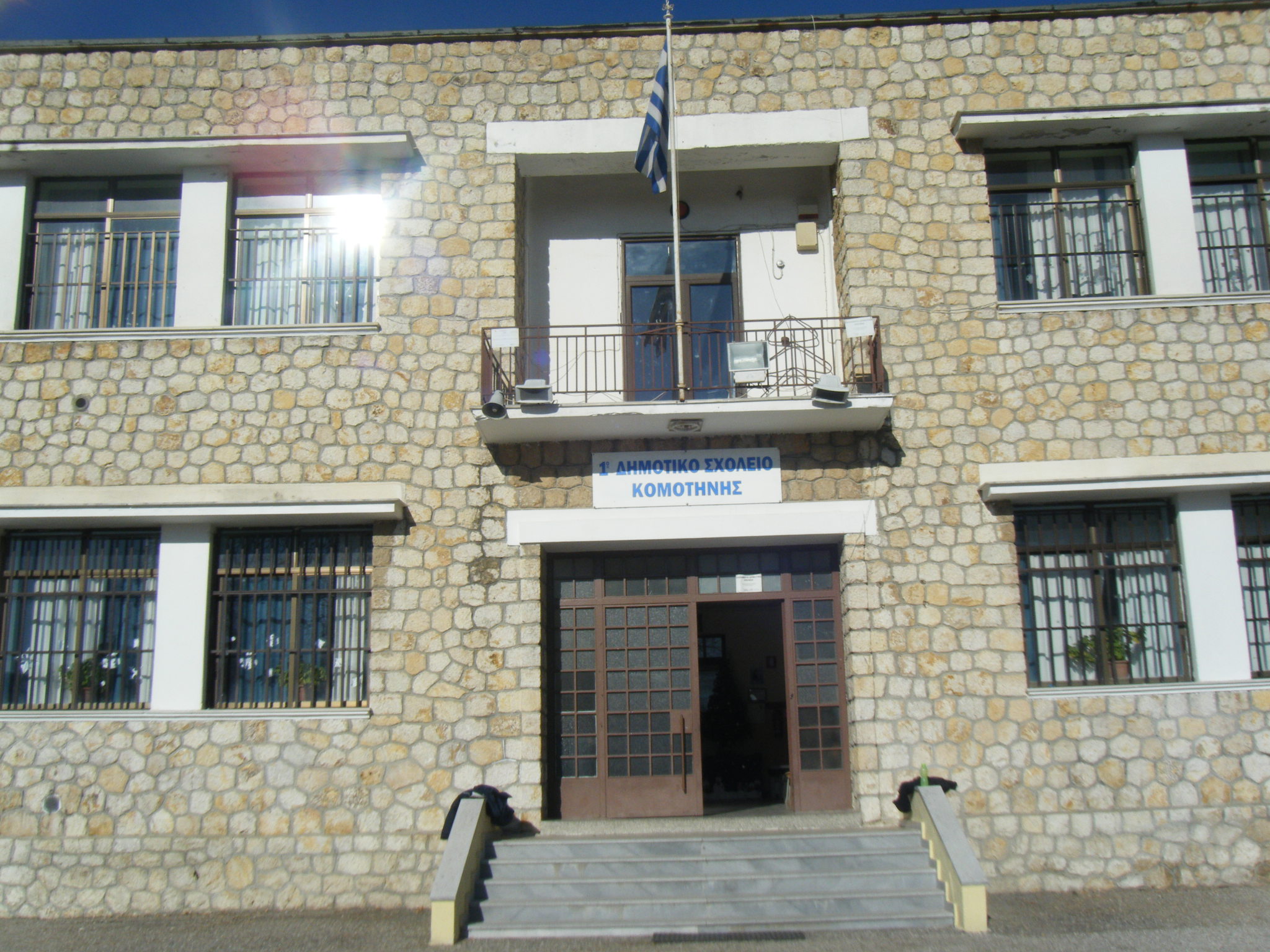
        1ο ΔΗΜΟΤΙΚΟ ΣΧΟΛΕΙΟ ΚΟΜΟΤΗΝΗΣ -ΚΟΜΟΤΗΝΗ Greece

        • Our website

          http://1dim-komot.rod.sch.gr/

          1st Day at School

          This is our School


          Communication in the mother tongue and in foreign languages

          • 1.   Communication in the mother tongue 

            Definition: Communication in the mother tongue is the ability to express and interpret concepts, thoughts, feelings, facts and opinions in both oral and written form (listening, speaking, reading and writing), and to interact linguistically in an appropriate and creative way in a full range of societal and cultural contexts; in education and training, work, home and leisure.

            Essential knowledge, skills and attitudes related to this competence: Communicative competence results from the acquisition of the mother tongue, which is intrinsically linked to the development of an individual’s cognitive ability to interpret the world and relate to others. Communication in the mother tongue requires an individual to have knowledge of vocabulary, functional grammar and the functions of language. It includes an awareness of the main types of verbal interaction, a range of literary and non-literary texts, the main features of different styles and registers of language, and the variability of language and communication in different contexts.

            Individuals should have the skills to communicate both orally and in writing in a variety of communicative situations and to monitor and adapt their own communication to the requirements of the situation. This competence also includes the abilities to distinguish and use different types of texts, to search for, collect and process information, to use aids, and to formulate and express one’s oral and written arguments in a convincing way appropriate to the context.

            A positive attitude towards communication in the mother tongue involves a disposition to critical and constructive dialogue, an appreciation of aesthetic qualities and a willingness to strive for them, and an interest in interaction with others. This implies an awareness of the impact of language on others and a need to understand and use language in a positive and socially responsible manner.

            2.   Communication in foreign languages (2)

            Definition: Communication in foreign languages broadly shares the main skill dimensions of communication in the mother tongue: it is based on the ability to understand, express and interpret concepts, thoughts, feelings, facts and opinions in both oral and written form (listening, speaking, reading and writing) in an appropriate range of societal and cultural contexts (in education and training, work, home and leisure) according to one’s wants or needs. Communication in foreign languages also calls for skills such as mediation and intercultural understanding. An individual’s level of proficiency will vary between the four dimensions (listening, speaking, reading and writing) and between the different languages, and according to that individual’s social and cultural background, environment, needs and/or interests.

            Essential knowledge, skills and attitudes related to this competence: Competence in foreign languages requires knowledge of vocabulary and functional grammar and an awareness of the main types of verbal interaction and registers of language. Knowledge of societal conventions, and the cultural aspect and variability of languages is important.

            Essential skills for communication in foreign languages consist of the ability to understand spoken messages, to initiate, sustain and conclude conversations and to read, understand and produce texts appropriate to the individual’s needs. Individuals should also be able to use aids appropriately, and learn languages also informally as part of lifelong learning.

            A positive attitude involves the appreciation of cultural diversity, and an interest and curiosity in languages and intercultural communication

            San Michele-Italy

            Μετάβαση στο padlet.com

            1ο ΔΗΜΟΤΙΚΟ ΣΧΟΛΕΙΟ ΚΟΜΟΤΗΝΗΣ -ΚΟΜΟΤΗΝΗ Greece

            • .

              ………….

              Greek tongue twisters (Γλωσσοδέτες)

              Ἄσπρη πέτρα ξέξασπρη κι ἀπ᾿ τὸν ἤλιο ξεξασπρώτερη
              (Áspri pétra xéxaspri ke ap ton ílio xexaspróteri)
              A white stone, very white, whiter than the sun.

              Μιὰ πάπια μὰ ποιά πάπια;
              (Miá pápia ma piá pápia)
              A duck, but which duck?).

              Η αθασιά της Αϊσές αν έχει αθάσια, ας έχει.
              (I athasiá tis Aishés an éshei atháshia, as éshei)
              /i aθa’ʃa t̪is à.i’ʃɛs an ɛʃi a’θaʃʲa, as ɛʃʲi/
              The atheist of Aeses if he has anthrax, let him have.

              Καλημέρα καμηλιέρη – Καμηλιέρη καλημέρα (Kaliméra kamiliéri kamiliéri kaliméra) Good morning camel herder, camel herder good morning

              Μια τίγρη μα ποια τίγρης – Μια τίγρη με τρία τιγράκια (Miá tíyri ma piá tíyri ‘ miá tíyri me tría tiyrákia) A tiger, but which tiger, a tiger with three tiger cubs

              Πέμπτη πέφτει ο πεύκος κάτω! (Pémdi péfti o péfkos káto) On a Thursday the pine tree falls down

              Μια πάπια μα ποιά πάπια ; Μια πάπια με παπιά

              A duck but which duck? A duck with ducklings.


              Usually I could not say the whole phrase. I twisted my tongue and get myself embarrassed. And after all who cares which duck is the one with the ducklings ? Will I ever use  this phrase in my life ? I doubt it… But I took the challenge after that and I can say that today I  spell all the Greek twisters correctly…

              Ο παππάς ο παχύς έφαγε παχιά φακή. Γιατί παππά παχύ έφαγες παχιά φακή;

              The fat priest ate fat lentil soup. Why, fat priest, did you eat fat lentil soup?


              How can a lentil soup be fat anyway? There are tiny and big (fat) lentils , but this soup , unless you are a hell of a cook is usually tasteless , even if you have used a lot of olive oil to cook it. Maybe priests should not eat fat soups anyway…


              https://youtu.be/7bpv0fUyncs

              Carnival Fest is a great opportunity for many language and art activities.

              First we read the poem “The Clown Song”(p.77, unit 16, Language book).It is a poem about friendship and feelings.

              If you dont have a place to sleep, use my shoe. If you dont have a warm place use my heart. If you dont have water to drink, use my tears. If you dont have dreams, use mine.”

              we discussed about clown’ s feelings and ours.When we feel sad, what we can do? what are the things or behavours that make us nervous, sad, misserable etc…

              we created bulletin boards with our feelings.

              we tried to find in the text all the words which express feelings.

              The next text in our Language book is “The boy with the acordeon”.It is about a boy who have earned a scolarship in The Musical School.

              It is a story about friendship. We read the story, we analise its structure, we searched all the words which expess feelings. we wrote the Boys feelings about his luck.

              At the end we created Clowns hat and Musical instruments. We sung and dance the Clown song.

              STEM and Digital competence

              • .

                3.   Mathematical competence and basic competences in science and technology

                Definition:

                A.

                Mathematical competence is the ability to develop and apply mathematical thinking in order to solve a range of problems in everyday situations. Building on a sound mastery of numeracy, the emphasis is on process and activity, as well as knowledge. Mathematical competence involves, to different degrees, the ability and willingness to use mathematical modes of thought (logical and spatial thinking) and presentation (formulas, models, constructs, graphs, charts).

                B.

                Competence in science refers to the ability and willingness to use the body of knowledge and methodology employed to explain the natural world, in order to identify questions and to draw evidence-based conclusions. Competence in technology is viewed as the application of that knowledge and methodology in response to perceived human wants or needs. Competence in science and technology involves an understanding of the changes caused by human activity and responsibility as an individual citizen.

                Essential knowledge, skills and attitudes related to this competence:

                A.

                Necessary knowledge in mathematics includes a sound knowledge of numbers, measures and structures, basic operations and basic mathematical presentations, an understanding of mathematical terms and concepts, and an awareness of the questions to which mathematics can offer answers.

                An individual should have the skills to apply basic mathematical principles and processes in everyday contexts at home and work, and to follow and assess chains of arguments. An individual should be able to reason mathematically, understand mathematical proof and communicate in mathematical language, and to use appropriate aids.

                A positive attitude in mathematics is based on the respect of truth and willingness to look for reasons and to assess their validity.

                B.

                For science and technology, essential knowledge comprises the basic principles of the natural world, fundamental scientific concepts, principles and methods, technology and technological products and processes, as well as an understanding of the impact of science and technology on the natural world. These competences should enable individuals to better understand the advances, limitations and risks of scientific theories, applications and technology in societies at large (in relation to decision-making, values, moral questions, culture, etc).

                Skills include the ability to use and handle technological tools and machines as well as scientific data to achieve a goal or to reach an evidence-based decision or conclusion. Individuals should also be able to recognise the essential features of scientific inquiry and have the ability to communicate the conclusions and reasoning that led to them.

                Competence includes an attitude of critical appreciation and curiosity, an interest in ethical issues and respect for both safety and sustainability, in particular as regards scientific and technological progress in relation to oneself, family, community and global issues


                4.   Digital competence

                Definition:

                Digital competence involves the confident and critical use of Information Society Technology (IST) for work, leisure and communication. It is underpinned by basic skills in ICT: the use of computers to retrieve, assess, store, produce, present and exchange information, and to communicate and participate in collaborative networks via the Internet.

                Essential knowledge, skills and attitudes related to this competence:

                Digital competence requires a sound understanding and knowledge of the nature, role and opportunities of IST in everyday contexts: in personal and social life as well as at work. This includes main computer applications such as word processing, spreadsheets, databases, information storage and management, and an understanding of the opportunities and potential risks of the Internet and communication via electronic media (e-mail, network tools) for work, leisure, information sharing and collaborative networking, learning and research. Individuals should also understand how IST can support creativity and innovation, and be aware of issues around the validity and reliability of information available and of the legal and ethical principles involved in the interactive use of IST.

                Skills needed include the ability to search, collect and process information and use it in a critical and systematic way, assessing relevance and distinguishing the real from the virtual while recognising the links. Individuals should have skills to use tools to produce, present and understand complex information and the ability to access, search and use internet-based services. Individuals should also be able use IST to support critical thinking, creativity, and innovation.

                Use of IST requires a critical and reflective attitude towards available information and a responsible use of the interactive media. An interest in engaging in communities and networks for cultural, social and/or professional purposes also supports this competence.


        1ο ΔΗΜΟΤΙΚΟ ΣΧΟΛΕΙΟ ΚΟΜΟΤΗΝΗΣ -ΚΟΜΟΤΗΝΗ Greece

        • .

          Maths


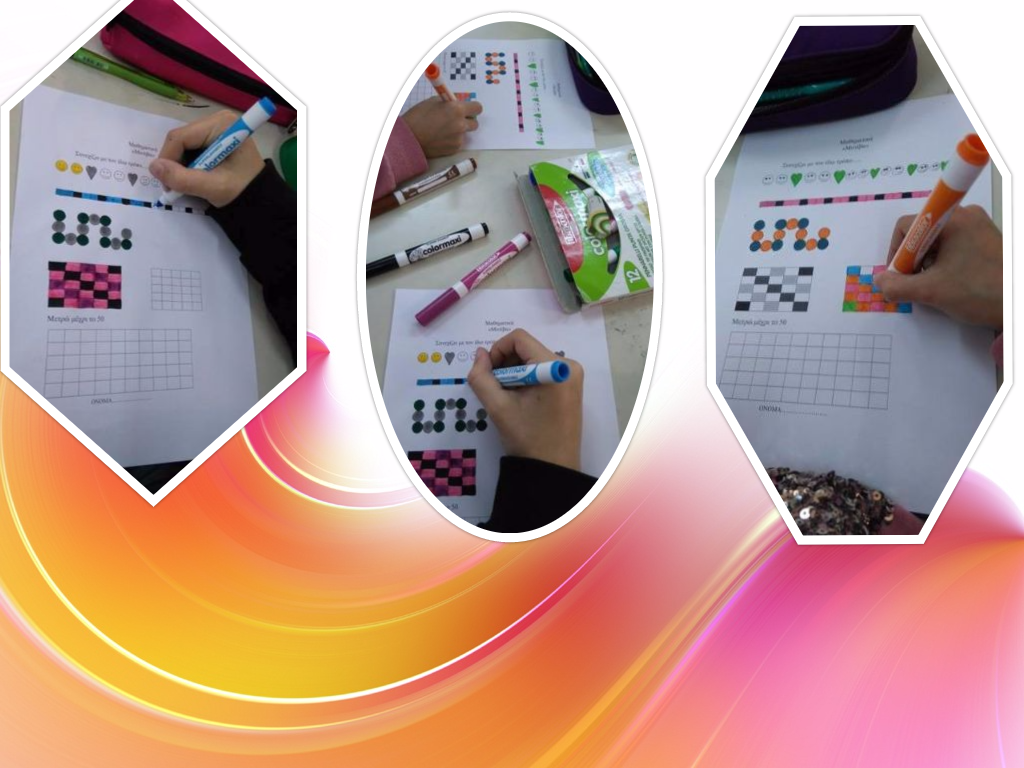
          The ability to accurately identify shapes is a foundational mathematical skill, and it is quite rewarding for children because their world is full of shapes. Understanding shapes will enable students to be more in tune to the world around them and see the connections between objects, as well as being better able to appreciate artistic works.

          Our children begin to understand the communicative power of their mark making.

          The next important development is the ability to recognise an “inside” and an “outside” of those shapes.

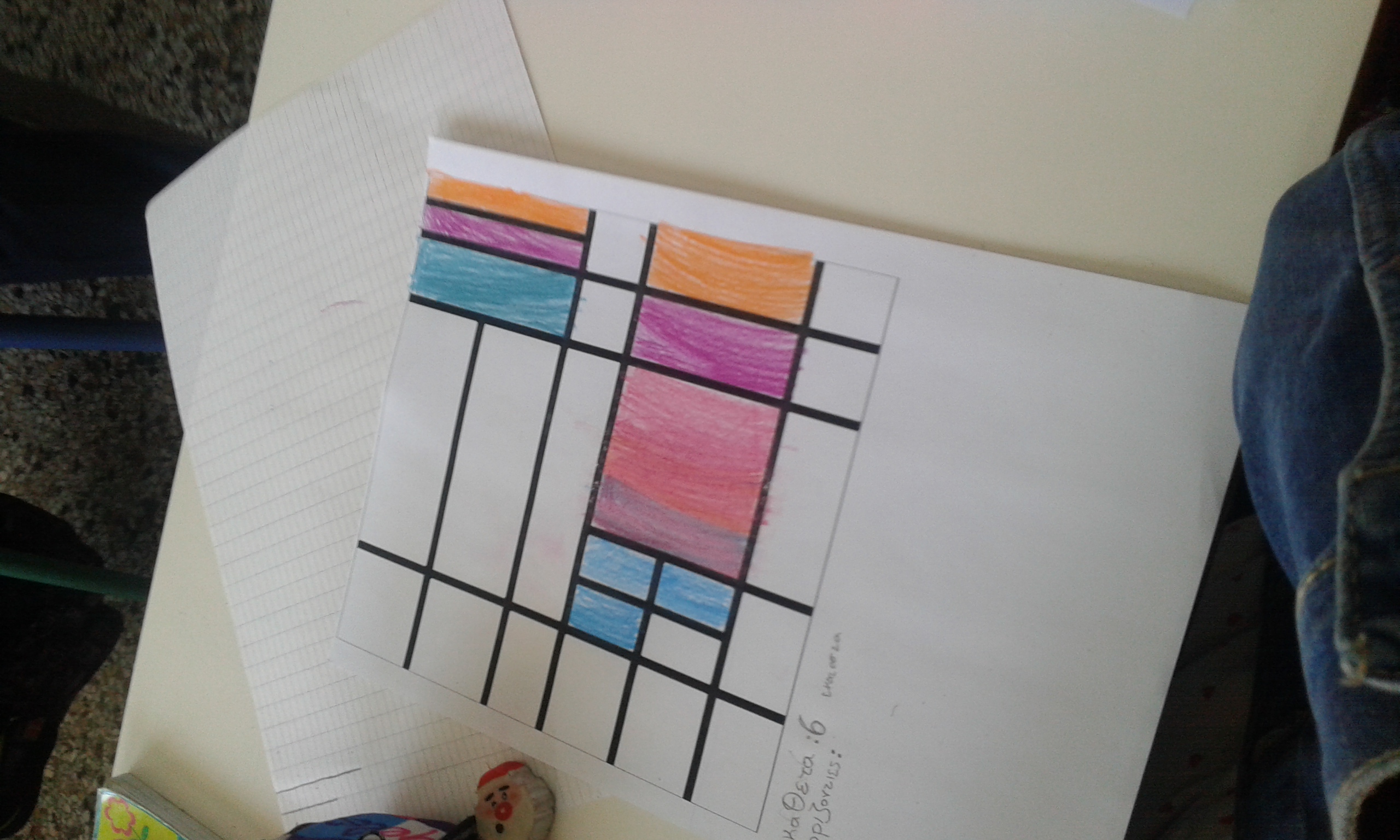
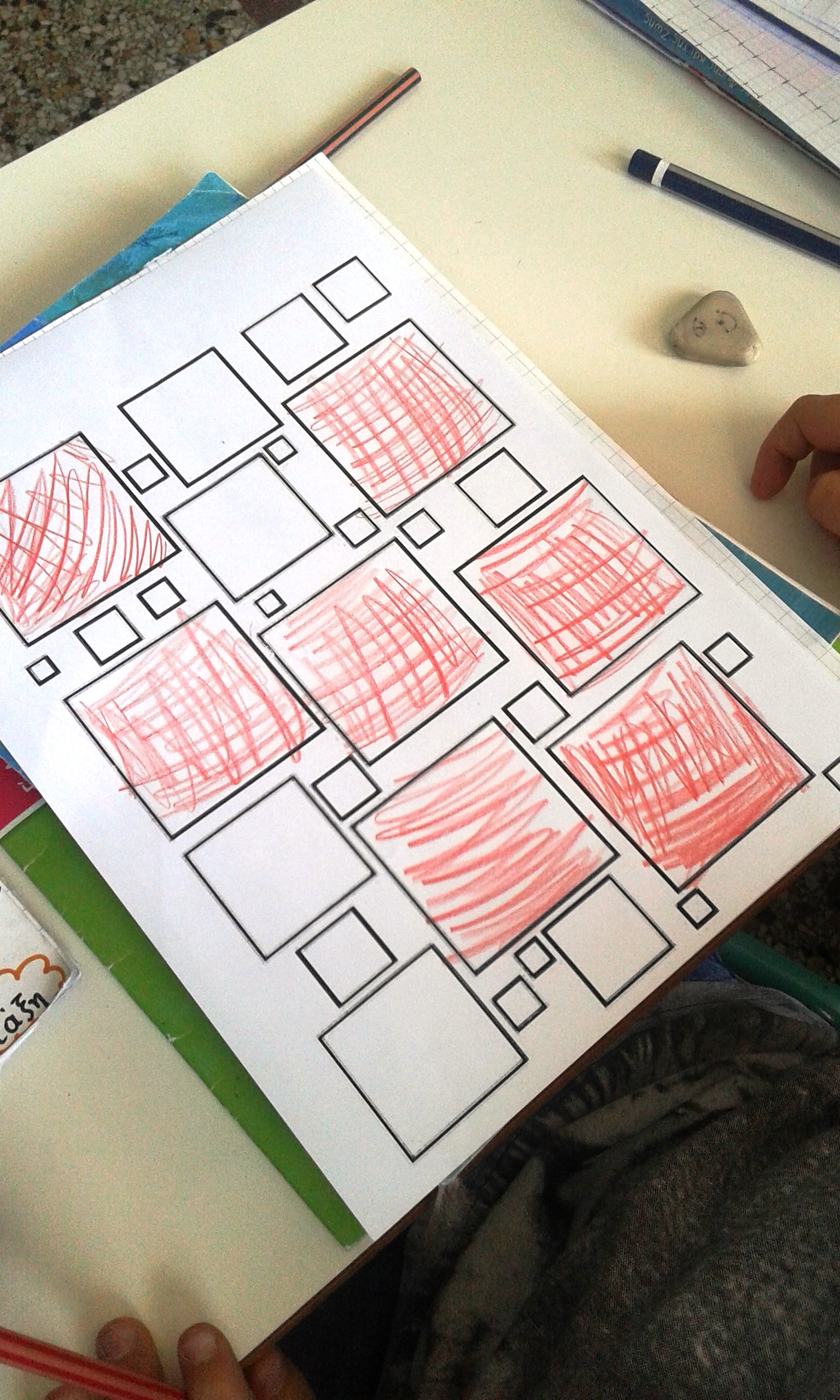
          I gave to my students a worksheet with blanc shapes and I asked the to imagine what they can draw with the shapes. This is the work sheet.

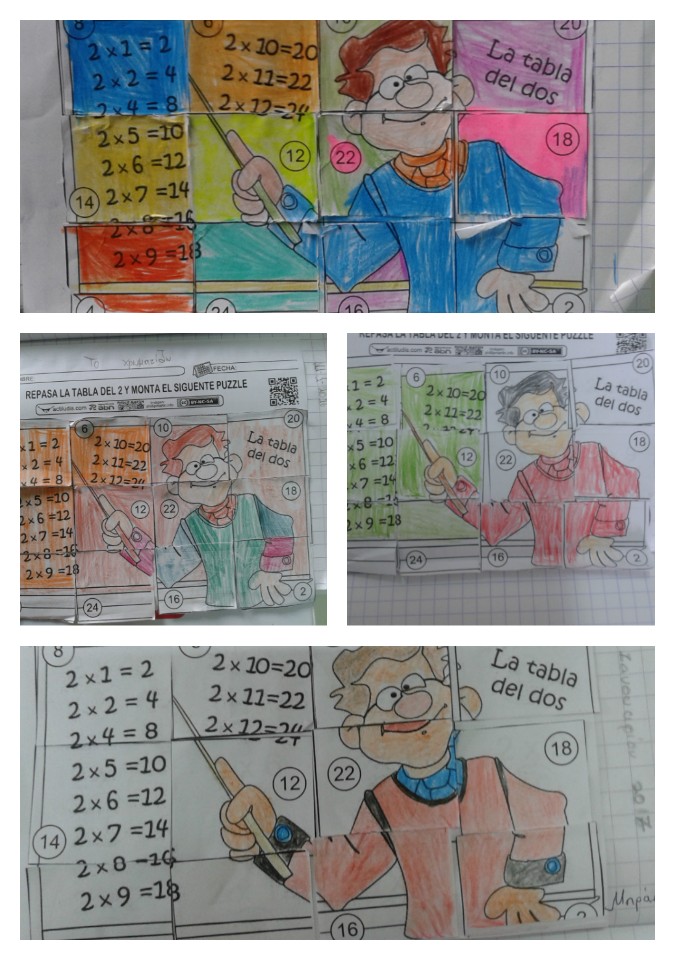
          Some children struggle with memorisation of number facts (I was one of them!) and providing tools that help children realise there are a number of different ways to approach solving a multiplication problem helps them to better understand how multiplication actually works. Once they learn and understand a few different strategies, they will indeed have a stronger foundation for learning to remember and recite multiplication facts.

          The strategies included are;

          • Equal groups: The child can draw dots or shapes to represent the equal groupings or use small manipulatives such as beads, buttons or unit blocks. I suggest laminating the printed mat and using a whiteboard marker for the drawing and writing tasks.
          • Array: An array is a group of objects arranged into rows and columns. Again, this can be drawn or made with manupulatives.
          • Repeated addition: The child is learning that by adding the second factor (or number) repeatedly, you can solve the problem. The first factor tells you how many time to add it.
          • Skip counting:  Counting by the second factor, the first factor tells you how many skips ahead to make as you count.
          • Write the full multiplication sentence.

          Science/Technology

          Digital

          Cultural awareness and expression

          • 8.   Cultural awareness and expression

            Definition:

            Appreciation of the importance of the creative expression of ideas, experiences and emotions in a range of media, including music, performing arts, literature, and the visual arts.

            Essential knowledge, skills and attitudes related to this competence:

            Cultural knowledge includes an awareness of local, national and European cultural heritage and their place in the world. It covers a basic knowledge of major cultural works, including popular contemporary culture. It is essential to understand the cultural and linguistic diversity in Europe and other regions of the world, the need to preserve it and the importance of aesthetic factors in daily life.

            Skills relate to both appreciation and expression: the appreciation and enjoyment of works of art and performances as well as self-expression through a variety of media using one’ s innate capacities. Skills include also the ability to relate one’s own creative and expressive points of view to the opinions of others and to identify and realise social and economic opportunities in cultural activity. Cultural expression is essential to the development of creative skills, which can be transferred to a variety of professional contexts.

            A solid understanding of one’s own culture and a sense of identity can be the basis for an open attitude towards and respect for diversity of cultural expression. A positive attitude also covers creativity, and the willingness to cultivate aesthetic capacity through artistic self-expression and participation in cultural life.

            1ο ΔΗΜΟΤΙΚΟ ΣΧΟΛΕΙΟ ΚΟΜΟΤΗΝΗΣ -ΚΟΜΟΤΗΝΗ Greece

            • .

              Art

              Music


              Motor Skills


              Traditions

              Social and civic competences

              • 6.   Social and civic competences

                Definition:

                These include personal, interpersonal and intercultural competence and cover all forms of behaviour that equip individuals to participate in an effective and constructive way in social and working life, and particularly in increasingly diverse societies, and to resolve conflict where necessary. Civic competence equips individuals to fully participate in civic life, based on knowledge of social and political concepts and structures and a commitment to active and democratic participation.

                Essential knowledge, skills and attitudes related to this competence:

                A.

                Social competence is linked to personal and social well-being which requires an understanding of how individuals can ensure optimum physical and mental health, including as a resource for oneself and one’s family and one’s immediate social environment, and knowledge of how a healthy lifestyle can contribute to this. For successful interpersonal and social participation it is essential to understand the codes of conduct and manners generally accepted in different societies and environments (e.g. at work). It is equally important to be aware of basic concepts relating to individuals, groups, work organisations, gender equality and non-discrimination, society and culture. Understanding the multi-cultural and socio-economic dimensions of European societies and how national cultural identity interacts with the European identity is essential.

                The core skills of this competence include the ability to communicate constructively in different environments, to show tolerance, express and understand different viewpoints, to negotiate with the ability to create confidence, and to feel empathy. Individuals should be capable of coping with stress and frustration and expressing them in a constructive way and should also distinguish between the personal and professional spheres.

                The competence is based on an attitude of collaboration, assertiveness and integrity. Individuals should have an interest in socio-economic developments and intercultural communication and should value diversity and respect others, and be prepared both to overcome prejudices and to compromise.

                B.

                Civic competence is based on knowledge of the concepts of democracy, justice, equality, citizenship, and civil rights, including how they are expressed in the Charter of Fundamental Rights of the European Union and international declarations and how they are applied by various institutions at the local, regional, national, European and international levels. It includes knowledge of contemporary events, as well as the main events and trends in national, European and world history. In addition, an awareness of the aims, values and policies of social and political movements should be developed. Knowledge of European integration and of the EU’s structures, main objectives and values is also essential, as well as an awareness of diversity and cultural identities in Europe.

                Skills for civic competence relate to the ability to engage effectively with others in the public domain, and to display solidarity and interest in solving problems affecting the local and wider community. This involves critical and creative reflection and constructive participation in community or neighbourhood activities as well as decision-making at all levels, from local to national and European level, in particular through voting.

                Full respect for human rights including equality as a basis for democracy, appreciation and understanding of differences between value systems of different religious or ethnic groups lay the foundations for a positive attitude. This means displaying both a sense of belonging to one’s locality, country, the EU and Europe in general and to the world, and a willingness to participate in democratic decision-making at all levels. It also includes demonstrating a sense of responsibility, as well as showing understanding of and respect for the shared values that are necessary to ensure community cohesion, such as respect for democratic principles. Constructive participation also involves civic activities, support for social diversity and cohesion and sustainable development, and a readiness to respect the values and privacy of others.

                1ο ΔΗΜΟΤΙΚΟ ΣΧΟΛΕΙΟ ΚΟΜΟΤΗΝΗΣ -ΚΟΜΟΤΗΝΗ Greece

Ο άνθρωπος με την πράσινη βαλίτσα (Β μέρος)

The man starts his journey

  • Have in common with a mysterious,  man who carries a green suitcase?The man comes into people’s lives because it is important for them to experience the visions that he is somehow able to show them—visions that even he doesn’t understand. But whoever he connects with will go through a transformation that will change the course of their life, for better or worse.This story is magical realism, realistic with paranormal elements, a mystery that needs to be solved ?What is in that suitcase? Why will he risk everything to keep it safe?The green suitcase in question doesn’t carry clothes, swimwear and sandals. Instead, it’s filled with secrets and magic.

    Lets start…………….

    ​He start from Greece and visit Italy,Spain, Boulgaria ,Ukraine and Greece.

    ​We worked in groups of two students. They drew the places that our Value Man will visit so as to share his Values.

    Boys and girls in 2nd D are really involved in the man’s journey. Here there are their paintings!Posted by Antonella Colletti

    3rd Primary school of Rhodes

    Our Man start from Greece and visit Italy,Spain, Boulgaria ,Ukraine and Greece

    The suitcase’s trip – Suitcases we sent and we received

    •  

      The man starts his trip. A long and difficult trip with a suit case full of values. His mission is to go around the Europe and teach what are the most inportant thing that bring happiness.

      3rd Primary School of Rhodes

      Man with green suitcase began its journey from Rhodes and go to Komotini and Katerini in Greece, and Colle di Val d’Elsa in Italy. In suitcase of students of 3rd Elementary school Rhodes put the passport, the ticket, and the value of respect.

      To help the students of other schools to understand what is respect for the prepared to take with him:

      • the flower of respect that shows what they think respect: feel, smell, taste, like,
      • the recipe of respect,
      • guidance on how to have respect for the school,
      •  piece of Poster Set ”All About RESPECT!”with Strategies for School.This poster set reinforces the ideas and understanding of RESPECT. Each letter in this acronym illustrates a strategy that students and teachers can learn/understand and use to practice respect. If all partners join their pieces then completed the poster. 

      End put in the suitcase of a card with  wishes for good Christmas. He wished good trip and said goodbye to him.

      Poster Set ”All About RESPECT!”with Strategies for School

      Evi’s suitcase is packed with surprises, friendship and wisdom!


      Antonella’s suitcase, amazingl! Students of 2nd D, in Colle di Val d’Elsa, have prepared five suitcases to send to their partners of three schools of Greece, of Bulgaria,  and Ucraina. In each suitcase they have put: a Friendship rubric to selfasses the grade of friendship one can show, a fantastic recipe for haviing friends, the story” The lion and mouse” , a wishing card.

      Marianthi’s suitcase is packed with caring.Fantastic!


      1st Primary School of Komotini Greece

      ​The man continuous hir trip from Komotini toItaly,Greece,Spain,Boulgaria and Ukraine. His Suitcase contains a very beautiful story a story about caring ang giving things,a award for caring not only ourselves but the planet ,the community and other people. He also carries his indetify passport,rules of how you can be a caring person,a questionary about how caring you are,a Christmas card. When we visit someone we must offer him a present, so our Value man has to offer two presents from kids: a Christmas ornament and a cinamon(mysterious, spiritual, and supernatural power​, a sign of wealth, )


      20th Kindergarten of Katerini-Greece

      Alexandra’s suitcase, just amazing!

      Marianthi’s suitcase, extremely wonderful!

      our suitcases made with enthusiasm and love!


      And from Italy! Thank you Antonella! Your suitcase is great!!!

      Christmas stories

      • 1st Primary School of Komotini

        Summary  The Quiltmaker a story before Christmas holidays. This story was the performance of our School Christmas celebration which unfortunately was postponed from a very sad incident.

        The Quiltmaker spends all of her time making quilts only to give them away. The King meets the Quiltmaker in a search for the one thing that will finally make him happy. When the generous quiltmaker finally agrees to make a quilt for a greedy king but only under certain conditions, she causes him to undergo a change of heart.We read the story we examined the story map we drew thw characters and the end of the story. We also divided the story in parts and drew each part. Finally we combine the quilters blanket.

        The Quilt Maker spends all of her time making quilts only to give them away:

        1. Why does she only give them to the poor or homeless?
        2. Why won’t she accept money for her quilts?
        3. Does the Quilt Maker seem happy? Why/Why not?
        4. Would you be happy to work all day and give your work away? Why/ Why not?

        In the beginning of the story we are told that the king is “not happy at all”.

        1. Why do you think that the King is not happy even though he is a King with two birthdays and so many treasures?
        2. Would you be happy if you were a Queen or King with so many treasures? Why/Why not?
        3. Can you be happy without treasures? How?

        https://www.canva.com/design/DACIkOKDyvc/view The cat and the Parrot a story about how we can react in difficult situations from 1st Primary School of Komotini ( I had to teach the letter Γ,γ I found a story with words beggining and has this letter <Γάτα και παπαγάλος> Ι used words with this letter to say my story and to say that it is very important how we react in difficult situations


        It was written by Evgenios Trivyzas, a Greek story teller whose creative imagination and captivating narratives have earned him not only the love of young and old, but also, in 2006, a place on the shortlist for the international Hans Christian Andersen Award.

        The story starts like this:

        Once upon a time there was a little mouse, who was called Gerbilly in his house. And every time this tiny rodent would look up at the sky, all he wanted was to touch the stars.

        “Grandpa,” he would say to his grandfather, “please lift me up high in your arms, so I can touch a little star.”

        “What you’re asking, my grandchild, can’t be done,” the grandfather would reply. “The little stars are hanging very high up in the sky. It is not easy at all to touch them …”

        The King meets the Quilt Maker in a search for the one thing that will finally make him happy. (However, at the end of the story the King has no things but is happy.)

        1. Is the quilt what makes the King happy?
        2. What does make him happy?
        3. How does getting a gift make you feel?
        4. How does giving a gift make you feel?

        The King begins to give his treasures away in exchange for a quilt.

        1. Does one have to be a Queen or King with treasures to give something away?
        2. Do you have to give away a thing to make someone happy, or is there another way of giving?


        Tickets for heaven
        We read the story we descuss the boy’s problem and how he managed to solve it. My students didn;t like the end of the story and they painted a new oneThis is students reaction about the story. We cut it in pieces we drew them and we retold the story.
        The students of 1st Primary School of Komotini wanted to an end of the story Tickets for Heaven. P;ease watch carefukky the drawings below
        3rd  Primary school of Rhodes

        The Little Match Girl by H.C. Andersen

        The Little Match Girl is a short story by Danish poet and author Hans Christian Andersen. The story is about the dreams and hopes of a child facing many difficulties, and first published in 1845.

        The story is famous not only because of its poignant tragedy, but also because of its beauty. Our imagination (and literature) can give us comfort, solace, and reprieve from so many of life’s hardships. But literature can also act as a reminder of personal responsibility. In that sense, this short story  could also make us re-evaluate our life, those things you cherish most.

        With my students saw the video and then everyone painted what love means to him and what he loves most.

        We continued with the other Christmas stories that were shared with us the rest of our partners.

        20th Kindergarten of Katerini-Greece

        2nd D, Primary School in Colle di Val d’Elsa, Italy

        My students watched this video many times, because they needed to reflect on the characters’ traits and actions. They talked about the reindeers’ behavior and then they infered the conclusion how are important the values of inclusion, respect for diversity, collaboration, positive attitude toward friends. The video gave them the opportunity to learn some new words in English.

        The man wishes for Christmas

        https://padlet.com/1canislupus22/5he5523ytqa0

    eaching values through interdisciplinary approach

    •  

      These activities aims at implementing and developing heterogeneous ways of learning and understanding of ethical dimensions in knowledge.

      We can engage students and help them to develop knowledge of values through activities in Mother Tongue and English, to be creative by doing Art and Drama, to dig into other subjects such as Science, for istance.

      The plan of activities consists in:

      • realising the activities through other subjects
      • dialogues about the contents of the stories read or/and listened
      • making settings and characters like puppets, using simple instructions in English
      • making up plays to develope students’ vocabulary growth and easy sentences in English, using the linguistic material existing in the context of the stories
      • drama activities
      • live meeting with a role model
      • using musical activities


      HERE IS HOW STUDENTS LEARN VALUES THROUGH SCIENCE.

      2ND D FROM COLLE DI VAL D’ELSA, ITALY.


      Using puppets in drama class. 2ND D, COLLE DI VAL D’ELSA, ITALY.

      Children have explored all the dimensions of the text before making this diorama, useful to act with short and simple sentences in English.

      At the end of this wonderful project my students have tried to use the lion and the mouse as puppets to say the narrative structure of the homonym story in English.

      Μετάβαση στο padlet.com

      Tale of Trust – Snejina (Bulgaria)

      •  

        Trust is like a mirror if you can break it and stick it right, but the cracks remain forever .. Trust is fresh air of our lives. Without trust can not. Nobody can be happy while constantly doubt in everything. Trust. At once so simple and so complicated about giving. To obtain. Actually, the most important component, we can build what we strive for. One needs someone beside him, always, in every aspect of their lives. As independent to try to be, the truth is that increasingly seek support from someone. Someone to whom we can trustTrust is a salve for the soul in exhausting maze of human relationships. It is fragile like a flower, but when it is, we live in harmony. We acquire a sense that the world is unsustainable islands of stability. When disappears, cometh chaos in our souls. ​

        ​Tale of Trust from Snejina

        ​Read her story and organise activities for all the members.


        1st Primary School of Komotini – Greece

        DISCUSSION QUESTIONS

        1. How do you know when you can trust someone?
        2. What part does trust play in your relationships with your friends and family? How would these relationships be affected if you found out someone was lying to you?

        • Can you imagine starting a friendship with someone you didn’t trust? What would that be like?

        • What are the benefits of being a trustworthy person? How do you benefit from the trustworthiness of others?

        • What does trusting somebody mean?

        • What do you look for in someone so you know you can trust him/her?

        • What makes a person trustworthy?

        • What does trust have to do with the quality of someone’s character?

        • How do you define a “lie”?

        • Is it ever okay to lie? When would that be?

        • What is a white lie? Is there any difference between a white lie and any other kind of lie? When have you told a white lie? What was the situation?​

        WRITING ASSIGNMENTS

        Write about someone you trust. Why do you trust that person?

        STUDENT ACTIVITIES

        ​We played a game with mirrors.

        FOR PARENTS

        Here are some things you can do to reinforce the message of TRUST

        Talk with your child about what it means to be an honest and trustworthy person and why it is important. Make sure he/she knows that it is important to you.Remember, you are your child’s most important teacher. He or she will learn a lot about being trustworthy from watching what you do.

        A TRUST game with mirrors

        If you are worried that your kid is not able to place his trust in others and needs to build on it​,read the next activity

        we have groups of 2-5 students it depends of how many mirrors we have. One is the leader and the other students must follow his instruction because they are looking throught the mirror. They have to trust the leader so as to walk carefully. All the students love this game they enjoy it very much because they walk on clouds.

        We read the story and we created this Bulletin Board

        ​Breathe with your toy friend: It is a game to learn to trust ourselves. Lay down put your toy frind on your stomach close your eyes and listen your breath. It is an amusement and relax methods to trust your self and relax.

        3rd Primary school of Rhodes

        Trust Walks

        The purpose of school is to develop a place where all students learn at high levels. In order to achieve this, we must establish meaningful relationships. And an essential component of meaningful relationships is trust. Trust is safety. Trust is comfort.  Trust is feeling that someone has your back. Trust is an environment where individuals can be their best selves.
        Building trust is a process. The end goal is the moment we can collectively have honest dialogue about our students.

        The following  activity, inclusive of different trust building exercice will help develop and strengthen the trust factor in  kids

        read a book and discuss

        Read the story ​Tale of Trust from Snejina and talk about trust

        What is a Trust?

        “When I say the word “trust” what comes to mind?

        How would  you lose someone’s trust?

        How would  you gain someone’s trust?

        written exercise

        Students determine ways in which they can build mutual trust.

        play a game

        Trust Walks

        A Trust Walk activity is also known as a Blind Walk activity. A fun trust exercise for group of kids.

        • Your kid and friends have to be divided into two groups. Make sure that both the groups have the same number of players.
        • Blindfold one group and let one kid from each group hold hands with each other to form a pair. Each pair should have one kid who has the blindfold and one who doesn’t. Depending on the level and intensity of the activity, you can let the path be regular or add obstacles. The kid who is not blindfolded has to guide his partner carefully through the path and reach a safe zone. Once all kids are in the safe zone, switch the blindfold and put it on the kids who did not wear it earlier
        This game builds a sense of trust between partners and boosts listening, communication and teamwork skills as partners work together to reach a common goal.You can easily play this game with more than two players, and with a few modifications you can also make it into an exciting treasure hunt.

                       2nd D PRIMARY SCHOOL OF COLLE DI VAL D’ELSA

        Here are the trust games we have played.

        Friendship Activities – The Lion and The mouse

        • Antonella Colletti from Italy have chosen FRIENDSHIP

          SHE HAS SENT US HER STORY. YOU READ IT TO YOUR STUDENTS AND WORK ON IT.

          A board game from 1st Primary School of Komotini

          This will print over 2 pages. Stick together and laminate. Child throws a die and follows the foot prints. If they land on the ‘best friends’ square then they must take a card and answer the question. If correct they can move forward 1 space. If incorrect they must go back 1 space. I am sure it will promote lots of discussion on what friendship really is.

          https://drive.google.com/file/d/0ByNIrvtBtGo2NjMxNDkxZTItODA3Mi00YjFmLWJhMTItYTY5ZTAxMjMwZWMw/view?resourcekey=0-ALxZKETnD0E1wbQ4mtCVhA

          an activity book from Komotini


          https://www.slideshare.net/MARIANTHIARVANITIDOU/an-activity-book-the-lion-and-the-mouse

          FOR PARENTS

          Dear Parent,

          Your child is involved in learning-activities designed to develop good character and empower young people to make good choices for themselves.

          The current lesson is about friendship. We have read the story We urge you to ask your child to tell you about this story and what he or she learned from it.

          Here are some things you can do to encourage your child to develop positive and healthy friendships.

            Encourage your child to talk with you about his or her friendships.

            If your child shows signs of feeling rejected or left out talk with him or her about it. Share a time when you felt the same way.

            Be sensitive to friendships that may involve negative activities or put-downs of other kids. Discuss it with your child and let him or her know how you feel about it.

            Encourage your child to show appreciation when a friend does something thoughtful or helpful.


          Αγαπητέ γονέα,

          Το παιδί σας συμμετέχει  στη μάθηση-δραστηριότητες που αποσκοπούν στην ανάπτυξη του καλού χαρακτήρα και για να τον ενδυναμώσει να κάνει  καλές επιλογές για τον εαυτό του. Το σημερινό μάθημα είναι για τη φιλία. Έχουμε διαβάσει την ιστορία <Το λιοντάρι και το ποντίκι> Σας προτρέπουμε να ρωτήσετε το παιδί σας να σας πει για αυτή την ιστορία και τι αυτός ή αυτή έμαθε από αυτό. Εδώ είναι μερικά πράγματα που μπορείτε να κάνετε για να ενθαρρύνετε το παιδί σας να αναπτύξει θετικές και υγιείς φιλίες. Ενθαρρύνετε το παιδί σας να μιλήσει μαζί σας σχετικά με τις φιλίες του. Εάν το παιδί σας δείχνει σημάδια αίσθημα απόρριψης , μιλήστε με αυτόν ή αυτήν γι ‘αυτό. Μοιραστείτε έ χρόνο την δική σας εμπειρία. Ενθαρρύνετε το παιδί σας να δείξει την εκτίμησή του ,όταν ένας φίλος κάνει κάτι καλό  ή χρήσιμο.


          Made with PhotoCollage.com

          Made with PhotoCollage.com

          We (1st Primary School of Komotini) worked on the activity sheet from Katerini

          20th Kindergarten of Katerini-Greece


          3rd Primary school of Rhodes

          Here our activities about the story THE LION AND THE MOUSE. 2nd D  PRIMARY SCHOOL, COLLE DI VAL D’ELSA, ITALY 2nd D Primary School of Colle di Val d’Elsa

          Friendship Activities The triple Filter Test

          •  

            20th Kindergarten of Katerini-Greece​ has chosen FRIENDSHIP

            ​THEY HAVE SENT THEIR SUITCASE AND THE STORY. YOU MUST READ IT TO YOUR STUDENTS AND WORK ON IT


            CONSIDER THIS

            Before you answer a question or voice your opinion, ask yourself: Is it true? Is it good? Is it kind? Is it useful? Is it necessary? If it passes these filters, speak up. If not, either find a tactful way to make it pass or better still, keep it to yourself

            Most people leave it at that and assume that the story is just about the information we spread. What if the real truth behind it, however, is about the information we seek and create. Imagine how different the world would be if we only chose to seek or create information that was true, good, or useful.

            Imagine how different the world would be if we only chose to seek or create information that was true, good, or usefulI remember my mom always used to say to me “when you point a finger at somebody, you have three fingers pointing back at you”.


            GAME:
            TELEPHONE: Yep! The old-fashioned game of “Telephone” that we all grew up with.
            Instructions: Have everyone sit in a line. The person at the beginning of the line thinks up a phrase and whispers it to the next person in line. That person whispers it to the next person, and so on until you get to the last person. The last person then calls out what they just heard. Typically the phrase changes as it goes down the line, so it’s rarely the same phrase as the first person started with. Have the last person then go to the front of the line.

            At the end of the game, remind them of how easily things can be twisted and changed. Once you say something, you no longer have control over what happens to that statement. There really are two sides of gossip that you can teach about from this game. Telling and believing. It’s one thing to start the gossip, it’s another to believe it and then retell it. When things are repeated, even with the best intentions, things can change so easily. It CAN stop with us. Encourage them to use good judgement and ALWAYS strive to be kind in the things they say about others.


            My proposals-Evi Karella

            I am a friend when…..


            The key of friendship


            Self-evaluation/Are you a good friend?


            3rd Primary school of Rhodes

            “Telephone”

            Trust Activities A bad word is not forgotten

            •  

              DG”SLANCE” ASENOVCI/BULGARIA​ has chosen TRUST.

              THE ONLY THING YOU HAVE TO DO IS TO READ THE STORY ANS CREATE ACTIVITIES FOR YOU AND ALL THE MEMBERS

              If we understood the power of our thoughts, we would guard them more closely. If we understood the awesome power of our words, we would prefer silence to almost anything negative. In our thoughts and words, we create our own weaknesses and our own strengths. Our limitations and joys begin in our hearts. We can always replace negative with positive

              1st Primary School of Komotini suggest the following activity

              What does glitter and gossip have in common?

              first explained what gossip is: when you talk behind someone else’s back- sometimes it’s true, sometimes it’s false, and it gets spread by others sharing it. Sometimes, gossip might not start out as something necessarily hurtful towards someone, but it could lead to it. Also, gossip is about someone’s personal or private life or matters, which they usually don’t want it to be shared with a bunch of other people. Then I posed the question: How is glitter like gossip?

              They had no clue.

              Perfect. Just what I was hoping for. I then set up the challenge:

              I told them that they would be in teams, and I had a challenge for them. The winning team would be free of homework for the entire week! (I knew that no one would win, but boy, were they excited and motivated).

              I then gave them the goal: The leader (the person with the glitter first) must spread it to everyone else in their team.

              But of course, I had a few other rules:

              ·  The leader could not have ANY glitter left on their hands- it must all be spread to their teammate’s hands. They couldn’t wash their hands to get rid of the glitter either.

              ·  No glitter could be found on the ground, not even ONE SPEC.

              ·  They only had 3 minutes.

              They were pumped. I was pumped too. I started the clock. I have to admit…one group got me very nervous. The leader almost got all the glitter off their hands by rubbing their hands on their shirt (clever- they bypassed my no-water rule… I give them credit). Kids were scraping their hands, rubbing their hands, creating a basket of hands to catch any falling glitter. It was beautiful, because it was also promoting team work. Once the time was up and no one was victorious, we washed our hands and came back to the question…

              How is Gossip like Glitter?

              We first talked about how it was like working with the glitter: it went everywhere, it’s shiny and sparkly, it stuck to peoples’ hands and clothes.Then we came up with connections between gossip and glitter. Here are real pictures from our activity with our ideas:They discovered the glitter spread very quickly from one person to the next and just like gossip. One person can start it, and it just bops around from person to person quickly

              The glitter clung to them- they couldn’t get rid of it easily. We talked about that our words stick with people- both kind words and hurtful words. What we choose to say will leave an impact on someone in someway.

              Every group had glitter on the floor around them, on their faces, in their hair, you name it. They couldn’t control where it went- just like the feathers and like gossip. If you share something with someone, you don’t know who they will share it with, and who that person will share it with and so on. It can be very dangerous when you share something hurtful about someone and don’t know who might hear it, not to mention, how the original idea could be changed from person to person.

              Last but not least, the glitter challenge seemed fun and exciting when I presented it to them… it wasn’t as fun when no one won and glitter was all over the place (and the control freak in me was ok with that- they were learning a valuable lesson). Gossip is the same way, we may feel popular and excited when we hear something about someone and want to share, but it can be untrue and/or hurtful and spread, creating one, big, hurtful mess. And again, we talked how we can’t take back what we say. We can apologize and hope the person forgives us, but it can’t be forgotten.

              What do you do in your classroom to promote social skills and such? I’d love to hear and gather more ideas!


              1st Primary School of Komotini -Greece

              ​I read to my students the phrase and I asked them to draw what they have understood . Here is their first opinion.

              Be careful with your words. Once they are spoken, they can only be forgiven, not forgotten.


              20th Kindergarten of Katerini-Greece


              My proposals


               DG”SLANCE” LEVSKI/ BULGARIA

              3rd Primary school of Rhodes

              Filter the Thoughts

              On the occasion of the story ” Trust Activities A bad word is not forgotten”we talked about the “Social Filter”. We explained that οur brains have filters to help us hold back the angry, hurtful words that we want to say so that we can protect friend’s feelings, save ourselves from being embarassed, show respect, and stay out of trouble. Most people can control their social filter without even thinking about it but some of us need lots of coaching experiences to keep our social filter on.

              taking someone else’s perspective

              We thought how others may feel with our words.

              Think it but not say it!

              Thinks …..thinks

              We think about a lot of things but some of our thoughts must not saying them.

              social filter is ON?

              Think before you speak

              filter throughts


              2nd D Colle di Val d’Elsa

              We have read the story ” A bad word is not forgotten” and, after reflecting on our relationships and the way we talk to eah other, we have made bingo cards writing bad and nice adjectives on them. When the bad ones have been called out, they have been covered with red hearts, because we all agree that it’s better to let them disappear and leave the heart’s voice instead.

              Respect Activities -The cocky bat

              • Respect​ is the value from 3rd Primary School of Rhodes

                We have sent this story with activities to the other members of the project. They have to read the story to their students and work on it.


                The cocky Bat    Πρόγραμμα σπουδών

                E – twinning 2017

                Πληροφορίες διδάσκοντος

                Διδάσκων Διεύθυνση ηλεκτρονικού ταχυδρομείου Τοποθεσία & ώρες γραφείου
                Marianthi Arvanitidou [Διεύθυνση ηλεκτρονικού ταχυδρομείου] [Τοποθεσία, Ώρες, Ημέρες]

                Γενικές πληροφορίες

                Περιγραφή

                A story for respect

                Προσδοκίες και στόχοι

                Learn about respect and how they can use it in their life

                Υλικά κύκλου μαθημάτων

                Απαιτούμενα υλικά

                Ÿ White papers – colorful sticky papers – crayons – pencil –

                Προαιρετικά υλικά

                Απαιτούμενο κείμενο

                The cocky bat

                Native American fairytale from South America

                Once upon a time, during autumn a bat was flying from branch to branch making a lot of noise, because she was cold. The king of the birds, the Eagle heard her and told her:

                “Why are you making so much noise?”

                “Because I am cold” she answered

                “But all the other birds are quiet!!” the king said

                “They are quiet because they are not so cold…they have feathers! I don’t have not even one feather!!” she cried

                The eagle decided to call all the birds in front of him and asked them to give the bat one feather each.  When the bat put on all the feathers,  she became a really wonderful bird. Each feather had a different colour and the spectacle was amazing. The bat thought that she was the best in the forest! She decided not to talk to the other birds and she was all day admiring her beauty.

                The birds complaint to the eagle about the her: “ If it wasn’t for us, she would still be naked and cold!!! And now she doesn’t even look at us!!! She is soooo arrogant!”

                Then the eagle called the  bat. “My dear bat”, he said, “All the birds made complaints about you. They say  that you care only about your new feathers, you don’t talk to them and you have become really arrogant. Is it true?”

                “They are jealous! Because I am more beautiful than them. Look at me!!” she answered and opened her wonderful feathers.

                “OK”, the eagle said , “Now, every bird will take back the feather that gave you. If you are really beautiful,  you don’t need their feathers!”

                The birds took all the feathers back and the bat remained naked as she used to be. She was so ashamed of her new look that she flew away ….and since then she flies only at night!


                Πρόγραμμα κύκλου μαθημάτων

                Prior Knowledge – Before Reading:

                *Have students discuss the picture of a bat and an eagle
                *Discuss what you think the bat might eagle  and what might happen at the end of the story.

                There are questions to ask BEFORE reading, DURING reading, and AFTER reading.  The cards are color coordinated for easy organization.  I also created different cards and questions for fiction and nonfiction texts.  Take a look at a few examples:

                The nonfiction cards are similar in color and design, but the questions vary. I created the question cards in two sizes (two/page or four/page) so you can decide which is best for your classroom.  I had some leftover straws from my little one’s Sip & See Party last month, and I thought they looked darling with these question cards.  You could also use popsicle sticks or craft sticks.  Another idea is to put the question cards on a metal ring.  

                I also included editable blank templates so you can add your own questions!  

                I decided that I would use some of them as question cubes for Guided Reading.  I color coded them so that it would be easy for me to know which set to use.  The green ones are for my students who are reading bellow grade level.  The blue ones are for my students reading on or above level and the red ones are for non fiction books.  I love that they are made out of foam because they won’t make too much noise when the students roll them on the table. These could be good for group discussion at the end of Guided Reading or it could be fun for the students to roll to determine what they will write about in their Guided Reading response journals.

                Dice, the questions, scissors, and a whole bunch of mod podge was all I needed for this project.  And some t.v. shows to watch while making them of course.


                Read the story – After Reading:

                What was your favorite part of the story?

                what are your feelings from the story?

                What is the main meaning of the story?
                Structure analysis

                Who? Where? When? What?Why?


                Describe the bat’s behavior
                Retell the story with rolling
                For the younger student, make a set of pictures for each student and have them just sequence the pictures in order
                Use the pictures of the characters to sequence how they were ordered in the story
                Draw a picture of what you would like her to do next


                After reading the bat story which  explores different behaviors we exhibit and the consequences, positive or negative, that go along with them.  We talked about how we want others to see us, and by making good choices we show our stellar character.

                In this funny play of the Golden Rule, students learn how to show respect to each other by thinking about how we like to be treated.  We then brainstormed ways that we show respect to each other and our planet.


                Παραγωγή γραπτού λ

                Ποίημα Θέμα Η νυχτερίδα
                Flutter, flutter little bat,
                How I wonder where you’re at.
                Swooping through the darkest night –
                You find your way without a light.Flutter, flutter little bat,
                How I wonder where you’re at!


                Πρόσθετες πληροφορίες και πόροι


                .


                FOR PARENTS

                Αγαπητέ γονέα,
                Το παιδί σας έχει μόλις διαβάσει την ιστορία Ο αναιδής νυχτερίδα : (ΣΕΒΑΣΜΟΣ) που απεικονίζει και προσδιορίζει τον σεβασμό και την ασεβή συμπεριφορά, και διδάσκει ότι τα άτομαμε σεβασμό οδηγούνται σε καλές φιλίες και θετικές διαπροσωπικές σχέσεις.
                Εδώ είναι μερικά πράγματα που μπορείτε να κάνετε για να ενισχύσει το μήνυμα αυτής της ιστορίας και των συναφών δραστηριοτήτων μάθησης μας.
                • Ζητήστε από το παιδί σας να σας πει για την ιστορία και τι αυτός ή αυτή έμαθε από αυτό.
                • Συζητήστε με το παιδί σας για τη σημασία του να συμπεριφερόμαστε στους άλλους με σεβασμό. Βεβαιωθείτε ότι αυτός / αυτή γνωρίζει ότι είναι σημαντικό για εσάς, και ότι αυτό θα οδηγήσει σε ισχυρότερη φιλίες.
                • Παρακολουθήστε ένα τηλεοπτικό πρόγραμμα μαζί, και μιλήστε για τους διάφορους τρόπους με τους οποίους οι χαρακτήρες ενήργησαν με σεβασμό ή με αγένεια προς το ένα το άλλο.

                • Βοηθήστε το παιδί σας να μάθει να συμπεριφέρεται με σεβασμό

                • Να θυμάστε ότι είστε ένα ισχυρό πρότυπο για το παιδί σας. Αν εσείς έχετε σεβασμό, αυτό είναι που το παιδί σας θα μάθει από εσάς.

                Dear Parent,

                Your child has just read the story The cocky Bat : RESPECT  which depicts and identifies respectful and disrespectful behavior, and teaches that treating people with respect leads to good friendships and positive interpersonal relationships.

                Here are some things you can do to reinforce the message of this story and our related learning activities.

                 Ask your child to tell you about the story and what he or she learned from it.

                 Talk with your child about the importance of treating other people with respect. Make sure he/she knows that it is important to you, and that it will lead to stronger friendships.

                 Watch a television program together, and talk about the various ways in which the characters acted respectfully or disrespectfully towards one another. Watch for put-downs, insults, and subtle forms of bullying.

                 Help your child become sensitive to his or her own behaviors or language that may be of a disrespectful nature, as he or she deals with siblings or friends

                 Remember that you are a powerful role model for your child. If you treat people respectfully, that is what your child will learn from you.

                your teacher Marianthi Arvanitidou 

                ​Parents opinion


                20th Kindergarten of Katerini-Greece

                3rd Primary school of Rhodes

                We read the story The cocky bat  which speaks of respect. After we read talked about

                the characters and we wrote what we would do in their position

                 the main meaning of the story

                 your favorite part of the story and usfeelings from the story

                we drew world respect

                we drew how respect looks like and how  sounds like

                We wrote the respected recipe

                At the end we said our opinion on how we show respect to our friends in our home, at school, on the environment.

                WE HAVE READ THE STORY THE COCKY BAT, THEN WE HAVE CREATING A POSTER BY DRAWING AND COLORING THE CHARACTERS. 2nd D, COLLE DI VAL D’ELSA, ITALY

                The story has been also explored in English by discovering characters traits and practicing sentences in English. 2nd D, Colle di Val d’Elsa, Italy.


              Caring Activities < The boys and the Santa Claus>

              • Caring is the Value from 1st Primary School of Komotini – Greece

                We have sent this story with activities to the other members of the project. They have to read the story to their students and work on it.

                An activity book for the story The boys and the Santa Claus (our suggestions)

                ​After examining the meaning of this story you can send this letter to parents and the following questionery.( this letter is in english and greek language)


                Αγαπητέ γονέα,
                Το παιδί σας διάβασε την ιστορία <Two boys and the Santa >που διδάσκει στα παιδιά τα πλεονεκτήματα του να είσαι ευγενικός και γενναιόδωρος, και να κάνουμε πράγματα για άλλους ανθρώπους.
                Εδώ είναι μερικά πράγματα που μπορείτε να κάνετε για να ενισχύσει το μήνυμα αυτής της ιστορίας  και των συναφών δραστηριοτήτων μάθησης μας.

                Ζητήστε από το παιδί σας να σας πει για την ιστορία  και ό, τι αυτός ή αυτή έμαθε από αυτό.
                • Συζητήστε με τα παιδιά σας για τη σημασία του να κάνουμε πράγματα για άλλους ανθρώπους. Υπενθυμίστε τους συχνά ότι έχουν τη δύναμη να φωτίζει την ημέρα κάποιου άλλου ατόμου μέσα από μια απλή πράξη καλοσύνης.
                • Συμμετοχή σε ένα σχέδιο υπηρεσίας της κοινότητας με τα παιδιά σας.
                • Προσπαθήστε να βρείτε τα πράγματα που μπορείτε να κάνετε μαζί για να κάνουν τη διαφορά στη ζωή κάποιου άλλου.
                • μάθετε στο παιδί σας να φροντίζει

                Να θυμάστε ότι είστε ένα ισχυρό πρότυπο για το παιδί σας. Εάν είστε ευγενικοί και εξυπηρετικοί σε άλλους ανθρώπους, αυτό είναι που το παιδί σας θα μάθει από εσάς


                FOR PARENTS

                Dear Parent,

                Your child has just read the story < Two boys and the Santa> : CARING  which teaches children the benefits of being kind and generous, and doing things for other people.

                Here are some things you can do to reinforce the message of this story and our related learning activities.

                 Ask your child to tell you about the story and what he or she learned from it.

                 Talk with your children about the importance of doing things for other people. Remind them often that they have the power to brighten another person’s day through a simple act of kindness.

                 Participate in a community service project with your children.

                 Try to find things that you can do together to make a difference in someone else’s life.

                 Catch your child being caring, that is doing something kind and generous for another person.

                 Remember that you are a powerful role model for your child. If you are kind and helpful to other people, that is what your child will learn from you.

                16/01/2017

                Today was a great opportunity ,after three weeks Christmas holidays because of bad weather to read the story and to discuss about caring. I had prepared this bulletin board with questions about what we must care and what means a caring person. My students wrote on small sticker paper their answers or they drew it. Finally,they said what they can do to be a caring person or they can say to other people so as to be happy.We read the story I asked some questions as : If I told you I thought you were a very caring person, what would that mean? What is a caring person/What made her change his mind?  Do you think that was a good reason /What do you think will happen next/What do you think the boy learned from this experience/What things could you do (or, have you done) that would help somebody who needs it? ​/How do you feel when people show that they really care about you/Do you consider yourself a caring person? In what ways are you a caring person? /What was most meaningful part of this story to you? What did you learn from reading this story? /I asked my students to list different things that kids at our school do which are either caring or uncaring. We discuss how they feel about these things. Brainstorm ways to make our school environment more caring. We create a list of recommendations. Design a poster that lists these ideas.We filled in the story book (I loaded upper) and I sent a letter to parents to work with the story and the activities.

                2nd D Primary School of Colle di Val d’Elsa

                One happy day we got a green suitcase: everyone was excited! There was a story ” The two boys and Santa Claus”, useful to reflect about caring. We have worked on the story in Italian and in English to find out the meanings and the narrative structure.

                Then we have shared with our international friends to do activities to think about the value of caring. So we colored and cut some hot air balloon to make our writings on values fly high. Our door is colored now!


      The value tree

      • Interactive poster The value tree

        2nd D from COLLE DI VAL D’ELSA, ITALY.

        We create THE VALUES TREE with recycling carboard.

        First children share their opinions and experiences on values.

        Then they write their thoughts and experiences about values on leaves of paper.

        Finally the TREE VALUES is full of written leaves.

        We have also created a wall full of values! 2nd D; COLLE DI VAL D’ELSA


        I gave small white papers to my students. They rolled the Wheel and drew their Value so as to create the Value Tree

        http://linoit.com/users/1canislupus22/canvases/The%20value%20tree

        3rd Primary school of Rhodes

        We created the tree of values and we put it on the door of our class.

        E- book and the final craft

        • Here are our comic strips created to develop technical abilities, improve language

           and critical thinking skills. Children have worked in small groups planning sentences together.

          Then have invented short stories on values.

          The 2nd D of COLLE DI VAL D’ELSA


          Here is our full edition of the comic-book

          ​we are going to create a key ring with keys as a present to our students.

          ​Each key must have a value in all the language that participate in this project.

          this is an example:

          1st Primary School of Komotini

          ​On occasion of Carnival celebration we created this bulletin board

          Though students’ heads may be in the clouds or more focused on candy at this time of the year, you can still work on the most valuable value LOVEThis Valentine’s Day, learn a little more about the organ that keeps everything in your body going–your heart! Get a closer listen to your heartbeats by creating ​A White Bear holding a Red Heart

          We discussed about love and the importance of relating that love to each individual life stage!

          A bulletin Board for what we have learnt from 1st Primary School of Komotini-Greece

          Keys of Values open all the hearts

          Clean Monday (GreekΚαθαρά Δευτέρα), also known as Pure Monday, Ash Monday, Monday of Lent or Green Monday, is the first day of Great Lent in the Eastern Orthodox ChristianSaint Thomas Christians of India and Eastern Catholic churches. It is a moveable feast that occurs at the beginning of the 7th week before Orthodox Easter Sunday.

          3rd Primary school of Rhodes

          key ring with keys

          Key of Values open my heart

          poster  VALUES

          Our kites for Action Aid

The man with the green suitcase (Α μέρος)

Σχετικά με το έργο

It is a project which learn children the values of our life and how they can use them to become useful in the world.
“Sometimes You will never know the true value of a moment, until it becomes a memory”

ΣΤΌΧΟΙ

The students will shape their behavior through many and varied effects .
Αcquaintance with the values ​​of life which are lost.
Students will gain confidence in themselves and become independent and happily able to make you happy and the people next to them
Communicate what they have learned about virtues and values in life.
Ask themselves: “What kind of person do I want to become?¨
Identify and articulate the values that, if they incorporate into their lives, will help them to be the type of person that they want to be.
Share what they personally believe about virtues and values in life with other students around the world.
Produce a booklet that contains the activities that they have completed in this project.

ΔΙΑΔΙΚΑΣΊΑ ΤΗΣ ΕΡΓΑΣΊΑΣ

We will create the value tree with stories and paintings.
We give a definition το every value ,we read stories, we find the opposite value we search what famous people said about this value ,we create a board game and a value book and send it to our partners. Finally, we work with activities which help the children to find out how they can use all these to their life and become humans and help the world to be better without fear.
Introduce the project to the students and invite them to participate in it.
Share with the students the objectives, desired outcomes, and timeline for the project.
Provide students with the requirements of the project.
Respond to their questions and concerns.
Ask for their input.
Provide students with access code so that they can view what has been posted on the Virtues project interactive forum.
Support and encourage them in their endeavors.
Work with students as they post their replies on the interactive forum and complete their booklet.

ΑΝΑΜΕΝΌΜΕΝΑ ΑΠΟΤΕΛΈΣΜΑΤΑ

The goals of this project are to:
Help the students grow in self-knowledge.
Help the students learn about the values, which are held by other people around the world.
Foster understanding and appreciation of the values of other cultures.
Provide opportunities for the students to communicate with students from other countries who are involved in the Virtues project.
Create a book with stories and painting about human values

The project’s Logo – poster

Student draw and paint the logo of our project. Let them to use their fantasy. Children know so many things and they can draw everything. I dont know how they do it but they are capable for all.

which logo do you chose?

1

2

3

4


https://padlet.com/1canislupus22/5gvudcbt85wn

Logo for the man travelling with values

  • http://prezi.com/gi75ucasabkg/?utm_campaign=share&utm_medium=copy


    Why we choose to teach values to our students?

    • Therefore it is time for us to pay more attention to values education in both teaching and at school. The requirements, tasks, possibilities and problems connected with the topic of values education in teaching and at school must be thought about carefully. Considerations must be made which contribute towards conveying such fundamental understanding and allowing teachers to both justify their own behaviour rationally in the context of school and to critically examine it​

      https://padlet.com/1canislupus22/tqomsxck0ax1

      The Pros and Cons of Teaching Moral Values at School

      https://padlet.com/1canislupus22/ft6a417tv2eo

      Our project man

      • We load how students imagine the man with the green suitcase


        Students in  2nd D COLLE DI VAL D’ELSA immagine the man of values travelling all around the world in order to spread values among children.The man with values travelling, 2nd D Colle ITALY

        Drawings above: 2nd D COLLE DI VAL D’ELSA


        3rd Primary school of Rhodes

        20th Kindergarten of Katerini-Greece


        Making a Good First Impression

        • How do you introduce yourself ​ and your students?

          It’s important that you make an impression and create a successful first impression experience for the members of this project.

          If you’re the teacher, keep in mind the purpose of your introduction is to help the members  feel comfortable and excited to be learning  from a credible expert who is also likable.

          You’ll want to share your professional background and credentials as well as include one or two non-professional interests. Optionally you might hint at values that are important to you​.

          By asking students to introduce themselves at the beginning of the project, you promote social interaction and communication between students that helps pave the way for increased participation and engagement later in the project.

          Goal:

          – to present yourselves and your schools so that other partners could know you better.

          Students present themselves

          • Students write about themselves and make a self portrait

             2nd D from COLLE DI VAL D’ELSA, ITALY

            We are studens From 3rd primary school of Rhodes. We are 7 years old.


            Here you are my students from Class 4A. They are nine and ten years old. 

            Teresa Sánchez Marcos

            C.E.I.P “Ntra. Sra. de la Antigua” Mérida  SPAIN.


            Children of 20th kindergarten of Katerini-Greece

            Hello everyone! In these drawings my pupils present themselves.

            The students ‘names cloud

              • WE CONSIDER VALUES AS A PRECIOUS GIFT FOR OUR LIVES. HERE THERE ARE OUR NAMES2nd D COLLE DI VAL D’ELSA, ITALYTeachers present their students using the web2 tool Tagul.

                20th Kindergarten of Katerini-Greece

                3rd Primary school of Rhodes

                Our Members on the map

          3

          Teachers introduce themselves

          https://padlet.com/1canislupus22/uyivdts98lqs

          First steps

          • The beginning steps of project development are the most crucial. It is vital to take the time to properly organize project work before the actual work gets under way. In order to keep our team motivated on the project

            First story

            • An old Cherokee is teaching his grandson about life. “A fight is going on inside me,” he said to the boy.

              “It is a terrible fight and it is between two wolves. One is evil – he is anger, envy, sorrow, regret, greed, arrogance, self-pity, guilt, resentment, inferiority, lies, false pride, superiority, and ego.” He continued, “The other is good – he is joy, peace, love, hope, serenity, humility, kindness, benevolence, empathy, generosity, truth, compassion, and faith. The same fight is going on inside you – and inside every other person, too.”

              The grandson thought about it for a minute and then asked his grandfather, “Which wolf will win?”

              The old Cherokee simply replied, “The one you feed.”

              You read the story – you paint it and say the meaning of the story .

              https://padlet.com/1canislupus22/rywui29uzwrq

              Activities for the story < the two wolves>

              • Load activities , worksheets or wht else you think that students examine the story.All schools must do the activities of the other schools,so as to have reaction and reflection.

                As we go about our lives, we can choose which of the wolves we want to feed. We can choose to feed the wolf of joy, peace, love, hope, serenity, and all those good things in every moment, or we can choose to feed the bad wolves. We have to remember that it’s not often one choice, one feeding of a wolf or the other, that creates what we see inside ourselves and what we see inside the world. It’s a long history of feeding one wolf over the other. It starts every day.

                These wolves live inside us. Though one wolf – say, the good wolf – might at any given point in time be a little bit malnourished, we can always feed it. Though one wolf, the evil wolf, may be a little bit plump because of choices that we’ve made in the past, we can choose today to feed a different wolf.

                1sr Primary School of Komotini – Marianthi Arvanitidou

                For the beggining story my students decided to make some drawings.

                This story is great opportunity to use it for the first days at school for classroom management

                We played the board game that Evi Karella created


                Evi Karella

                20th Kindergarten of Katerini-Greece

                Here is a board game I made about two wolves’ fable. Children throw the dice and move forwards. If they stand on  a”take a card” square they must take a card. Cards have “+” and “-” symbols for moving forwards or backwards. The winner is the one who reaches the “Finish” square first.


                3rd Primary school of Rhodes

                We paint how we imagine the two wolves and that everyone can live


                The two wolves, story illustrated in 2nd D Italy

                •  

                  Here is how the story has been presented on the whiteboard.

                  https://sway.com/b3m9rLpDio7vGgv5

                  Here the illustrations of the story with drawings and collages, made by children working in collaboration. They have written in groups the captions.


                  Thoughts about the two wolves

                  • Teachers can discuss the theme below with their students. They can also write their thoughts about the story.

                    Two Wolves is an indian legend and illustrates the most importand battle in our lives.Our negative thoughts can create anxiety, anger, resentment, jealousy—an array of emotions. Negative thinking is normal. However, if this way of thinking becomes incessant, it can lead to depression and self-destructive behavior like addictions, derailing us from what we want most in life. At minimum, negative thinking saps our energy, erodes our self-confidence and can put us in a bad mood. Certainly, many would agree that our thoughts come and go so quickly that it’s seems impossible to notice them, but with awareness and an attitude of self-compassion, we can redirect our negative thoughts to more positive ones.Our thoughts can be our own worst enemy. That is, if we let them. Think about how you may be “feeding” your negative thoughts by allowing them to rule your mind. Next time you have a negative thought, catch it and ask yourself, “What is this thought doing for me?” You will find that the answer is that all they are doing is disempowering you. You can immediately feel more empowered by focusing on something good in your life

                    We can create greater peace, confidence and a more positive outlook by learning how to manage our thoughts. After all, this battle can be won because we have the power of choice!

                    Which wolf are you feeding?  Remember, you always have a choice…

                    Do you know an other story similar to TWO WOLVES STORY?

                    https://padlet.com/1canislupus22/xgxgk6pg46md

                    Activities for the story < Unhelpful Friends>

                    •  

                      You can share the activities you have done with your students.


                      Marianthi Arvanitidou – 1st Primary School of Komotini

                      Fairy Tale Formula

                      Children’s drawings and our memory cards for the story

                      20th kindergarten of Katerini-Greece

                      3rd Primary school of Rhodes


                      Our activities for the story < Unhelpful Friends>

                      a) paintings

                      b) comics


                      Picture


                      20th Kindergarten of Katerini-Greece


                                                                                   2nd D Colle di Val d’Elsa


                      We read the story”THE UNHELPFUL FRIENDS” , then we made the following activities in English. Here the pages of some children’s exercisebook.


                      Then the video with Maissa, Tommaso, Hiba, Melissa tell the story to their partners.


                      Activities for the story < The broken Pot>

                      • Students, in 2nd D from Colle di Val d’Elsa, represent the story with drawings. Then they play  as ballad singers.


                        Make many copies of the light bulb pattern below and cut out.  When you see your child or students doing something positive (as in playing well with others), or showing an act of kindness toward another (such as helping someone pick up toys after they were dropped), give the child a Light Shines Bright bulb.  Write the child’s name on the bulb, or write “Name” Light Shines Bright.  Hang up on a string or a line drawn on a bulletin board and hang lights up on the line.  The children can also color the light bulb.

                        1st Primary School of Komotini


                        20th Kindergarten of Katerini-Greece


                        The cracked pot

                        • We read and talk about the contents of the story.

                          2nd D, Colle di Val d’Elsa.

                          Acrivities for the story < The wisdom of the elderly>

                          • You can load your students paintings and the activities you create for this story so as tobe used from the other schools.

                            ​1st Primary School of Komotini

                            Simply take  cubes and give them a shake. Roll them. Then, starting with ‘Once upon a time…’ select the icon that catches your eye first. The objective is to tell a story that link together all nine images.

                            And remember – there is no wrong answer! Have fun.

                            If you do it as quickly as possible without thinking too hard, you’ll be surprised by your storytelling ability. Your brain is constantly trying to make meanings and it thinks in pictures. When you look at an icon, you can’t help but find meaning. Your brain is doing it all the time, constantly filling in the gaps. Your brain searches through all your memories and experiences to try and find a meaningful association


                            20th Kindergarten of Katerini-Greece

                            These are some worksheets I’ve made and I’m going to use them at school, and some masks for dramatic play. I hope you find them useful!


                            20th Kindergarten of Katerini-Greece

                            Marianthi’s story cube-throw and tell the story

                            3rd Primary school of Rhodes

                            We read the story and we talked to. The thing  liked children and puzzled them. Then taking the idea to partner school20th Kindergarten of Katerini we made masks with their heroes and we wrote what we would like to ask them.

                            We have created flashcards to do activities of storytelling. 2nd D Primary School, Colle di Val d’Elsa

                            Hercules’s choise

                            •  

                              Hercules: Don’t “Myth” This Teaching Opportunity!

                              Hercules was the son of Zeus and Alcmene. Zeus was the most powerful of all the ancient gods and ruler of the skies, rain, and law and order. Zeus ruled on Mount Olympus, which is where all the gods lived. Alcmene was a beautiful human woman. Zeus saw how beautiful Alcmene was and disguised himself as her husbandBecause Zeus was a god and Alcmene was a human, their son Hercules was half god and half human. Someone who has powers that are more than human, but not quite as powerful as a god is called a demigod. Hercules was a demigod because of his more-than-human strength.As Hercules grew, so did his strength. He also became an unbeatable wrestler and master of the bow and arrow.Ancient sources mention his adolescent training, but there he mostly trains one-on-one with Chiron or a number of different tutors, each teaching a particular specialized physical skill.‡ Some accounts also note a moral aspect to Hercules’ education; the story of his choosing between a life of Pleasure or Vice and a life of Virtue is the most famous example, but again Hercules is on his own.

                              1st Primary School of Komotini – Greece

                              Here is an activity you can do with your students

                              First Person

                              I have the students retell a myth in first person point of view, assuming the identity of a hero like Hercules. They really enjoy this task, and it is a good comprehension strategy.

                              masks   After teaching about the Hercules  myth and students are aware of the masks the actors in greek plays wear, students are asked to choose a character in a myth and make a mask for that individual. Using large paper, students create the shape of the mask (making holes for eyes, nose and mouth) and decorate according to the character they chose. The masks are adorned with oversized words the students pick to describe the character

                              Because these students are so young, mythology can be used only to a somewhat limited extent, therefore, what I have tried to do is to incorporate these exciting and valuable stories into their regular school program in a way that will enhance their learning, especially in the field of reading and writing, Reading to children is an essential tool in awakening their interests, Very often, children will want to re-read books that teachers have read to them, the teacher could also read up to a certain point in a book and stop

                              How  we worked on the story Hercules Choice that Evi Karella sent to us.

                              1.We read the story My student impressed as they have never heard this side of Hercules – only that Hercules was Ancient Greece’s consummate hero—part superman, part everyman. To commemorate his superhuman acts of heroism,

                              Vocabulary. This activity shouldn’t be a Herculean task. Invite students to define the word Herculean as used in the previous statement. Then ask each student to write several more sentences using the word. Finally, students share their sentences with the class and choose the five sentences that make best (most Herculean?) use of the word.

                              Writing: What Is a Hero? What does it take to be a hero? Invite students to write a short essay describing the heroic characteristics of Hercules. Students should close their essay by nominating a modern-day hero, someone who exhibits many of those same characteristics.

                              Science. Hercules is the name given to one of the constellations in the sky. Invite students to diagram that constellation. Some students will be motivated to learn about other constellations, their shapes, and their history.

                              Using the Myths in Other Areas in the Classroom

                              One way of increasing interest in reading is to sustain the child’s enjoyment of a book that he has read, There are many ways we can integrate classroom activities with the child’s enjoyable reading experiences. Some will be presented now.

                              ·         In the Area of Writing

                              (1) Have children pretend that they are characters from a book and send another character (student) a letter,

                              (2) Children can change or give stories new endings. They can pretend that they are the main characters and change the story to their liking.

                              ·         In Drama

                              ·         Children of all ages love to pretend, Some very creative methods of motivating further pupil reading can be found in the following activities:

                              ·         (1) Panomime—Through pantomime an individual or small group may share events of a popular story with the class as a whole. A few people may pantomime an incident to see if the rest of the class can guess what the performance represents.

                              ·         (2) Puppets of book characters can act out scenes or complete stories for the enjoyment of the rest of the class,

                              ·         In the Areas of Art

                              ·         Cut-outs of characters from books can be displayed on bulletin boards. The teacher can assign groups of children to be responsible for monthly bulletin boards. The children will get much more excited if they are the creators.

                              ​Preparing our masks for Drama activity

                            3rd Primary school of Rhodes

                            Our actions for the ” The choices of Hercules’

                            We talked about Hercules and options in the course of his life. We chose to read the story with Virtue and Vice. Then we made masks of heroes and dramatize the story. It was an action that loved children and gave them the opportunity: first they ask themselves and reflect on their choices and secondly to learn the ancient theater, the masks, the actors, the audience.The idea for our masks gave the 20th Kindergarten of Katerini.


                            THE 2nd D CLASS from COLLE DI VAL D’ELSA.

                            Hercules among “two choices” has give us the opportunity to observe ancient paintings of the Italian art, in particular ” Ercole al bivio”, painted by Annibale Caracci, and an other one painted by Niccolò Soggi. This masterpieces have given us inspiration for creating a poster using various tecniques, with the final result of the collage. This actitivity has been an interesting practice to teach disciplines through interdisciplinarity:classic music, language, art. All the students have partecipated enthusiastically!

                            20th Kindergarten of Katerini-Greece


                          • Activities for the story The origin of happiness

                            • .1st Primary School of Komotini


                              I read the story < The origin of Happiness> to my students. They impressed .Even my students are 6 years old we discuss all the themes we read above with simlpe words and frases. They love it like fairy tales.

                              The psychological and philosophical pursuit of happiness began in China, India and Greece nearly 2,500 years ago with Confucius, Buddha, Socrates, and Aristotle. We can find remarkable similarities between the insights of these thinkers and the modern “Science of Happiness.” If you could put happiness into a bottle and slap a price tag on it, you’d be richer ​than everyone inthe world.It’s natural to want to feel good all the time, but how will you get there when the plight of human existence seems to be to want happiness that is constantly out of reach? Considering where happiness actually comes from will give you a greater understanding of this most-desired emotion, and hopefully, help you get more of it.”Happiness depends on ourselves.” More than anybody else, Aristotle enshrines happiness as a central purpose of human life and a goal in itselfAccording to Aristotle, happiness consists in achieving, through the course of a whole lifetime, all the goods — health, wealth, knowledge, friends, etc. — that lead to the perfection of human nature and to the enrichment of human life. This requires us to make choices, some of which may be very difficult. Often the lesser good promises immediate pleasure and is more tempting, while the greater good is painful and requires some sort of sacrifice. For example, it may be easier and more enjoyable to spend the night watching television, but you know that you will be better off if you spend it researching for your term paper. Developing a good character requires a strong effort of will to do the right thing, even in difficult situations.

                              Here is their paintings about the story and what they learnt about happiness.

                              I asked my students what is happiness.They drew their opinions on small pieces of paper, they ‘ve the same for my question what makes you happy.We also examined what happens to our body when we are happy.We drew the Happiness.This is what they have said and drawn.

                              2nd D PRIMARY SCHOOL, COLLE DI VAL D’ELSA, ITALY.

                              All the activities have involved children in sharing their ideas, writings and drawings.


                              20th Kindergarten of Katerini-Greece

                              3rd Primary school of Rhodes

                              My students drew that what is happiness.  Their opinion is this

                              Activities for the story< Good and Evil>

                              • Read the story . Discuss with your students. Paint the story . Load your activities and your thoughts.


                                2nd D, COLLE DI VAL D’ELSA


                                1st Primary School of Komotini

                                ​First we read the story Good and Evil wearing our Listening Ears

                                ​We create the rope of the story putting the characters- the setting -the problem – the sequence(I gave little pieces of paper to my student they draw and stuct the papers on the story rope.We worked on Story elements in a Flip FLop book

                                we gave the end of the story

                                ​we definite what is good and what is evil and we complete the two hearts The good and the Evil (what do we think that every heart has inside)

                                we draw how big is our problems and filled the the line of the problems

                                ​We had a second reading of the story so as to deside the end. Some of the students said that the man must live only with the Evil(WHY?), a few that the ma will live with the Good and some of them said that he must live with both Good and Evil

                                ​Finally they drew their end

                                At the end of the week we made a flow map using the characters to retell the story .


                                Our live meetings

                                •  

                                  As a project manager, it is critical to meet with my team on a regular basis to touch base and communicate project updates, including successes and issues.


                                  about project
                                  planning
                                  19.01.2017
                                  14:00 CET

                                  about project
                                  planning
                                  20.01.2017

                                  The members of the project < The man with the green suitcase> are going to have their first meeting to discuss about the next steps of the program

                                  Our First Meeting
                                  Online
                                  28.10.2016
                                  20:00 – 21:30 (CET)

                                  Members meeting

                                  • Online
                                  • 18.11.2016
                                  • 18:30 – 20:00 (CET)
                                  Members meetingevent picture

                                  Planning – Discussion

                                  the man with the green suitcase

                                  • Online
                                  • 20.11.2016
                                  • 17:30 – 19:00 (CET)
                                  the man with the green suitcaseevent picture

                                  ​the presentation of the next steps

                                  The christmas suitcase

                                  • Online
                                  • 13.12.2016
                                  • 18:00 – 19:30 (CET)
                                  The christmas suitcaseevent picture

                                  Planning the next steps

                                  Τhe man with teh green suitcase meets the students

                                  • Online
                                  • 14.12.2016
                                  • 08:00 – 09:30 (CET)
                                  Τhe man with teh green suitcase meets the studentsevent picture

                                  First students” meeting


                                  CHRISTMAS STUDENTS\'S MEETING

                                  Our First Meeting 2017

                                  about project

                                  the members of the project had a live meeting at 21/01/2017 to discuss the next steps

                                  Our Christmas meeting!


                                  The man with Green suitcase

                                  • Online
                                  • 30.04.2017
                                  • 14:00 – 15:30 (CET)

                                  Upcoming live events

                                  Title
                                  Description
                                  Date
                                  Time

                                  about project
                                  ——————
                                  28.06.2017
                                  19:30

                                  about project closing The man with the green suitcase
                                  Online
                                  24.06.2017
                                  21:00 – 22:30 (CET)
                                  about project closing The man with the green suitcase

                                  live events
                                  about project
                                  ———————-
                                  19.06.2017
                                  15:00

                                  live events

                                  Title
                                  Description
                                  Date
                                  Time

                                  about project
                                  discussion for closing the project
                                  17.06.2017
                                  15:30

                                  about project
                                  closing the project
                                  18.06.2017
                                  15:30

                                  about project
                                  ———————-
                                  19.06.2017
                                  15:00

                                  The man with Green suitcase

                                  Students say…….

                                  • It is about building benchmarks and accountability into your plan, and using them to evaluate the plan as you go It gives the project a more strategic structure, provides evidence for our results and, importantly, contributes to the knowledge base about effective crime prevention.​


                                    It is a page that students can say their opinion or comment the work of other students. They can write or draw their comments as some of them cant write

                                    https://padlet.com/1canislupus22/vsgo1r2qhspp

                                    Roll on the Values – Activities

                                      • Human values are the principles, standards, convictions and beliefs that people adopt as their guidelines in daily activities. Principal human values are the foundation on which professional ethics are built. They are a set of consistent measures and behaviors that individuals choose to practice in the pursuit of doing what is right or what is expected of them by society. Most laws and legislation are shaped by human values.Human values are passed by parents to their offspring soon after childbirth and are instilled throughout the children’s upbringing. As they grow, children learn more values from their peers, religious leaders, teachers, friends and society at large. These attributes include honesty, trustworthiness, diligence, discipline, fairness, love, peace, justice, care for one another and being mindful of the environment, including plants and animals. In addition, selflessness and putting the well-being of all before a person’s own needs are desirable human values. Generally, human values are highly encouraged in society, while negative attributes are discouraged and condemned. These values are passed from one generation to another. People with excellent human values are usually held in high esteem, admired and rewarded.


                                        https://padlet.com/1canislupus22/gxt97plpahj9

                                        How we can use this project to teach language

                                        •  

                                          The skill of syllabication is one of the early phonemic awareness skills It’s important that students understand that words are comprised of individual speech sounds.  By mid-kindergarten/early first we expect children to be able to “segment” or break apart words into their sounds​

                                          Roll the wheel choose the word and divide it in syllabus


                                          This a story for teaching the greek letter Γ,γ In the story we used words and phrases with this letter and also we leant how people react and they have to do when they have a problem ​


                                          Words with the letter Γ,γ


                                          In laguage subject we has to evaluate four letters I chose the greek letter Θ,θ and we discussed about anger.(Θυμός ) from the story The person is hurt when you become angry on him & hurting others bind bad karmas, results of which have to be compensated in the next life. Dadashri says that anger is a weakness. Those who don’t use anger as a weapon have sheel(extraordinary moral character). Sheel in a person subdues even animals. Lions, tigers, and enemies all will surrender to such a person.

                                          This is the story: .“Once in a beautiful forest lived a green, big dragon. Every morning he woke up saw the trees of the forest, take deep breaths and feel happy! The forest was so beautiful that quickly gained huge reputation, so animals come from everywhere to stay there. Since the dragon lost the peace. And not anything else, began to easily get upset and angry. The first time I was angry because the squirrels gathered acorns and everywhere left the ground. He went the dragon to make the walk, the press and began frolicking pain.He was so Angry that from his mouth came out a fire. The result was to burn the tree next to it, and the language. For days he could neither talk nor eat. Once met, something happened that made him angry. A rabbit ate carrots and tossed the stalks out of the cave dragon. he was angry again and  he took fire from his mouth, burned two trees this time and did more damage to the tongue. As for the language, he had filled blisters and made him only eating yoghurt and talking … pthevda

                                          One day he came to a forest elf soon saw the great disaster, searched to find what fault. It did not take long to find the dragon angry and sent fire from his mouth, when a mole had filled the place with holes. Then the elf went around and gave him the “magic box”. From that day the dragon not only angry, but also stopped to start fires and burn the trees. Today the forest has become green as old. “
                                          But what was the magic box?
                                          It was a colored box inside this dragon wrote what angered him

                                          Have the children make a box with their own personal stamp.
                                          Each child has his own box.
                                          Then put them to write what makes them angry.
                                          If it is small, can draw or write yourself.
                                          Everything written enters the magic box and then becomes a discussion of what can be done when the child is not.

                                          My students have drawn the magic box

                                          we analised the story with The story map

                                          When you feel angry. You may notice your heart beating faster, face getting hot, and an urge to react to the source of your anger.If you are feeling an urge to do something you don’t want to do.

                                          • Anytime you feel the need to relax and de-stress

                                          ​What your body feels when you are angry?

                                          The green angry Dragon

                                          3rd Primary school of Rhodes

                                          Book reading

                                          We chose the hour of Filanagnosias course to read books:

                                          1. Τα μαγικά χέρια του τσαγκαράκου της Μαριέττας Κόντου

                                          2. Παπαγάλος πειρατής της Ιουλίας Κωστοπούλου

                                          The first book is a story full of truths, full of compassion, patience, will, stubbornness and love for what one believes and never tries not to alter the time. A story, yet, full of love, thought, wisdom and values that ultimately time leaves its forgotten!
                                          the second is a story about diversity and the importance of accepting others.

                                          In the end we did different activities of these is the recipe of love.


                                          Class 2nd D, Colle di Val d’Elsa, ITALY

                                          Letters of the alphabet are used to write words that indicate values. My students have drawn and colored the letters choosing free patterns. Then we have imagined together how to let our man spread values in the world. The result is that he travels all around the world on an extraordinary ship, playing with wonderful words.

                                          HOW TO TEACH LANGUAGE IN 2ND D PRIMARY SCHOOL OF COLLE DI VAL D’ELSA

                                          My students have listened the story ” The giving tree” and then have talked about the meanings of the story and written their opinions.


                                          ​spin the weel and write what value you earn

                                          press the center button and turned the wheel This is the value that you work next week Find the story and organize your activities. Upload them to the program for your partners. Write your value and your name.


                                          3rd Primary School Of Rhodes

                                          Our value is Respect


                                                                                      2nd D PRIMARY SCHOOL OF COLLE DI VAL D’ELSA

                                          Spinning the wheel was a great fun and suspense! My students are happy to get FRIENDSHIP.

                                          The definition of the values we have chosen


Fun and Games Math

Σχετικά με το έργο

PL
Projekt będzie polegał na:
– zamieszczaniu na blogu instrukcji gier i zabaw matematycznych, które wykorzystujemy w pracy z dziećmi oraz galerii zdjęć z lekcji z wykorzystaniem wyżej wymienionych gier i zabaw,
– wykorzystywaniu (sprawdzaniu) we własnej pracy wybranych gier i zabaw zamieszczonych przez innych partnerów i tworzeniu galerii zdjęć z przeprowadzonych lekcji,
– tworzeniu gier i zabaw z dziećmi i prezentowaniu ich na wspólnie prowadzonym blogu.
ENG
The project will consist of :
– posting on a blog instructions games and math, which we use in working with children and a photo gallery of the lessons with the use of the above games and activities,
– use ( checking ) in their work selected games and posted by other partners and creating a photo gallery of the conducted lessons
– the creation of games and activities with children and presenting them together run a blog.

ΣΤΌΧΟΙ

PL
Cele:
– rozwijanie zainteresowań matematycznych,
– utrwalanie pojęć matematycznych,
– doskonalenie sprawności rachunkowej,
– rozwijanie logicznego myślenia matematycznego,
– stymulowanie aktywności twórczej,
– wykorzystywanie wiedzy matematycznej w życiu codziennym.
ENG
Objectives:
– developing interest in mathematics,
– consolidation of mathematical concepts,
– improving the efficiency of accounting,
– develop logical mathematical thinking,
– stimulating creative activity,
– the use of mathematical knowledge in everyday life.

ΔΙΑΔΙΚΑΣΊΑ ΤΗΣ ΕΡΓΑΣΊΑΣ

PL
Wszyscy:
1) wymiana pomysłów i opracowanie projektu,
2) utworzenie bloga,
3) zamieszczanie na blogu instrukcji gier i zabaw matematycznych wykorzystywanych w pracy z dziećmi oraz tworzenie galerii zdjęć z lekcji,
4) wykorzystywanie (sprawdzanie) we własnej pracy wybranych gier i zabaw zamieszczonych przez innych partnerów i tworzeniu galerii zdjęć z przeprowadzonych lekcji,
5) tworzenie gier i zabaw z dziećmi i prezentowaniu ich na wspólnie prowadzonym blogu,
6) przygotowanie ewaluacji projektu.
ENG
Everybody:
1) exchange of ideas and development of the project,
2) create a blog,
3) posting on the blog instructions games and math used in work with children and creating a photo gallery of the lessons,
4) the use (check) in their work selected games and posted by other partners and creating a photo gallery of the conducted lessons,
5) the creation of games and activities with children and presenting them together run a blog,
6) preparation of project evaluation.

ΑΝΑΜΕΝΌΜΕΝΑ ΑΠΟΤΕΛΈΣΜΑΤΑ

http://eb-funandgamesmath.blogspot.com/

Info Point

  • Welcome to the project : “Fun and games math”. In the Info Point you will find:

    – Information about the project

    – the project Schedule

    – Calendar project

    -Useful tools

    Hope it will be an enjoyful, interactive, creative and of course collaborative learning experience for all!

    RO

    Bine ați venit la proiect: “Matematica prin distracție și jocuri “. În Info Point veți găsi:

    – Informații despre proiect

    – Planificarea proiectului

    – Calendarul Proiectului

    unelte -Telefoane utile

    Sper că va fi o experiență deosebită, interactivă, creativă și, desigur, învățarea în colaborare pentru toți!

    Project timetable

    • We use google forms to  make suggestions for the project  so as to organize.

      https://docs.google.com/document/d/1OWAK_2Xpdf0fpkAtC4FQrgWvghXw3uUp-81wtIaXMGM/edit

      Schedule

      September – October

      • all partners make their proposals for the project by using the google document and decide on the timetable.

      • create a blog and calendar

      • Introducing useful tools for the project

      • ”Who is who” ( ice breakers)

      1. Introducing yourselves (Teachers): we can prepare something to introduce ourselves

      2. Introducing your students:

      3. Introducing your schools

      •  We locate each other on the map

      • Maths about me (I say or draw what is the Maths about me)

      • Creating a LOGO of this project

      November – May

      • posting on the blog instructions games and math used in work with children and creating a photo gallery of the lessons,

      • the use (check) in their work selected games and posted by other partners and creating a photo gallery of the conducted lessons,

      •  the creation of games and activities with children and presenting them together run a blog,

      • evaluation of the project and diffusion in the school and the local community

      • Netiquette

        • The etiquette guidelines that govern behavior when communicating on the Internet have become known as netiquette. Netiquette covers not only rules of behavior during discussions but also guidelines that reflect the unique electronic nature of the medium.


          Core Rules of Netiquette Rule

          1:Remember the Human Rule

          2: Adhere to the same standards of behavior online that you follow in real life Rule

          3: Know where you are in cyberspace Rule

          4: Respect other people’s time and bandwidth Rule

          5: Make yourself look good online Rule

          6: Share expert knowledge Rule

          7: Help keep flame wars under control Rule

          8: Respect other people’s privacy Rule

          9: Don’t abuse your power Rule

          10: Be forgiving of other people’s mistakes

          Internet Safety

          Calendar Fun and Games Math

          Social media of “Fun and games math”

          •  Blog “Fun and games math”.

            Our facebook group.

            Collaborations – Facebook-Twinspace – Skype – live meetings

            • Discuss ideas, share experiences, find tips and advice to develop the topic in your projects and teaching routines


              etwinning live

              https://live.etwinning.net/events/event/26140

              https://live.etwinning.net/events/event/17419

              https://live.etwinning.net/events/event/24755

              https://live.etwinning.net/events/event/29230

              https://www.facebook.com/sofia.maglaridou


              Primary School of I.C.Lentini

              What children say about math…


              Facebook

              3rd Primary school Rhodes

              “who is who” (Ice breakers)

              ntroducing students

              • Denizciler Preschool- Rukiye Akyol

                tudents present themselves ( their name, their favorite color, their interests etc.)in order to meet with the rest of the other schools. Their presentation to upload using dotstorming or  any other tool.

                Hello! We are second class in The Primary School in Lauria(ITALY)

                OKULUN SUNUMU

                Hello! We are second class in The Primary School in Żółwin.

                Heloo,

                we are students from Belgrade in Serbia. We have 9 and we are going to ,,Dragan Lukic” Elementary School


                Hello,

                We kindergarten “Varpelis” 3-4metų children from Lithuania. Our city Rokiškis.

                Laimutė Lašienė


                Here we are! G’1 class of 3rd  primary school of Mesologgi!

                dotstorming

                (Dotstorminng insanlar dijital yapışkan notlar göndermek için bir alandır. Bu notlar metin ve ya resim içerebilir.
                Dotstorminng için izin verir öğrenciler paylaşmak yorumlarınızı ve hiç birbirimizi daha iyi tanımak .)

                Merhaba! Antalya’daki Okul Öncesi Sınıfı (Türkiye) Varsak Sakarya Ortaokulu


                Romanya, Anaokulu’ndan Nr.1

                Merhaba,
                biz “The Flyers” mız ve Romanya’dan, MITERU’dan Liviu Rebreanu Teknoloji Yüksek Okulu 1. Anaokulundan geliyoruz.

                Gümülcine İlköğretim Okulu

                Plagiari, Yunanistan’ın 2. Anaokulundan merhaba !!


                Heronia – Yunanistan’daki Anaokulundan Merhaba

                Introducing School Parteners

                • 2nd Kindergarten of Plagiari, Greece

                  Teachers:Maglaridou Sofia and Mastori Meropi

                  .Dragan Lukic” Elementary Shool, Belgrade, Serbia, III grade (9 years old)

                  Teacher Tanja Olear Gojic

                  Gymnasial School ”Caius Iacob”Arad, Romania

                  Maieru, Romania< Liceul Tehnologic “Liviu Rebreanu”

                  ITALY- PRIMARY SCHOOL G.MARCONI CLASS 2^ A

                  1)These are the schools that are part of the I.C.Lentini of Lauria.      2) This is the G.Marconi building, where is our class

                  HUZURKENT LATİFE HANIM PRİMARY SCHOOL MERSİN / TURKEY

                  POLAND, Primary School No. 1 in Bogatynia

                  3rd primary school of Mesologgi, GreeceLithuania, town Rokiškis, kindergarten „Varpelis”.

                  MY SCHOOL, MY CLASS Armenia Vanadzor 16 primery school

                  SAULIAI ”JUVENTA” PROGYMNASIUM FROM LITHUANIA:)


                  Georgia – 31 public school in Kutaisi

                  1. 3rd Primary School of Rhodes

                  Powered by emaze

                  2. 3 D / SPzOI NR 5 W SŁUPSKU/ POLAND


                  3. Szkoła Podstawowa im. Józefa Kulli w Mąkoszycach

                  The project logo

                  • Partner schools will create a candidate logo for the project, which will be published in padlet
                    The publication will be made until October 30.

                    We will then be voted on and selected the most popular.

                    Vote for your favorite logo. We can vote only one logo.

                    The voting deadline is November 4.


                    The winner is ….

                    Mathematic Gloves from Żółwin, Poland

                    Me and the mathematics around me

                    • We often tell ourselves and our students that math is all around us, but that can ring hollow if you’re someone who looks around and, to be quite honest, you don’t really see it.  We don’t know what to look for – we don’t know what “mattered” – so we are effectively blind to all the math around me.
                      So we started  to find and share examples of math in the world around me in the hopes of showing others – teachers and students – where to start finding it for themselves.

                      What do you think about mathematics?

                      • Write what it means for you and your students the math.

                        Partner responses


                        Collaborative interactive poster ΄΄What do you think about mathematics?΄΄

                        Primary School of  I.C. Lentini Lauria ITALY

                        What children say about math…

                        1st Primary School of Panorama Thessaloniki  Greece

                        What children say about math…


                        1st Primary School of Komotini -Greece

                        Denizciler Preschool-Rukiye Akyol

                  Maths about me

                  • You can write with the students to this Linoit  canvas  for the use of mathematics in our daily life.

                    Click on the image


                    Italy- Primary school Lauria


                    SP Mąkoszyce / Poland

                    Angles


                    Nipiagogeio Heronias


                Math meets Art

                  • mat ghame  fairy tale

                    Enter the link below. Add text and images for the story to progress. we can give that we want the plotWe enter the most last link to add text, images and evolve the story.When we finish we put the link of the story page and our name.

                    https://www.storyjumper.com/sjeditor/edit/31878566/-3rd Primary school Of Rhodes ( 1-.4)The beginning of the fairytale was. Good luck to the next school!

                    https://www.storyjumper.com/book/index/31878566/-#page/6:  Varsak Sakarya Ortaokulu(5-6)

                    https://www.storyjumper.com/book/index/31878566/-#page/8       OŠ Dragan Lukić  (7-8)

                    Marianthi Arvanitidou

                     ewa br(9-10)

                    https://www.storyjumper.com/book/index/40449496/5912d0e824d09   

                    Matzarli M.- Mastori M.


                    https://www.storyjumper.com/sjeditor/edit/31878566/- (10)  Marta Czerniak Zespół Szkól w Żółwinie

                    https://www.storyjumper.com/book/index/31878566/-#page/15  : Renata Szczyglewska Primary School of Bogatynia, Poland( 11-15)

                    https://www.storyjumper.com/book/index/31878566/-#page/16  Sofia Maglaridou (16-17)  2nd Kindergarten of Plagiari

                    https://www.storyjumper.com/book/index/35785006/588e824527c1d#page/2

                    Mr. and Mrs. triangle triangle in Europe

                    Book titled 'Mr. and Mrs. triangle in Europe'Read this free book made on StoryJumper!function(){function d(){“undefined”==typeof SJMakeBookOpenLightBox?–c>0&&setTimeout(d,100):SJMakeBookOpenLightBox()}function e(){/in/.test(document.readyState)?setTimeout(e,9):d()}var a=”https:”==document.location.protocol?”https:”:”http:”;if(“undefined”==typeof SJScriptLoaded){window.SJScriptLoaded=!0;var b=document.createElement(“script”),c=10;b.src=a+”//www.storyjumper.com/script/storyjumper-embed.js”,document.getElementsByTagName(“head”)[0].appendChild(b),e()}}();

                    The numbers in different languages

                    • Our team would like to do a presentation “The numbers in different languages”
                      Please complete the numbers in your language.
                      Please choose the number, that you could illustrate.

                      Here you can add recording/voice 

                      Numbers document

                      We are working…

                      NUMBERS

                      Our numbers in different languages

                      NUMBERS online/interactive version

                      Collaborative poster of our project

                      • Each school draws something about our project

                        http://colorillo.com/bkuf?1skqw4d

                        Activities combining math and art for kids.


                        MARIANTHI ARVANITIDOU

                        When I was a graduate student in art history, I read many explanations of abstract art, but they were invariably inadequate and misleading.Maths is all about patterns and rhythms, so it’s no surprise that there’s plenty of maths in art. Whether it’s the visual arts or the performing arts, maths can be a tool, an inspiration, or simply something that’s naturally contained within the structures and patterns

                        Your students will enjoy participating in math class with our art activities for teachers of any grade level, from elementary to high school. Mix numbers with creativity with art activities that your students will love

                        Increase pupils’ self-esteem in mathematics lessons

                        • Challenge preconceptions of what maths is
                        • Explore the beauty of maths
                        • Increase pupil motivation and enjoyment
                        • Make connections between different areas of maths in a meaningful way
                        • Make cross-curricular links
                        • Develop pupils’independent learning skills
                        • Make math meaningful with these fun projects that allow your students’ creativity to shine!   Post-It Note Math  Integrate math and art with this collaborative project. Divide students up into groups


                        Math and Carnival

                        Exploring shapes and colors

                        We  learn colors and shapes with these fun and easy activites

                        poems , songs and fairy tail for mathematics

                        • We write with the children songs or poems that they are about mathematics and we upload here.


                          poems or songs

                          https://docs.google.com/presentation/d/1U6yLARsDVYkIS7Lru34yPCsLNzZFG-5fVhuxjDNGzCg/edit#slide=id.g17956942f6_0_109


                          collaborative fairy tale

                          Our fairy tale will be public and will be written by all partners together. This starts a school next school continues giving the fairy tale that it wants plot.

                          Book titled 'Mr. and Mrs. triangle in Europe'
                          Read this free book made on StoryJumper!function(){function d(){“undefined”==typeof SJMakeBookOpenLightBox?–c>0&&setTimeout(d,100):SJMakeBookOpenLightBox()}function e(){/in/.test(document.readyState)?setTimeout(e,9):d()}var a=”https:”==document.location.protocol?”https:”:”http:”;if(“undefined”==typeof SJScriptLoaded){window.SJScriptLoaded=!0;var b=document.createElement(“script”),c=10;b.src=a+”//www.storyjumper.com/script/storyjumper-embed.js”,document.getElementsByTagName(“head”)[0].appendChild(b),e()}}();

                          collaborative fairy tale

                          1st Primary of Panorama Thessaloniki- 2nd kindergarten of Plagiari

                          Book titled 'Snow White'Read this free book made on StoryJumper!function(){function d(){“undefined”==typeof SJMakeBookOpenLightBox?–c>0&&setTimeout(d,100):SJMakeBookOpenLightBox()}function e(){/in/.test(document.readyState)?setTimeout(e,9):d()}var a=”https:”==document.location.protocol?”https:”:”http:”;if(“undefined”==typeof SJScriptLoaded){window.SJScriptLoaded=!0;var b=document.createElement(“script”),c=10;b.src=a+”//www.storyjumper.com/script/storyjumper-embed.js”,document.getElementsByTagName(“head”)[0].appendChild(b),e()}}();


                          others fairy tale

                          Elementary school ,,Dragan Lukic” Belgrade, Serbia tearcher Tanja Olear Gojic

                          3d/POLAND/ SŁUPSK

                          https://storybird.com/books/muzykalne-zwierzeta/?token=hwa3j8zz6e

                          1st Primary School of Panorama Thessaloniki     Greece 

                          2nd Kindergarden of Plagiari Greece

                          A mathematical fairy tale


                          1st Primary School of Panorama Thessaloniki Greece

                          A poem about Maths…


                          Amenia, Vanadzor 16 school

                          Happy cunting

                          ​A christmas number fairy tale from 1st Primary School of Komotini


                          THE CHRISTMAS STORY OF NUMBERS on PhotoPeach

                          Marta Czerniak

                          My first book online. I’m so happy!!!

                          Book titled 'untitled'
                          Nilay KIYMACI Denizciler Mustafa Kemal İlkokuluRead this free book made on StoryJumper


                          Denizciler Preschool- Rukiye Akyol

                          Book titled 'Dogs and Puppies'Read this free book made on StoryJumper!function(){function d(){“undefined”==typeof SJMakeBookOpenLightBox?–c>0&&setTimeout(d,100):SJMakeBookOpenLightBox()}function e(){/in/.test(document.readyState)?setTimeout(e,9):d()}var a=”https:”==document.location.protocol?”https:”:”http:”;if(“undefined”==typeof SJScriptLoaded){window.SJScriptLoaded=!0;var b=document.createElement(“script”),c=10;b.src=a+”//www.storyjumper.com/script/storyjumper-embed.js”,document.getElementsByTagName(“head”)[0].appendChild(b),e()}}();

                        collaborative fairy tale

                  exchange between partner

                  • We upload photos or video or presentation of activities planned for or together with our students to exchange work of each class with other classes of our partners! e.g playing the games of other partners.

                    Choices games tabled by my colleagues and I play in my classroom


                    The Primary School of Żółwin, Poland

                    We made Tangram Zoo with the idea of Kamila Stefańska. We had fantastic lesson.

                    3rd Primary School of Rhodes

                    we got the ideas from school Huzurkent Latife Hanım Primary School TURKEY.We thank the  teacher Fatma Güler

                    3rd Primary School of Rhodes

                     we got the ideas from school Huzurent Latife Hanım İlkokulu. We thank the  teacher Fatma Güler.

                    puzzle

                    puzzle by adding

                    Task for partners

                    • The pupils create short math tasks in English language for partners

                      The Primary School of Żółwin

                      How much  does it cost? Let’s make your pictures.

                      3rd Primary school of Rhodes

                      Apples and Friends Puzzle

                      The Puzzle:

                      You have a basket containing ten apples. You have ten friends, who each desire an apple. You give each of your friends one apple.

                      Now all your friends have one apple each, yet there is an apple remaining in the basket.

                      Solution(Each school writes its name and the solution that gives the puzzle)

                      school Żółwin, Poland

                      Solution:  We think, that one friend got an  apple with a basket. :))

                      Farmer Crosses River Puzzle

                      The Puzzle:

                      A farmer wants to cross a river and take with him a wolf, a goat, and a cabbage.

                      There is a boat that can fit himself plus either the wolf, the goat, or the cabbage.

                      If the wolf and the goat are alone on one shore, the wolf will eat the goat. If the goat and the cabbage are alone on the shore, the goat will eat the cabbage.

                      How can the farmer bring the wolf, the goat, and the cabbage across the river?

                      Solution(Each school writes its name and the solution that gives the puzzle)


                      school: 2nd Kindergarden of Plagiari, Greece

                      Solution: The farmer takes the goat across, then takes the wolf across and brings the goat back. Then he takes the cabbage across, comes back, and takes the goat across last.

                      ____________________________________________________________________________________________________________

                      2nd Kindergarten of Plagiari,Greece

                      Matching the dots with the numbers


                      Number line


                      Numbers 1-5

                      (Maglaridou Sofia)

                      _________________________________________________________

                      SP Makoszyce

                      CODE + MATHS = FUN

                      en     pl


                      TANGRAM – tasks for you

                      3rd Primary school of Rhodes


                      TANGRAM

                      CODE + MATHS = FUN


Learning through Heidi’s eyes-Μαθαίνοντας με τη Χάιντι (μέρος Β)

January activities