Angela Karavas's blog

Άλλος ένας ιστότοπος Blogs.sch.gr

Funny World Days – December

Δεκ 201412

2014  is  Year of Family Farming  and  December 2014 is Human Rights Month.

December 12th is…

  • Poinsettia Day  

The Poinsettia was discovered in Southern Mexico by American botanist Joel Roberts Poinsett, whose death is commemorated by Poinsettia Day. The scientific name for the Poinsettia is Euphorbia Pulcherrima.

  • Lost & Found Day

Throughout recorded history, humans have been losing personal items and finding others. So, it should come as no immense shock that Lost and Found Day has been invented. Although this event is celebrated on no set “day” (it will vary from location to location), this does not take away from its importance. In essence, Lost and Found Day is set aside to encourage us to return any items that we may have found during the past year. Likewise, it is also a great occasion to try to find any personal belongings which we had lost.

There is no guarantee that we will be rewarded for our efforts, but that it not particularly the point. Many feel that this occasion is simply meant to remind us that we live in a world where decency and responsibility need to be embraced. Indeed, Lost and Found Day is as much of a moral event as it is a time to give back and (hopefully) receive.

  • Ugly Christmas Sweater Day
Lurking in the murky depths of many people’s wardrobes is a colorful, brash and (in most cases) highly embarrassing novelty Christmas jumper which, were it not for Ugly Christmas Sweater Day, would probably never see the light of day. Launched in 2011, this annual celebration, which is growing in popularity every year among adults and children, is not simply an excuse to parade humiliatingly-unfashionable seasonal knitwear featuring Rudolph, Christmas puddings and Frosty the Snowman; it is a light-hearted and enjoyable fundraising event with a serious aim in aid of Save the Children.

In schools, colleges and offices Christmas jumpers are donned to raise money for the global charity that works to combat premature death among children from easily preventable diseases such as diarrhoea, malaria and pneumonia, and whose mission is clinically summed-up in the slogan ‘No Child Born to Die’.

  • Gingerbread House Day

Gingerbread House Day is a day that can be celebrated in a wide variety of fun ways, and will be a day that children in particular will really enjoy.

Celebrating Gingerbread House Day involves creating a gingerbread house. But, the best part is that once the house has been created it can be devoured!

Gingerbread House Day should be a social event, and be used as something that engages children and adults alike. Children and parents can make a gingerbread house together and then, later, the gingerbread houses can be eaten at a party especially laid on for the occasion. Alternatively, a giant gingerbread house can be created by several people, with guests invited to decorate it with icing sugar or sweets.

Charities can also benefit via Gingerbread House Day. Portions of a gingerbread house, or mini gingerbread houses can be sold to raise funds for the charity in question.


από κάτω από: General | με ετικέτα ,  |  Δεν υπάρχουν σχόλια »    

International World Days-December

Νοέ 201430

Below is a list of days that have been recognised as international observancesby the United Nations December.


1 December World AIDS Day
2 December International Day for the Abolition of Slavery
3 December International Day of Persons with Disabilities  
5 December International Volunteer Day for Economic and Social Development  
5 December World Soil Day  
7 December International Civil Aviation Day  
9 December International Anti-Corruption Day  
10 December Human Rights Day  
11 December International Mountain Day  
18 December International Migrants Day  
20 December International Human Solidarity Day

Today-November 16

Νοέ 201416

Today is.. Have A Party With Your Bear Day!!

Have a Party with Your Bear Day is one of several bear-related holidays of which Teddy Bear Picnic Day is the most famous. The origins and history of this holiday are shrouded in obscurity, although may be a variation on another bear-related holiday.

Aside from the obvious, very little is defined about this holiday. Is the bear in question a teddy bear? A real bear? Someone dressed in a bear suit? Its open to interpretation – just use caution if the party involves a real bear!
Some celebration suggestions are to host a party where guests are bring teddy bears – a fun option for children – or to take photos of oneself next to a stuffed museum bear while wearing a party hat. Another fun option might be a trip to a zoo or wildlife park, or learning more about these amazing animals while enjoying a piece of cake.

It is also Button Day!!

The National Button Society, founded in 1938, established Button Day as a celebration for all who enjoyed collecting and crafting with buttons.

The appeal of buttons is clear. They come in every shape, colour and style, from pearly white shirt buttons, to ornate Victorian affairs, to cute fastenings shaped like insects and animals. Any outfit can be updated by adding the right buttons, and sewing them on is one of the easiest types of needlework to learn. And they don’t just belong near buttonholes, either. Clusters of buttons can be used to decorate almost everything, and even on their own in jars they are delightful to handle, play with and admire.

There’s no need to waste the buttons on worn-out clothes! Snip them off, and start a collection this Button Day. They can be used to repair clothes with missing buttons, as a source of craft ideas, or simply as a joy in themselves.

November 15

Νοέ 201415

On November 15, we celebrate:

  • Philanthropy Day

This most generous of holidays was founded to promote and celebrate giving in all its forms.The festival is also a grassroots movement to praise and encourage kindness wherever it occurs. The aim of the celebration is actually twofold – to raise awareness of the importance of philanthropy, and encourage those not already involved to throw themselves into volunteer and charity work, and to acknowledge the efforts of those who already work to help their fellow humans, and deserve to be celebrated. Nobody has to be a philanthropist, but many choose to be, and make a world of difference in the world.

The History of Philanthropy Day

The concept was originally thought up and then organized by Douglas Freeman in the 1980s. The first National Philanthropy Day awards luncheon was held in cities across the country in 1986, after President Ronald Reagan proclaimed November 15 as National Philanthropy Day. President Ronald Reagan was the first world leader to declare an official Philanthropy Day, to celebrate ‘the love of humankind’. Every year since then, communities across the globe have celebrated by hosting events to recognize activities of donors, volunteers, foundations, leaders, corporations, and others engaged in philanthropy.

How to celebrate National Philanthropy Day

There is no one correct way to celebrate National Philanthropy Day, as everyone helps people indifferent ways. Bill Gates for one seems to have been celebrating this holiday every day of his life for the past few years, since the creation of the Bill and Melinda Gates Foundation in 2000. However, most people in the world are not nearly as vastly wealthy as Bill Gates, Warren Buffet or the like, and therefore can find other, smaller ways to help others–even s mall donation or kind gesture on our part can mean the world to someone who is, for example, suffering from a serious illness in poverty. There are many ways to participate in celebration of this great holiday, and as with Bill Gates, it is best when we do not help others only one day a year. Philanthropy means the act of loving humankind, and everyone knows that love can be expressed in a number of ways. So find a charity with a cause you care deeply about, be it one that feeds hungry children, or one that helps people suffering from a certain disease. Maybe someone in your family was taken too young by a sickness you would like to see defeated once and for all? Or maybe you feel that there is not enough awareness about LGBT youth’s struggles with bullying in schools and just want other people to notice the problem and take it seriously? No matter whether your gesture is helping to collect food for Christmas packages for the poor, collecting money to help feed the ever-increasing number of animals in animal shelters, raising money for extra new books to be bought at your local public school, or just spending a little time every now and the with elderly people in nursing homes who do not have any relatives to keep them company, you can be certain that you gesture will be appreciated greatly by those you help, even if your actions or the sum of money you donate doesn’t seem like that big of a deal to you. Any way you decide to do it, celebrate by helping others and making a difference!


  • Guinness World Record Day

Record breaking attempts that are especially visual can be chosen for filming for this years Guinness World Record Day newsreel and shown world-wide. Pictures of attempts can also be sent into the Guinness World Record and may be used for publicity on the website or even included in next years book. In both 2009 and 2010, more than 300,000 people took part in attempting to break more than 50 different records.


  • I Love to Write Day

I Love to Write day was founded by author John Riddle, a non-fiction and self-help writer, to get kids writing in schools and encourage adults to rekindle an old dream.

I Love to Write Day is celebrated by many different organisations – schools, community halls, churches, and even shopping centres. It covers all genres, from novels to poetry to writing in to your local newspaper with a point you’ve always wanted to make but never found time for before. The aim is to get people to sit down and put something on paper or on a computer, however short and in whatever style, kick-starting their writing and giving them confidence through being part of a global movement.

You can participate by writing something down, and encouraging your friends and family to do the same. Consider holding a writing and reading party with your friends, giving books as gifts, or donating to a local reading or writing scheme as part of your celebration.


  • Clean Out Your Refrigerator Day

Although it has been rumored that Clean Your Refrigerator Day was started by the Whirlpool Corporation, the origin of this event is lost in the mists of time. The day is a great reminder though, that, to function effectively, our kitchen appliances should be cleaned out once in a while.

Refrigerators can be one of those kitchen appliances that are taken for granted. They keep food cool and prevent it from spoiling. We only notice them when they fail to work or if a foul smell starts emanating from the interior every time we open the door. Food we bought weeks ago can be lurking in the back, uneaten.

So, don your rubber gloves, fill that bucket with warm water and get cleaning. It won’t take long. In fact, a couple of hours will probably do it. The ‘fridge doesn’t even have to be turned off. You’ll thank yourself later.

από κάτω από: General | με ετικέτα  |  Δεν υπάρχουν σχόλια »    

International World Days

Νοέ 201414

Below is a list of days that have been recognized as international observances by the United Nations.

November


There are some more World Days, which some are funny and others are weird.

Novemeber is characterised as World Vegan Month

Today November 14th  is Pickle Day,  Operating Room Nurse Day,  Spicy Guacomole Day,  Loosen Up,Lighten Up Day

Διαβάστε όλο το άρθρο »

από κάτω από: General | με ετικέτα  |  Δεν υπάρχουν σχόλια »    

Today In History-November 13

Νοέ 201413

What Happened This Day In History

November 13

1474 In the Swiss-Burgundian Wars, Swiss infantry shatters the army of Charles the Bold at Hericourt near Belfort, countering his march to Lorraine.
1835 Texans officially proclaim independence from Mexico, and calls itself the Lone Star Republic, after its flag, until its admission to the Union in 1845.
1851 The London-to-Paris telegraph begins operation.
1860 South Carolina’s legislature calls a special convention to discuss secession from the Union.
1862 Lewis Carroll writes in his diary, “Began writing the fairy-tale of Alice–I hope to finish it by Christmas.”
1878 New Mexico Governor Lew Wallace offers amnesty to many participants of the Lincoln County War, but not to gunfighter Billy the Kid.
1897 The first metal dirigible is flown from Tempelhof Field in Berlin.
1907 Paul Corno achieves the first helicopter flight.
1914 The brassiere, invented by Caresse Crosby, is patented.
1927 New York’s Holland Tunnel officially opens for traffic.
1940 U.S. Supreme Court rules in Hansberry v. Lee that African Americans cannot be barred from white neighborhoods.
1941 A German U-boat, the U-81 torpedoes Great Britain’s premier aircraft carrier, the HMS Ark Royal. The ship sinks the next day.
1942 Lt. Gen. Dwight D. Eisenhower flies to Algeria to conclude an agreement with French Admiral Jean Darlan..
1945 Charles de Gaulle is elected president of France.
1952 Harvard’s Paul Zoll becomes the first man to use electric shock to treat cardiac arrest.
1956 The U.S. Supreme Court unanimously strikes down two Alabama laws requiring racial segregation on public buses.
1969 Anti-war protesters stage a symbolic “March Against Death” in Washington, DC.
1970 A powerful tropical cyclone strikes the Ganges Delta region of East Pakistan (now Bangladesh), causing an estimated half-million deaths in a single night; the Bhola cyclone is regarded as the worst natural disaster of the 20th century.
1982 The Vietnam Veterans Memorial dedicated in Washington, DC.
1985 Some 23,000 people die when the Nevado del Ruiz erupts, melting a glacier and causing a massive mudslide that buries Armero, Columbia.
1989 Compact of Free Association: the Federated States of Micronesia, the Republic of the Marshall Islands, and the Republic of Palau—places US troops wrested from Japanese control in WWII—become sovereign nations, associated states of the United States.
1989 Hans-Adam II becomes Prince of Liechtenstein (1989– ) upon the death of his father, Franz Joseph II.
2000 Articles of impeachment passed against Philippine President Joseph Estrada.
2001 US President George W. Bush signs an executive order allowing military tribunals against foreigners suspected of connections to planned or actual terrorist acts against the US.
Born on November 13
354 Saint Augustine, Christian theologian and philosopher.
1312 Edward III, King of England who won victories against such renowned foes as Baybars, Llewellyn and Wallace.
1850 Robert Louis Stevenson, Scottish novelist and poet (Treasure IslandKidnapped).
1856 Louis Brandeis, the first Jew to sit on the U.S. Supreme Court.
1909 Eugene Ionesco, Romanian-born dramatist; a leading playwright of the Theater of the Absurd genre (The Bald SopranoRhinoceros).
1911 John Jordan “Buck” O’Neill, first African American coach in Major League Baseball; previously, he was a first baseman and manager in the Negro League.
1924 Motoo Kimura, Japanese biologist who introduced the neutral theory of molecular evolution (1968).
1934 Gary Marshall, actor, director, producer; created Happy Days TV series and its spinoffs.
1940 William Taubman, political scientist, author; won Pulitzer Prize for biography (2004) for his biography of Nikita Khrushchev.
1947 Joe Mantegna, actor, producer, director, voice actor (The Godfather Part IIICriminal Minds TV series; voice of mob boss Fat Tony on The Simpsons).
1955 Whoopi Goldberg,comedian,  actress (The Color PurpleGhost), singer, talk show host (The View); second African American woman to win an Oscar (Best Supporting Actress,Ghost, 1990); one of few entertainers to have won an Oscar, Emmy, Tony and Grammy.
από κάτω από: General, Informative | με ετικέτα  |  Δεν υπάρχουν σχόλια »    

Today In History-November 13 (cont.)

Νοέ 201413

What Happened This Day In History

November 13

1474 In the Swiss-Burgundian Wars, Swiss infantry shatters the army of Charles the Bold at Hericourt near Belfort, countering his march to Lorraine.
1835 Texans officially proclaim independence from Mexico, and calls itself the Lone Star Republic, after its flag, until its admission to the Union in 1845.
1851 The London-to-Paris telegraph begins operation.
1860 South Carolina’s legislature calls a special convention to discuss secession from the Union.
1862 Lewis Carroll writes in his diary, “Began writing the fairy-tale of Alice–I hope to finish it by Christmas.”
1878 New Mexico Governor Lew Wallace offers amnesty to many participants of the Lincoln County War, but not to gunfighter Billy the Kid.
1897 The first metal dirigible is flown from Tempelhof Field in Berlin.
1907 Paul Corno achieves the first helicopter flight.
1914 The brassiere, invented by Caresse Crosby, is patented.
1927 New York’s Holland Tunnel officially opens for traffic.
1940 U.S. Supreme Court rules in Hansberry v. Lee that African Americans cannot be barred from white neighborhoods.
1941 A German U-boat, the U-81 torpedoes Great Britain’s premier aircraft carrier, the HMS Ark Royal. The ship sinks the next day.
1942 Lt. Gen. Dwight D. Eisenhower flies to Algeria to conclude an agreement with French Admiral Jean Darlan..
1945 Charles de Gaulle is elected president of France.
1952 Harvard’s Paul Zoll becomes the first man to use electric shock to treat cardiac arrest.
1956 The U.S. Supreme Court unanimously strikes down two Alabama laws requiring racial segregation on public buses.
1969 Anti-war protesters stage a symbolic “March Against Death” in Washington, DC.
1970 A powerful tropical cyclone strikes the Ganges Delta region of East Pakistan (now Bangladesh), causing an estimated half-million deaths in a single night; the Bhola cyclone is regarded as the worst natural disaster of the 20th century.
1982 The Vietnam Veterans Memorial dedicated in Washington, DC.
1985 Some 23,000 people die when the Nevado del Ruiz erupts, melting a glacier and causing a massive mudslide that buries Armero, Columbia.
1989 Compact of Free Association: the Federated States of Micronesia, the Republic of the Marshall Islands, and the Republic of Palau—places US troops wrested from Japanese control in WWII—become sovereign nations, associated states of the United States.
1989 Hans-Adam II becomes Prince of Liechtenstein (1989– ) upon the death of his father, Franz Joseph II.
2000 Articles of impeachment passed against Philippine President Joseph Estrada.
2001 US President George W. Bush signs an executive order allowing military tribunals against foreigners suspected of connections to planned or actual terrorist acts against the US.
Born on November 13
354 Saint Augustine, Christian theologian and philosopher.
1312 Edward III, King of England who won victories against such renowned foes as Baybars, Llewellyn and Wallace.
1850 Robert Louis Stevenson, Scottish novelist and poet (Treasure IslandKidnapped).
1856 Louis Brandeis, the first Jew to sit on the U.S. Supreme Court.
1909 Eugene Ionesco, Romanian-born dramatist; a leading playwright of the Theater of the Absurd genre (The Bald SopranoRhinoceros).
1911 John Jordan “Buck” O’Neill, first African American coach in Major League Baseball; previously, he was a first baseman and manager in the Negro League.
1924 Motoo Kimura, Japanese biologist who introduced the neutral theory of molecular evolution (1968).
1934 Gary Marshall, actor, director, producer; created Happy Days TV series and its spinoffs.
1940 William Taubman, political scientist, author; won Pulitzer Prize for biography (2004) for his biography of Nikita Khrushchev.
1947 Joe Mantegna, actor, producer, director, voice actor (The Godfather Part IIICriminal Minds TV series; voice of mob boss Fat Tony on The Simpsons).
1955 Whoopi Goldberg,comedian,  actress (The Color PurpleGhost), singer, talk show host (The View); second African American woman to win an Oscar (Best Supporting Actress,Ghost, 1990); one of few entertainers to have won an Oscar, Emmy, Tony and Grammy.
από κάτω από: General, Informative | με ετικέτα  |  Δεν υπάρχουν σχόλια »    

Today in History-November 12

Νοέ 201412

What Happened This Day In History

A chronological timetable of historical events that occurred on this day in history. Historical facts of the day in the areas of military, politics, science, music, sports, arts, entertainment and more. Discover what happened today in history.

Today in History
November 12

1035 King Canute of Norway dies.
1276 Suspicious of the intentions of Llywelyn ap Gruffydd, the Prince of Wales, English King Edward I resolves to invade Wales.
1859 The first flying-trapeze circus act is performed by Jules Leotard at the Circus Napoleon.
1863 Confederate General James Longstreet arrives at Loudon, Tennessee, to assist the attack on Union General Ambrose Burnside’s troops at Knoxville.
1867   Mount Vesuvius erupts.
1903 The Lebaudy brothers of France set an air-travel distance record of 34 miles in a dirigible.
1923 Adolf Hitler is arrested for his attempted German coup.
1927 Canada is admitted to the League of Nations.
1928 The ocean liner Vestris sinks off the Virginia cape with 328 aboard, killing 111.
1938 Mexico agrees to compensate the United States for land seizures.
1941 Madame Lillian Evanti and Mary Cardwell Dawson establish the National Negro Opera Company.
1944 U.S. fighters wipe out a Japanese convoy near Leyte, consisting of six destroyers, four transports and 8,000 troops.
1944 The German battleship Tirpitz is sunk in a Norwegian fjord.
1948 Hikedi Tojo, Japanese prime minister, and seven others are sentenced to hang by an international tribunal.
1951 The U.S. Eighth Army in Korea is ordered to cease offensive operations and begin an active defense.
1960 The satellite Discoverer XVII is launched into orbit from California’s Vandenberg AFB.
1968 The U.S. Supreme Court voids an Arkansas law banning the teaching of evolution in public schools.
1971   President Richard Nixon announces the withdrawal of about 45,000 U.S. troops from Vietnam by February.
1987   Boris Yeltsin is fired as head of Moscow’s Communist Party for criticizing the slow pace of reform.
1990 Crown Prince Akihito is formally installed as Emperor Akihito of Japan.
1990 Sir Timothy John “Tim” Berners-Lee, a British computer scientist, publishes a formal proposal for the creation of the World Wide Web.
1996 A Saudi Arabian Airlines Boeing 747 collides with a Kazakh Illyushin II-76 cargo plane near New Delhi, killing 349. It is the deadliest mid-air collision to date (2013) and third-deadliest aircraft accident.
1997 Ramzi Yousef convicted of masterminding the 1993 World Trade Center bombing.
2003 The first Italians to die in the Iraq War are among 23 fatalities from a suicide bomb attack on an Italian police base in Nasiriya, iraq.
2003 Shanghai Transrapid sets a new world speed record (311 mph or 501 kph) for commercial railway systems.
Born on November 12
1815 Elizabeth Cady Stanton, political reformer and founder of the Women’s Rights Convention.
1817 Mirza Hoseyn ‘Ali Nuri (Baha’ Ullah), founder of the Baha’i faith.
1840 Auguste Rodin, French sculptor.
1866 Sun Yat-Sen, Chinese revolutionary who founded the Nationalist Party.
1889 DeWitt Wallace, founder of Reader’s Digest.
1911 Buck Clayton, jazz trumpeter.
1922 Charlotte MacLeod, mystery writer (Rest You MerryMaid of Honor).
1929 Grace Kelly, American actress and Princess of Monaco.
1945 Tracy Kidder, writer (Among SchoolchildrenOld Friends).
1945 Neil Young, singer, songwriter, musician, producer; member of several well-known bands including Buffalo Springfield and Crosby, Stills, Nash & Young.
1952 Ronald Burkle, business magnate; founded Yucaipa Companies private investment firm and is co-owner of the Pittsburgh Penguins pro hockey team.
1957 Tim Samaras, engineer and storm chaser who contributed to scientific knowledge of tornadoes; killed along with his son Paul and meteorologist Carl Young by a tornado with winds of nearly 300 mph near El Reno, Okla,, in 2013.
1961 Nadia Comaneci, Olympic gold medal-winning Romanian gymnast; named one of the athletes of the century by Laureus World Sports Academy (2000).
1962 Naomi Wolf, activist, author of The Beauty Myth; a leader in what has been described as the third wave of the feminist movement.
1968 Sammy Sosa, pro baseball player from Dominican Republic; only MLB player to hit 60 or more home runs in a single season three times, he was denied entry into the Baseball Hall of Fame in 2013 after as-yet unproven allegations he used performance-enhancing drugs.
από κάτω από: General, Informative | με ετικέτα  |  Δεν υπάρχουν σχόλια »    

Guy Fawkes

Νοέ 20146

Remember, Remember the Fifth of November                      

The Gunpowder Treason and Plot

I know of no reason why the Gunpowder Treason

Should ever be forgot
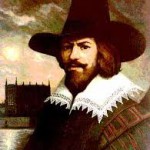
guy fawkes

Guy Fawkes is the name most associated with the 1605 Gunpowder Plot – the attempt by Guy Fawkes and others like Thomas Wintour, Everard Digby and Thomas Percy to blow up the king, James I, and members of Parliament. Guy Fawkes was literally caught on the spot and a ‘guy’ is still burned on bonfires – lit to celebrate the ‘miraculous’ survival of James I.

Guy Fawkes was born on April 13th, 1570 at Stonegate in Yorkshire. Fawkes was the only son of Edward Fawkes and his wife Edith. He went to the Free School of St. Peter’s and among the other pupils there were Christopher and John Wright. Fawkes was tutored by John Pulleyn who some at the time believed to be a Catholic.

As with so many ordinary people living at this time, the early years of Fawkes are clouded with mystery. If he had not found fame or infamy in 1605, few would have been bothered. There are some secondary sources that state that Fawkes married a Maria Pulleyn in 1590 – but the information for this did not come from parish records so such claims are open to dispute. It is also thought that Fawkes found employment as a footman – his employer was Anthony Browne, 2nd Lord Monteagle.

It is thought that Guy Fawkes left England in 1593 or 1594 for Flanders. Here he joined the Spanish Army, which at the time was under the command of the Archduke Albert of Austria who later became governor of the Netherlands. Fawkes clearly impressed senior officers in the Spanish Army. In 1596, the Spanish took Calais and Fawkes held a position of command during this campaign. Fawkes was described as a man of “excellent good natural parts, very resolute and universally learned.” Other references refer to Fawkes’ “virtue” and “nobility”. Others noted his religious devotion and his punctual attendance at religious ceremonies.

 By around 1600, Fawkes was using Guido as a Christian name instead of Guy. In 1603, Fawkes left Archduke Albert’s forces and was granted permission to go to Spain. Here he wanted to enlighten Philip III as to the true standing of Catholics in England. While on this visit he met up again with Christopher Wright. It is believed that the two spent time devising a plan for a Spanish invasion of England on the death of Elizabeth I. However, any chance of Spanish support for such a venture was minimal as the Spanish were still very much affected by the disaster of the 1588 Spanish Armada – a calamitous defeat that had left deep scars in Spanish society.

From Spain, Fawkes went to Brussels. Here he met Thomas Wintour (Winter). In his signed confession after his arrest, though it was signed under the duress of torture, Fawkes claimed that it was in Brussels that Wintour told him of his intention to kill James I. By May 1604, Fawkes had met up with Thomas Wintour, Christopher Wright, Robert Catesby, John Wright and Thomas Percy. They are said to have taken an oath at the Duck and Drake inn in the Strand in London that was to lead to the Gunpowder Plot. The Jesuit priest, John Gerard, sanctified the oath in another room at the inn.

Now Fawkes became ‘John Johnson’ who was the servant to Thomas Percy. Probably in March 1605, the conspirators hired a cellar beneath Parliament. The cellar, on the advice of Fawkes, was filled with barrels of gunpowder that were hidden beneath iron bars and faggots. Fawkes returned to Flanders possibly to let the relevant parties know how far advanced was the plan. In August 1605, Fawkes returned to London and he went to the cellar to check on the gunpowder that had been stored there. 

The 18th October 1605 is a crucial date with regards to the conspiracy. The plotters met on this day. They discussed how Catholic peers might be spared from the planned explosion. This led to the famed ‘Monteagle Letter’ written in October 26th to William Parker, the 4th Baron Monteagle. A number of the conspirators were concerned when the contents of letter became known. However, they believed that the letter was so vague that they could continue with their plans.

 On October 30th 1605, Fawkes once again inspected the gunpowder stored in the cellar. On November 3rd, the conspirators met in London – though not Fawkes – to make plans for what should happen after the explosion. All of them made plans for a speedy exit from London. Fawkes was due to flee to Flanders after the explosion having set a slow fuse.

On November 4th, the cellars of Parliament were searched. The Lord Chamberlain, Thomas Howard, Earl of Suffolk led the search party.  They found Fawkes and decided that he was a “bad fellow” and reported their findings to James I. The cellar was searched again. Between both searches, Fawkes had left the cellar to seek out Percy to warn him about what had occurred. Fawkes then returned to the cellar. It was during the second search that Fawkes was found again in the cellar. Fawkes was arrested. On him, the arresting party found slow matches and touchwood.

 Early on November 5th, 1605, Fawkes was questioned. One of his questioners was James I. Fawkes claimed that he was ‘John Johnson’ but he made clear his real intention when he said that he wanted to blow a Scotsman back to Scotland.

On November 6th, James I gave permission for the torture of Fawkes to progress from the “gentler tortures” to the “worst”. James wrote “et sic per gradus ad ima tenditur”. He told the torturers “God speede youre worke.”

 Fawkes broke his silence on November 7th. He confessed that he was Guy Fawkes and that five men were involved in the plot. On November 8th, he gave an account of how the conspiracy was to progress and on November 9th, he named the other conspirators. No evidence exists as to what tortures were used on Fawkes but it is generally accepted that the torture that most broke him was the feared rack.

 The trial of the conspirators started on January 27th 1606. There was never any doubt that those arrested were guilty. On Friday 31st 1606, Fawkes was taken to the Old Palace Yard in Westminster – he had been sentenced to be hung, drawn and quartered. He was meant to be the last of the conspirators to be executed. It is generally accepted that Fawkes escaped the butchery of this by breaking his neck during the hanging process. While the process of drawing and quartering was carried out, Fawkes was dead. He was to go into history as the man who tried to bring down a monarchy. Every November 5th, people in England are asked to “remember, remember, the 5th of November, gunpowder, treason and plot.” Effigies of Guy Fawkes are burned throughout the land, and in Lewes, East Sussex, an effigy of the pope is traditionally burned to further remind people of the Catholic aspect to the plot.

V for Vendetta

Guy Fawkes, Guy Fawkes,
‘Twas his intent.
To blow up the King and the Parliament.
Three score barrels of powder below.
Poor old England to overthrow.

The Gunpowder Plot and the threat to the King’s life inspired William Shakespeare’s “Macbeth”.  It was the same legend that became the source of inspiration for the graphic novel “V for Vendetta”,written by Alan Moore and illustrated by David Lloyd, the graphic artist who penciled the iconic Guy Fawkes mask in the graphic novel. The story  is a modern tale about an anarchist, V, who hides his face behind the mask of Guy Fawkes, fighting against a dystopian UK Fascist State. Some called him a terrorist, others a freedom fighter. Where Guy Fawkes failed, V succeeds in destroying the Parliament building. Most importantly, his violent and theatrical political statements trnsformed his audience. At the end of the movie, it is not just the stone building that falls. The whole government apparatus is undermined as the people take on a mask and march in the streets of London in a single act of mass revolt.

TheGuy Fawkes mask was practically unknown outside the circle of comic book aficionados until V for Vendetta was turned into a movie in 2005.  James Mcteigue and the Wachowski brothers revamped the story to make it relevant to a post 9/11 context.


                                                                                     V-for-Vendetta-Poster-041-389x400

The history of the English language

Νοέ 20142

Watch this 10 minute video on how the English language came to be what it is today. You might find it funny but it is quite informative especially if you are somehow involved with English- a teacher or a student.

http://www.youtube.com/watch?v=H3r9bOkYW9s

If you don’t understand , you can read the tapescript. The History of English in Ten Minutes Scripts


από κάτω από: General | με ετικέτα  |  Δεν υπάρχουν σχόλια »    
« Παλιότερα άρθραΠιο πρόσφατα άρθρα »

Πρόσφατα σχόλια


    Αλλαγή μεγέθους γραμματοσειράς
    Αντίθεση
    Μετάβαση σε γραμμή εργαλείων