Παρακολουθήστε και συγκινηθείτε με την τελετή αποφοίτησης της Γ’ Γυμνασίου του Γυμνασίου Πάρου. Το 2013 μαζί με την Κα. Στέλλα Κούρτη, συνάδελφό μου αναλάβαμε να βοηθήσουμε στο στήσιμο της τελετής/γιορτής αποφοίτησης των παιδιών. Απολαύστε την!!
Idioms and expressions with the word “Time”
Οκτ 201416
Here are some expressions with the word “time”. The sentences next to them will help you understand their meanings.
- at one time = during a single period of time That is a lot for anyone to possess at one time.
- at times = every now and then She’s really rude at times.
- have a good time = have fun I’m sure I’ll have a good time at Mark’s party; he’s got lots of food and fantastic music!
- from time to time = sometimes, occasionally He made me promise to write to him from time to time.
- all the time = continuously It rained all the time when I was in London last week.
- behind the times = old-fashioned The law is behind the times on a number of important issues.
- just in time = at the right time He was just in time to see his brother’s plane land.
- ahead of one’s time = be more talented than other’s recognise , having ideas too modern or original for the period in which one is living Edison was ahead of his time: he invented the light bulb.
- at all times = always You should have control of your vehicle at all times.
- have the time of one’s life = have a fantastic experience I had the time of my life at Josh’s anniversary dinner; lots of wine and dance. I’ll never forget it!
- keep time =a. to work correctly ( clock) My watch doesn’t keep good time., b. keep the beat in music (opposite: out of time) Keep time to the drum.
- make time for something or someone = create a period of time especially for a thing or person He makes time for football, but not much else.
- out of time = have not any more time available He didn’t finish the test because he was out of time; so he failed.
- Time is Money = someone’s time is important We shouldn’t delay the deal because time is money.
- all in good time = within a reasonable amount of time Things happen all in good time; soon you will find your way.
- for the time being = for a limited period There was little I could do for the time being.
- once upon a time = at a time of the past Once upon a time there were three little pigs.
- in time = a. it will happen eventually No doubt in time the arguements will straighten themselves out., b. being not to late for something He returned to his hotel in time for a late supper.
- in no time = something happens almost immediately In no time at all the whole sky was lit up.
- on time = something is done at the correct time We all caught the train and we all got here on time.
- doing time = being in prison He is doing time for fraud.
- half the time = something often has this quality Half the time the computers were out of action.
- nine times out of ten = it happens on nearly every occasion Normally, nine out out of ten, we’re happy to accept these results.
- It is only a matter of time / it is only a question of time = it is unavoidable and will definetly happen It is only a matter of time before another crisis erupts.
Christmas Caroling at Paros JuniorHigh School
Οκτ 201415
C’ Class students are excited about singing traditional English and Greek Christmas carols.
Ms. Stella Kourtis was responsible for the Greek carols and I was for the English ones. Together we
organised the event on the day A’ Term report cards were handed out to parents, a few days before the
Christmas holidays. Enjoy!!
Halloween
Οκτ 201414
On October 31st, the eve of All Saints Day, we celebrate Halloween. 
The tradition of Halloween began way back in the fifth century BC by the Irish Celts, who
organized their year according to the agricultural calendar and marked the transition from one
year to the next on October 31st.
The story goes that during the transition spirits would return to earth, looking for living bodies
to possess for the following year. The Celts would then dress up in ghoulish costumes to parade around the
community to frighten them away.
Years later, the tradition of trick-or-treating is thought to have grown from a ninth century European custom, when
early Christians would make house calls begging for soul cakes. It was thought that even strangers could help a soul’s
passage to heaven by saying prayers, so, in exchange for a cake they promised to pray for the donor’s deceased
relatives. Where does the name Halloween come from? In the year 835AD the Roman Catholic Church made
November 1st a church holiday to honor all the saints. This day is called All Saint’s Day. It used to be also known as
Hallowmas or All Hallows. Gradually, over the years, October 31st became known as All Hallow Even ( evening ),
eventually All Hallow’s Eve, and then Halloween as we know it today. ( the word hallow means saint )

Revising Tenses for C Class Junior High School
Οκτ 201412
This is a review of the English tenses. The table is provided to help recall the form and use of the different English tenses studied in previous lessons.
| Simple Present | |
|---|---|
| Affirmative | She drinks. |
| Negative | She does not drink. |
| Interrogative | Does she drink? |
| Form | I, you we they play | he, she, it plays |
| Uses |
|
| Present Progressive | |
|---|---|
| Affirmative | He is reading. |
| Negative | He is not reading. |
| Interrogative | Is he reading? |
| Form | To be (in the simple present) + verb + ing |
| Uses |
|
| Simple Past | |
|---|---|
| Affirmative | I cried. |
| Negative | I did not cry |
| Interrogative | Did I cry? |
| Form | Regular verbs: Verb + ed | Irregular verbs: forms differ and should be learned by heart. This is a list of irregular verbs |
| Uses |
|
| Past Progressive | |
|---|---|
| Affirmative | He was driving. |
| Negative | He was not driving. |
| Interrogative | Was he driving? |
| Form | to be (in the simple past) + verb + ing |
| Uses |
|
| Present Perfect Simple | |
|---|---|
| Affirmative | They have slept. |
| Negative | They have not slept. |
| Interrogative | Have they slept? |
| Form | Have / has + past participle (past participle of regular verbs: verb + ed | Past participle of irregular verbs: forms differ and should be learned by heart. This is a list of irregular verbs) |
| Uses |
|
| Present Perfect Progressive | |
|---|---|
| Affirmative | He has been thinking. |
| Negative | He has not been thinking. |
| Interrogative | Has he been thinking? |
| Form | have or has + been + verb + ing |
| Uses |
|
| Past Perfect Simple | |
|---|---|
| Affirmative | She had won. |
| Negative | She had not won. |
| Interrogative | Had she won? |
| Form | had + past participle (past participle of regular verbs: verb + ed | Past participle of irregular verbs: forms differ and should be learned by heart. This is a list of irregular verbs) |
| Uses |
|
| Affirmative | He had been waiting. |
|---|---|
| Negative | He had not been waiting. |
| Interrogative | Had he been waiting? |
| Form | had + been + verb + ing |
| Uses |
|
| Future Simple | |
|---|---|
| Affirmative | You will win. |
| Negative | You will not win. |
| Interrogative | Will you win? |
| Form | will + verb |
| Uses |
|
| Near Future (going to) | |
|---|---|
| Affirmative | He is going to watch TV. |
| Negative | He is not going to watch TV. |
| Interrogative | Is he going to watch TV? |
| Form | to be (in the simple present) + going + to + verb |
| Uses |
|
| Future Progressive | |
|---|---|
| Affirmative | She will be listening to music. |
| Negative | She will not be listening to music. |
| Interrogative | Will she be listening to music? |
| Form | will + be + verb + ing |
| Uses |
|
| Future Perfect | |
|---|---|
| Affirmative | He will have spoken. |
| Negative | He will not have spoken. |
| Interrogative | Will he have spoken? |
| Form | will + have + past participle (past participle of regular verbs: verb + ed | Past participle of irregular verbs: forms differ and should be learned by heart. This is a list of irregular verbs) |
| Uses |
|
| Future Perfect Progressive | |
|---|---|
| Affirmative | You will have been studying. |
| Negative | You will not have been studying. |
| Interrogative | Will you have been studying? |
| Form | will + have + been + verb + ing |
| Uses |
|
| Conditional Simple | |
|---|---|
| Affirmative | We would relax. |
| Negative | We would not relax. |
| Interrogative | Would we relax ? |
| Form | would + verb |
| Uses |
|
| Conditional Progressive | |
|---|---|
| Affirmative | He would be writing. |
| Negative | He would not be writing. |
| Interrogative | Would he be writing? |
| Form | would + be + verb + ing |
| Uses |
|
| Conditional Perfect | |
|---|---|
| Affirmative | He would have written. |
| Negative | He would not have written. |
| Interrogative | Would he have written? |
| Form | would + have + past participle (past participle of regular verbs: verb + ed | Past participle of irregular verbs: forms differ and should be learned by heart This is a list of irregular verbs) |
| Uses |
|
| Conditional Perfect Progressive | |
|---|---|
| Affirmative | She would have been sleeping. |
| Negative | She would not have sleeping speaking. |
| Interrogative | Would she have been sleeping? |
| Form | would + have + been + verb + ing |
| Uses |
|
Thanksgiving Day in Canada
Οκτ 201412
Thanksgiving Day in Canada
Quick Facts
Thanksgiving Day is a holiday to give thanks for the blessings in one’s life, particularly the harvest. It is a day off work for many Canadians.
Local names
| Name | Language |
|---|---|
| Thanksgiving Day | English |
| le Jour d’Action de grâce | French |
| Thanksgiving Day | German |
Thanksgiving Day 2014
Monday, October 13, 2014
Thanksgiving Day 2015
Monday, October 12, 2015
Thanksgiving Day in Canada has been a holiday on the second Monday of October since 1957. It is a chance for people to give thanks for a good harvest and other fortunes in the past year.
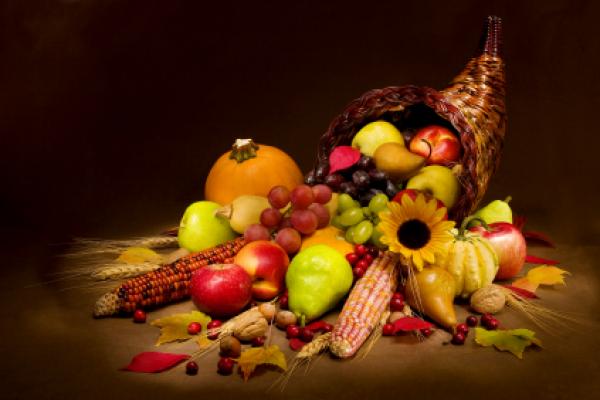
Thanksgiving Day in Canada is linked to the European tradition of harvest festivals.
What do people do?
Many people have a day off work on the second Monday of October. They often use the three-day Thanksgiving weekend to visit family or friends who live far away, or to receive them in their own homes. Many people also prepare a special meal to eat at some point during the long weekend. Traditionally, this included roast turkey and seasonal produce, such as pumpkin, corn ears and pecan nuts. Now, the meal may consist of other foods, particularly if the family is of non-European descent.
The Thanksgiving weekend is also a popular time to take a short autumn vacation. This may be the last chance in a while for some people to use cottages or holiday homes before winter sets in. Other popular activities include: outdoor breaks to admire the spectacular colors of the Canadian autumn; hiking; and fishing. Fans of the teams in the Canadian Football League may spend part of the weekend watching the Thanksgiving Day Classic matches.
Public life
Thanksgiving Day is national public holiday in Canada. Many people have the day off work and all schools and post offices are closed. Many stores and other businesses and organizations are also closed. Public transport services may run to a reduced timetable or may not run at all.
Background
The native peoples of the Americas held ceremonies and festivals to celebrate the completion and bounty of the harvest long before European explorers and settlers arrived in what is now Canada. Early European thanksgivings were held to give thanks for some special fortune. An early example is the ceremony the explorer Martin Frobisher held in 1578 after he had survived the long journey in his quest to find a northern passage from Europe to Asia.
Many thanksgivings were held following noteworthy events during the 18th century. Refugees fleeing the civil war in the United States brought the custom of an annual thanksgiving festival to Canada. From 1879, Thanksgiving Day was held every year but the date varied and there was a special theme each year. The theme was the “Blessings of an abundant harvest” for many years. However, Queen Victoria’s golden and diamond jubilees and King Edward VII’s coronation formed the theme in later years.
From the end of the First World War until 1930, both Armistice Day and Thanksgiving Day were celebrated on the Monday closest to November 11, the anniversary of the official end of hostilities in World War I. In 1931, Armistice Day was renamed Remembrance Day and Thanksgiving Day was moved to a Monday in October. Since 1957, Thanksgiving Day has always been held on the second Monday in October.
Symbols
Thanksgiving Day in Canada is linked to the European tradition of harvest festivals. A common image seen at this time of year is a cornucopia, or horn, filled with seasonal fruit and vegetables. The cornucopia, which means “Horn of Plenty” in Latin, was a symbol of bounty and plenty in ancient Greece. Turkeys, pumpkins, ears of corn and large displays of food are also used to symbolize Thanksgiving Day.
Mother’s Day
Μάι 201411
Thank You Mom
I know how often I took you for granted
when I was growing up.
I always assumed you’d be there
when I needed you…
and you always were.
But I never really thought about what that meant
till I got older and began to realize
how often your time and energy were devoted to me.
so now, for all the times I didn’t say it before,
thank you, Mom…I love you so very much!
Mother’s Day is a celebration honoring mothers and motherhood, maternal bonds, and the influence of mothers in society. It is celebrated on various days in many parts of the world, most commonly in spring. (e.g., April–May in the northern hemisphere, October in Argentina, but northern hemisphere spring, May, in Australia).
The celebration of Mother’s Day began in the United States in the early 20th century; it is not related to the many celebrations of mothers and motherhood that have occurred throughout the world over thousands of years, such as the Greek cult to Cybele, the Roman festival of Hilaria, or the Christian Mothering Sunday celebration (originally a celebration of the mother church, not motherhood). Despite this, in some countries Mother’s Day has become synonymous with these older traditions.
The modern American holiday of Mother’s Day was first celebrated in 1908, when Anna Jarvis held a memorial for her mother in Grafton, West Virginia. Her campaign to make “Mother’s Day” a recognized holiday in the United States began in 1905, the year her beloved mother, Ann Reeves Jarvis, died. Anna’s mission was to honor her own mother by continuing work she had started and to set aside a day to honor mothers, “the person who has done more for you than anyone in the world.” Anna’s mother, Ann Jarvis, was a peace activist who had cared for wounded soldiers on both sides of the Civil War and created Mother’s Day Work Clubs to address public health issues.
Due to the campaign efforts of Anna Jarvis, several states officially recognized Mother’s Day, the first in 1910 being West Virginia, Jarvis’ home state. In 1914 Woodrow Wilson signed the proclamation creating Mother’s Day, the second Sunday in May, as a national holiday to honor mothers. In a thank-you note to Wilson, Jarvis wrote of a “great Home Day of our country for sons and daughters to honor their mothers and fathers and homes in a way that will perpetuate family ties and give emphasis to true home life.”

 <a href="http://www.wordle.net/show/wrdl/8380322/Mother%27s_Day"
          title="Wordle: Mother's Day"><img
          src="http://www.wordle.net/thumb/wrdl/8380322/Mother%27s_Day"
          alt="Wordle: Mother's Day"
          style="padding:4px;border:1px solid #ddd"></a>
What are your learning goals for this year?
Απρ 201427

Great words!
Απρ 201427

They were teachers once upon a time…
Μαρ 201412
These people were teachers before becoming well-known or even famous. It’s hard to imagine it but it’s true. Take a look at the list and be surprised!
1. Gene Simmons
The tongue-flicking bassist of Kiss taught sixth grade in Harlem before he became the world’s most famous bass-playing demon. Simmons later revealed in interviews that his superiors canned him for replacing the works of Shakespeare with Spiderman comics, which he thought the students were more likely to actually read.
2. Alexander Graham Bell
The telephone pioneer got his start teaching Visible Speech at the BostonSchool for Deaf Mutes. He developed a bond with a student named Mabel Hubbard, and when she was 19 the two married.
3. Sting
Before he became a star with The Police, Sting taught English, music, and soccer at St. Catherine’s ConventSchool. Sting later said of working at a convent school, “I was the only man on the faculty. In fact, I was the only teacher not in a habit.”
4. Robert Frost
Robert Frost worked as a teacher to supplement the income from his fledgling literary career. He worked as both a farmer and teacher at the PinkertonAcademy in Derry, New Hampshire. His students called him “the Hen Man” because the poet was afraid of chickens, and Frost allegedly had trouble remembering to milk the school’s cows on time.
5. Lyndon Johnson
The man who would later become the 36th president got his start as a principal at the Mexican-AmericanWelhausenSchool in Cotulla, Texas. He later finished his teaching degree and landed gigs teaching public speaking at PearsallHigh School in Pearsall, Texas and Sam Houston High in Houston. The debate team he coached at Sam Houston lost the Texas state championship by a single point; Johnson supposedly had to vomit backstage before he could bring himself to congratulate the winners.
6. Art Garfunkel
We can’t speak for Paul Simon, but at least half of Simon and Garfunkel was really, really good at math. Garfunkel nearly earned a doctorate in the subject and was teaching math at the LitchfieldPreparatory School in Connecticut when “Bridge Over Troubled Water” soared to the top of the charts.
7. John Adams
The second President of the United States spent a few years working as a schoolteacher in Worcester, Massachusetts. Teaching didn’t suit Adams, who thought his students were nothing more than a “large number of little runtlings, just capable of lisping A, B, C, and troubling the master.” He eventually gave up the job to go to law school.
8. J.K. Rowling
The Harry Potter author worked as an English teacher in Portugal as she plotted out the early adventures of her young wizards.
9. Mr. T
It was hard for Chicago students to be fools when it came to gym class in the mid-1970s. You’d pay attention if Mr. T told you to do jumping jacks, wouldn’t you?
10. Sylvester Stallone
Did you know you were seeing a matchup of tough-guy teachers when you watched Rocky III? When Sly was attending the AmericanCollege in Switzerland during the 1960s, he worked as a gym teacher to earn extra spending money.
11. Andy Griffith
Before he was a sheriff, before he was Matlock, Andy Griffith was a teacher. After graduating from the University of North Carolina, Griffith taught English at GoldsboroHigh School.
12. Billy Crystal
The comedian worked as a junior high substitute teacher on Long Island while he waited for his career to take off. Among the classes he subbed for: girls’ gym, which must have been a great source of material.
13. Kris Kristofferson
The country star was a Rhodes Scholar who studied literature at Oxford before joining the Army and rising to the rank of captain. Toward the end of his tour of duty, Kristofferson took a job as an English teacher at West Point, but he decided against the professorship at the last minute. Instead of heading to New York, he resigned his commission and moved to Nashville in 1965.
14. Stephen King
Although he initially had to work in an industrial laundry after his college graduation, the horror master eventually found a teaching job that paid a cool $6,400 a year at the Hampden Academy in Hampden, Maine. King wrote Salem‘s Lot while living in a trailer and working this job during the day.
15. Sir William Golding
The author’s experiences as a teacher helped inform the novel that made his career. He once allowed a class of boys to debate with complete freedom, and the classroom quickly devolved into such disorder that it inspired Golding to write Lord of the Flies.
Πρόσφατα σχόλια