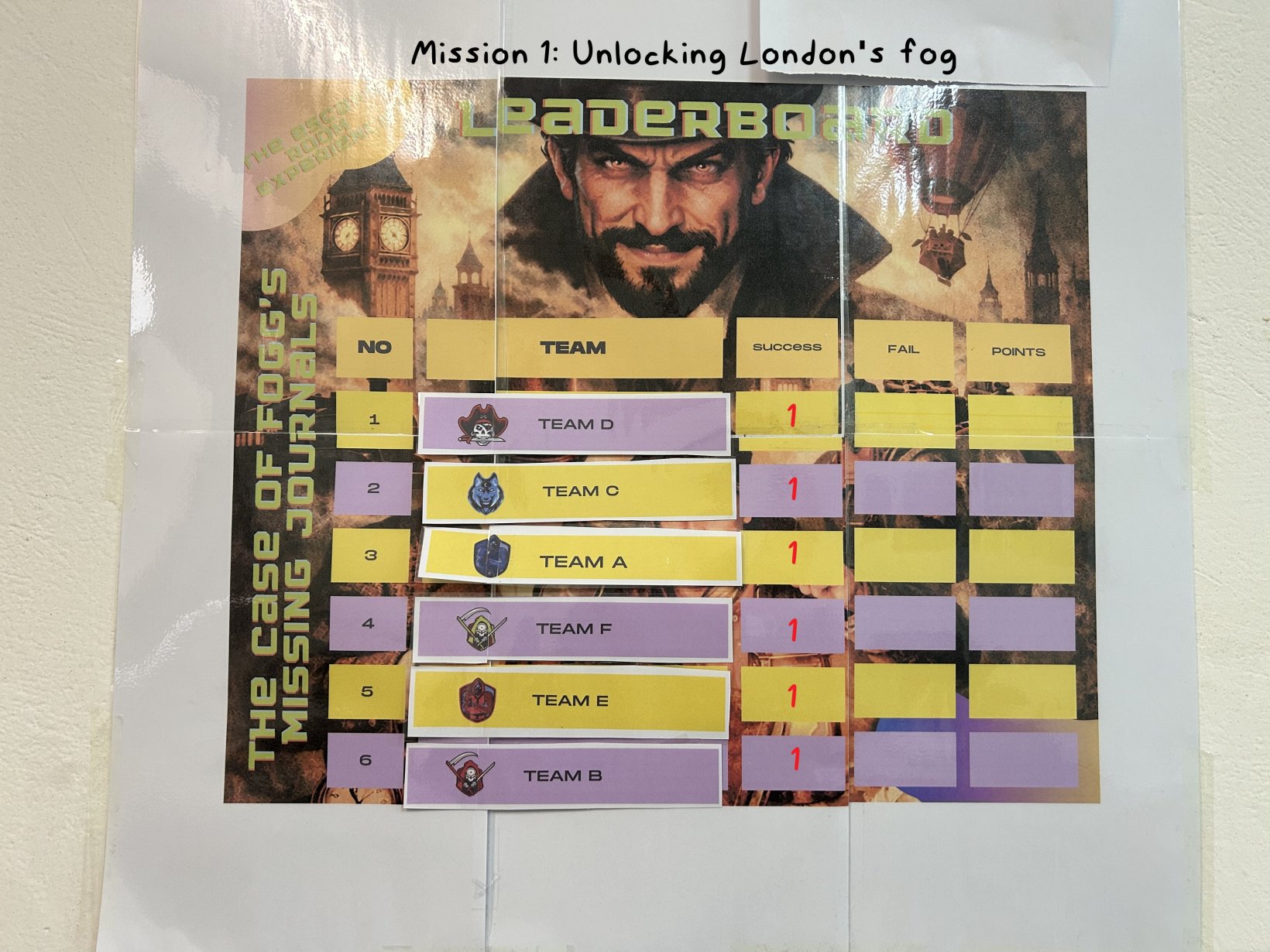
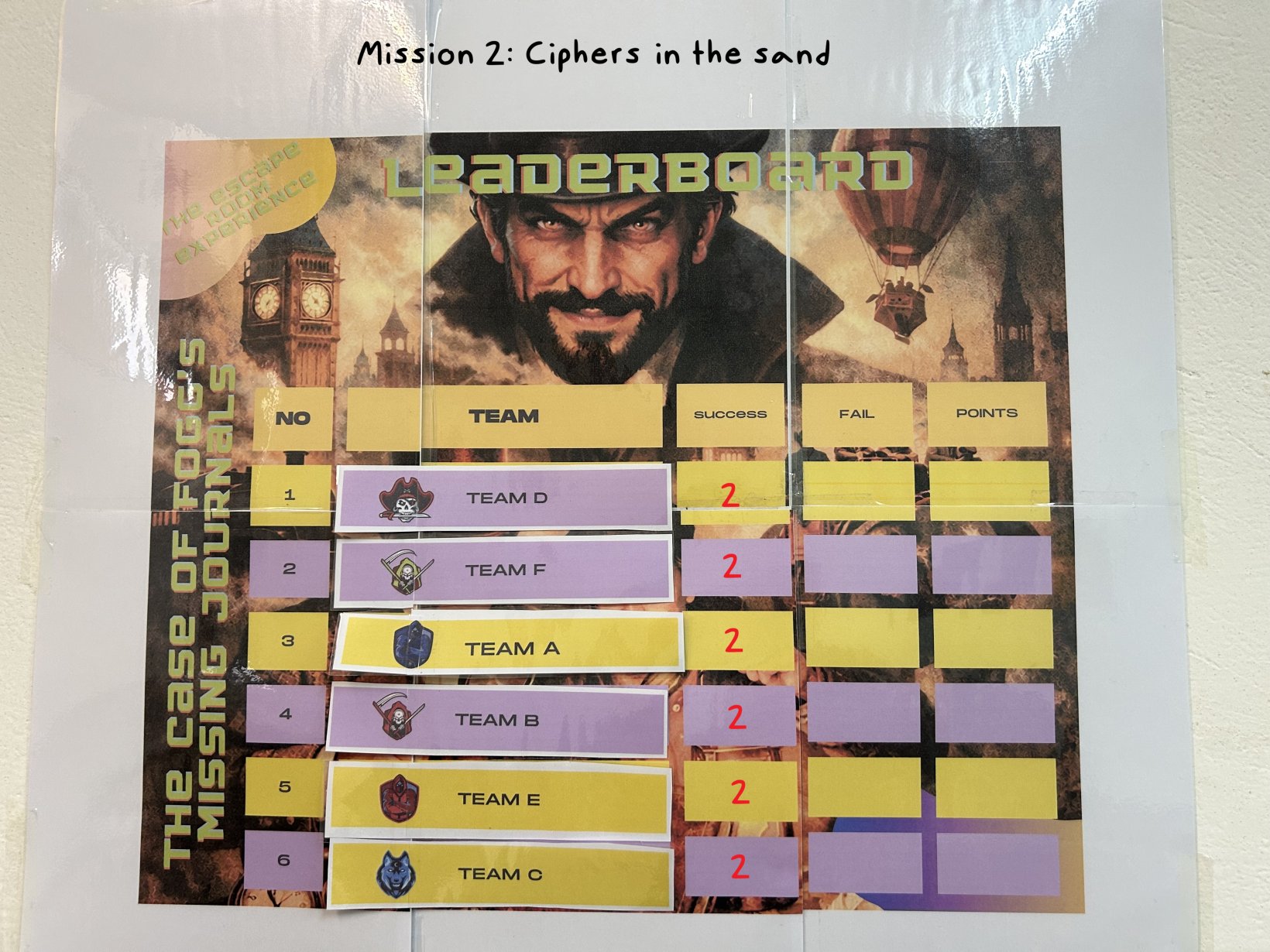
The winner of the game is the team with the most successful missions and the most points collected in missions 3 and 7. For missions 3 and 7, there is an extra bonus of 1600 points for the team that completes the mission 1st, 1000 points for the second, 800 points for the 3rd, 400 points for the 4th, 200 points for the 5th and 100 for the 6th…
Good Luck!
Outro Presentation: The case of Fogg’s missing journals_CASE SOLVED
Time is not merely counted—it is felt, shaped, and remembered. Within the solemn halls of the British Museum, time becomes almost visible, resting gently upon artifacts that refuse to fade.
Consider the eternal stillness of the Giza Pyramids. They do not race against time; they endure it. In contrast, the Suez Canal and the coming of trains during the Industrial Revolution reveal humanity’s restless desire to master time—to shorten distances and to move faster. Yet, in this pursuit, a question quietly arises: does saving time always mean valuing it?
The Taj Mahal offers a different answer. It teaches that time finds its highest meaning not in speed, but in devotion. Built to preserve love beyond death, it reminds us that what is truly precious is not how long something lasts, but how deeply it is felt. Likewise, the Silk Road did more than connect lands—it accelerated the exchange of ideas, cultures, and wisdom, proving that time gains value when it is shared.
The rhythm of time is also written in nature and tradition. The Chinese calendar and the phases of the moon teach harmony with cycles, urging patience and balance.
In the fleeting blossoms of Hanami, we are gently reminded that beauty exists precisely because it does not last. From the disciplined lives of the Samurai, we learn that every moment demands intention—that time, when honored, becomes a path to mastery.
Yet history also bears witness to sorrow: the Trail of Tears stands as a painful reminder that time can carry injustice, but also memory, resilience, and the enduring spirit of a people.
And there, at Greenwich, where the Prime Meridian divides the world, humanity has tried to measure time, to order it, to make it universal. But even as clocks align, our experience of time remains deeply personal.
Thus, TIME teaches us its final, quiet lesson: it is not ours to control, only to choose within. As Gandalf reminds us, “All we have to decide is what to do with the time that is given to us.” Let us then choose wisely—not to fill our hours endlessly, but to deepen them; not merely to pass time, but to transform it into moments of meaning, presence, and true quality.
When was the last time you read an article to the end? How many times have you shared links without opening them? Have you argued with trolls in the comments?
How immune are you to information disorders? To find out, we offer you a chance to play games and view posters at the Fakeless exhibition. It is designed for younger and older audiences, enabling everyone to enhance their media literacy skills.
On this website, you will find 15 artifacts divided into four blocks. Each block represents a dose of vaccine against disinformation. You can choose from one of nine languages and spend time playing and learning!
Learning about various techniques, tricks, and disinformation strategies will help you prepare to face them in the real world!
Writing a great story is about more than just a good plot; it is about using the right grammatical tools to bring your memories to life. Today, I will show you how to use narrative tenses, vivid descriptions, and discourse markers using a story from June 1937.
1. Master Your Narrative Tenses
To create flow, you must use three main tenses:
Past Continuous: Use this for background actions that were in progress.
Example: “The sun was shining and I was walking home from church.”
Simple Past: Use this for the main actions or the next events in the story.
Example: “I saw a girl and I introduced myself.”
Past Perfect: Use this for actions that happened before the main story started.
Example: “She told me she had seen me in town before.”
2. Use Adjectives and Adverbs
Don’t just say “it was a hot day.” Use adjectives to describe nouns and adverbs to describe actions. This makes the scene “pop.”
Adjectives: “It was the hottest day in decades. She was the most beautiful girl.”
Adverbs: “She shyly looked down. We talked happily all morning.”
3. Bring Characters to Life with Direct Speech
Use reporting verbs (said, replied, whispered) and correct punctuation to show exactly what was said.
“My name is Jenny,” she replied softly.
4. Organize with Discourse Markers
To help your reader follow the timeline, use markers to show the sequence of events.
First, I saw her reading a book.
Then, our eyes met and she smiled.
After that, I decided to go and talk to her.
A.
It was June, 1937. The hottest day in decades. I was walking home from church when I saw the most beautiful girl in the world. She was sitting on a bench in the park and she was reading some book. Suddenly, she looked up and our eyes met. She smiled at me and then shyly looked back down into her book. I decided to go and talk to her. I just had to meet her. I walked up to her and introduced myself. Her name was Jenny. She told me that she had seen me before in town, but she was too shy to meet me. We were talking all morning and the time just flew by. That was the beginning of our story. I loved her until the day she died.
B.
It was June, 1937, one of the hottest, most sweltering days in decades. I was slowly walking home from the quiet old church, the sun beating mercilessly down on the dusty streets, when I suddenly saw the most breathtakingly beautiful girl I had ever seen. She was sitting gracefully on a worn wooden bench in the peaceful park, completely absorbed in a thick, well-loved book.
All at once, she gently lifted her eyes, and our gazes unexpectedly met. She smiled warmly at me, a soft, shy smile, and then quickly lowered her eyes back to the pages of her book. In that very moment, I felt an irresistible urge to approach her. I simply had to meet her.
With a racing heart, I nervously walked toward her and politely introduced myself. Her name was Jenny. In a quiet, hesitant voice, she told me that she had often noticed me around town, but she had always been far too shy to speak to me. We talked happily and endlessly all morning, and the hours passed incredibly fast, as if time itself had decided to rush by.
That unforgettable morning marked the true beginning of our beautiful story. I loved her deeply, faithfully, and unconditionally until the very day she peacefully passed away.
C
It was June, 1937—in fact, one of the hottest, most unbearably sweltering days in decades. That morning, I was slowly walking home from the quiet old church, the sun beating mercilessly down on the dusty streets, when suddenly I saw the most breathtakingly beautiful girl I had ever laid eyes on. She was sitting gracefully on a worn wooden bench in the peaceful park, completely absorbed in a thick, well-loved book.
At that moment, she gently lifted her eyes, and to my surprise, our gazes met. She smiled warmly at me and said softly, “Good morning,” before shyly lowering her eyes back to the pages of her book. Immediately, I felt an irresistible urge to approach her. “I have to meet her,” I thought to myself.
So, with a racing heart, I nervously walked toward her and politely said, “Hello, my name is Thomas.” She looked up again and replied in a quiet, hesitant voice, “I’m Jenny.” Then, after a brief pause, she added, “I’ve seen you around town before, but I was always too shy to talk to you.”
From that point on, we talked happily and endlessly all morning. We laughed, shared stories, and slowly forgot about the passing time. Before we knew it, the hours had flown by, as if time itself had decided to rush forward.
In the end, that unforgettable morning marked the true beginning of our beautiful story. I loved her deeply, faithfully, and unconditionally until, sadly, the very day she peacefully passed away.
Κατά την τελευταία διδακτική ώρα της Τρίτης 16 Δεκεμβρίου 2025, οι μαθητές του Στ1 του σχολείου μας, συμμετείχαν σε μία ξεχωριστή και εορταστική διασχολική τηλεδιάσκεψη με τους μαθητές της Στ’ τάξης του 4ου Δημοτικού Σχολείου Σπάρτης.
Η τηλεσυνάντηση υλοποιήθηκε στο πλαίσιο της διδασκαλίας της Αγγλικής Γλώσσας, έπειτα από πρόσκληση του εκπαιδευτικού Αγγλικής Γλώσσας και Υποδιευθυντή του 4ου Δ.Σ. Σπάρτης, κ. Γεώργιου Πασταρματζή, την οποία αποδεχθήκαμε με ιδιαίτερη χαρά. Στόχος της δράσης ήταν η αυθεντική επικοινωνία των μαθητών μας στα Αγγλικά, μέσα από ένα ευχάριστο, εορταστικό και δημιουργικό πλαίσιο.
Κατά τη διάρκεια της τηλεδιάσκεψης, μαθητές και εκπαιδευτικοί των δύο σχολείων συστήθηκαν στα Αγγλικά, αντάλλαξαν εορταστικές ευχές και στη συνέχεια παρουσίασαν αγγλόφωνα χριστουγεννιάτικα τραγούδια. Οι μαθητές του Στ1 ερμήνευσαν το παραδοσιακό βρετανικό τραγούδι “Twelve Days of Christmas”, ένα ιδιαίτερα γνωστό και αγαπημένο τραγούδι στον αγγλόφωνο κόσμο, το οποίο συνδέεται διαχρονικά με την εορταστική περίοδο. Από την πλευρά τους, οι μαθητές/τριες του 4ου Δ.Σ. Σπάρτης τραγούδησαν το “Last Christmas”, μία διαχρονική επιτυχία της δεκαετίας του ’80.
Η άψογη συνεργασία των δύο σχολικών μονάδων, η συστηματική προετοιμασία των εκπαιδευτικών και η ενθουσιώδης συμμετοχή των μαθητών συνέβαλαν σε ένα άρτιο παιδαγωγικό αποτέλεσμα, στο οποίο κυριάρχησαν η επικοινωνιακή χρήση της Αγγλικής Γλώσσας, η καλλιέργεια της προφορικής έκφρασης και η διαπολιτισμική δημιουργική προσέγγιση. Παρά τη γεωγραφική απόσταση, τα σχολεία μας ήρθαν πιο κοντά μέσα από τη γλώσσα, τη μουσική και το εορταστικό πνεύμα.
Η εποικοδομητική αυτή σύμπραξη ολοκληρώθηκε με την ανταλλαγή αναμνηστικών. Εκ μέρους του σχολείου μας, αποστείλαμε ηλεκτρονική κάρτα με ευχές και τον σύνδεσμο ενός εκπαιδευτικού ψηφιακού παιχνιδιού, που δημιούργησε η εκπαιδευτικός Αγγλικής Γλώσσας για δημιουργική αξιοποίηση στην τάξη, ενώ λάβαμε μία επιστολή που περιελάμβανε –μέσω QR codes– εορταστικές ψηφιακές δραστηριότητες σε δύο γλώσσες και ένα σύγχρονο πλάνο πολυμεσικών δράσεων για το εορταστικό δωδεκαήμερο.
Η δράση αυτή αποτέλεσε μια πολύτιμη εμπειρία για τους μαθητές μας, ενισχύοντας τη χαρά της μάθησης, τη συνεργασία και την ουσιαστική χρήση της ξένης γλώσσας σε αυθεντικά επικοινωνιακά πλαίσια.
As part of the “Active Citizenship” project, the 5th-grade students participated in the creation of a digital library of audio stories (podcasts) in both Greek and English. The stories were either written by the students themselves or inspired by books they have read.
A common theme across all stories is the acceptance of diversity and inclusion. The students read the stories aloud, highlighting the importance of accessibility to children’s books for all children.
Σήμερα, οι μαθητές του Ε2 πειραματίστηκαν με τη δημιουργία τραγουδιών με τη χρήση του εργαλείου Suno. Αφού άκουσαν διάφορες δημιουργίες, έδωσαν διάφορες εντολές (prompts) και έφτιαξαν τα δικά τους τραγούδια σε διάφορα είδη μουσικής. Δυο από αυτά, μπορείτε να ακούσετε παρακάτω.
Σήμερα πειραματιστήκαμε με τη δημιουργία εικόνων. Δώσαμε το παρακάτω prompt
A green bear wearing a black tutu skirt and an orange fish with purple glasses eating pizza by a pool
και φτιάξαμε τις ακόλουθες εικόνες:
Δεύτερο prompt:
A green lizard wearing an orange tutu skirt and a purple frog wearing a purple shirt and a pink tie playing chess at the top of a skyscraper. A black fly is watching them.
Χρησιμοποιούμε cookies για να σας προσφέρουμε την καλύτερη δυνατή εμπειρία στη σελίδα μας. Εάν συνεχίσετε να χρησιμοποιείτε τη σελίδα, θα υποθέσουμε πως είστε ικανοποιημένοι με αυτό.