INTRO presentation: The case of Fogg’s missing journals
Evidence File 
Mission 1: Unlocking London’s fog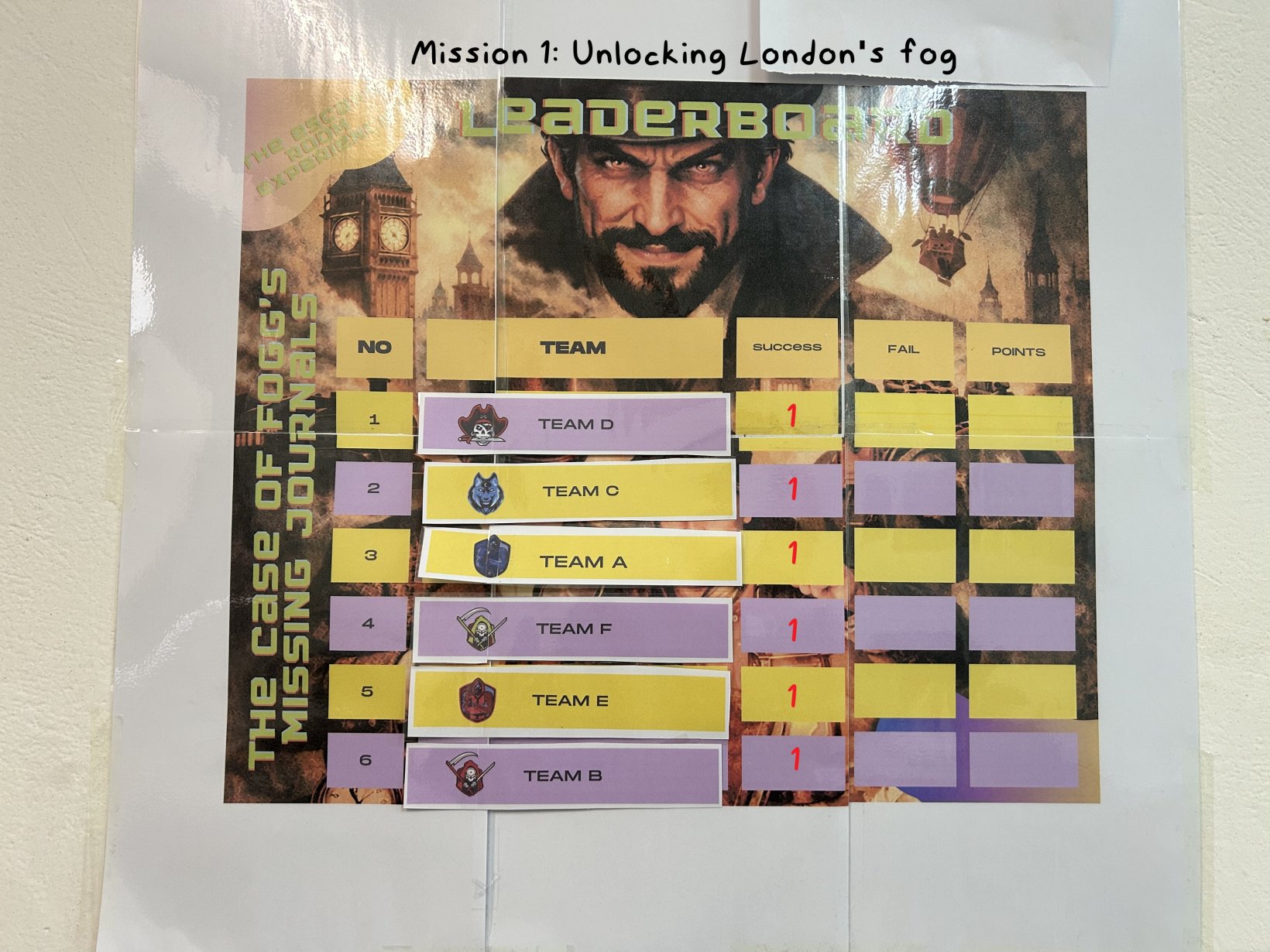
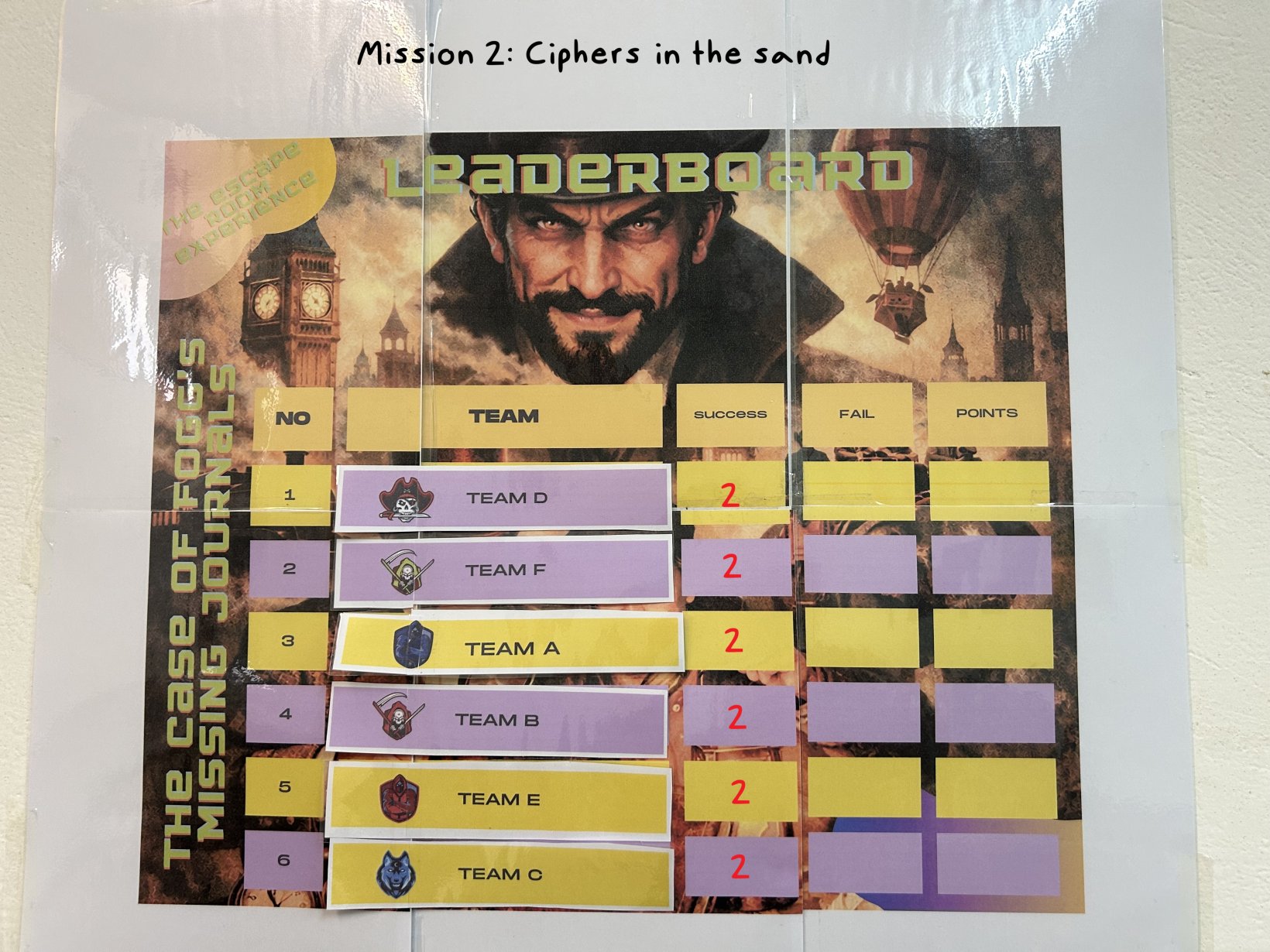
Mission 2: Ciphers in the sand
Mission 3: Tracks to eternal love

Mission 4: The silk dragon

Mission 5: Blossoms on the blade

Mission 6: The trail of tears

Mission 7: The secrets of time

The winner of the game is the team with the most successful missions and the most points collected in missions 3 and 7. For missions 3 and 7, there is an extra bonus of 1600 points for the team that completes the mission 1st, 1000 points for the second, 800 points for the 3rd, 400 points for the 4th, 200 points for the 5th and 100 for the 6th…
Good Luck!
Outro Presentation: The case of Fogg’s missing journals_CASE SOLVED
Time is not merely counted—it is felt, shaped, and remembered. Within the solemn halls of the British Museum, time becomes almost visible, resting gently upon artifacts that refuse to fade.
Consider the eternal stillness of the Giza Pyramids. They do not race against time; they endure it. In contrast, the Suez Canal and the coming of trains during the Industrial Revolution reveal humanity’s restless desire to master time—to shorten distances and to move faster. Yet, in this pursuit, a question quietly arises: does saving time always mean valuing it?
The Taj Mahal offers a different answer. It teaches that time finds its highest meaning not in speed, but in devotion. Built to preserve love beyond death, it reminds us that what is truly precious is not how long something lasts, but how deeply it is felt. Likewise, the Silk Road did more than connect lands—it accelerated the exchange of ideas, cultures, and wisdom, proving that time gains value when it is shared.
The rhythm of time is also written in nature and tradition. The Chinese calendar and the phases of the moon teach harmony with cycles, urging patience and balance.
In the fleeting blossoms of Hanami, we are gently reminded that beauty exists precisely because it does not last. From the disciplined lives of the Samurai, we learn that every moment demands intention—that time, when honored, becomes a path to mastery.
Yet history also bears witness to sorrow: the Trail of Tears stands as a painful reminder that time can carry injustice, but also memory, resilience, and the enduring spirit of a people.
And there, at Greenwich, where the Prime Meridian divides the world, humanity has tried to measure time, to order it, to make it universal. But even as clocks align, our experience of time remains deeply personal.
Thus, TIME teaches us its final, quiet lesson: it is not ours to control, only to choose within. As Gandalf reminds us, “All we have to decide is what to do with the time that is given to us.” Let us then choose wisely—not to fill our hours endlessly, but to deepen them; not merely to pass time, but to transform it into moments of meaning, presence, and true quality.