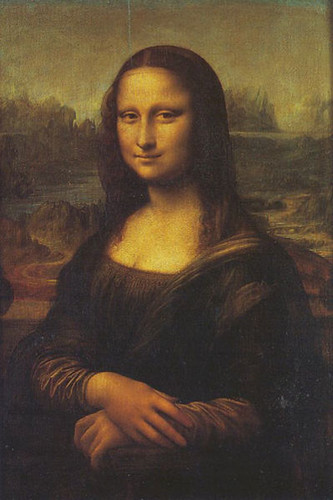
Leonardo da Vinci (1452–1519) was one of the most remarkable figures of the Italian Renaissance. He is best known as a painter, but his talents extended far beyond art. Leonardo was also an inventor, scientist, engineer, anatomist, and philosopher. His ability to combine creativity with scientific observation makes him a powerful symbol of human curiosity and intellectual freedom.
Leonardo was born in the town of Vinci, near Florence, Italy. Although he did not attend university, he received training as an apprentice in the workshop of Andrea del Verrocchio, a well-known artist of the time. There, he developed skills in painting, sculpture, mechanics, and design. His early exposure to different disciplines strongly influenced his later work.
As an artist, Leonardo aimed to represent the natural world as realistically as possible. His most famous paintings, Mona Lisa and The Last Supper, are admired for their emotional depth, balanced composition, and technical innovation. He introduced artistic techniques such as sfumato, which allowed him to create soft transitions between light and shadow, giving faces a lifelike quality.
However, Leonardo did not see art as separate from science. He believed that careful observation was the key to understanding the world. This belief led him to study human anatomy, plants, animals, water, and mechanics. His anatomical drawings, based on human dissections, were incredibly accurate and influenced medical science centuries later.
Leonardo recorded his ideas in detailed notebooks, many of which were written in mirror writing. In them, he designed flying machines, military devices, bridges, and early mechanical inventions. Although most of these designs were never built during his lifetime, they demonstrate his visionary thinking and deep understanding of scientific principles.
Leonardo spent the last years of his life in France, where he died in 1519. Today, he is remembered not only for his artistic masterpieces but also for his belief that knowledge has no boundaries. His life encourages us to remain curious, creative, and open to learning across different fields.