Κάτω από: Γενικά | Δεν επιτρέπεται σχολιασμός στο 7. Ο ΘΡΥΛΟΣ ΤΟΥ ΓΕΦΥΡΙΟΥ ΤΗΣ ΑΡΤΑΣ (2007-2008)
 ΤΟ ΓΕΦΥΡΙ ΤΗΣ ΑΡΤΑΣ
Η γέφυρα και ο θρύλος
Το γεφύρι της Άρτας είναι γέφυρα του ποταμού Άραχθου. Η γέφυρα αυτή, κατά το χρονογράφο της Ηπείρου, είναι κτίσμα των προ Χριστού Ρωμαϊκών χρόνων. Σύμφωνα όμως με μερικές παραδόσεις, κτίσθηκε όταν η Άρτα έγινε πρωτεύουσα πόλη στο Δεσποτάτο της Ηπείρου. Χρονολογίες οικοδόμησης 1602 ή 1606.
Ιστορία του θρύλου
Η ιστορική έρευνα διατυπώνει ότι ο θρύλος αυτός έκρυβε πολλά χρόνια μια ιστορική αλήθεια για την περιοχή της Άρτας και γενικότερα της Ηπείρου. Όταν χρειάστηκε να περάσει από την περιοχή μεγάλη δύναμη τουρκικού στρατού, οι Τούρκοι ζήτησαν από τους κατοίκους βοήθεια. Πολλοί μάστορες και τεχνίτες προστρέξανε για να βοηθήσουν. Όταν όμως έμαθαν το λόγο που έπρεπε να κατασκευαστεί, πήγαιναν τη νύχτα και γκρέμιζαν ό,τι την προηγούμενη μέρα οι ίδιοι είχαν φτιάξει.
Οι Τούρκοι ζήτησαν να μάθουν γιατί αργεί τόσο πολύ το έργο και εκείνοι απάντησαν ότι τελικά το μέρος είναι στοιχειωμένο. Ο Τούρκος διοικητής λοιπόν διέταξε τη σύλληψη του Πρωτομάστορα και της γυναίκας του και τη θανάτωσή τους. Τότε όλοι φοβήθηκαν και ολοκλήρωσαν το γεφύρι. Το τούρκικο ασκέρι συνόδευαν οι κατάρες των Ελλήνων. Μετά την απελευθέρωση της Ελλάδας από τον Τουρκικό ζυγό, οι κατάρες έγιναν ευχές για τον ελληνικό στρατό.
Κατά το δημοτικό τραγούδι που ανήκει στα άσματα του ακριτικού κύκλου, 1300 κτίστες, 60 μαθητές, 45 μάστοροι (μηχανικοί) υπό τον Αρχιμάστορα προσπαθούσαν να κτίσουν τη γέφυρα της οποίας τα θεμέλια κάθε πρωί ήταν καταστραμμένα. Μέχρι που πτηνό με ανθρώπινη φωνή γνωστοποίησε πως για να στεριώσει η γέφυρα απαιτείται η ανθρωποθυσία της συζύγου του Πρωτομάστορα. Το οποίο και έγινε με κατάρες που καταλήγουν σε ευχές.
Το δημοτικό ποίημα: Της Άρτας το Γιοφύρι
Σαράντα πέντε μάστοροι κι εξήντα μαθητάδες
γιοφύρι εθεμέλιωναν στης Άρτας το ποτάμι.
Ολημερίς το χτίζανε, το βράδυ εγκρεμιζόταν.
Μοιρολογιούν οι μάστοροι και κλαιν οι μαθητάδες:
“Αλοίμονο στούς κόπους μας, κρίμα στις δούλεψές μας,
ολημερίς να χτίζουμε το βράδυ να γκρεμιέται.”
Πουλάκι εδιάβη κι έκατσε αντίκρυ στό ποτάμι,
δεν εκελάηδε σαν πουλί, μηδέ σαν χελιδόνι,
παρά εκελάηδε κι έλεγε ανθρώπινη λαλίτσα:
“Αν δε στοιχειώσετε άνθρωπο, γιοφύρι δε στεριώνει,
και μη στοιχειώσετε ορφανό, μη ξένο, μη διαβάτη,
παρά του πρωτομάστορα την όμορφη γυναίκα,
που έρχεται αργά τ’ αποταχύ και πάρωρα το γιόμα.”
Τ’ άκουσ’ ο πρωτομάστορας και του θανάτου πέφτει.
Πιάνει, μηνάει της λυγερής με το πουλί τ’ αηδόνι:
Αργά ντυθεί, αργά αλλαχτεί, αργά να πάει το γιόμα,
αργά να πάει και να διαβεί της Άρτας το γιοφύρι.
Και το πουλι παράκουσε κι αλλιώς επήγε κι είπε:
“Γοργά ντύσου, γοργά άλλαξε, γοργά να πας το γιόμα,
γοργά να πας και να διαβείς της Άρτας το γιοφύρι.”
Να τηνε κι εμφανίστηκε από την άσπρη στράτα.
Την είδ’ ο πρωτομάστορας, ραγίζεται η καρδιά του.
Από μακριά τους χαιρετά κι από κοντά τους λέει:
“Γειά σας, χαρά σας, μάστοροι και σεις οι μαθητάδες,
μα τι έχει ο πρωτομάστορας και είναι βαργομισμένος;
“Το δαχτυλίδι του ‘πεσε στην πρώτη την καμάρα,
και ποιός να μπει, και ποιός να βγει, το δαχτυλίδι νά ‘βρει;”
“Μάστορα, μην πικραίνεσαι κι εγώ να πά σ’ το φέρω,
εγώ να μπω, εγώ να βγω, το δαχτυλίδι νά ‘βρω.”
Μηδέ καλά κατέβηκε, μηδέ στη μέση πήγε,
“Τράβα, καλέ μ’ τον άλυσο, τράβα την αλυσίδα
τι όλον κόσμο ανάγειρα και τίποτες δεν βρήκα.”
Ένας πηχάει με το μυστρί κι άλλος με τον ασβέστη,
παίρνει κι ο πρωτομάστορας και ρίχνει μέγα λίθο.
“Αλίμονο στη μοίρα μας, κρίμα στο ριζικό μας!
Τρεις αδελφάδες ήμαστε, κι οι τρεις κακογραμμένες,
η μια ‘χτισε το Δούναβη, κι η άλλη τον Αφράτη
κι εγώ η πιό στερνότερη της Άρτας το γιοφύρι.
Ως τρέμει το καρυόφυλλο, να τρέμει το γιοφύρι,
κι ως πέφτουν τα δεντρόφυλλα, να πέφτουν οι διαβάτες.”
“Κόρη, το λόγον άλλαξε κι άλλη κατάρα δώσε,
που ‘χεις μονάκριβο αδελφό, μη λάχει και περάσει.”
Κι αυτή το λόγον άλλαζε κι άλλη κατάρα δίνει:
“Αν τρέμουν τ’ άγρια βουνά, να τρέμει το γιοφύρι,
κι αν πέφτουν τ’ άγρια πουλιά, να πέφτουν οι διαβάτες,
γιατί έχω αδελφό στην ξενιτιά, μη λάχει και περάσει.
Κάτω από: Γενικά | Δεν επιτρέπεται σχολιασμός στο 7a. THE LEGEND OF THE BRIDGE OF ARTA (2007-2008)
THE LEGEND OF THE BRIDGE OF ARTA
The Bridge of Arta is a stone bridge that crosses the Arachthos river near the city of Arta in Epirus, Greece. The bridge became famous from the eponymous legendary folk ballad. According to α chronicler, the bridge was constructed during Ancient Roman times. However, according to some traditions it was built when Arta became capital of the Despotate of Epirus. Construction dates vary from 1602 to 1606.
The history of the legend
Historical research has shown that the legend itself was hiding a historical truth for the area of Arta and in general Epirus. During the Turkish occupation in Greece, some Turkish troops needed to pass by the area. So, the asked the hlp of the Greeks to build a bridge. However, when the Greek builders found out what the bridge would be used for, every night they demolished what they had built during the day.
When the Turks aksed why it was taking the Greeks so long to build the bridge, they answered that the place was haunted. Then the Turkish commander ordered his men to arrest the head builder and his wife and kill them. Everybody got scared and they worked very hard to build the bridge, cursing the Turks at the same time.
A folk balad has been written for the building of the bridge. According to the folk ballad, every day 1300 builders, 60 apprentices, 45 craftsmen or masons, under the leadership of the Head Builder, tried to build a bridge the foundations of which would collapse each morning. Finally, a bird with a human voice informed the Head Builder that in order the bridge to remain standing, he must sacrifice his wife. As the wife is being killed, being built in the foundations of the construction, she utters curses that conclude with blessings.
THE BALAD Forty-five master builders and sixty apprentices
Were laying the foundations for a bridge over the river of Arta
They would toil at it all day, and at night it would collapse again.
The master builders lament and the apprentices weep:
“Alas for our exertions, woe to our labours,
For us to toil all day while at night it collapses!”
A bird appeared and sat on the opposite side of the river.
It did not sing like a bird, nor like a swallow,
But it sang and spoke in a human voice:
“Unless you sacrifice a human, the bridge will never stand.
And don’t you sacrifice an orphan, or a stranger, or a passer-by,
But only the chief mason’s beautiful wife,
Who comes late in the afternoon and brings his supper.”
The chief mason hears it and falls down like dead.
He quickly sends to his wife, with the bird as his messenger:
“Let her dress slowly, change slowly, and bring the supper late,
Let her come late to cross the bridge of Arta!”
But the bird ignored it and gave her a different message:
“Hurry, dress quickly, change quickly, and bring the supper early,
Go quickly to cross the bridge of Arta!”
So she went and appeared at the end of the white lane.
The chief mason saw her and his heart broke.
From far she greeted them, and when she came near she spoke:
“Greetings, builders, and greetings to you, apprentices.
But what’s wrong with the chief mason that his looks are so dark?”
“He lost his wedding ring, it fell into the first chamber.
Who’ll go down there now and up again to find the ring for him?”
“Master, don’t worry, I’ll go myself to get it,
I’ll go down there and come up again and find the ring for you.”
She had hardly descended, hardly went down into it,
When she called: “Pull me up, dear, pull the chain,
I’ve looked everywhere but can’t find anything!”
One comes with the spade and one with the mortar,
And the chief mason himself goes and throws a big stone.
“Alas for our fate, woe to our destiny!
We were three sisters, and all three star-crossed.
One of us worked on the Danube, the other on the Euphrate,
And I, the youngest, on the river of Arta.
May the bridge ever shake, as carnations shake,
And may those who cross it ever fall down, as leaves fall from trees.”
“Girl, take that back, make it a different curse,
Because you have your only dear brother, lest he happen to pass by.”
And so she took it back and uttered a different curse:
“When the wild mountains shake, then may the bridge shake,
And when the wild birds fall from the sky, then may those who cross it fall.
For I have a brother abroad, lest he happen to pass by.”
Κάτω από: Γενικά | Δεν επιτρέπεται σχολιασμός στο 2. ΜΥΘΟΙ ΤΟΥ ΑΙΣΩΠΟΥ (2007-2008)
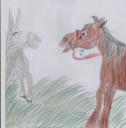 ΑΙΣΩΠΟΣ: Ο ΑΓΑΠΗΜΕΝΟΣ ΜΑΣ ΠΑΡΑΜΥΘΑΣ
Ο Αίσωπος καταγόταν από τη Φρυγία της Μικράς Ασίας. Έζησε στην Ελλάδα και ταξίδεψε στην Ανατολή και την Αίγυπτο, μελετώντας τα ήθη και τα έθιμα των ανθρώπων.
Γεννήθηκε από οικογένεια δούλων. Δούλος κι ο ίδιος πουλήθηκε σε σκλαβοπάζαρα σε τρεις αφέντες. Ένας από τους αφέντες τους ήταν φιλόσοφος από τη Σάμο και του χάρισε την ελευθερία του γιατί εξήγησε σωστά έναν οιωνό.
Η φήμη θέλει τον Αίσωπο πολύ άσχημο. Ήταν όμως πανέξυπνος και είχε μεγάλη και δημιουργική φαντασία. Από τα ταξίδια που έκανε απέκτησε σοφία και συμβούλευε τους ανθρώπους να ζουν αρμονικά και ευτυχισμένα. Τις συμβουλές αυτές τις έκανε μύθους όπου έβαζε συμβολικά τα ζώα να μιλούν αλλά και φυτά και ανθρώπους. Ήταν ευχάριστες ιστορίες με διδακτικό περιεχόμενο.
Σε ένα ταξίδι του στους Δελφούς κατηγορήθηκε από τους ιερείς του μαντείου για κλοπή. Δικάστηκε και καταδικάστηκε σε θάνατο. Οι ιερείς όμως, τιμωρήθηκαν από τους θεούς.
Οι Μύθοι του Αισώπου διαδόθηκαν από γενιά σε γενιά, από στόμα σε στόμα. Ακόμα και σήμερα διδάσκονται στα σχολεία και έχουν μεταφραστεί σε πολλές γλώσσες.
ΤΟ ΛΙΟΝΤΑΡΙ ΚΑΙ Ο ΓΑΙΔΑΡΟΣ
Μια φορά ζούσε στο δάσος ένα γέρικο λιοντάρι που δεν μπορούσε να κυνηγήσει γιατί κουραζόταν εύκολα. Μια μέρα λοιπόν, καθώς ήταν ξαπλωμένο κάτω από ένα δέντρο και η κοιλιά του γουργούριζε από την πείνα είδε ένα γάιδαρο να έρχεται προς το μέρος του γκαρίζοντας. Τότε, του ήρθε μια ιδέα. Είπε λοιπόν στο γάιδαρο:
- – Καλέ μου γάιδαρε δεν έχω ακούσει πιο δυνατή φωνή από τη δική σου. Αν θέλεις, ίσως μπορείς να με βοηθήσεις.
- – Τι μπορώ να κάνω για εσάς μεγάλε μου άρχοντα; ρώτησε ο γάιδαρος.
- – Θέλω όταν βλέπεις ζώο να γκαρίζεις δυνατά για να έρχονται σε εμένα και να τα τρώω.
- – Εντάξει, είπε ο γάιδαρος.
Έτσι και έγινε. Ο γάιδαρος γκάριζε, τα ζώα πήγαιναν προς το λιοντάρι και εκείνο τα έτρωγε. Βλέπετε, ήταν πολύ γέρικο για να κυνηγήσει την τροφή του. Ο γάιδαρος καμάρωνε με τα καμώματά του.
Μια μέρα όμως μια λεοπάρδαλη, που περνούσε από εκεί, πλησίασε το γάιδαρο και τον έφαγε. Έτσι λοιπόν, ο γάιδαρος είχε την ίδια τύχη με όλα τα άλλα ζώα του δάσους.
Ο ΣΚΥΛΟΣ ΚΑΙ Ο ΛΥΚΟΣ
Μια φορά κι ένα καιρό ζούσε στο δάσος ένας λύκος. Ήταν ελεύθερος αλλά πολύ δύσκολα έβρισκε τροφή.
Μια μέρα λοιπόν πήγε στον κάμπο μήπως και βρει κανένα μικρό ζώο για να το φάει. Εκεί λοιπόν, συνάντησε ένα σκύλο που έτρεχε στην αυλή του σπιτιού του. Ο σκύλος του είπε ότι το αφεντικό του, του έδινε άφθονο φαγητό και αυτός φύλαγε το σπίτι.
Όταν ο λύκος τον ρώτησε αν μπορούσε να έχει και αυτός λίγο φαγητό, ο σκύλος του απάντησε ότι το αφεντικό του θα χαιρόταν να έχει δυο φύλακες. Ξαφνικά, ο λύκος πρόσεξε το λουρί στο λαιμό του σκύλου. Εκείνος του είπε ότι τις περισσότερες ώρες της ημέρας το αφεντικό του τον είχε δεμένο με μια αλυσίδα.
Τότε, ο λύκος προτίμησε να είναι ελεύθερος στο δάσος και νηστικός, παρά χορτάτος και δεμένος με αλυσίδα.
Ο ΛΑΓΟΣ ΠΟΥ ΦΟΒΟΤΑΝ
Μια νύχτα το λιοντάρι, το βασιλιάς του δάσους, καθώς προχωρούσε σ’ ένα μονοπάτι, το χτύπησε κατά λάθος ένας τράγος με τα κέρατά του και το λιοντάρι έπεσε στο έδαφος.
Την επόμενη μέρα, το λιοντάρι διέταξε όλα τα ζώα που έχουν κέρατα να φύγουν από το δάσος. Άκουσε τα νέα λοιπόν και ένας φοβητσιάρης λαγός και, ενώ έπινε νερό στο ποτάμι, είδε τα μεγάλα αυτιά του μέσα στο νερό και τα πέρασε για κέρατα. Έτσι, φοβήθηκε και αποφάσισε να φύγει από το δάσος. Στο δρόμο, συνάντησε ένα ποντικό και τον ρώτησε που πηγαίνει. Ο λαγός του είπε ότι φεύγει από το δάσος γιατί έχει κέρατα. Όσο κι αν προσπάθησε ο ποντικός να τον μεταπείσει, δεν τα κατάφερε.
Ο φοβητσιάρης λαγός το έβαλε στα πόδια και έφυγε μακριά από το ήσυχο δάσος. Εκεί όμως που πήγε, υπήρχαν πολλές αλεπούδες και, ένα βράδυ, μια απ’ αυτές τον έφαγε.
Να τι παθαίνει κανείς όταν φοβάται πολύ.
ΤΟ ΠΟΥΛΙ ΚΑΙ ΤΟ ΣΚΟΥΛΗΚΙ
Κάποτε ένα πουλάκι βγήκε για κυνήγι στο δάσος και βρήκε ένα μικρό σκουληκάκι που έτρωγε φύλλα. Όταν το πλησίασε για να το φάει, το σκουληκάκι το παρακάλεσε να μην το κάνει. Συνέχισε να το παρακαλεί να το αφήσει να ζήσει για να χαρεί τον ήλιο και τον αέρα αλλά μάταια. Τελικά το πουλάκι έφαγε το σκουλήκι.
Λίγο αργότερα, το πουλάκι έπεσε στα δίχτυα ενός χωρικού. Το πουλάκι παρακαλούσε το χωρικό να μην το φάει αλλά εκείνος είπε ότι αν και ήταν πολύ μικρό, ήταν πολύ νόστιμος μεζές. Όσο και αν τον παρακάλεσε, ο χωρικός, δεν του έκανε τη χάρη.
Έτσι, το πουλάκι που δε λυπήθηκε το σκουληκάκι, είχε την ίδια τύχη. Το έφαγε ο χωρικός όπως και αυτό έφαγε το σκουληκάκι.
Η ΧΕΛΩΝΑ ΚΑΙ Ο ΒΑΤΡΑΧΟΣ
Μια φορά και ένα καιρό ήταν μια μικρή χελώνα. Μια μέρα είπε στη μητέρα της:
- – Μητέρα, εμείς οι χελώνες, είμαστε πολύ δυστυχισμένα ζώα.
- – Γιατί το λες αυτό κόρη μου; τη ρώτησε η μητέρα της.
- – Γιατί κουβαλάμε συνέχεια αυτό το βαρύ καύκαλο, σερνόμαστε στη γη και δεν μπορούμε να τρέξουμε ούτε να πηδήξουμε.
Η μικρή χελώνα παραπονέθηκε επίσης ότι δεν είχε πηδήσει ποτέ της όπως ο φίλος της ο βάτραχος.
- – Μη στενοχωριέσαι κόρη μου, της απάντησε η μητέρα της που γνώριζε πολλά από τη ζωή. Μια μέρα θα θυμηθείς τα λόγια μου.
Ένα μεσημέρι, η μικρή χελώνα πήγε να βρει το φίλο της το βάτραχο. Εκείνος, μόλις την είδε, άρχισε να πηδάει από τη χαρά του. Ξαφνικά ακούστηκε ένας δυνατός θόρυβος. Ήταν ένα άλογο που κάλπαζε προς το μέρος τους. Το ένα του πόδι έπεσε επάνω στη χελώνα. Μα το καύκαλό της ήταν σκληρό και σώθηκε. Δε συνέβη όμως το ίδιο με τον άτυχο βάτραχο. Το βαρύ πόδι του αλόγου τον έλιωσε.
Τρομαγμένη η χελώνα έτρεξε στη μητέρα της. Όταν της είπε τι είχε συμβεί εκείνη της απάντησε:
- – Θυμάσαι τα λόγια μου; Άλλη φορά να μην παραπονιέσαι που γεννήθηκες χελώνα.
Η ΑΛΕΠΟΥ ΚΑΙ Ο ΚΟΡΥΔΑΛΛΟΣ
Μια φορά κι ένα καιρό, ήταν μια πονηρή αλεπού που ήταν πολύ πεινασμένη. Μια μέρα, είδε ένα κορυδαλλό να κρύβεται στους θάμνους και ήθελε να τον φάει. Όταν την είδε ο κορυδαλλός, κατάλαβε ότι ήθελε να τον φάει και πέταξε ψηλά. Τότε, η αλεπού του δικαιολογήθηκε, ότι την παρεξήγησε και ότι σκόνταψε σε ένα κλαρί και έπεσε μπροστά στη φωλιά του.
Για να τον κάνει να έρθει κοντά της του είπε ότι άκουσε ένα σπουργίτη να τραγουδά καλύτερα από αυτόν. Ο κορυδαλλός δεν πίστεψε την αλεπού και όταν αυτή τον παρακάλεσε να κατέβει κάτω για να μιλήσουν, αυτός αρνήθηκε. Την προσκάλεσε όμως να ανέβει εκείνη ψηλά στο δέντρο.
Η αλεπού κατάλαβε ότι ο κορυδαλλός ήταν έξυπνος και δε θα κατάφερνε να τον φάει. Αναγκάστηκε λοιπόν να φύγει νηστική και ταπεινωμένη ενώ ο κορυδαλλός πετούσε από πάνω της και τραγουδούσε.
Ο ΓΑΙΔΑΡΟΣ ΤΟΥ ΦΤΩΧΟΥ
Μια φορά κι ένα καιρό, ήταν ένα άλογο που έσερνε την άμαξα ενός άρχοντα που ήταν γεμάτη με χρυσάφι. Δίπλα του, περπατούσε ένας γάιδαρος που κουβαλούσε τα ξύλα ενός χωρικού.
Τότε, το άλογο είπε στο γάιδαρο ότι θα έπρεπε να είναι πολύ δυστυχισμένος αλλά εκείνος του απάντησε ότι ήταν πολύ ευχαριστημένος με τη ζωή του γιατί δούλευε σκληρά και είχε όσο άχυρο επιθυμούσε. Το άλογο όμως επέμενε ότι ο γάιδαρος ήταν δυστυχισμένος.
Σε λίγο, ήρθαν μερικοί ληστές, χτύπησαν το άλογο και πήραν όλο το χρυσάφι. Το άλογο λυπήθηκε για ότι είχε συμβεί αλλά ο γάιδαρος γελούσε μαζί του. Έτσι, το άλογο στεκόταν εκεί δυστυχισμένο ενώ ο γάιδαρος πήγε στο σπιτάκι του ευχαριστημένος.
Ο ΛΥΚΟΣ ΚΑΙ Η ΚΑΤΣΙΚΑ
Κάποτε μια κατσίκα έφυγε από το κοπάδι της και βρέθηκε ανάμεσα σε μερικούς θάμνους. Ξαφνικά, ένας λύκος πετάχτηκε μέσα από τους θάμνους. Η κατσίκα φοβήθηκε πάρα πολύ. Νόμιζε ότι ο λύκος θα την έτρωγε. Εκείνος όμως της ζήτησε τη βοήθειά της γιατί τον κυνηγούσαν μερικοί χωρικοί. Της ζήτησε να πει στους χωρικούς ότι πήγε στην απέναντι πλαγιά και της υποσχέθηκε ότι αν τον βοηθούσε θα της έκανε ένα μεγάλο δώρο.
Έτσι και έγινε. Οι χωρικοί έφυγαν μακριά και ο λύκος σώθηκε από τις σφαίρες τους. Η κατσίκα τότε ζήτησε από το λύκο το δώρο που της είχε υποσχεθεί. Ο λύκος της είπε ότι ήταν πολύ κουτή και ότι της έκανε το μεγαλύτερο δώρο. Της χάρισε τη ζωή που είναι το σημαντικότερο δώρο που έχει ο άνθρωπος.
Τη χαιρέτησε και έφυγε για τη φωλιά του.
Η ΧΕΛΩΝΑ ΠΟΥ ΗΘΕΛΕ ΝΑ ΠΕΤΑΞΕΙ
Μια φορά κι ένα καιρό, στην αυλή ενός χωριατόσπιτου, ζούσε μια χελώνα που όνειρό της ήταν να πετάξει. Ζήλευε τις πάπιες γιατί πετούσαν όποτε ήθελαν και έβλεπαν τον κόσμο από ψηλά.
Μια μέρα λοιπόν, οι πάπιες άκουσαν το παράπονο της χελώνας και τη λυπήθηκαν. Της είπαν ότι θα μπορούσε να πετάξει μαζί τους. Οι δυο πάπιες έπιασαν με το στόμα τους ένα κομμάτι ξύλο και η χελώνα το κρατούσε από τη μέση.
Έτσι, πέταξαν και οι τρεις πολύ ψηλά. Τι όμορφα που ήταν ψηλά στον ουρανό! Επιτέλους πραγματοποίησε το μεγάλο της όνειρο! Πετούσε! Η χελώνα όμως μέθυσε τόσο πολύ από τη χαρά της που νόμισε ότι θα μπορούσε να πετάξει και μόνη της. Άφησε λοιπόν το ξύλο, έπεσε στη γη και σκοτώθηκε.
Αυτό το παραμύθι μας διδάσκει ότι πρέπει να είμαστε ευχαριστημένοι με τη μορφή που μας έδωσε ο θεός και να μη ζηλεύουμε τους γύρω μας.
ΤΟ ΠΑΘΗΜΑ ΤΟΥ ΛΥΚΟΥ
Μια φορά κι ένα καιρό, το λιοντάρι, ο βασιλιάς των ζώων, αρρώστησε βαριά και κάλεσε όλα τα ζώα για να του πουν τι φάρμακο να πάρει. Μαζί με τα άλλα ζώα πήγε στο λιοντάρι και ο λύκος. Εκείνος του είπε ότι μόνο η αλεπού ξέρει τo φάρμακο που πρέπει να πάρει αλλά αυτή δεν έτρεξε να τον βοηθήσει. Αμέσως λοιπόν, το λιοντάρι διέταξε να συλλάβουν την αλεπού και να της κόψουν τη γλώσσα. Ο λύκος έτριβε τα χέρια του από τη χαρά του.
Ένα πουλάκι, που είχε ακούσει τη συνομιλία, πήγε στην αλεπού και της είπε τα νέα. Τότε εκείνη έκοψε από το δάσος μερικά βότανα και τα πήγε στο λιοντάρι. Του είπε ότι άργησε γιατί έπρεπε να μαζέψει τα βότανα. Όταν το λιοντάρι τη ρώτησε αν αυτά θα του κάνουν καλό, η αλεπού του απάντησε ότι θα έπρεπε να τα βράσει με τη γλώσσα ενός λύκου και να πιει το φάρμακο.
Έτσι και έγινε. Το λιοντάρι διέταξε να κόψουν τη γλώσσα του λύκου, την έβρασε με τα βότανα και ήπιε το φάρμακο. Η πονηρή αλεπού τιμώρησε το λύκο για τη συκοφαντία του με αυτό τον τρόπο.
Ο ΠΟΝΗΡΟΣ ΓΑΙΔΑΡΟΣ
Μια φορά κι ένα καιρό ήταν ένας χωρικός που είχε ένα γάιδαρο για να σέρνει το αμάξι του. Κάθε μέρα ο χωρικός κουβαλούσε πράγματα με το αμάξι του από τη μια πολιτεία στην άλλη. Ανάμεσα στις δυο πολιτείες υπήρχε ένα ποτάμι. Μα το γεφύρι που τις ένωνε ήταν χτισμένο πολύ μακριά και ο γάιδαρος έκανε μεγάλο κύκλο για να περάσει απέναντι.
Μια μέρα λοιπόν, ενώ το αφεντικό του κοιμόταν στην άμαξα, ο γάιδαρος αποφάσισε να περάσει από το ποτάμι για να κόψει δρόμο. Εκείνη τη μέρα κουβαλούσε αλάτι στην άμαξα και μόλις μπήκε στο ποτάμι, το αλάτι διαλύθηκε και η άμαξα έγινε πολύ ελαφριά. Ο γάιδαρος χάρηκε πάρα πολύ.
Την επόμενη μέρα έκανε το ίδιο. Έλα όμως που κουβαλούσε σφουγγάρια και αυτά ρούφηξαν το νερό του ποταμού και έγιναν βαριά. Όταν ξύπνησε ο χωρικός, του έβαλε τις φωνές και τον ξυλοφόρτωσε.
Από εκείνη την ημέρα ο γάιδαρος πήγαινε υπομονετικά ως το γεφύρι και από εκεί περνούσε στην απέναντι όχθη. Το πάθημα του είχε γίνει μάθημα!
Ο ΠΙΘΗΚΟΣ ΠΟΥ ΕΓΙΝΕ ΒΑΣΙΛΙΑΣ
Μια φορά κι ένα καιρό το γέρικο λιοντάρι, που ήταν βασιλιάς της ζούγκλας, πέθανε. Έτσι, όλα τα ζώα συγκεντρώθηκαν για να αποφασίσουν ποιος θα είναι ο νέος βασιλιάς.
Πολλά ζώα ήταν υποψήφια. Η τίγρης, γιατί είναι δυνατή και έξυπνη, ο ελέφαντας, γιατί είναι το πιο μεγάλο ζώο στη γη, ο ρινόκερος, γιατί κινείται γρήγορα παρά τον όγκο του, η καμηλοπάρδαλη, γιατί είναι το πιο ευγενικό ζώο της ζούγκλας, ο γορίλας, γιατί βγάζει τις πιο δυνατές κραυγές.
Τότε, η πονηρή αλεπού πρότεινε να γίνει βασιλιάς το ζώο που θα ταίριαζε καλύτερα στο κεφάλι του η κορώνα. Έτσι, έκαναν βασιλιά τον πίθηκο. Αυτό όμως δεν άρεσε στην αλεπού. Παραπλάνησε τον πίθηκο και αυτός έπεσε σε μια παγίδα γιατί εκεί του είπε ότι υπήρχε θησαυρός.
Όταν τον είδαν τα υπόλοιπα ζώα, άρχισαν να γελάνε μαζί του. Στο τέλος, αποφάσισαν να ζήσουν όλα μαζί χωρίς βασιλιά.
Ο ΦΑΝΤΑΣΜΕΝΟΣ ΚΟΚΟΡΑΣ
Σε μια αυλή ζούσε κάποτε ένας κόκορας που είχε μεγάλη ιδέα για τον εαυτό του. Έλεγε ότι είχε την πιο δυνατή φωνή και ότι θα μπορούσε να νικήσει οποιονδήποτε κόκορα στον κόσμο.
Μια μέρα, τα παιδιά του σπιτιού, άφησαν στην αυλή ένα μικρό αμαξάκι. Ο κόκορας φαντάστηκε ότι με αυτό θα μπορούσε να ταξιδέψει σ’ όλο τον κόσμο για να τον δουν όλες οι κότες και τα κοκόρια και να θαυμάσουν την ομορφιά του.
Δυο γάτοι που τον άκουσαν, τον ρώτησαν αν θα ήθελε να μπει στο αμαξάκι και αυτοί να το σέρνουν. Ο κόκορας συμφώνησε, μπήκε μέσα και άρχισε να τους φωνάζει να τρέξουν πιο γρήγορα.
Μα στη γωνιά του κήπου, οι γάτοι σταμάτησαν, όρμισαν επάνω του και τον έφαγαν. Έτσι, ο κόκορας πλήρωσε το γεγονός ότι ήταν καυχησιάρης αλλά και κουτός.
O TZIΤΖΙΚΑΣ ΚΙ Ο ΜΕΡΜΗΓΚΑΣ
Μια φορά κι έναν καιρό ένας τεμπέλης τζίτζικας περνούσε την ώρα του τραγουδώντας. Ενώ το ακούραστο μυρμηγκάκι κουβαλούσε τρόφιμα για το χειμώνα στη φωλιά του.
Ώσπου μια μέρα, ο τζίτζικας λέει στο μυρμήγκι: « Δε χρειάζεται να κουβαλάς με τέτοια ζέστη.»
«Μα φυσικά και χρειάζεται, γιατί όταν έρθει ο χειμώνας θα έχω φαΐ για μένα και την οικογένειά μου.»
Έτσι και έγινε! Ήρθε ο χειμώνας με το κρύο και ο τζίτζικας πάγωνε χωρίς στέγη και τροφή ενώ το μυρμήγκι είχε ζέστη και τροφή μέσα στη φωλιά του.
Μια μέρα το μυρμήγκι βρήκε το τζίτζικα μισοπεθαμένο και τον πήρε μαζί στη φωλιά του. Εκεί του πρόσφερε στέγη και ζεστασιά. Κι εκείνος σε αντάλλαγμα τους τραγούδησε ωραία τραγούδια.
Ο τζίτζικας υποσχέθηκε το επόμενο καλοκαίρι να φροντίσει να μαζέψει φαγητό για το χειμώνα αλλά δεν έβαλε και πάλι μυαλό.
Ο ΒΟΣΚΟΣ ΚΑΙ Ο ΛΥΚΟΣ
Μια φορά κι ένα καιρό ήταν ένας βοσκός που φύλαγε τα πρόβατά του. Μια μέρα, αποφάσισε να κάνει ένα αστείο στους συγχωριανούς του γιατί βαριόταν. Φώναξε, «Βοήθεια! Λύκος! Λύκος!» και οι συγχωριανοί του έτρεξαν να τον βοηθήσουν. Όταν έφτασαν στο βουνό τον ρώτησαν που είναι ο λύκος. Εκείνος γέλασε και τους είπε ότι ήταν αστείο.
Ο βοσκός έκανε το ίδιο αστείο πολλές φορές. Μια φορά όμως, ένας λύκος πράγματι εμφανίστηκε και επιτέθηκε στα πρόβατα. Ο βοσκός έτρεξε προς το χωριό και φώναξε: «Βοήθεια! Λύκος! Λύκος!».
Οι συγχωριανοί του τον άκουσαν αλλά δεν τον πίστεψαν γιατί νόμιζαν ότι ήταν αστείο. Τότε, εκείνος τους εξήγησε ότι δεν έλεγε ψέματα.
Τελικά, πήγαν όλοι στο βουνό και είδαν το λύκο να φεύγει τρέχοντας και τριγύρω τους βρίσκονταν πολλά σκοτωμένα πρόβατα.
Ο ΛΑΓΟΣ ΚΑΙ Η ΧΕΛΩΝΑ
Μια φορά κι έναν καιρό μαζεύτηκαν όλα τα ζώα του δάσους και άκουγαν το λαγό που υπερηφανευόταν ότι είναι ο πιο γρήγορος. Τότε η σοφή κουκουβάγια τον προκάλεσε σε αγώνα δρόμου με τη γέρικη χελώνα και ο λαγός δέχτηκε.
Ξεκινάει λοιπόν ο λαγός τρεχάτος και αφήνει πίσω του την καημένη τη χελώνα που περπατούσε σιγά-σιγά. Στο δρόμο του ο λαγός βρίσκει ένα χωράφι με καρότα και σταματάει να φάει μερικά.
Όμως τα καρότα ήταν νόστιμα κι έφαγε πάρα πολλά. Μετά από το πολύ φαγητό έπεσε και κοιμήθηκε για πολλές ώρες. Η χελώνα όμως σιγά-σιγά τον προσπέρασε κι έφτασε πρώτη στο τέρμα.
Έτσι η χελώνα νίκησε το λαγό γιατί δεν αρκεί να καυχιέσαι για κάτι, αλλά και να προσπαθείς να το πετύχεις.
Κάτω από: Γενικά | Δεν επιτρέπεται σχολιασμός στο 6. ΚΑΡΑΓΚΙΟΖΗΣ: ΤΟ ΕΛΛΗΝΙΚΟ ΘΕΑΤΡΟ ΣΚΙΩΝ (2007-2008)
 Το θέατρο σκιών έχει τις ρίζες του στη Βυζαντινή και την Οθωμανική αυτοκρατορίες. Ο Καραγκιόζης αντιπροσωπεύει τη μάχη των Ελλήνων ενάντια στον Τουρκικό ζυγό.
Έχει καμπούρα και αυτό δηλώνει ότι κουβαλά όλο το βάρος του κόσμου. Έχει μεγάλη μύτη και το ένα χέρι του είναι τρεις φορές μακρύτερο από το άλλο για να μπορεί να παίρνει χρήματα. Κάποιες φορές είναι καπετάνιος, κάποιες άλλες στρατιωτικός ή γιατρός ή ακόμη και ο Μέγας Αλέξανδρος. Χρησιμοποιεί την εξυπνάδα του για να πετύχει μικρούς θριάμβους που όμως καταλήγουν στην καταστροφή. Στο σενάριο υπάρχουν πολλές ιστορικές αναφορές και συμβολισμοί που αρέσουν τόσο στα παιδιά όσο και στου μεγάλους.
Πολλοί θεωρούν ότι ο Καραγκιόζης είναι η άγραφη ιστορία των Ελλήνων που προσπαθούσαν να συμβιβαστούν με τους νόμους, τα έθιμα, τις αξίες τη μόδα και την πολιτική της Δυτικής Ευρώπης. Όλα αυτά τους είχαν επιβληθεί από τις χώρες που τη βοήθησαν να απελευθερωθεί από τους Τούρκους. Οι Έλληνες με τις δικές τους παραδόσεις προσπαθούσαν να κάνουν πράγματα με τρόπο αφύσικο για αυτούς αλλά ήταν απαραίτητο για να συμβαδίσουν με τον υπόλοιπο κόσμο.
Η λέξη Καραγκιόζης έχει τις ρίζες της στην Τούρκικη λέξη Καραγκιόζ που ήταν μια φιγούρα στο θέατρο σκιών των Οθωμανών.
Προτού εμφανιστούν οι ταινίες και η τηλεόραση στην Ελλάδα υπήρχε ο Καραγκιόζης που ταξίδευε από πόλη σε πόλη και έδινε παραστάσεις στην κεντρική πλατεία. Ακόμη και σήμερα δίνονται παραστάσεις Καραγκιόζη και γίνονται πολλά φεστιβάλ κάθε χρόνο.
ΟΙ ΦΙΓΟΥΡΕΣ ΤΟΥ ΚΑΡΑΓΚΙΟΖΗ
| ΚαραγκιόζηςΕίναι ο άνθρωπος του λαού. Έξυπνος, τραγουδιστής, καλόκαρδος, πατριώτης, πολιτικός, ετοιμόλογος, ερωτιάρης. Πότε είναι πλούσιος, πότε φτωχός, πότε κάνει τον κουτό, πότε τον παλικαρά. Όπου θέλεις τον βρίσκεις. |
| ΑγλαΐαΕίναι η γυναίκα του Καραγκιόζη. Πάντα υπομονετική με τα καμώματα του άντρα της. |
| ΚολλητήριαΚολλητίρης: Είναι το μεγάλο παιδί του Καραγκιόζη. Έξυπνος και εφευρετικός σαν τον πατέρα του. Κοπρίτης: Είναι το μεσαίο παιδί του Καραγκιόζη και όλη η οικογένεια απορεί πως παχαίνει χωρίς να τρώει.
Μπιρικόκος: Είναι το μικρότερο παιδί του Καραγκιόζη. Μιλάει μπεμπεκίστικα με το “λ”. |
| ΧατζηαβάτηςΕίναι δειλός και πονηρός. Πάντα αχώριστος φίλος με τον Καραγκιόζη. |
| Σιορ-ΔιονύσιοςΖακυνθινός από παλιά αρχοντική οικογένεια ξεπεσμένη. Πάντοτε όμως αποτυγχάνει στους έρωτές του και τις περισσότερες φορές τρώει ξύλο. Μιλάει τη διάλεκτο των Ιονίων νήσων με Ιταλική προφορά. |
| ΜορφονιόςΆσχημος με τεράστιο κεφάλι και μύτη. Μικρόσωμος με κοντά πόδια. ‘Έχει την ιδέα άτι είναι ωραίος και κοροϊδεύει τους άσχημους. |
| ΣταύρακαςΨευτοπαλληκαράς τύπος της παλιάς Αθήνας. Ενώ δεν έχει χρήματα κάνει τον πλούσιο. Πάντοτε τρώει ξύλο της χρονιάς του. |
| Εβραίος ΣολομώνΕβραίος της παλιάς εποχής. Σπιτονοικοκύρης του Καραγκιόζη. Πιεστικός στην είσπραξη των ενοικίων, φοβάται το δικαστήριο και φυσικά και τους καβγάδες. Δεν εισπράττει το Σάββατο κι ο Καραγκιόζης του λέει πως θα τον πληρώσει μόνο Σάββατο. Χρησιμοποιεί πολλές ισπανικές λέξεις. |
| ΜπαρμπαγιώργοςΕίναι ο τέλειος τύπος του βουνίσιου χωριάτη. Άνθρωπος δυνατός, τίμιος. ηθικός, πολύ αγαθός. Του αρέσει το τζάμπα και έχει μεγάλη μανία να παντρευτεί. Ο Καραγκιόζης γνωρίζοντας όλα αυτά τον μπλέκει πολλές φορές. Χαρακτηριστικό του είναι η μεγάλη φωνή του και η μιλιά του με βλάχικους ιδιωματισμούς. |
| ΒεληγκέκαςΕίναι Αλβανικής καταγωγής και άνθρωπος του Βεζίρη. Ενώ πολλές φορές κακομεταχειρίζεται τον Καραγκιόζη κατά βάθος τον φοβάται για την πονηριά του. Μόνο ο Μπάρμπα Γιώργος τα βάζει με τον Βελιγκέκα και πολλές φορές τον δέρνει. |
| ΒεζυροπούλαΣύμβολο ομορφιάς και γυναικείας καπατσοσύνης, αντικείμενο έρωτα. |
| ΒεζύρηςΟνομάζεται και Πασάς. Αφέντης του σαραγιού διορισμένος από τον Σουλτάνο. |
Κάτω από: Γενικά | Δεν επιτρέπεται σχολιασμός στο A. MEETING IN POLAND – ΣΥΝΑΝΤΗΣΗ ΣΤΗΝ ΠΟΛΩΝΙΑ
Προπαρασκευαστική επίσκεψη
BYDGOSZCZ, ΠΟΛΩΝΙΑ (ΔΕΚΕΜΒΡΙΟΣ 2005)
 Όλα ξεκίνησαν τον Οκτώβριο του 2005, όταν ο Σύλλογος Διδασκόντων του σχολείου μας θεώρησε ότι η συμμετοχή του σχολείου μας σε ένα πρόγραμμα Comenius θα είχε πολλά να προσφέρει τόσο στους μαθητές μας όσο και στους εκπαιδευτικούς. Γνωριμία με τον πολιτισμό άλλων Ευρωπαϊκών χωρών, εξάσκηση ξένων γλωσσών και ειδικά της Αγγλικής γλώσσας, εξοικείωση των μαθητών και των εκπαιδευτικών με τις ΤΠΕ, ανταλλαγή γραμμάτων, συμμετοχή σε συνομιλίες και τηλεδιασκέψεις με μαθητές άλλων σχολείων.
 Έτσι, το Δεκέμβριο του 2005 εκπαιδευτικοί από την Πορτογαλία, το Βέλγιο, την Ιταλία, την Κύπρο, τη Δανία, την Ισπανία και την Ελλάδα συναντηθήκαμε στην Πολωνία στο σχολείο SZKOLA PODASTAWOWA Nr 20 z ODDZIALAMI INTEGRACYJNYMI, στην πόλη BYDGOSZCZ και είχαμε την προπαρασκευαστική συνάντηση για τη συμμετοχή μας στο πρόγραμμα Comenius με θέμα: «ΜΥΘΟΙ, ΘΡΥΛΟΙ ΚΑΙ ΠΑΡΑΜΥΘΙΑ». Η διάρκεια του προγράμματος είναι τρία σχολικά έτη, 2006 – 2009. Στο πρόγραμμα συμμετείχε και το Ρουμάνικο σχολείο SCOALA CU CL. I-VIII HORLESTI-REDIU, από την πόλη IASI (Ιάσιο). Δυστυχώς, το Πολωνικό και το Ρουμάνικο σχολείο δεν εγκρίθηκαν από τους εθνικούς τους φορείς και έτσι στο πρόγραμμα συμμετέχουν τα υπόλοιπα επτά σχολεία.
Στη συνάντηση αυτή συντάξαμε την αίτηση για συμμετοχή μας στο πρόγραμμα και αποφασίσαμε για τον τρόπο που θα δουλέψουμε και τις δραστηριότητές μας. Επίσης, ξεναγηθήκαμε στην πόλη του Bydgoszcz που βρίσκεται στη βόρεια Πολωνία και πραγματοποιήσαμε επίσκεψη στην πόλη Torun, τη γενέτειρα του Κοπέρνικου.
PREPARATORY MEETING
BYDGOSZCZ, POLAND (DECEMBER 2005)
In October 2005 teachers from schools from Portugal, Belgium, Cyprus, Denmark, Greece, Italy, Spain and Poland met at the Polish school SZKOLA PODASTAWOWA Nr 20 z ODDZIALAMI INTEGRACYJNYMI, in BYDGOSZCZ, a Polish town in the north of the country.
 During the meeting we talked about the Comenius project we would apply for with the title “MYTHS, LEGENDS AND FAIRY TALES” and filled in the application form. The duration of our project is three years, 2006 – 2009.We considered that the students as well the teachers of all participating schools would benefit greatly by taking part in the project: become familiar with the cultures of other European counties, use English in real context -e-mails, letters, video conference-, use the New Technologies.

During our staying in Bydgoszcz we were guided to the town’s sights and visited Torun, Copernicus’ birthplace.

Κάτω από: Γενικά | Δεν επιτρέπεται σχολιασμός στο 6a. KARAGHIOZIS: THE GREEK SHADOW THEATRE (2007-2008)


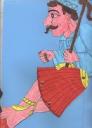
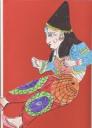 KARAGHIOZIS
Karaghiozis is the Greek shadow puppet theatre. It is descendant of the ancient shadow puppets of the orient, through the Byzantine and Ottoman empires. The central figure is Karaghiozis himself who represents the struggle of the Greek people, particularly under the yoke of Turkish occupation.
Karaghiozis has a humped back which symbolizes the weight of the world. He has a big nose and one arm three times longer than the other and most of the stories performed are about his efforts to get money by impersonating some esteemed persons like a sea-captain, a military officer, a doctor, Alexander the Great and many other characters. He also uses his intelligence to achieve the small triumphs that eventually lead to larger disasters. Within the plot there are a lot of historical references and lots of symbolisms that make the show enjoyable to both children and adults.
It is suggested that perhaps Karaghiozis is the unwritten history of the Greek people trying to conform to the laws, customs, values, fashions and politics of Western Europe that had been imposed upon them by the countries that helped liberate them from the Turks. The Greeks with their own local traditions were trying to do things in a way that even though seemed superficial to them were essential to progress with the rest of the world.
The character of Karaghiozis actually comes from the Turkish word Karagoz who was a handsome and intelligent leading man type character in the shadow puppets of the Ottomans.
Before there were films and television there was Karaghiozis and travelling theatres would announce the show times in the main squares upon arrival in the villages and cities of Greece. Karaghiozis still exists today and every year Karaghiozis festivals are held in a lot of towns in Greece.
THE FIGURES OF KARAGHIOZIS
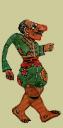 Karaghiozis
He represents the everyday man. He’s smart, good-hearted, a patriot, a politician, a lover, a singer and quick in reply. He’s sometimes rich, sometimes poor, sometimes stupid and sometimes bully. You can find him everywhere.
 Aglaia
She is Karaghiozis’ wife. She is always patient with her husband.
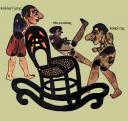 Kollitiria
Kollitiris: He is Karaghizis’ eldest son. He is clever like his father.
Kopritis: He is Karaghiozis’ middle son. Everybody in the family wonders how he gets fat although he says he doesn’t eat!.
Mpirikokos: He is the youngest child in the family. He can’t pronounce the letter “R” and says “L” instead.
 Hatziavatis
He is coward and cunning. He is also Karaghiozis’ closest friend.
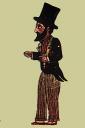 Sior Dionysios
He is the offspring of a family from the Ionian island of Zakynthos that used to be rich. He is always disappointed by the women he loves and is often bitten. He speaks Greek in the dialect of the Ionian islands with Italian pronunciation.
 Morfonios
His name means handsome. He is ugly with an enormous head and nose. He has got a short body and legs. He thinks he is handsome and laughs at ugly people.
 Stavrakas
He is the bully guy of old Athens. Although he is poor, he pretends to be rich. He is always bitten.
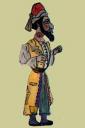 Jewish Solomon
He is the Jewish character of old times. He is Karaghiozis’ landlord. He presses him to pay the rent and he is afraid of trials and quarrels. He thinks it is bad luck to collect the rent on Saturday and Karaghiozis always tells him he will pay him on Saturday. He uses a lot of Spanish words when he speaks.
 Barba Yorgos (=Uncle George)
He represents the original Greek from the mountains. He is a strong person, honest and kind. He does not like spending money and he strongly wishes to get married. Karaghiozis is aware of all these characteristics and he often puts him into trouble. He has a loud voice with the pronunciation of people who live in villages.
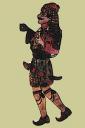 Veligekas
He is of Albanian origin and Vezyris’ partner. He very often maltreats Karaghiozis but he is also afraid of his craftiness. Barba Yorgos sometimes bits him.
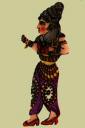 Vezyropoula
She is a symbol of beauty and a capable woman. A lot of men fall in love with her.
 Vezyris
He is also called Pasha and lives in the Seraglio.
Κάτω από: Γενικά | Δεν επιτρέπεται σχολιασμός στο 5a. ODYSSEY (2007-2008)
THE ADVENTURES OF ODYSSEUS

In ancient times Odysseus (or Ulysses) was the Greek king of Ithaca, an island in the Ionian Sea. Penelope was his wife. Odysseus was also the hero of Homer’s epic poem, the Odyssey. When the Trojan War ended, it took Odysseus ten years to return home to Ithaca. During these years he had many adventures.
Journey home to Ithaca
The Ciconians

After Odysseus and his men left Troy, they got on their ships and the strong winds sent them to the land of the Cicones. There Odysseus’ companions robbed the Ciconians’ animals and sweet wine and sat on the beach to eat.
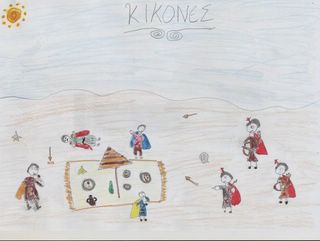
The Ciconians attacked them and many of Odysseus’ men were killed.The rest of them fled to the ships as fast as they could and left.
The Lotus-Eaters
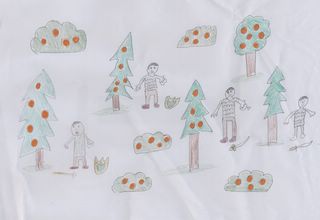
Then the wind sent the ships far away to a land in Africa. They landed on the land of the Lotus-Eaters. Odysseus sent out three men. They ate the lotus and fell asleep. The lotus were magic fruit! After eating them, they did not want to go back home. Odysseus went to the beach and dragged them back to the ship against their will. Then he arrived to the Cyclopes’ island.
The Cyclopes’ island

There was a large cave on the Cyclopes’ island. Polyphemus, a giant who had one eye, lived there. When he returned to his cave, he trapped Odysseus and his men in the cave by blocking the entrance with a very heavy rock. He then ate a pair of the men each day, but Odysseus thought of a cunning plan for escape.
In the evening, after the giant had eaten two of Odysseus’ men, he gave him a bowl of strong wine. Then Polyphemus asked, “What’s your name?” and Odysseus ansered,”Nobody”. Polyphemus said, “I will eat you, too, Nobody”. The giant drank the wine and fell asleep. Odysseus and his men turned a stick into a giant spear and blinded Polyphemus. Hearing Polyphemus’ cries, other Cyclopes came to his cave and asked him what was wrong. Polyphemus replied “Nobody has blinded me!”. The other Cyclopes left him alone, thinking that he must have been mad saying that Nobody had blinded him.
In the morning, Polyphemus rolled back the heavy rock to let his sheep out to graze. Odysseus and his men escaped tied to the bellies of the sheep. They loaded the sheep on board their ships and set sail.
As Odysseus and his men were sailing away, he shouted to Polyphemus that if someone asked him who had blinded him, he should say Odysseus, the king of Ithaca, had. Polyphemus tried to hit the ship throwing rocks at it, but because he was blind, he missed. When the ship started sailing, Polyphemus raised his arms to his father, Poseidon, and asked him not to allow Odysseus to go back home to Ithaca, and if he did, he should arrive back home alone with his crew dead and in a stranger’s ship.
Aeolus
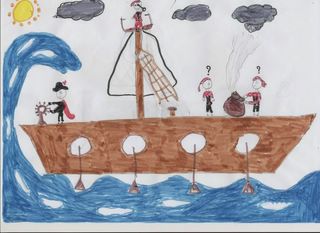
Odysseus stopped at Aeolus’, the god of the winds, island. Aeolus gave Odysseus and his crew hospitality for a month and a bag filled with all the winds except the one that would lead him home. When they were very near Ithaca, a couple of Odysseus’ men decided to open the bag with the winds because they thought there were gold and silver inside. The winds flew out of the bag and blew Odysseus’ ship away to the Laestrygonians’ land.
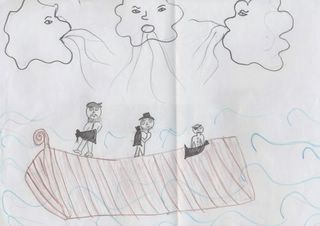
The Laestrygonians

There was a port near Laestrygonians’ land and eleven of Odysseus’ ships got into it. Only Odysseus’ ship was kept outside the harbour. The Laestrygonians were huge like giants. They threw rocks at the ships, sank them and ate all the men on board. Only Odysseus and his crew escaped with his ship. Next they went to the island of Circe.
Circe
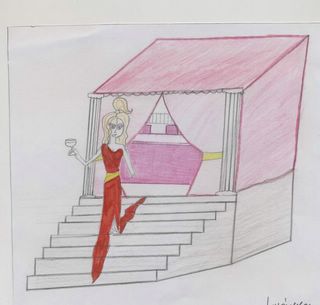
Circe was a woman who enchanted men. Odysseus sent a group of men ahead of the rest of his men. Circe offered them a magic drink, hit them with her wand and changed them into pigs. Only one man escaped and warned Odysseus.
Odysseus took his sword and set out to rescue his men. When Circe tried to hit him with her wand, he raised his sword and made her turn his companions into men again.They stayed at Circe’s island for a year. When Odysseus decided to leave, she advised him to go to the Underworld to ask Tiresias, the foreteller, when he would return to Ithaca.
Journey to the Underworld
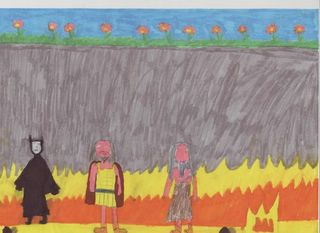
Odysseus travelled to the end of the ocean and arrived at the entrance of Hades. There he offered gifts to the deads: flour, milk and wine, water and honey. He met Achilles, Agamemnon and many other men who were killed in the Trojan War.
Then, he talked to Tiresias. Tiresias told him that although Poseidon hated him because he blinded his son, they would arrive to Ithaca one day if they didn’t harm the cattle of Helios.
The Sirens

Then he sailed to the Sirens.The Sirens had the most beautiful voices in the world and enchanted seamen with their songs. Kirki had advised Odysseus to put wax in his companions’ ears so that they wouldn’t hear the Sirens’ song. He did so and also asked his companions to tie him on a pole on the ship’s deck. When he heard the Sirens singing, he asked his companions to untie him to go on shore. However, they tied him even harder until they went away from the Sirens’ island.
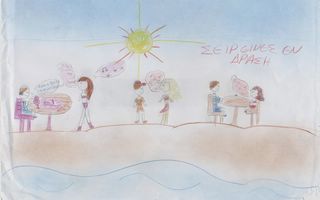
Scylla and Charybdis

Then they approached the Path of Scylla and Charybdis. On the one side Charybdis used to drink all the water of the sea and sink the ships. Odysseus and his men passed this point without any accidents. However, on the other side, Scylla seized six men with her six heads and ate them. Although everybody was very sad, they set sail again.

The Cattle of Helios

Finally, Odysseus and his crew approached the island of Helios(=Sun), where he kept sacred cattle. Odysseus had been warned by Tiresias and Circe not to touch the cattle. He told his men not to land on the island. However, they went ashore because they were very tired. Some days later, they ran out of food and were very hungry. One day, while Odysseus was sleeping, some of his men killed some oxen and cooked them. They were punished for their action. Zeus destroyed the ship with a thunderstorm and all the men died except for Odysseus. Odysseus grabbed a piece of wood and was washed up on Calypso’s island ten days later.
Calypso and the Phaeacians
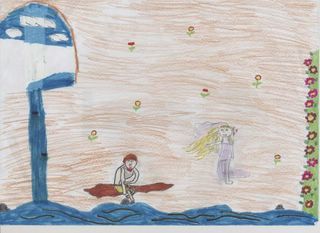
Calypso hosted Odysseus in her cave and took care of him. She made him love her and he stayed with her for seven years. Goddess Athena pitied him and asked her father Zeus to help Odysseus go away. Zeus sent god Hermes to tell Calypso to let Odysseus go. Odysseus left for Ithaca on a small boat. When Poseidon saw him at sea, he hit the sea with his trident and the high waves washed up Odysseus’ boat on the Phaeacians island, Corfu.

Nausica, daughter of King Alcinous of the Phaecians, found him on the beach and took him to the palace. They all had dinner and after dinner the palace singer started singing songs of the Trojan war. Then, Odysseus revealed his true identity. The next day, the Phaeacians prepared a ship for Odysseus and the next morning they arrived in Ithaca. They travelled all night and as he was still asleep, they carried him to the shore and left some presents next to him.
Odysseus in Ithaca
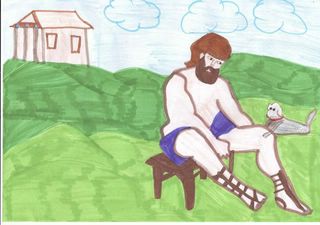
Goddess Athena appeared to Odysseus when he arrived in Ithaca. She told him that a lot of suitors used to go to his palace every day, they drank and ate and wanted to marry his wife Penelope and become kings of Ithaca. She also told him that his wife cried every day and that she was looking forward to his return.
Then Athena transformed Odysseus into a beggar and he went to Eumaeus’ hut. There Odysseus met his son, Telemachus. They hugged each other and cried for a long time. The next day Odysseus went to the palace and only his dog, Argos, recognised him. After that, Argos quietly passed away.

When Penelope heard that a beggar had come to the palace, she asked her maid to give him food and wash his feet. Penelope wanted to ask him if he knew anything about her husband. While the maid was washing the beggar’s feet, she saw a scar on his right knee and understood that he was Odysseus. However, she promised Odysseus not to tell anything to his wife, Penelope.
The next morning, Penelope asked the suitors to throw the arrow of Odysseus’ bow through the hole of twelve axes. The one who would be successful, would become her new husband. They all failed. When Odysseus tried, he passed the arrow through all the twelve axes.
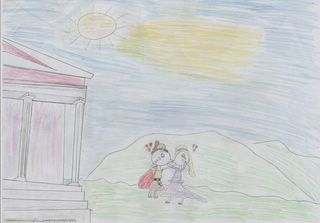
After that, Penelope realised that the beggar was Odysseus, her husband. Odysseus killed all the suitors and met his wife. They were all very happy!!!
Κάτω από: Γενικά | Δεν επιτρέπεται σχολιασμός στο 4. DAEDALUS AND ICARUS – ΔΑΙΔΑΛΟΣ ΚΑΙ ΙΚΑΡΟΣ (2007-2008)
DAEDALUS AND ICARUS
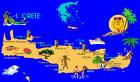
Many years ago, King Minos lived in an island, in the Mediterranean Sea, called Crete. A famous engineer called Daedalus and his son Icarus lived in Crete, too. They were from Athens, a town of Ancient Greece. King Minos asked Daedalus to build a wonderful palace for him.
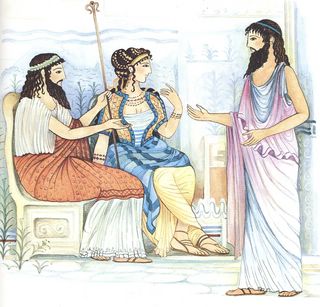
Daedalus and Icarus worked very hard. They worked day and night. Finally, they built the huge palace of Knossos for King Minos and Queen Pasifae. The King and the Queen liked it very much.
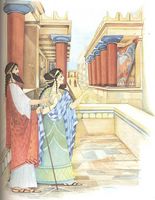
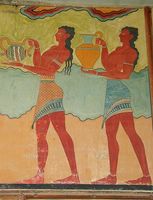
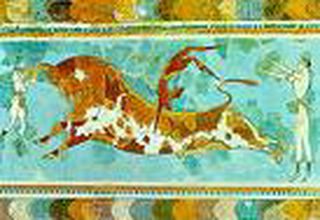
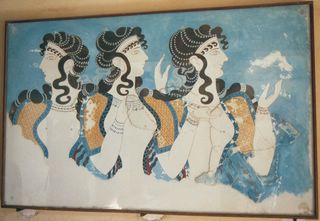
Next to it, they built another palace with a lot of rooms. The labyrinth. People got into the labyrinth and could not get out. Minotaur, a monster with a man’s body and a bull’s head, lived in it. Some people of Athens had killed Minoas’ son. Then, Minoas sailed to Athens, sieged the town and forced the Athenians to send seven young men and seven young women to Crete every year. They were fed to the Minotaur. That was their fine for their defeat.
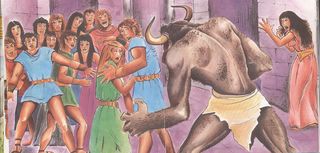
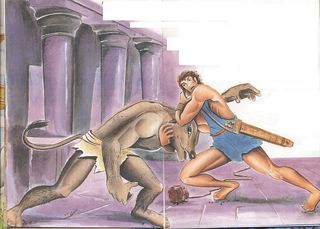
Some years later, Thesseus, the King’s of Athens son, went to Crete, with the seven young men and the seven young women, to kill the Minotaur. Ariadne, Minoas’ daughter, lived in the palace of Knossos, too. She offered to help Thesseus kill the Minotaur and get out of the labyrinth. Thesseus killed the monster and was free to return to Athens.
Icarus and Daedalus wanted to go back to Athens, too. In the Labyrinth, they were looking for a way to escape. One day, Icarus saw some birds flying in the sky and had an idea. He asked Queen Pasifae for help. She brought them feathers and wax. Daedalus and Icarus made two pairs of wings.
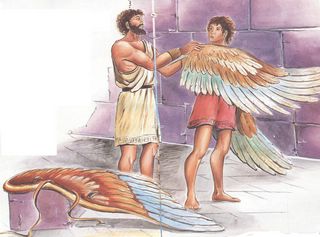
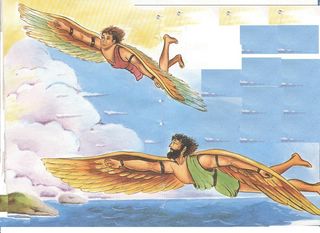
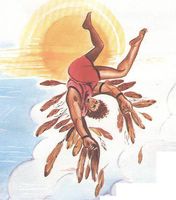
They put the wings on their backs and flew out of a high window.But Icarus wasn’t careful. He went very near the sun and his feathers melt. Finally, he fell into the deep sea.
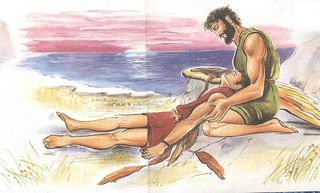
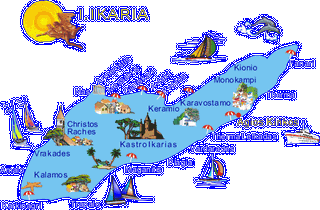
Daedalus looked for Icarus for many hours. Finally, he found him dead on the shore of an island. Ever since the island, Daedalus found Icarus’ body on, is called Ikaria and the sea Icarus fell into is called Ikario Sea.
ΔΑΙΔΑΛΟΣ ΚΑΙ ΙΚΑΡΟΣ
Στα αρχαία χρόνια, βασιλιάς της Κρήτης ήταν ο Μίνωας. Ένας διάσημος μηχανικός, ο Δαίδαλος και ο γιος του ο Ίκαρος ζούσαν στην Κρήτη, επίσης. Κατάγονταν από την Αθήνα. Ο βασιλιάς Μίνωας ζήτησε από το Δαίδαλο να του χτίσει ένα υπέροχο παλάτι. Ο Δαίδαλος και ο Ίκαρος δούλευαν μέρα και νύχτα. Τελικά έφτιαξαν το παλάτι της Κνωσού, για το Μίνωα και την Πασίφαη. Το παλάτι άρεσε πολύ στο βασιλιά και τη βασίλισσα. Δίπλα σ’ αυτό το παλάτι, έχτισαν ένα άλλο, με πολλά δωμάτια, το Λαβύρινθο. Οι άνθρωποι έμπαιναν μέσα και δεν μπορούσαν να βγουν έξω.
Στο Λαβύρινθο ζούσε ο Μινώταυρος. ήταν ένα τέρας με σώμα ανθρώπου και κεφάλι ταύρου. Κάποτε, μερικοί Αθηναίοι σκότωσαν το γιο του Μίνωα. Τότε εκείνος πήγε στην Αθήνα, την κατέλαβε και τους ανάγκασε να του στέλνουν, στην Κρήτη κάθε χρόνο, επτά νέους και επτά νέες. Μετά, τους έριχνε για τροφή στον Μινώταυρο. Αυτή ήταν η τιμωρία τους.
Μερικά χρόνια αργότερα, ο Θησέας, ο γιος του βασιλιά της Αθήνας, πήγε στην Κρήτη με επτά νέους και επτά νέες για να σκοτώσει το Μινώταυρο. Η Αριάδνη, η κόρη του βασιλιά Μίνωα, ζούσε στο παλάτι της Κνωσού, επίσης. Προσφέρθηκε να βοηθήσει το Θησέα να σκοτώσει το Μινώταυρο και να φύγει από το Λαβύρινθο. Του έδωσε ένα κουβάρι κλωστή για να τον βοηθήσει. Ο Θησέας σκότωσε το Μινώταυρο και ήταν ελεύθερος και γύρισε στην Αθήνα.
Ο Ίκαρος και ο Δαίδαλος ήθελαν και αυτοί να γυρίσουν πίσω στην Αθήνα. Μέσα στο Λαβύρινθο ο Ίκαρος και ο Δαίδαλος έψαχναν να βρουν τρόπο να φύγουν. Μια μέρα ο Ίκαρος είδε μερικά πούλια να πετούν στον ουρανό. Τότε σκέφτηκαν να ζητήσουν βοήθεια από την Πασιφάη για να δραπετεύσουν. Η Πασιφάη τους έφερε φτερά πουλιών και κερί. Ο Ίκαρος και ο Δαίδαλος άρχισαν να φτιάχνουν δυο ζευγάρια φτερά. Όταν τα έφτιαξαν, έβαλαν τα φτερά στις πλάτες τους και πέταξαν από το ψηλό παράθυρο του Λαβύρινθου. Ο Ίκαρος όμως δεν πρόσεξε. Πετούσε όλο και πιο κοντά στον ήλιο. Το κερί έλιωσε και έπεσε στη βαθιά θάλασσα.
Ο Δαίδαλος έψαχνε το γιο του για πολλές ώρες. Τελικά τον βρήκε νεκρό στην παραλία ενός νησιού. Από τότε, το νησί που ο Δαίδαλος βρήκε τον Ίκαρο νεκρό, ονομάζεται Ικαρία και η θάλασσα που έπεσε ονομάζεται Ικάριο πέλαγος
Κάτω από: Γενικά | Δεν επιτρέπεται σχολιασμός στο 2a. AESOP’S MYTHS (2007-2008)
AESOP: OUR BELOVED STORY TELLER

Aesop was born in Phrygia in Minor Asia. He lived in Greece but he also travelled to the East and to Egypt. He studied people’s customs and civilizations.
His family and he were slaves. He was sold to three masters. One of them was a philosopher and set him free because Aesop explained an omen.
I t is said that he was a very ugly man. He was very clever and had creative imagination. His travels made him wiser and he advised people to live happily and in harmony. He wrote myths to advise people. Animals, plants and people were the heroes of his myths. His stories taught people.
In one of his travels to Delphi, he was accused of theft by the holymen of the oracle. He was sentenced to death. However, the holymen were punished by the Gods for their decision.
Aesop’s myths are still alive today. They are taught to young pupils and have been translated into many languages.
THE LION AND THE DONKEY

Once upon a time, an old lion lived in the forest. It was so old that it could not hunt his food. One day, while it was laying under a tree, he saw a donkey coming towards him. Then, he had an idea. He told the donkey:
- – My dear donkey. Your voice is the loudest I have ever heard. Could you please help me?
- – What can I do for you my lord? asked the donkey.
- – I would like you to bray loudly when you see an animal so that they will come to me and I will eat them.
- – All right! said the donkey.
From that day on, he started braying whenever he saw an animal. The animals approached the lion and he ate them. The donkey was very proud because he could help the lion!
One day however, a leopard who was passing by, approached the donkey and ate him. The donkey had the same end with all the other animals of the forest.
THE DOG AND THE WOLF

Once upon a time, a wolf lived in a forest. He was free but he could hardly find any food.
One day, he went to the meadow to find a small animal to eat when he saw a dog running in the yard of a house. The dog told him that his boss gave him a lot of food. The wolf asked the dog if he could also have some food and the dog replied that his boss would be very happy to have two guards. After a while, the wolf noticed that there was a chain around the dog’s neck. The dog told him that most of the time his boss kept him tied.
After that, the wolf left because he preferred to be free and hungry than having food and being tied to a chain.
THE COWARD HARE

One evening, while the lion, the king of the forest, was walking on a path, he was hit by a bull’s horns by accident.
The lion got so angry that the next morning ordered all animals that had horns to leave the forest. A coward hare heard the news and while he was drinking water in the river he saw his big ears’ reflection in the waters of the river and thought that they were horns. He got so scared that he decided to leave the forest. When a mouse saw the hare leaving, he tried to persuade him not to do it.
However, the coward hare started running and left far away from the quiet forest. In his new home, there were a lot of foxes and one evening, one of them ate him.
It all happened because the hare was too coward.
THE BIRD AND THE WORM

Once upon as time, a small bird went hunting in the forest. Suddenly, it saw a small worm that was eating some leaves. The bird approached the worm to eat it and the worm begged the bird not to do it. It asked the bird to let it live and enjoy the sun and the air but in vain. The bird ate the worm.
Some days later, the bird was caught in a hunter’s net. The bird begged the hunter not to eat it but he said that although it was very small, it was very tasty.
So, the bird had the same fate with the worm! The bird ate the worm and the hunter ate the bird!
THE TURTLE AND THE FROG

Once upon a time, there was a young turtle. One day she told her mother:
- – Mum, we, the turtles, are very unfortunate animals.
- – Why do you say that my daughter? her mother asked her.
- – Because we always carry our heavy shell, crawl on the ground and can’t run or jump.
Then the young turtle complained that she had never jumped like her friend the frog.
- – Don’t worry my daughter, her mother said. One day, you will remember my words.
One afternoon, the turtle went to play with her friend, the frog. As soon as the frog saw her, he started jumping joyfully. Suddenly, a loud noise was heard. It was a horse galloping towards them. The horse’s foot stepped on the turtle. However, her shell was not crashed because it was hard. The horse’s other foot stepped on the frog and killed him.
The turtle was scared, ran to her mother and told her what had happened. Then, her mother told her:
- – My dear daughter, do you remember my words? You should never complain again about being born a turtle.
THE FOX AND THE SKYLARK

Once upon a time, there was a cunning fox that was very hungry. One day, she saw a skylark in the bushes and she wanted to eat him. When the skylark saw the fox, he flew very high.
The fox tried to cheat the bird to come closer to her by telling him that she had heard a sparrow singing better than him. Then, she asked him to get down from the tree to talk to him. The skylark told the fox that she could climb up the tree if she wanted to talk to him.
As the fox could not do it, she had to go away hungry and humiliated by the skylark who was flying above her singing happily.
THE POOR MAN’S DONKEY

Once upon a time, a horse was pulling a rich man’s cart full of gold. A donkey was riding next to him carrying a cart full of wood.
Then, the horse told the donkey that he thought he was very unhappy living in the poor man’s house. The donkey answered that he was very happy because he worked hard and could have as much straw as he wished. However, the horse insisted that the donkey was not happy.
Some time later, some robbers came, hit the horse and took all the gold. The horse was very sad and the donkey could not stop laughing at him.
So, the horse stood desperate in the middle of the street while the donkey rode happily back home.
THE WOLF AND THE GOAT

Once upon a time, a goat got away from her flock and hid in some bushes. Suddenly, a wolf came out of the bushes. The goat got scared. She thought the wolf would eat her. However, the wolf asked the goat for help.
He told her that some villagers were chasing him and if she helped him, he would give her a big present. The goat told the villagers that the wolf was on the slope opposite and they went away.
Then, the goat asked the wolf for her present. The wolf told her: “Don’t be silly! I have given you the most valuable present. Your life!”.
The wolf thanked the goat for her help and left.
THE TURTLE THAT WANTED TO FLY

Once upon a time, a turtle lived in the yard of a house in a village. Her dream was to fly high. She was jealous of the ducks that could fly and see the world from high above.
One day, the ducks heard her talking about her wish and told her that she could fly with them if she wished. The ducks held a long stick with their mouths and the turtle got it from the middle.
They all flew very high. At last, the turtle could fly! She was so happy that she forgot she could not fly by herself. She left the stick, fell on the ground and got killed.
The story teaches us that we must be happy with what we are and never be jealous of other people.
THE WOLF’S MISFORTUNE

Once upon a time, the lion, the king of the animals, got sick and asked all animals to bring him some medicine to get well. Then, the wolf told the lion that only the fox knew which was the right medicine for his sickness but she did not run to help him.
The lion got angry and ordered the other animals to arrest the fox and cut her tongue. The wolf was very happy because he hated the fox. A little bird heard the lion talking to the animals and told everything about it to the fox. The fox collected some herbs and took them to the lion. She apologised for being late as she was busy collecting the herbs. Then, she told the lion that he should boil the herbs and a wolf’s tongue and drink the medicine.
The lion ordered the animals to cut the wolf’s tongue and boil it with the herbs. In this way, the cunning fox punished the wolf.
THE CUNNING DONKEY

Once upon a time, a farmer had a donkey that pulled his cart. Every day, the donkey had to go from one town to the other. Between the two towns there was a river and the bridge that connected them was far away. So, the donkey had to ride a long way every day.
One day, while his boss was sleeping in the cart, the donkey decided to cross the river. That day, he was carrying salt in the cart. The salt was dissolved in the water of the river and the cart became lighter and easier to be pulled.
The next day, the donkey crossed the river again. This time, he was carrying sponges. The sponges soaked in the water and became so heavy that the donkey could not pull the cart anymore. Then, the farmer woke up, bit the donkey and pulled the cart out of the river.
From that day on the donkey patiently pulled the cart through the bridge to the town.
THE MONKEY THAT BECAME A KING

Once upon a time, the old lion, the king of the jungle, died. So, all the animals gathered to decide who the new king would be.
A lot of animals wanted to become the new king. The tiger, because she was strong and clever, the elephant, because he was the biggest animal in the world, the rhino, because although he was strong, he could move very fast, the giraffe, because she was the kindest animal in the jungle, the gorilla, because it had the loudest voice.
Then, the cunning fox suggested that the animal on whose head the crown fit best, should become the king of the jungle. So, the monkey was elected to become the king of the jungle. However, the fox tricked the monkey by telling him that there was a treasure in a hole in the ground. So, the monkey fell in the trap.
When the rest of the animals saw their king in the hole, they started laughing at him. Finally, they decided to live happily all together without a king.
THE ARROGANT ROOSTER

Once upon a time, a rooster lived in the yard of a house. He always boasted about himself. He used to say that he had the loudest voice and he could beat any other rooster in the world.
One day, some children were playing in the yard with a small cart. The rooster saw the cart and thought that if he jumped in it, he could travel all over the world and all the hens and the roosters would admire his beauty.
Then, two tomcats offered to pull the cart and he accepted. He jumped in it and shouted to the tomcats to run faster and faster. However, just around the corner, the tomcats stopped running , jumped on the rooster and ate him.
The rooster was very arrogant and silly to believe the tomcats!
THE CRICKET AND THE ANT

It was summer and the lazy cricket was singing while the ant was carrying food into its nest for the winter.
The cricket told the ant that it didn’t need to do that. When the winter came, the ant had a lot of food at home while the cricket was hungry and cold in the snow. The ant took the cricket into his house, gave it food and took care of it.
The cricket promised the ant that it would collect food next summer but in vain.
THE SHEPHERD BOY AND THE WOLF

Once, there was a shepherd boy who had to look after his sheep. One day, he felt bored and decided to play a trick on the villagers. He shouted, “Help! Wolf! Wolf!” The villagers heard his cries and rushed out of the village to help the shepherd boy. When they reached him, they asked, “Where is the wolf?” The shepherd boy laughed loudly, “Ha, Ha, Ha! I fooled all of you. I was only playing a trick on you.”
The shepherd boy played this trick several times. Then, some time later, a wolf went into the field. The wolf attacked one sheep, and then another and another. The shepherd boy ran towards the village shouting, “Help! Help! Wolf! Help! Somebody!”
The villagers heard his cries but they laughed because they thought it was another trick. The boy ran to the nearest villager and said, “A wolf is attacking the sheep. I lied before, but this time it is true!”
Finally, the villagers went to look. It was true. They could see the wolf running away and many dead sheep lying on the grass.
THE HARE AND THE TURTLE

Once upon a time, the hare, that was proud to be the fastest animal in the forest, raced with the turtle. The race started and the poor turtle walked very slowly while the hare ran fast. On his way, the hare saw a field with carrots. He stopped and ate so many that he fell asleep for hours. Meanwhile, the turtle kept on walking slowly and arrived at the finish line first. The turtle won the race.
We must never boast about our abilities but we must always try to achieve the best.
Κάτω από: Γενικά | Δεν επιτρέπεται σχολιασμός στο 1. THE ARGONAUTICAL EXPEDITION – ΑΡΓΟΝΑΥΤΙΚΗ ΕΚΣΤΡΑΤΕΙΑ (2007-2008)
THE ARGONAUTICAL EXPEDITION
Many years ago, a king called Athams reigned the Greek town of Orhomenos. Nefeli was the queen. They had two children, Frixos and Elli. When Nefeli died, Athamas got married to Ino. Ino was jealous of Frixos and Elli. One day, she told Athamas that an omen said that he had to sacrifice his children if he wanted the earth to give seeds again. Then, the children’s dead mother, Nefeli, sent a gold haired ram to take them away. They rode the ram but during the journey Elli got dizzy, fell into the sea and drowned. Ever since the sea is called Ellispontos (Black Sea).

Frixos managed to arrive at Kolhida, a magic country near Kafkasus. The people of Kolhida welcomed and hosted Frixos and he gave them the Golden Fleece as a token of his gratitude.
Many years later, in another Greek town called Iolkos, Aeson, who was the king, was killed by his brother Pelias who became the new king. Jason, Aeson’s son, grew up with the care of his wise teacher, Centaur Cheiron.

When he became older, he returned to Iolkos, his hometown, to become the king. Pelias set him a very hard mission. He asked Jason to bring back the gold fleece. Jason went on board a very strong ship called Argo and started his voyage.
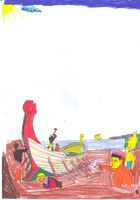
The voyage was very difficult.He went through a lot of obstacles. Finally, he arrived in Kolhida.


There, he faced many more difficulties. However, Midia, the king’s daughter, helped him.

Finally, Jason managed to get the “Golden Fleece”, come back to his country and become the king. He married Midia and they had two children. Jason was the first Greek voyager.
ΑΡΓΟΝΑΥΤΙΚΗ ΕΚΣΤΡΑΤΕΙΑ
Τα παλιά χρόνια, στον Ορχομενό της Βοιωτίας, ήταν βασιλιάς ο Αθάμας και βασίλισσα η Νεφέλη. Είχαν δυο παιδιά, το Φρίξο και την Έλλη.Όταν πέθανε η μητέρα τους, ο Αθάμας παντρεύτηκε την Ινώ, που ζήλευε πολύ τα μικρά παιδιά. Έτσι, κατάφερε να πάρει χρησμό από το μαντείο ότι: «Μόνο τότε θα κάνει η γη καρπό όταν ο Αθάμας θυσιάσει στο Δία το Φρίξο και την Έλλη».Τότε, η νεκρή μητέρα τους, η Νεφέλη, έστειλε ένα χρυσόμαλλο κριάρι, να πάρει τα παιδιά και να τα σώσει.
Στη διαδρομή η Έλλη ζαλίστηκε και έπεσε στη θάλασσα. Από τότε, ο πορθμός στον οποίο έπεσε ονομάζεται Ελλήσποντος.Ο Φρίξος κατάφερε να φτάσει στην Κολχίδα, μια χώρα μαγική κοντά στον Καύκασο. Επειδή οι κάτοικοί της τον καλοδέχτηκαν και τον φιλοξένησαν, τους χάρισε το χρυσόμαλλο δέρας.
Πολλά χρόνια αργότερα, σε μια άλλη πόλη της Ελλάδας, την Ιωλκό, ο βασιλιάς Αίσονας έχασε το θρόνο του από τον αδελφό του τον Πελία. Ο Ιάσωνας, ο γιος του Αίσονα, μεγάλωσε με το σοφό δάσκαλό του, τον Κένταυρο Χείρωνα. Όταν μεγάλωσε ο Ιάσωνας επέστρεψε στην πόλη του, για να πάρει πίσω το βασίλειό του. Ο Πελίας του ανέθεσε μια πολύ δύσκολη δοκιμασία. Του ζήτησε να φέρει πίσω το χρυσόμαλλο δέρας.
Ο Ιάσονας με ένα γερό καράβι, την Αργώ, ξεκίνησε το ταξίδι του. Το ταξίδι ήταν πολύ δύσκολο. Πέρασε πολλές δοκιμασίες αλλά τα κατάφερε να φτάσει στην Κολχίδα. Εκεί, είχε να ξεπεράσει και άλλα εμπόδια. Τον βοήθησε όμως η Μήδεια, η κόρη του βασιλιά. Ο Ιάσονας κατάφερε το στόχο του. Πήρε το «Χρυσόμαλλο δέρας», γύρισε στην Ιωλκό και έγινε βασιλιάς.
Παντρεύτηκε τη Μήδεια και έκαναν δυο παιδιά. Ήταν ο πρώτος Έλληνας θαλασσοπόρος.